Filters

17 filtered results

Clear all filters
Favorites
With answer key
Interactive

17 filtered results

Difficulty Level

Grade


Unlock your child's potential with our Critical Thinking Addition Worksheets designed for ages 5-7. These engaging worksheets go beyond simple addition, fostering essential problem-solving and analytical skills. Carefully crafted activities challenge young learners to think deeply and understand the underlying concepts of addition. Each worksheet is filled with fun, interactive exercises that make learning enjoyable while promoting critical thinking. Perfect for both classroom and home use, our resources stand out in developing a strong foundation in math, ensuring kids are not only ready but excited for future mathematical explorations. Explore the collection and watch your child’s confidence grow!
Check out this FREE Trial Lesson on Addition for age 5-7!

More Word Problems

Favorites
With answer key
Interactive
  • 5-7
  • Critical Thinking
  • Addition
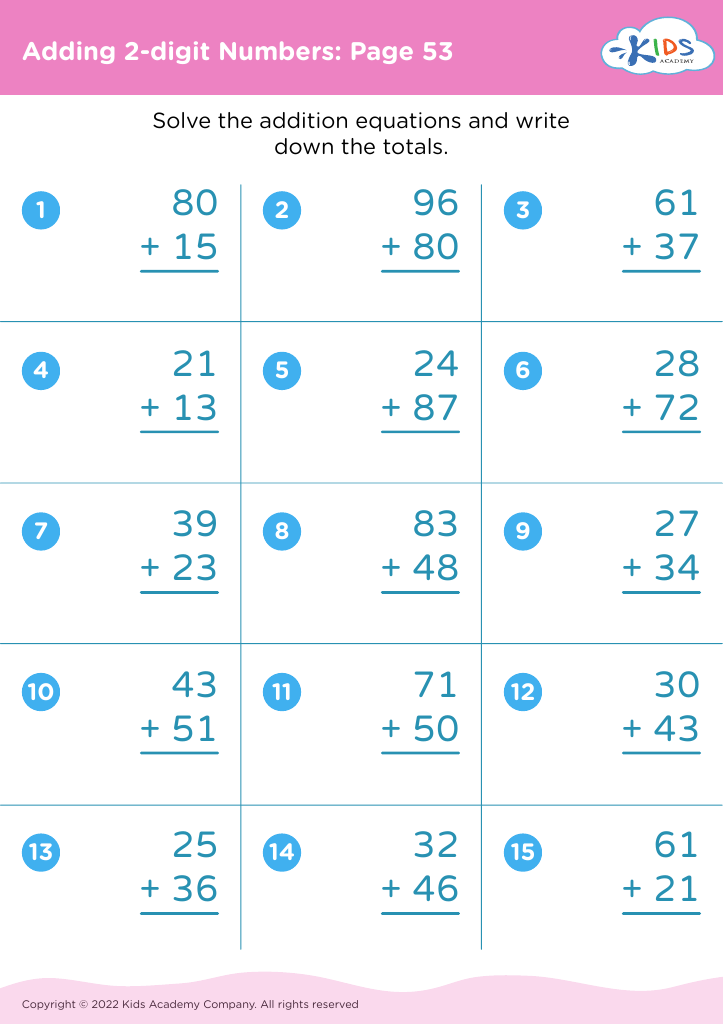
Adding 2-digit Numbers: Page 53

Adding 2-digit Numbers: Page 53

Adding 2-digit Numbers: Page 53
Worksheet
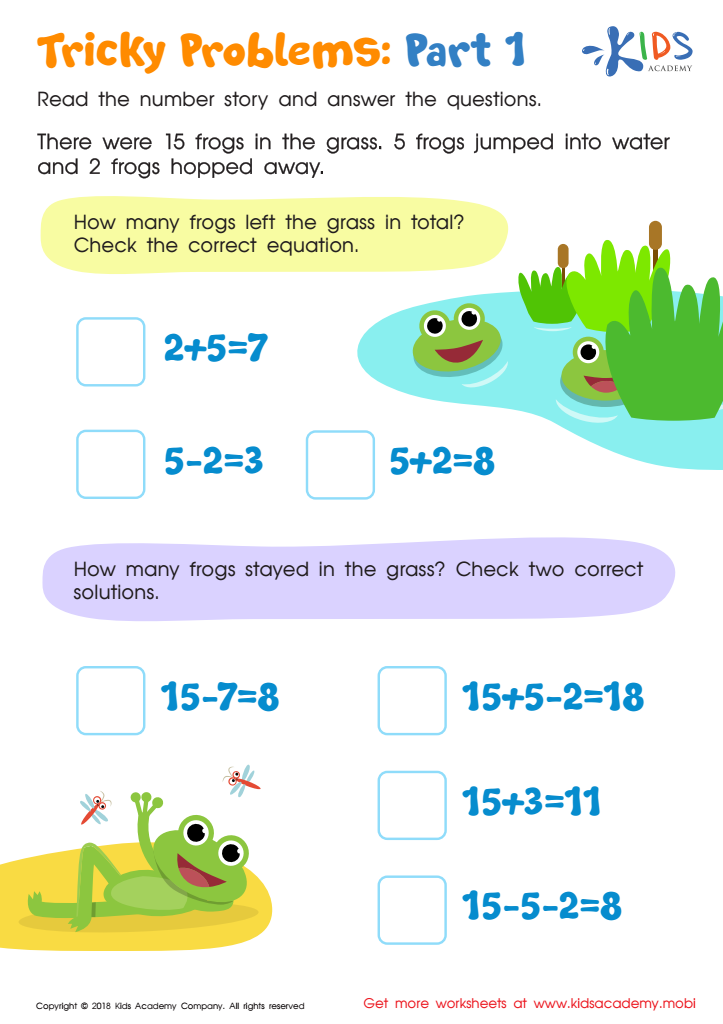
Tricky Problems Worksheet: Part 1

Tricky Problems Worksheet: Part 1

Visualizing word problems can help students solve them. This fun PDF worksheet encourages students to create mental images using math facts, then check boxes to match the equations for basic addition problems. It's a great way to build confidence in solving math.
Tricky Problems Worksheet: Part 1
Worksheet
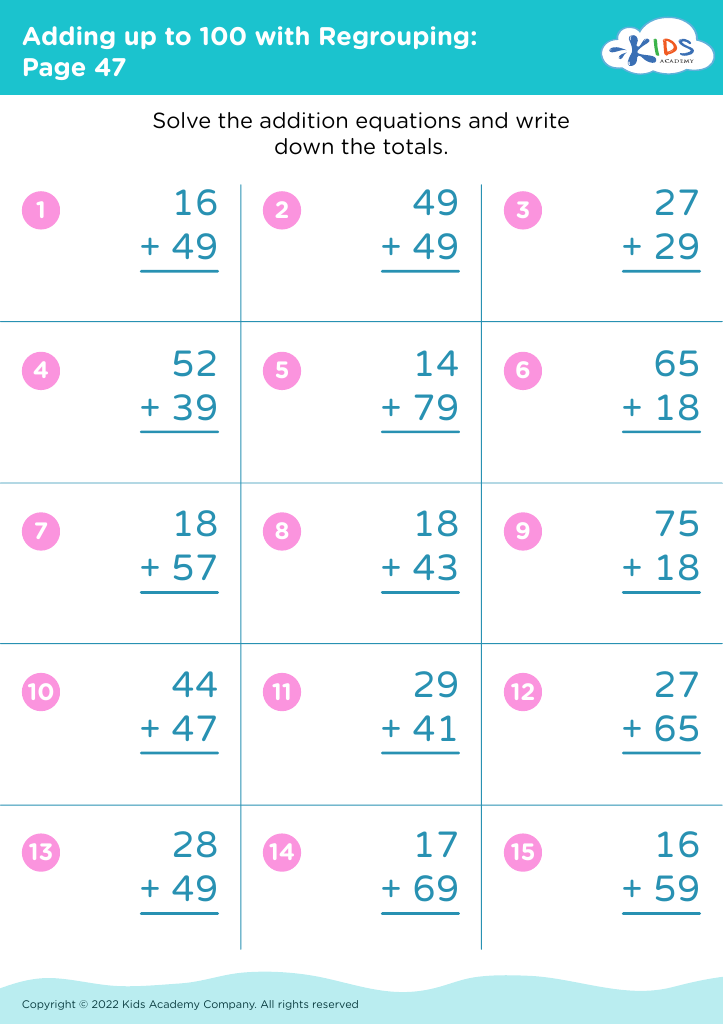
Adding up to 100 with Regrouping: Page 47
Worksheet
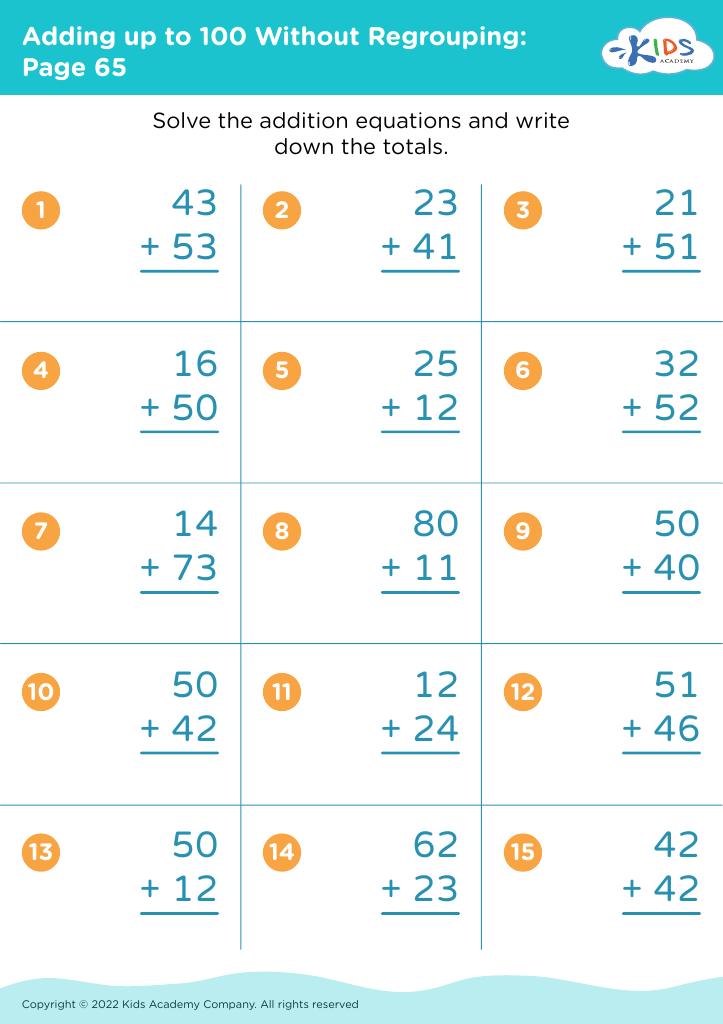
Adding up to 100 Without Regrouping: Page 65
Worksheet
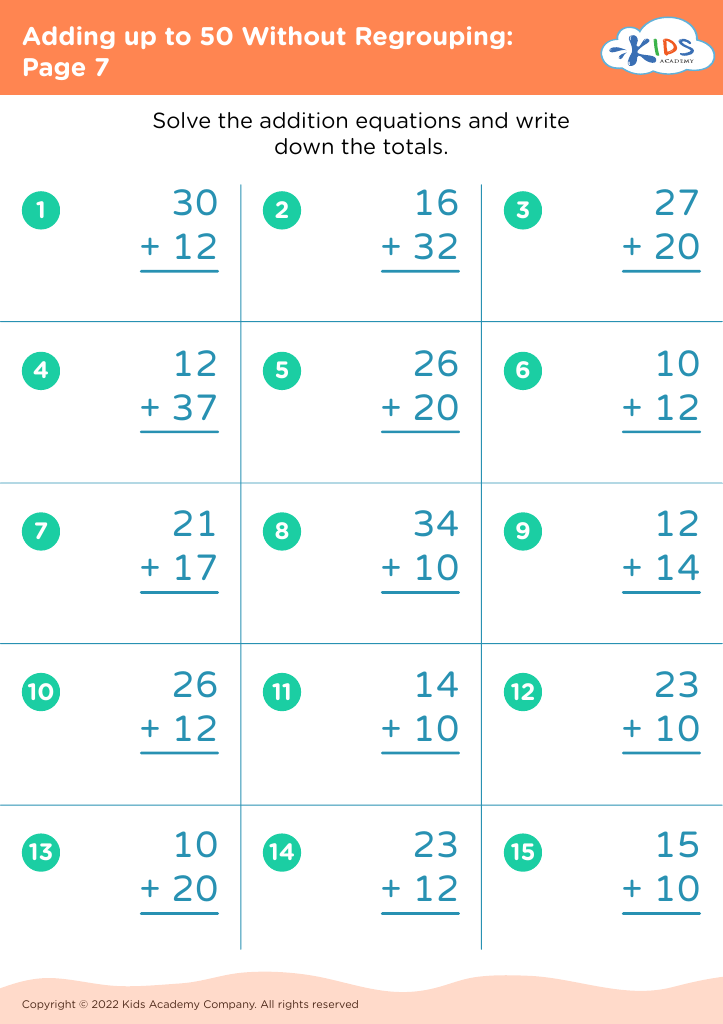
Adding up to 50 Without Regrouping: Page 7
Worksheet
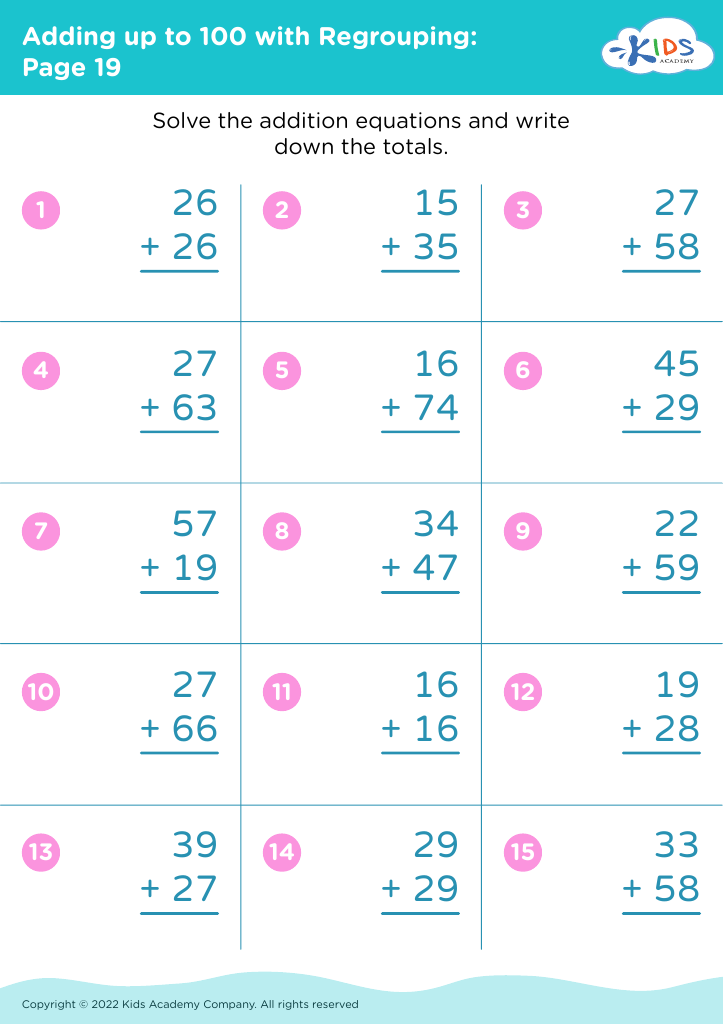
Adding up to 100 with Regrouping: Page 19
Worksheet
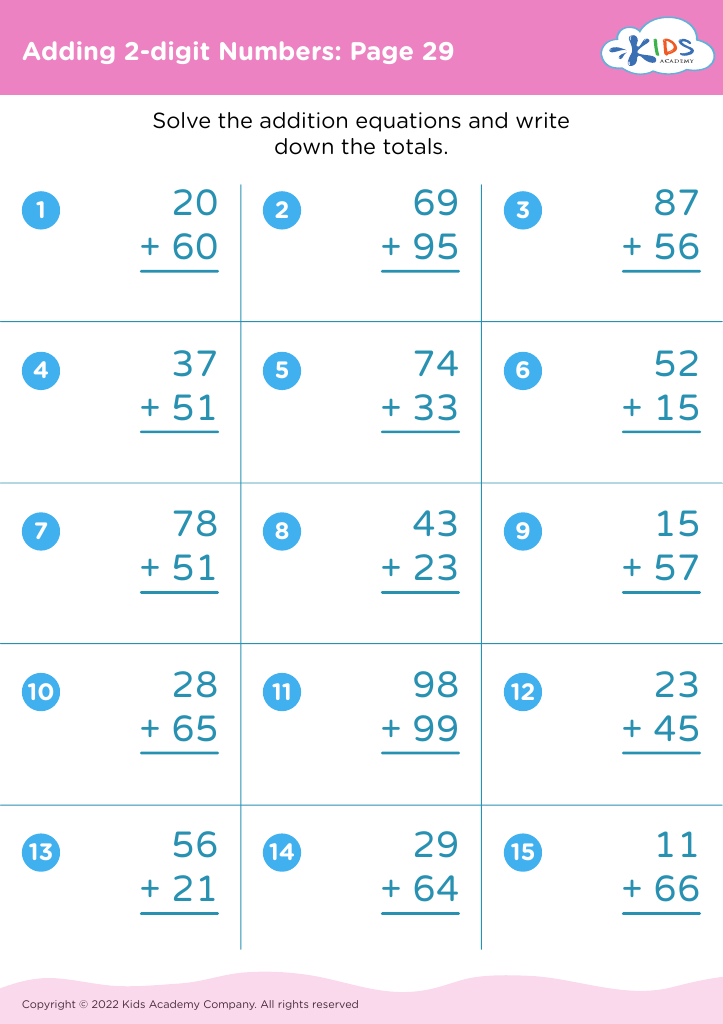
Adding 2-digit Numbers: Page 29

Adding 2-digit Numbers: Page 29

Adding 2-digit Numbers: Page 29
Worksheet
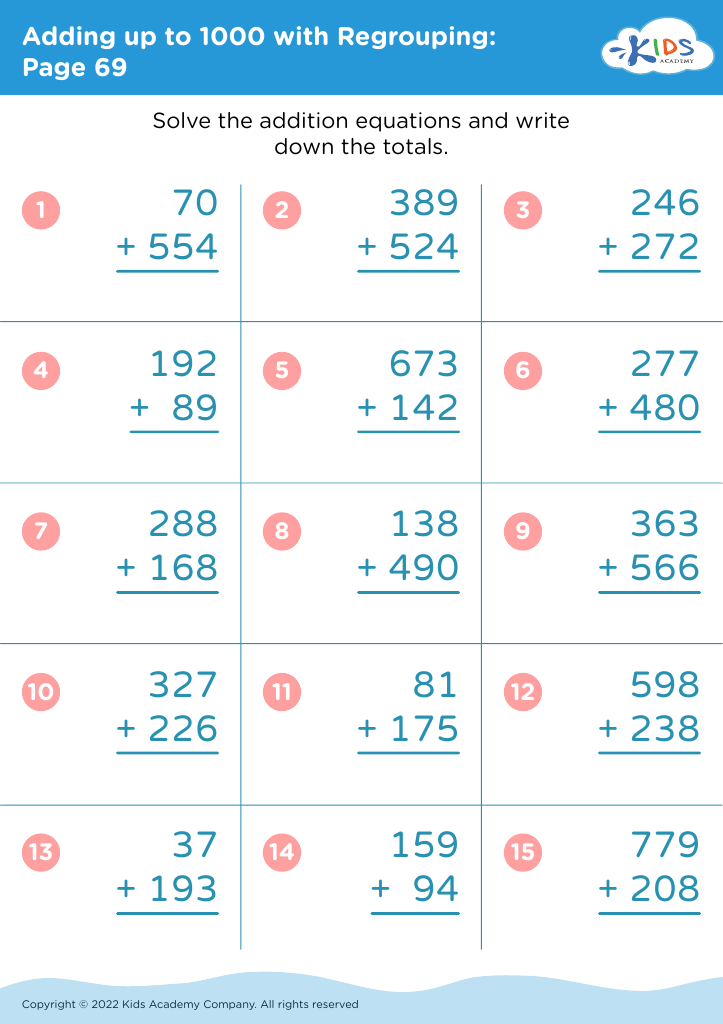
Adding up to 1000 with Regrouping: Page 69
Worksheet
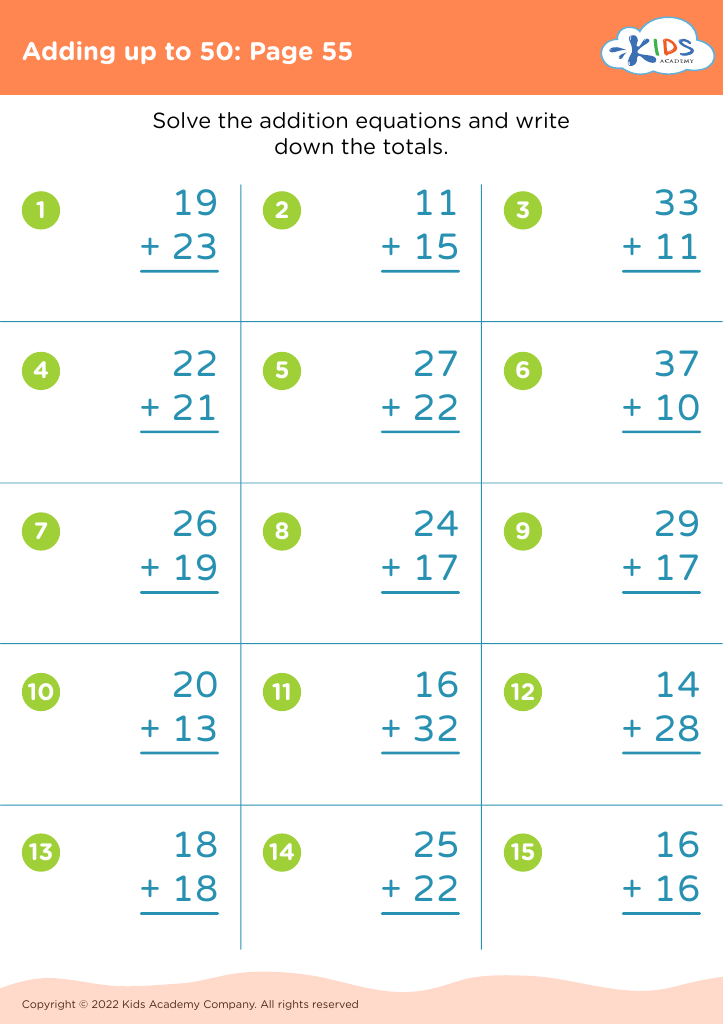
Adding up to 50: Page 55

Adding up to 50: Page 55

Adding up to 50: Page 55
Worksheet
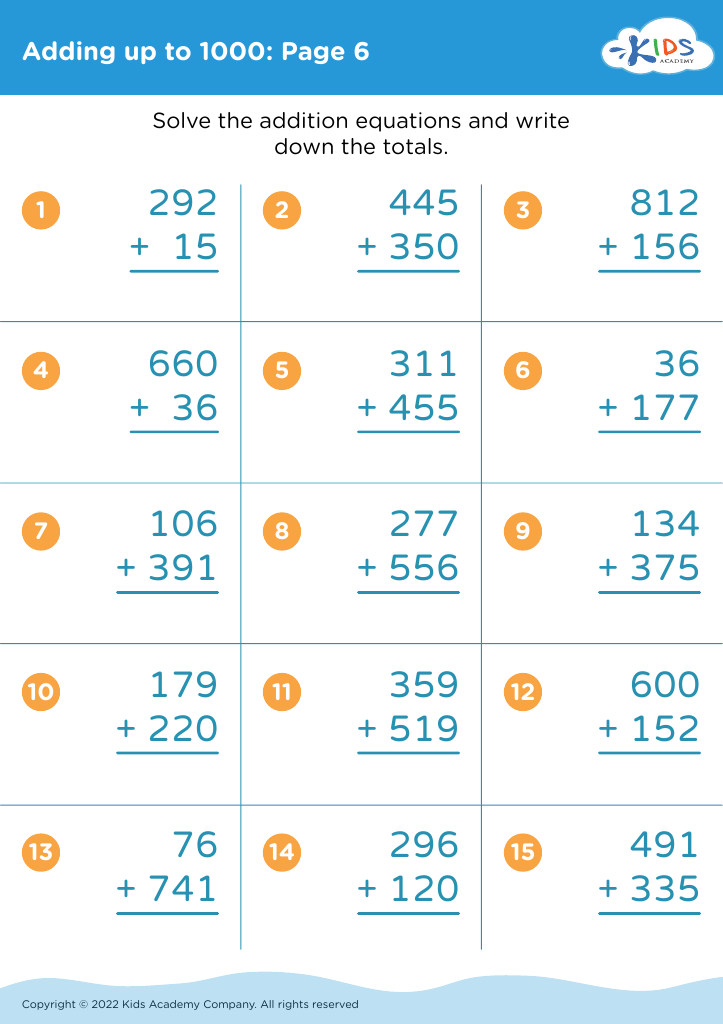
Adding up to 1000: Page 6

Adding up to 1000: Page 6

Adding up to 1000: Page 6
Worksheet
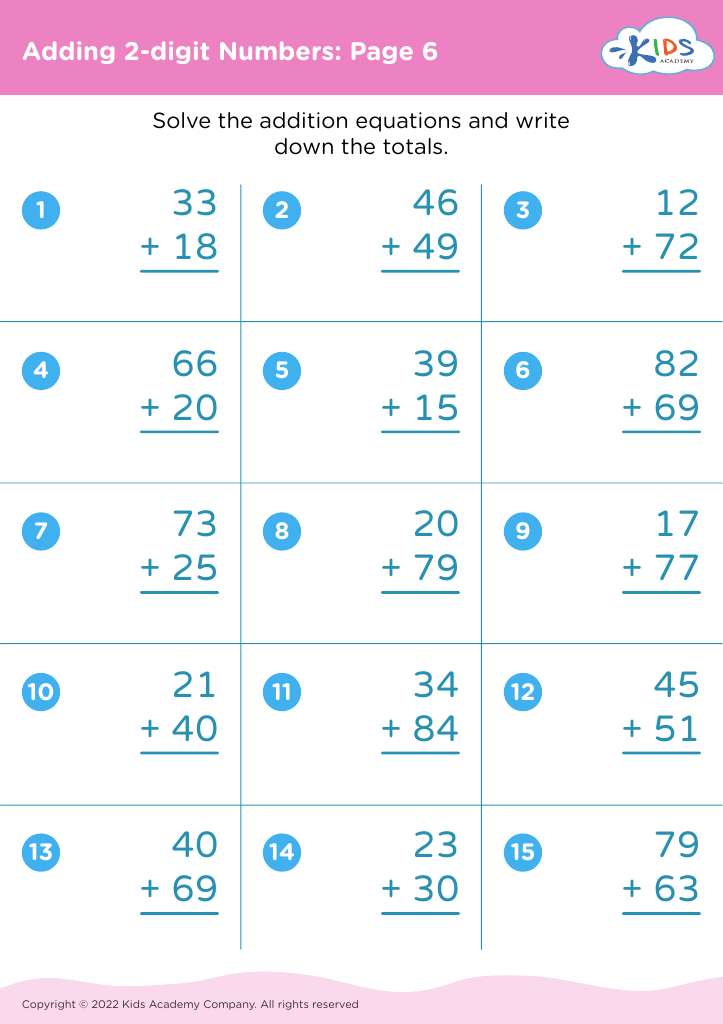
Adding 2-digit Numbers: Page 6

Adding 2-digit Numbers: Page 6

Adding 2-digit Numbers: Page 6
Worksheet
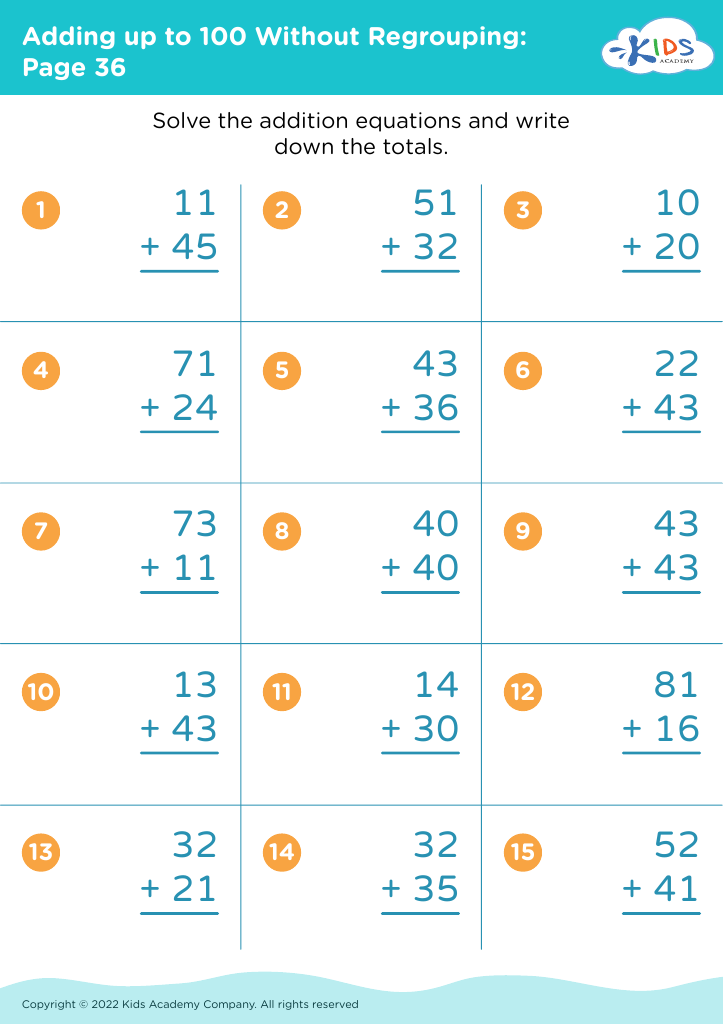
Adding up to 100 Without Regrouping: Page 36
Worksheet
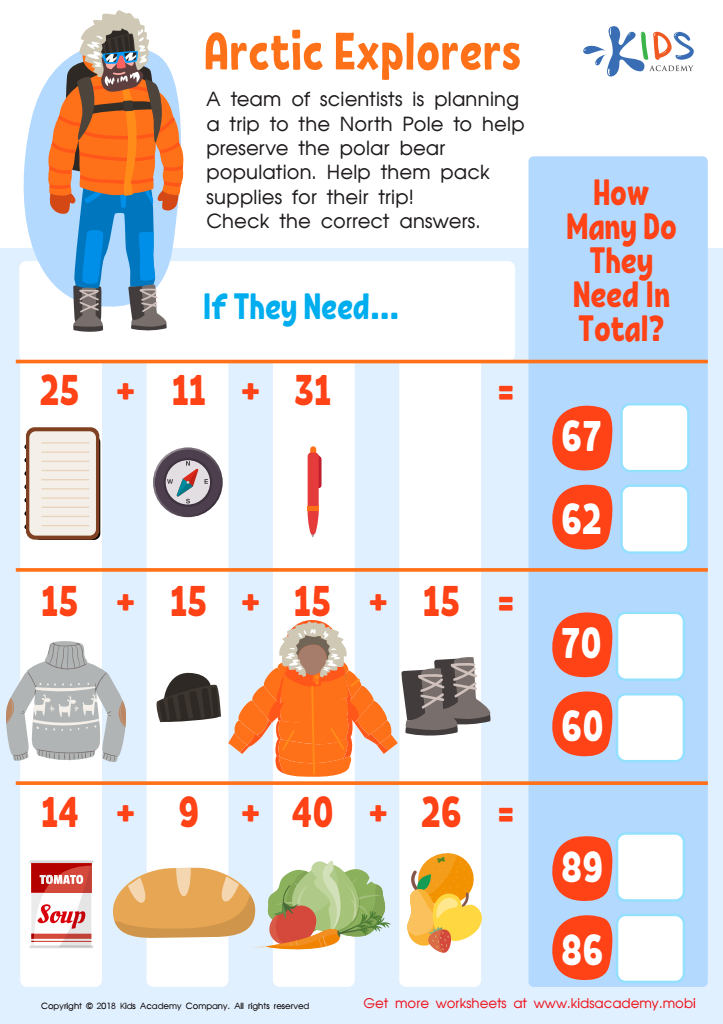
Arctic Explorers Worksheet
Arctic Explorers Worksheet
Help your child pack supplies for a team of scientists' trip to the North Pole! Before beginning, explain how efforts are needed to protect endangered animals like polar bears. Encourage them to check the correct clothing needed for the extremely cold region. For example, warm and protective clothing is essential.
Arctic Explorers Worksheet

Worksheet
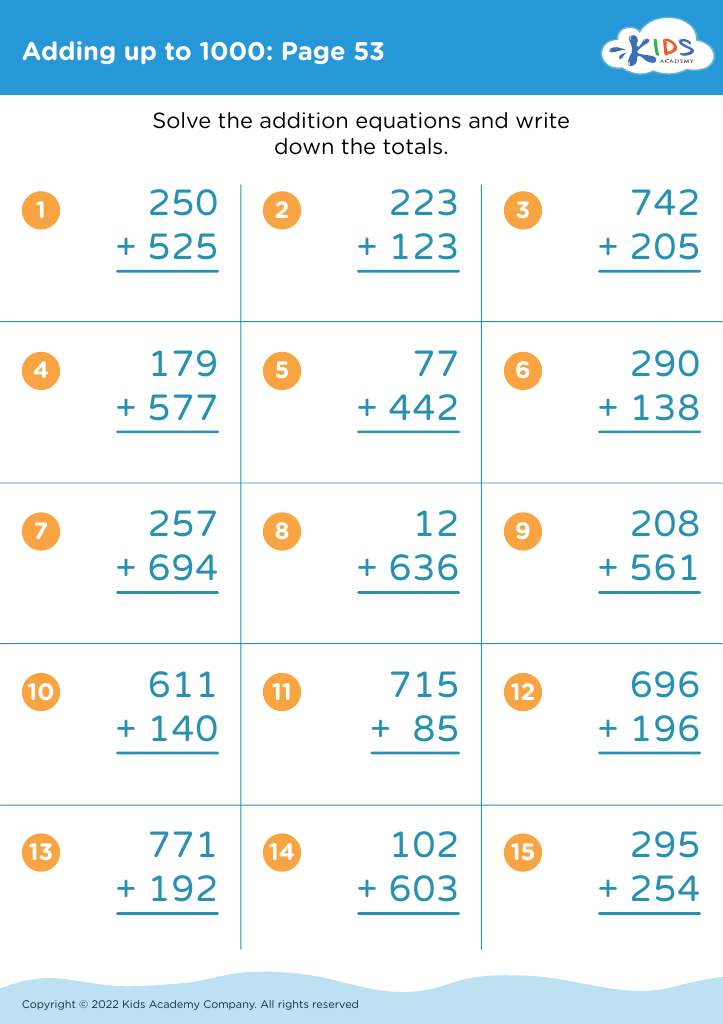
Adding up to 1000: Page 53

Adding up to 1000: Page 53

Adding up to 1000: Page 53
Worksheet
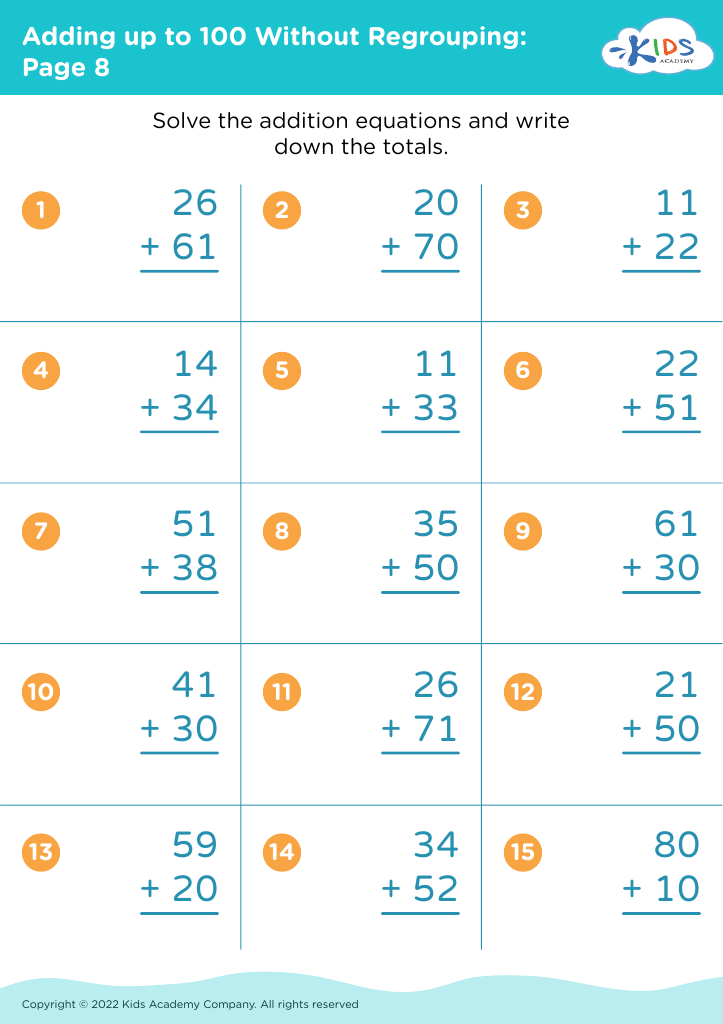
Adding up to 100 Without Regrouping: Page 8
Worksheet
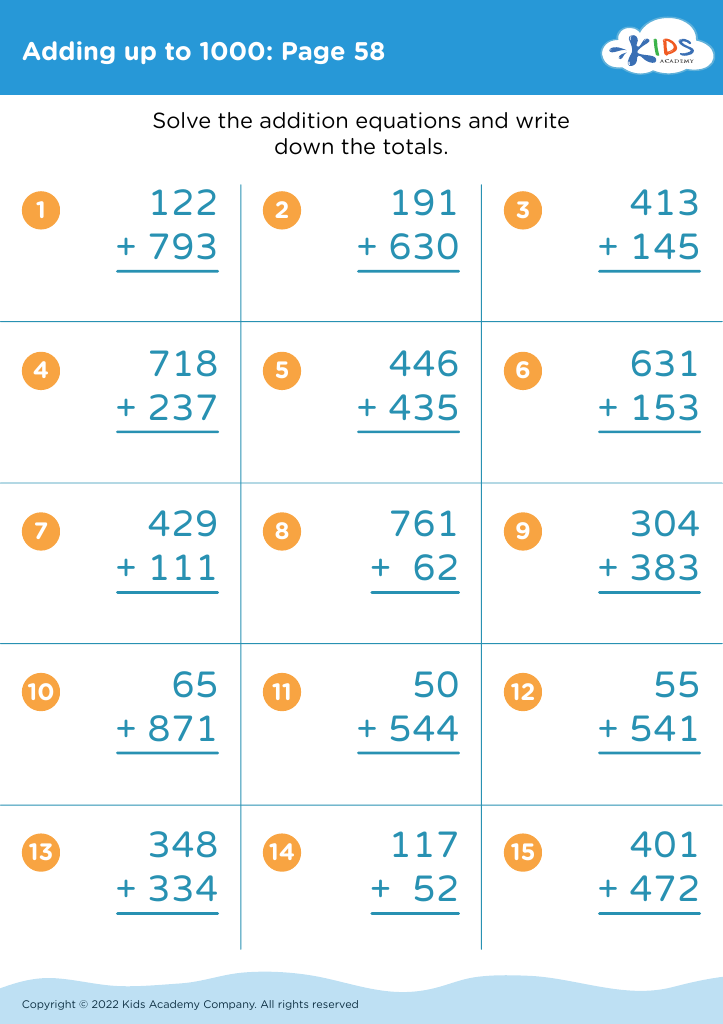
Adding up to 1000: Page 58

Adding up to 1000: Page 58

Adding up to 1000: Page 58
Worksheet
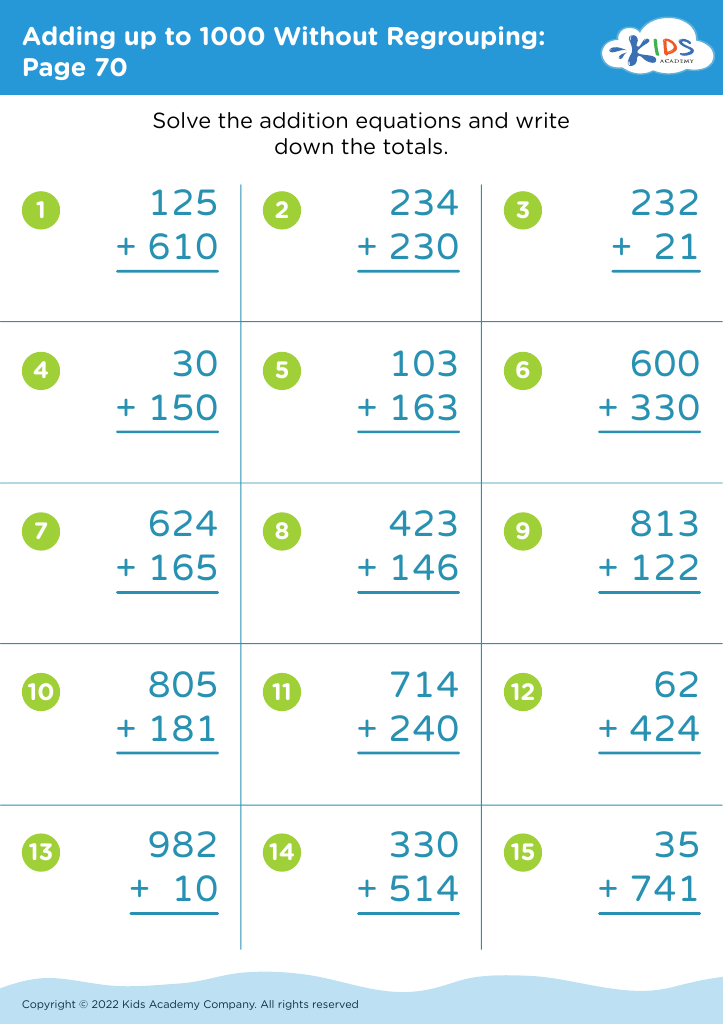
Adding up to 1000 Without Regrouping: Page 70
Worksheet


Critical Thinking Addition for Ages 5-7 is crucial for several reasons. First, fostering critical thinking in early learners sets a strong foundation for problem-solving and reasoning skills that they'll use throughout their lives. Introducing thought-provoking addition activities engages young minds and encourages them to think deeper, questioning and understanding the 'why' behind mathematical concepts instead of simply memorizing facts.

Second, integrating critical thinking in math at an early age helps children develop resilience. When children encounter complex problems and persevere through trial and error, they build the confidence and tenacity needed to face future challenges.

Furthermore, critical thinking addition promotes cognitive development. Activities that challenge kids to find multiple solutions or explain their reasoning enhance neural connections, improving overall brain function and supporting learning across various subjects.

Lastly, it aligns with real-world applications. Children who learn to think critically can transfer these skills to everyday situations, from following instructions to making informed decisions.

In essence, caring about Critical Thinking Addition within this age group means valuing and nurturing essential life skills—analytical thinking, creativity, and adaptability—ensuring young learners not only excel academically but also grow into capable, resourceful individuals.