Enhance critical thinking Addition Worksheets for Ages 5-7
4 filtered results
-
From - To
Discover our "Enhance Critical Thinking Addition Worksheets" designed specifically for children ages 5-7! These engaging and interactive worksheets help young learners develop essential math skills while fostering critical thinking. By presenting exciting math challenges, kids will solve addition problems through reasoning and problem-solving strategies. Our worksheets are crafted to stimulate curiosity and encourage independent thinking, ensuring an enriching learning experience. Perfect for teachers and parents, these resources provide opportunities for practice, assessment, and skill mastery in a fun, supportive environment. Ignite your child’s love for math and enhance their critical thinking abilities with our thoughtfully designed addition worksheets!
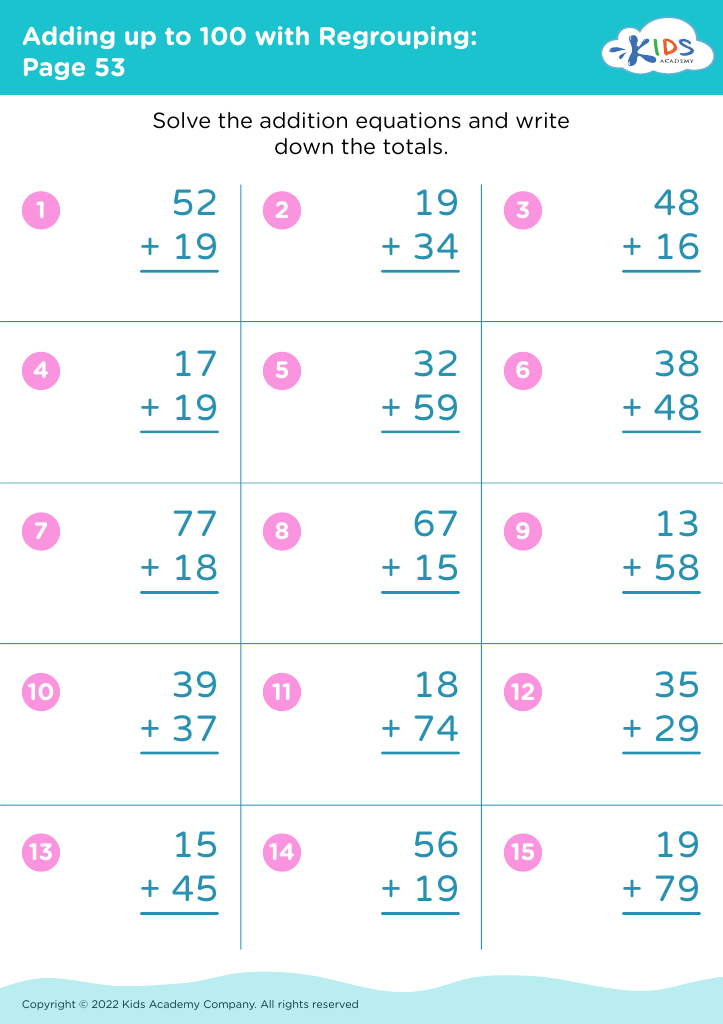
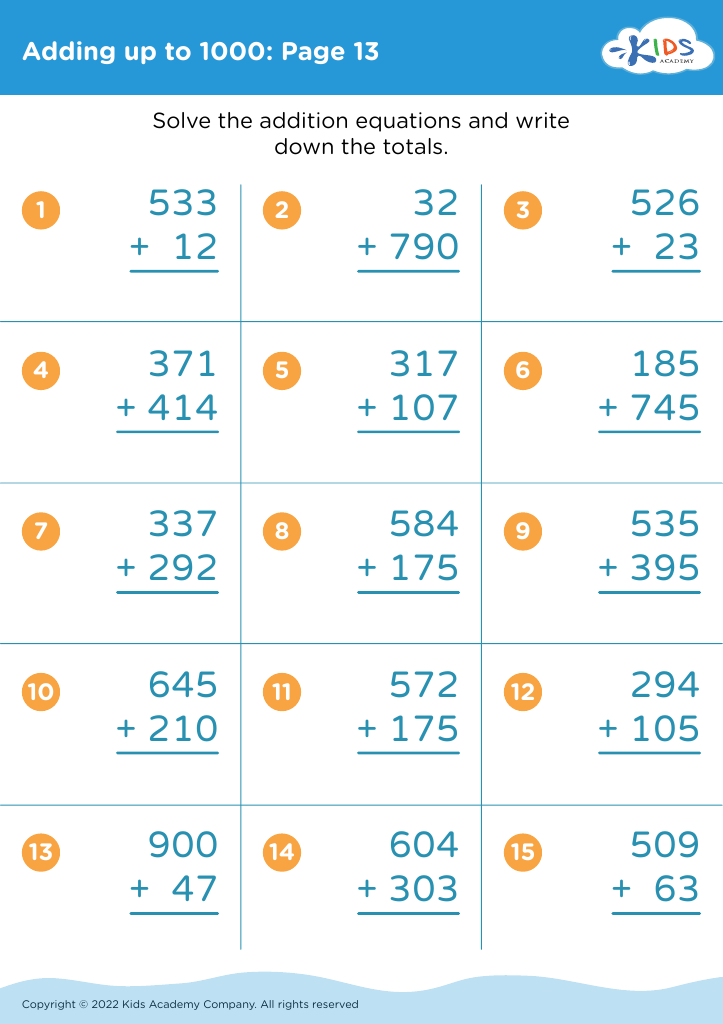
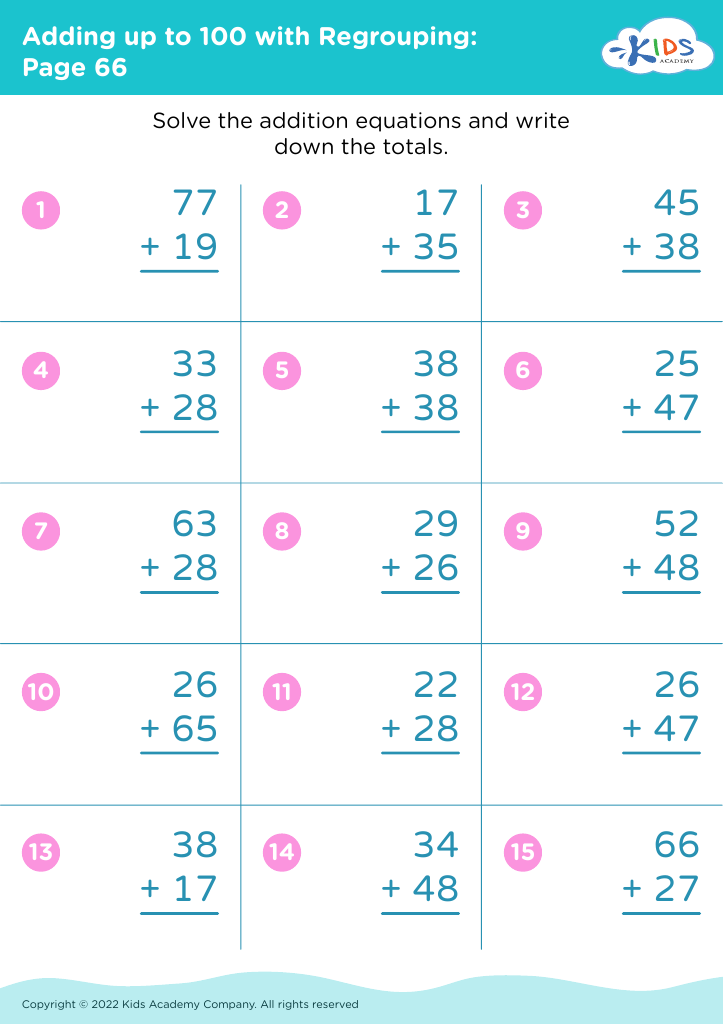
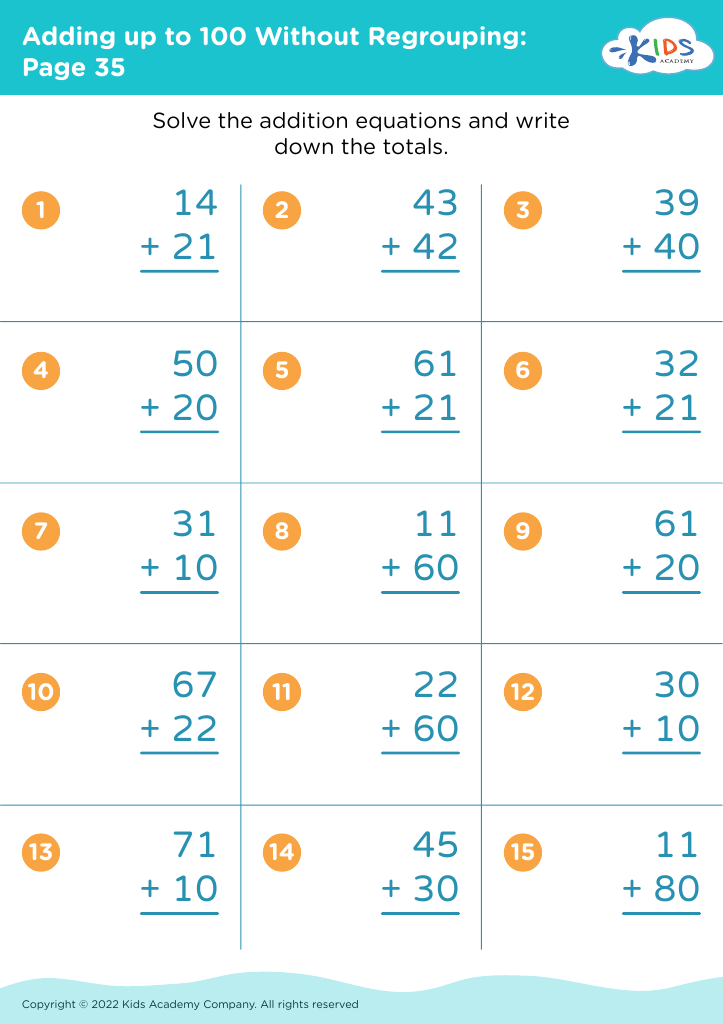








Enhancing critical thinking skills in children aged 5-7 is crucial for several reasons. First, these formative years are pivotal for cognitive development; children are naturally curious and eager to explore their environment. By fostering critical thinking, parents and teachers can nurture this curiosity into meaningful analysis and problem-solving skills.
Critical thinking encourages children to ask questions, evaluate information, and make thoughtful decisions, which are essential skills not only for academic success but for everyday living. At a young age, teaching children to examine situations critically helps them develop the ability to see different perspectives, an essential aspect of social interaction and emotional intelligence.
Moreover, as children engage in discussions and activities that promote critical thinking, they learn to articulate their thoughts and beliefs, boosting their confidence and communication skills. This intellectual engagement also prepares them for future learning experiences, making them more adaptable and resilient learners.
Ultimately, by prioritizing critical thinking, parents and teachers equip children to navigate the complexities of the world, cultivate a lifelong love for learning, and empower them to contribute thoughtfully to society. Thus, enhancing critical thinking skills is a foundational investment in a child’s education and personal growth.








