Fine motor development Addition Worksheets for Ages 5-7
4 filtered results
-
From - To
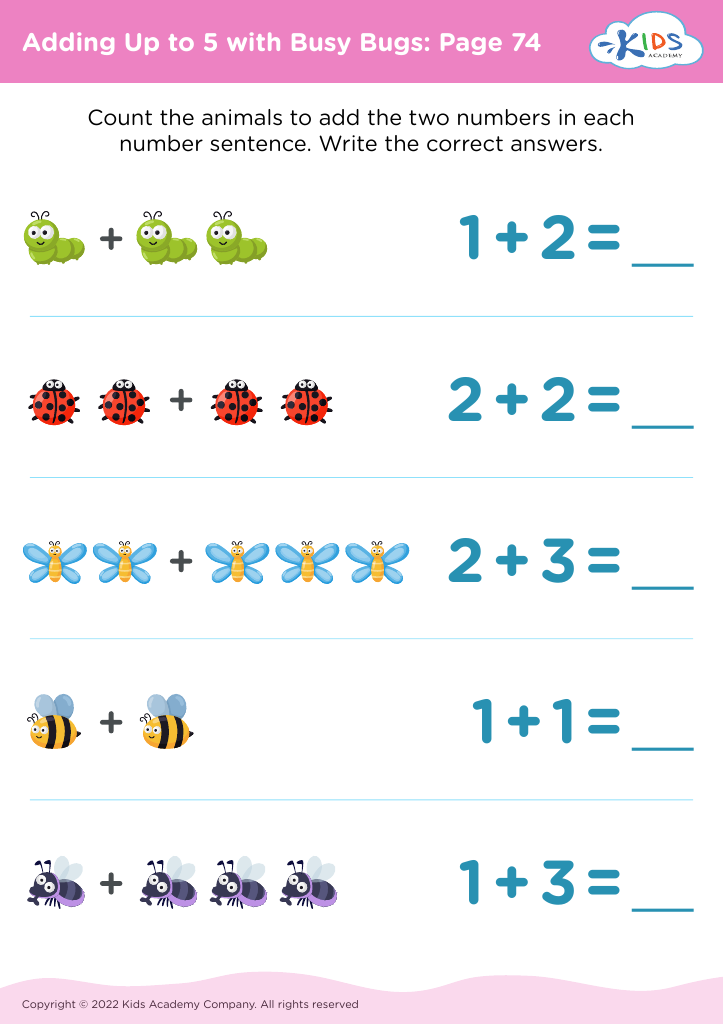
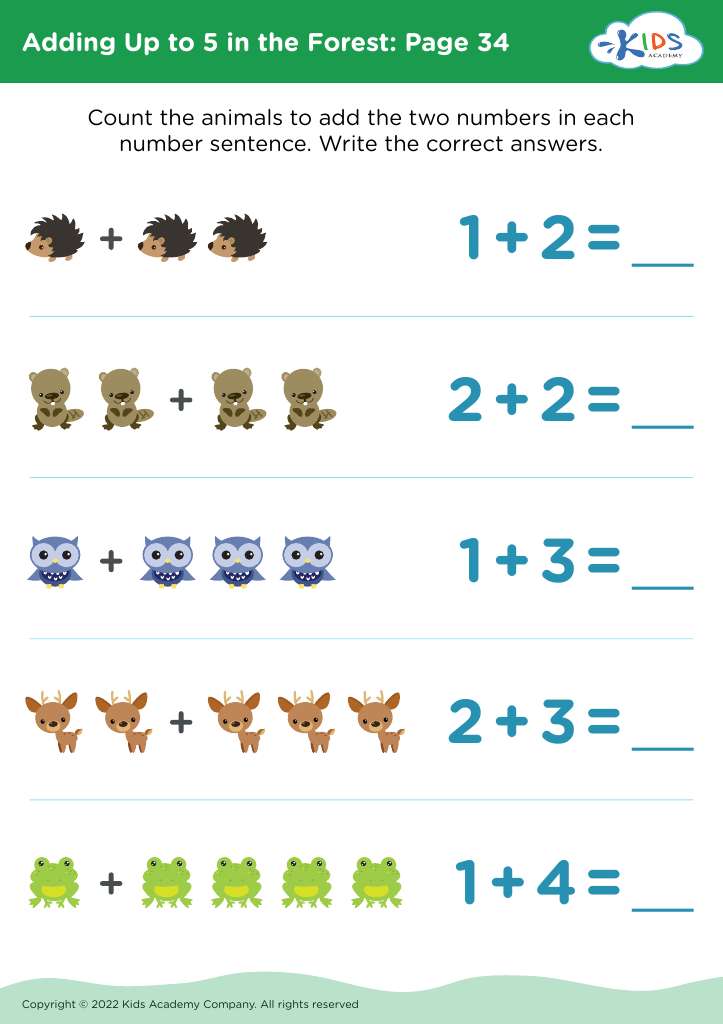
Unlock your child's potential with our Fine Motor Development Addition Worksheets designed specifically for ages 5-7. These engaging worksheets not only focus on addition skills but also promote fine motor development, essential for early learners. Each activity encourages children to grasp, trace, and manipulate various materials, enhancing their hand-eye coordination and dexterity. With fun themes and approachable problems, these worksheets make learning addition enjoyable while building the foundational skills needed for writing and drawing. Explore our collection to help your child practice essential math skills while developing their fine motor abilities, setting the stage for future academic success. Download now!
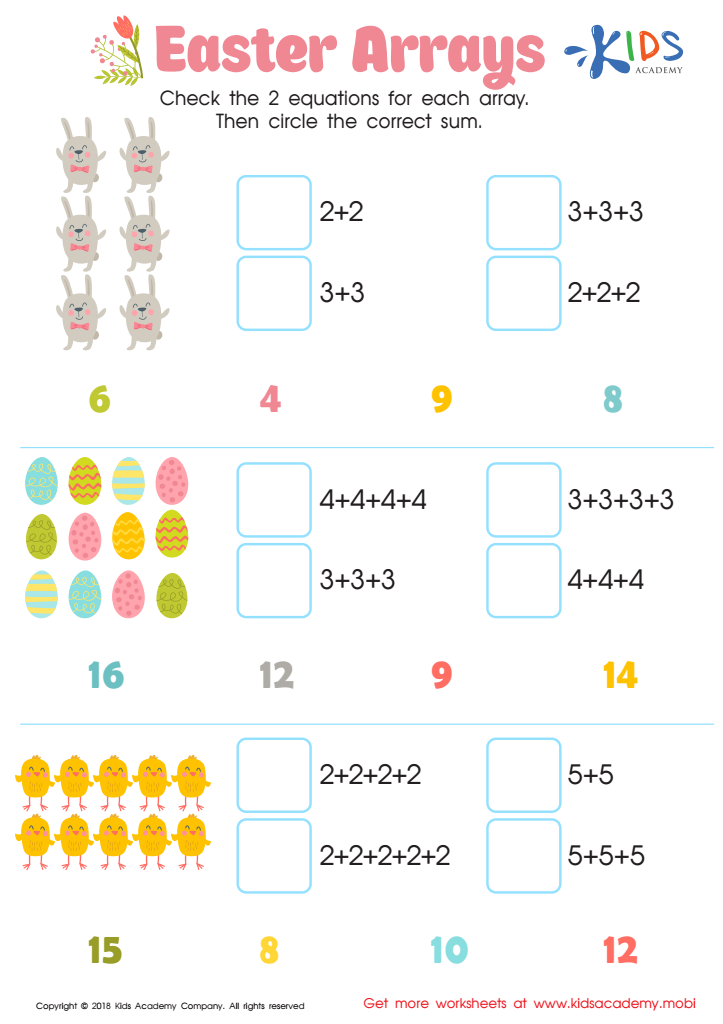
Easter Arrays Worksheet
 Assign to My Students
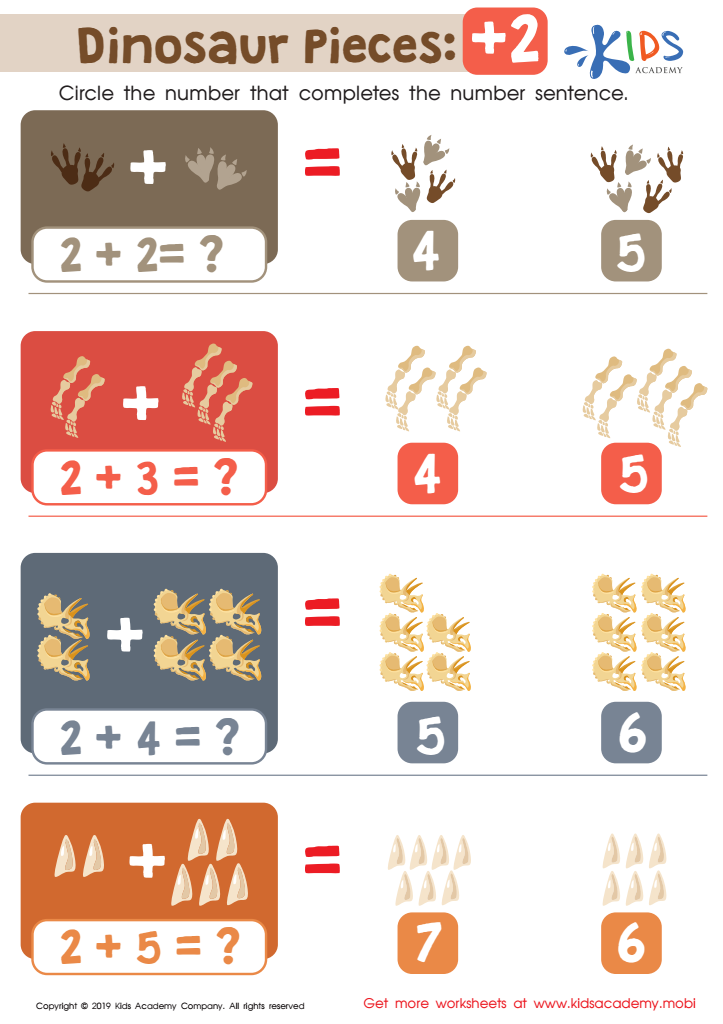
Dinosaur Pieces: +2 Worksheet








Fine motor development is crucial for children aged 5-7 as it lays the groundwork for essential skills in both academic and daily life settings. At this age, children are refining their hand-eye coordination and dexterity, which are key for tasks such as writing, cutting, and manipulating small objects. Parents and teachers should care about this aspect of development because it significantly influences a child’s ability to engage with the curriculum effectively. Strong fine motor skills enhance a child’s confidence and competence when performing classroom activities, from writing letters to creating art projects, thus supporting overall educational success.
Furthermore, fine motor skills are linked to cognitive development. As children learn to use their hands skillfully, they are also developing problem-solving abilities and creativity. Parents and teachers can encourage fine motor growth through enjoyable activities like arts and crafts, building with blocks, or playing with manipulatives, ensuring that children not only practice but also enjoy the process. Investing time and resources in fine motor activities promotes lifelong skills, enhancing independence and self-sufficiency. Therefore, a focused approach to fine motor development is essential for fostering balanced, capable individuals who are well-prepared for future challenges.








