Fraction Addition Addition Worksheets for Ages 5-7
14 filtered results
-
From - To
Enhance your child's math skills with our engaging Fraction Addition Worksheets designed for ages 5-7! Perfectly tailored for early learners, these printable resources simplify the concept of fractions and make addition fun. Whether students are adding like or unlike fractions, our worksheets feature colorful illustrations and age-appropriate exercises that encourage hands-on learning. With step-by-step guidance and a variety of challenges, children can build confidence and develop essential problem-solving skills. Explore our extensive collection to find the perfect worksheets that fit your child's learning needs. Start adding fractions today and watch their math skills flourish!
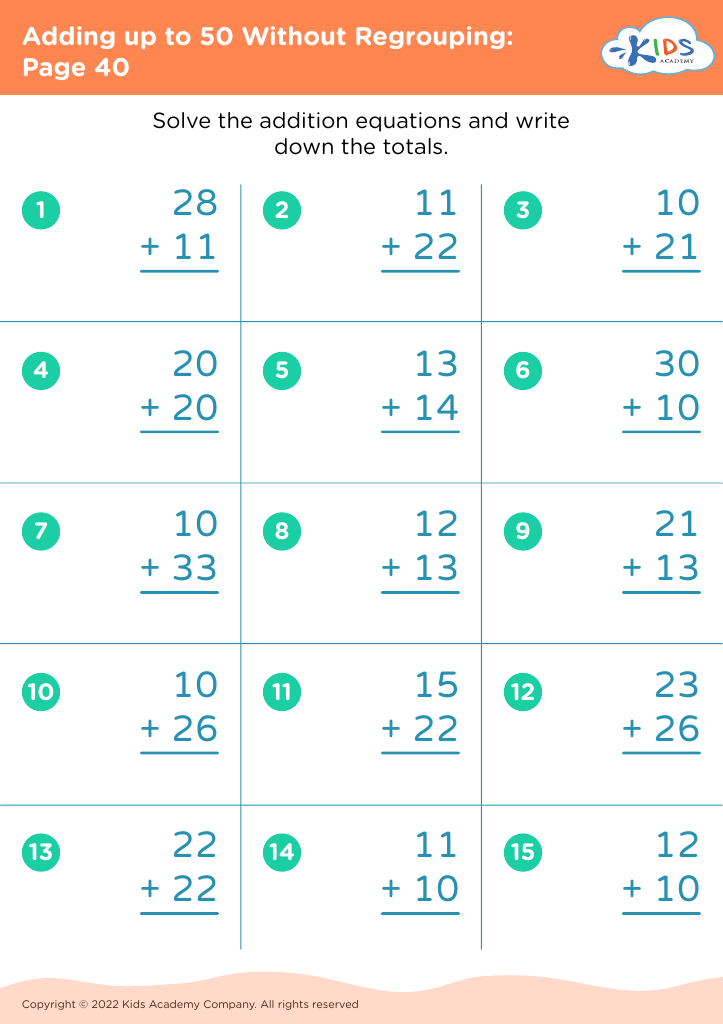
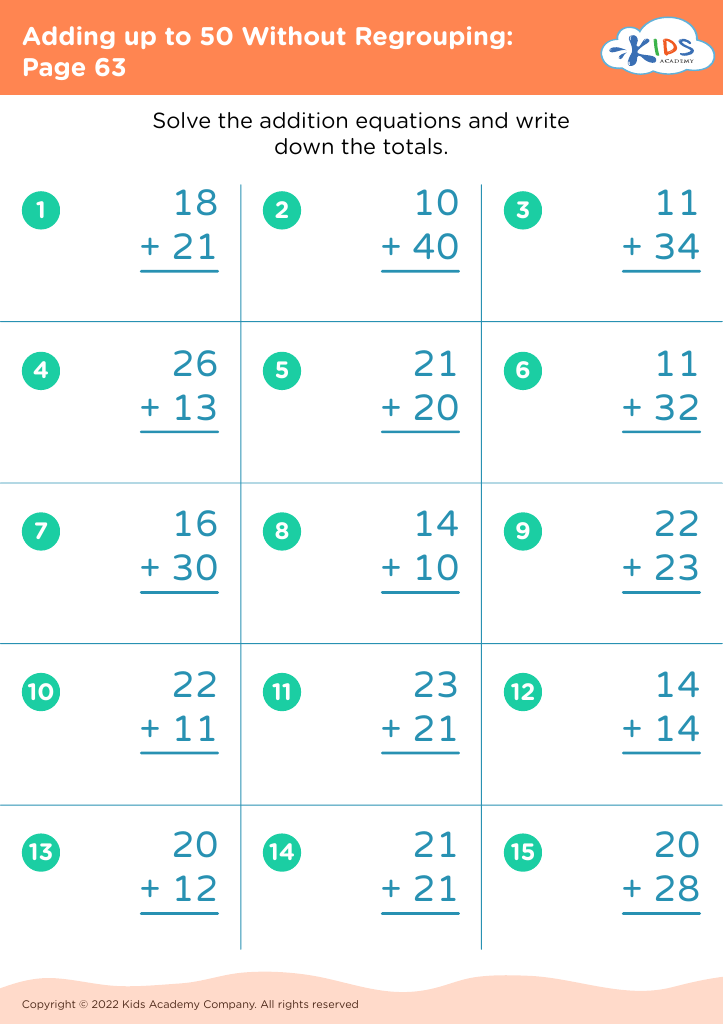
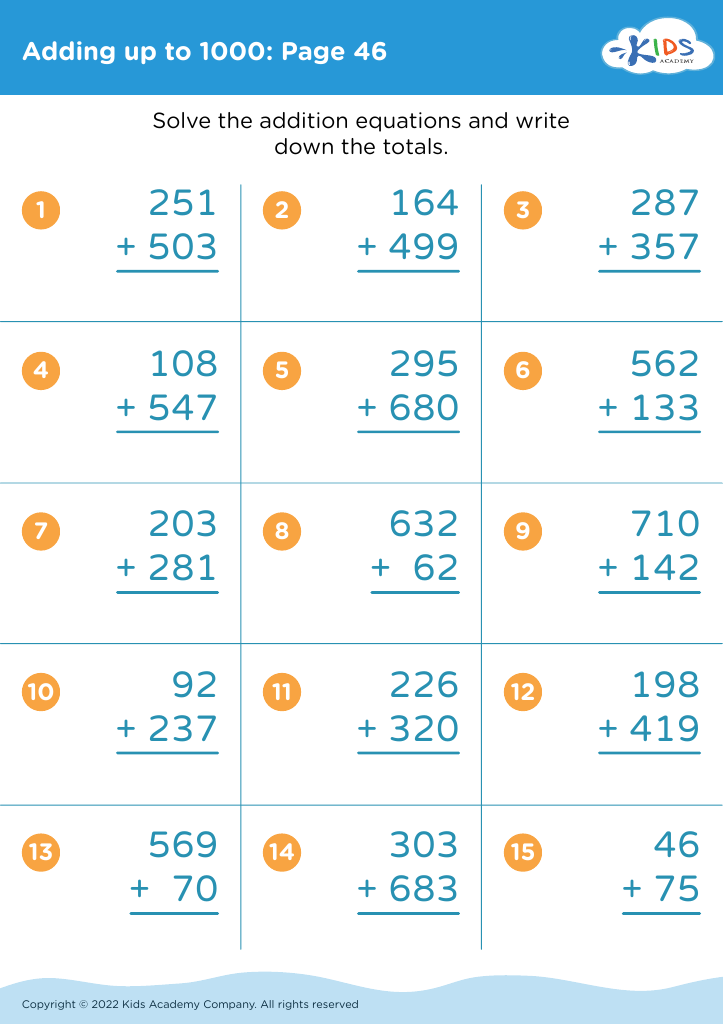
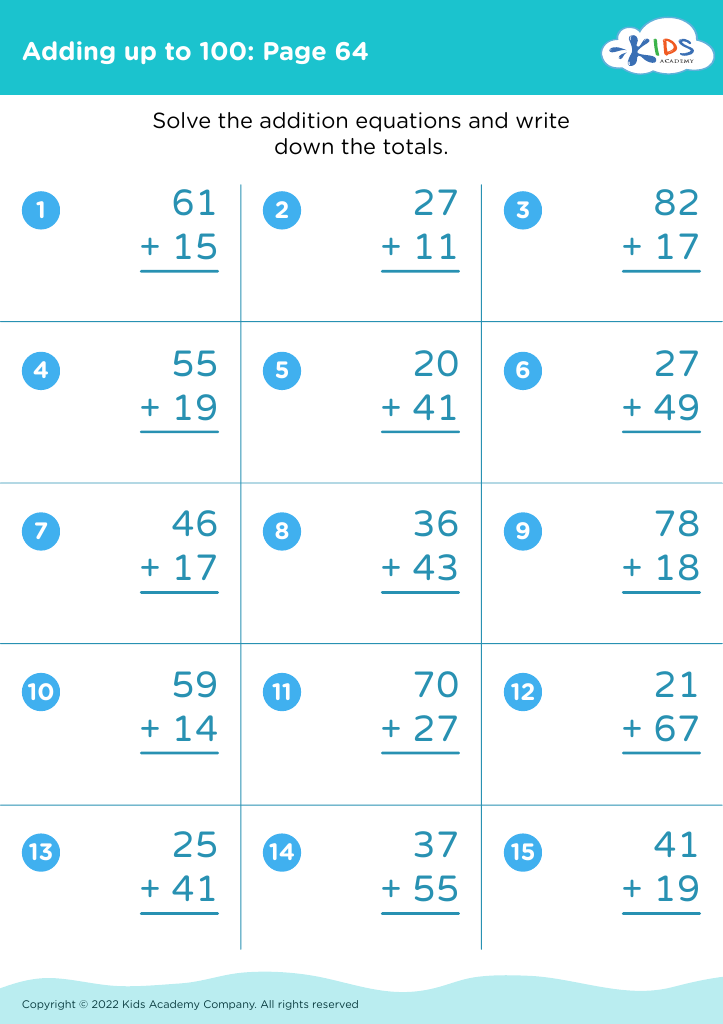
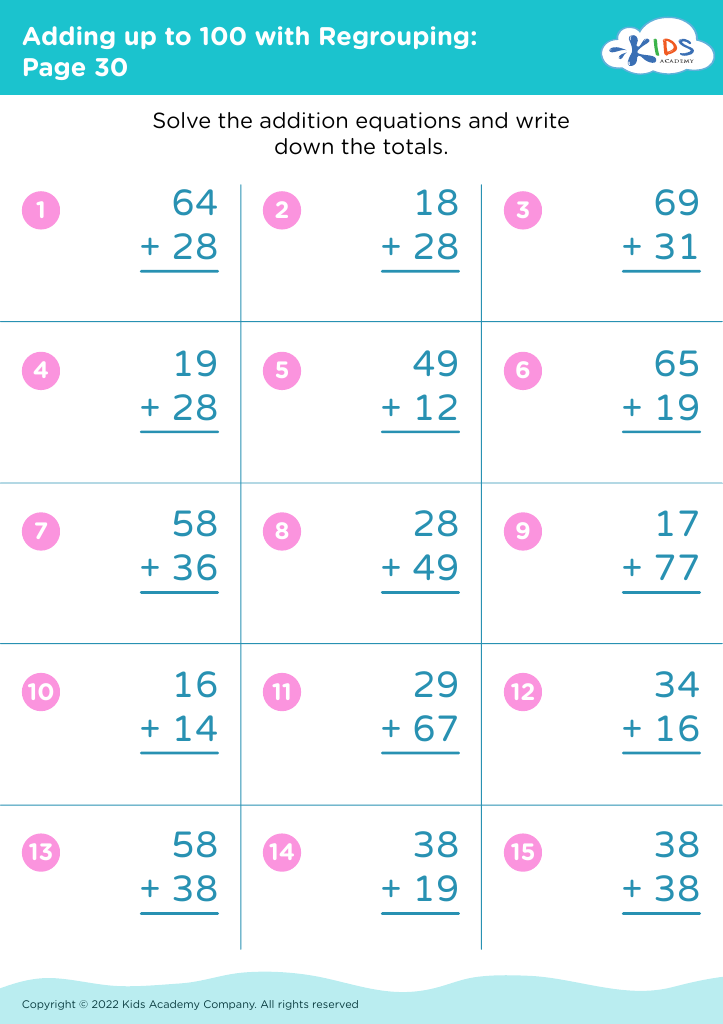
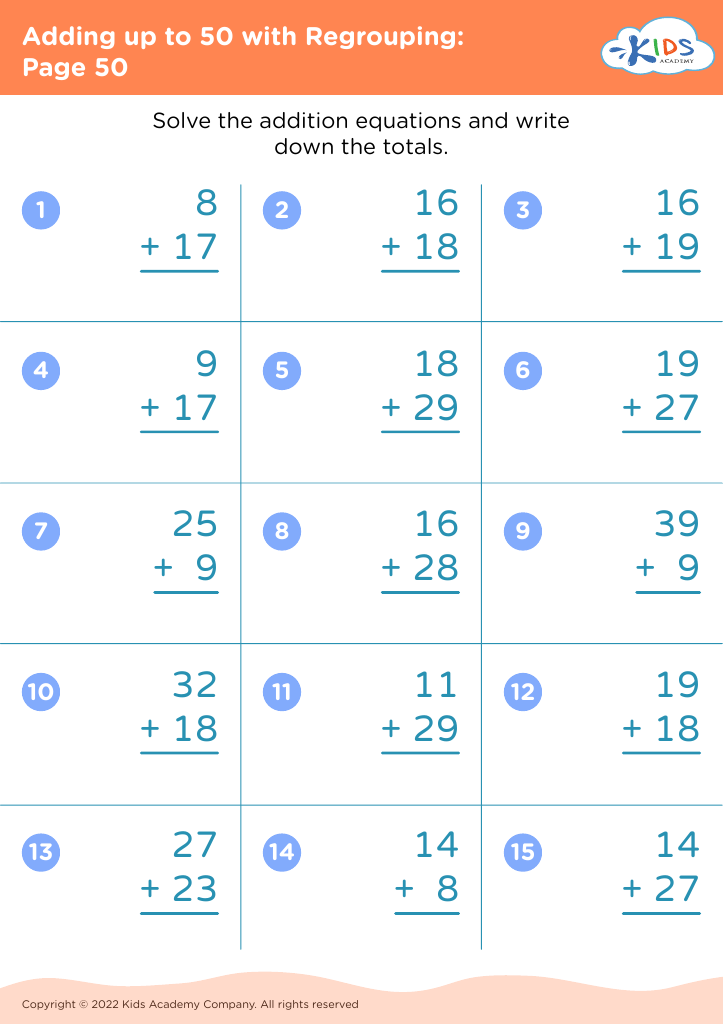
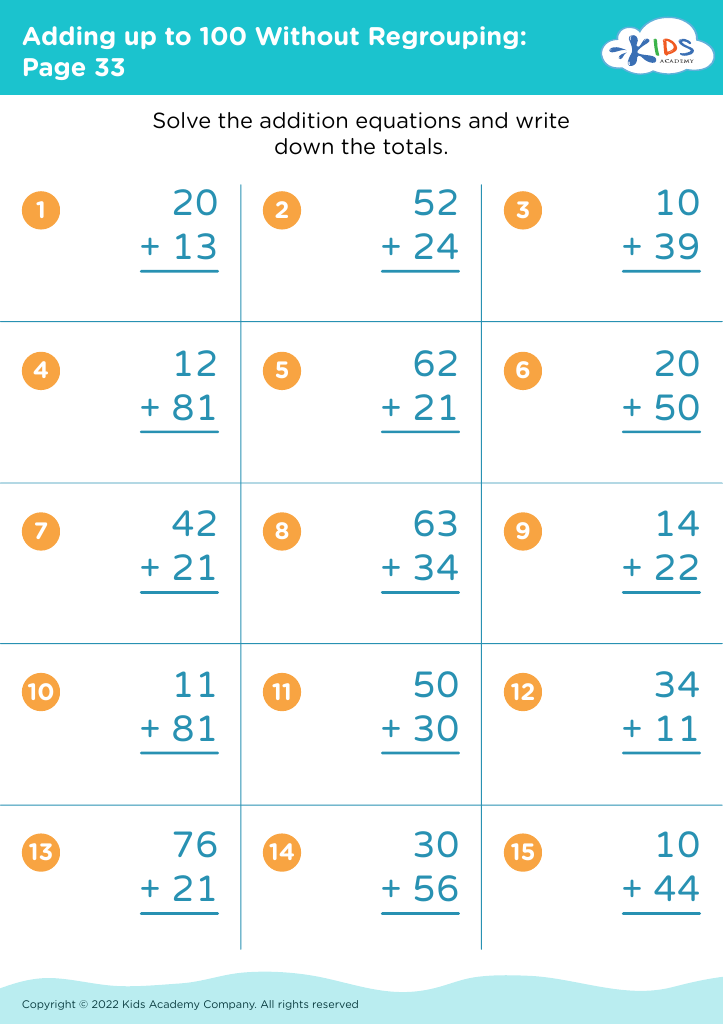
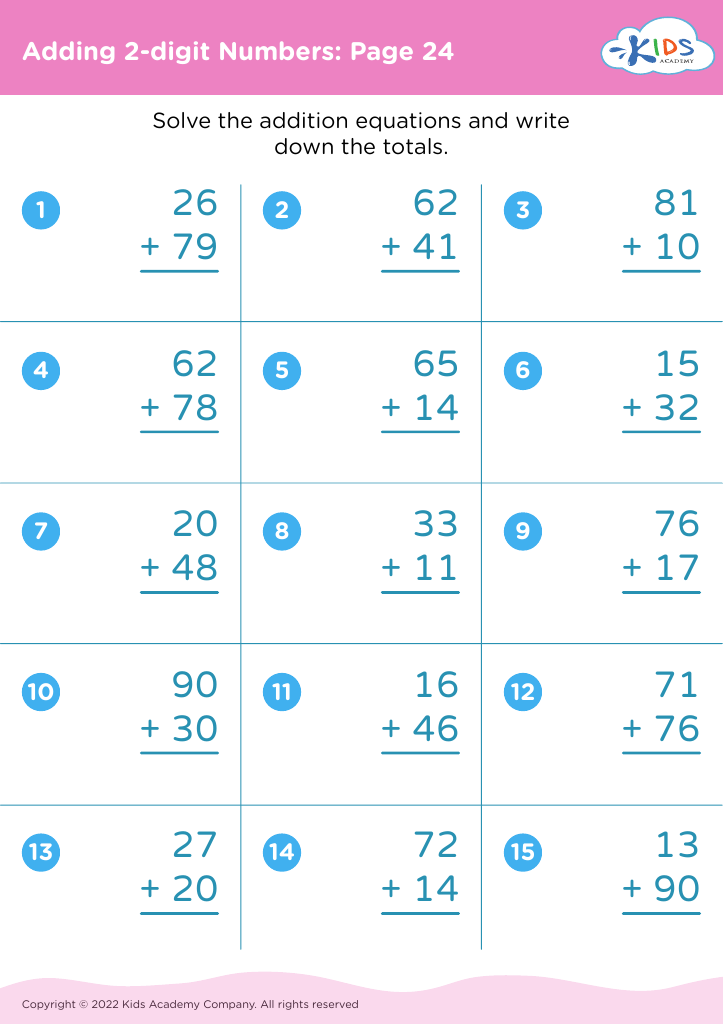
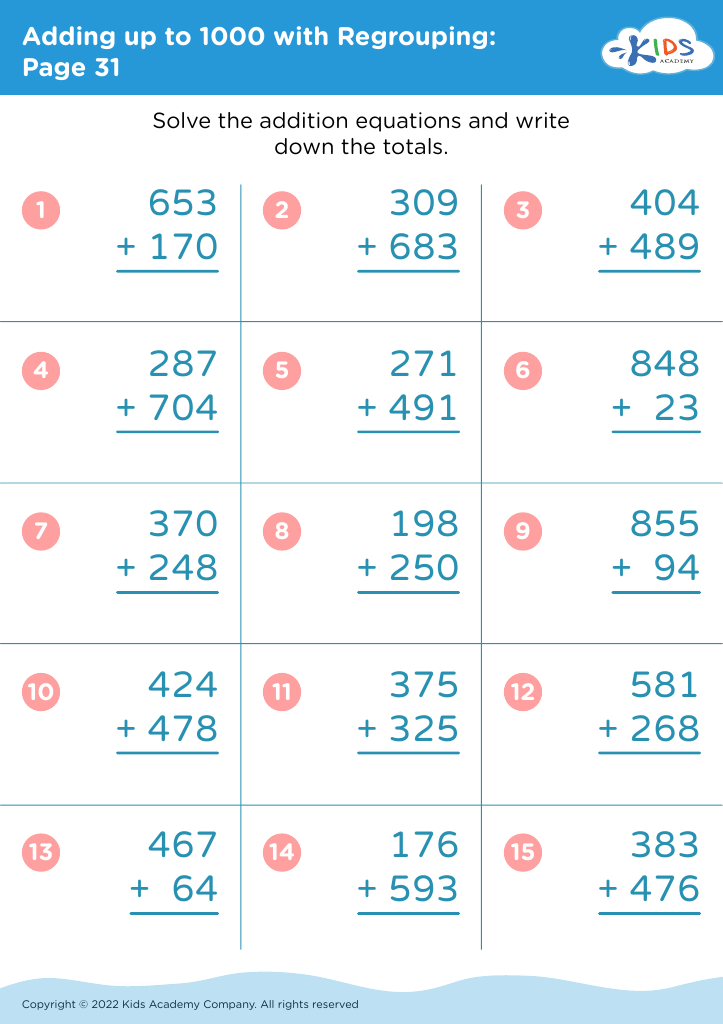
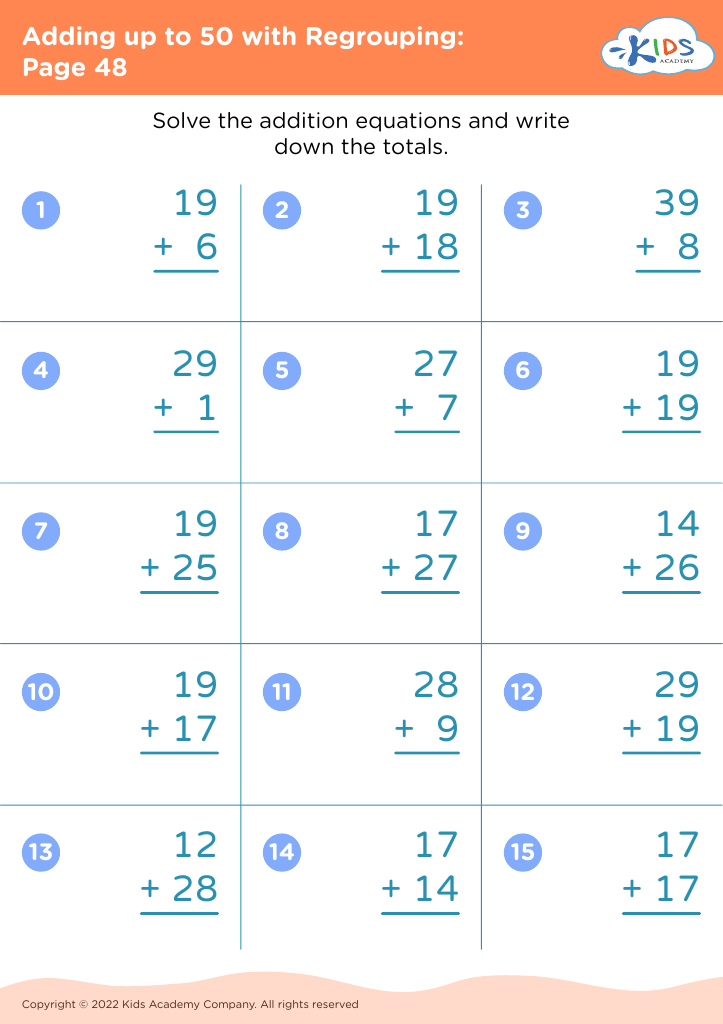
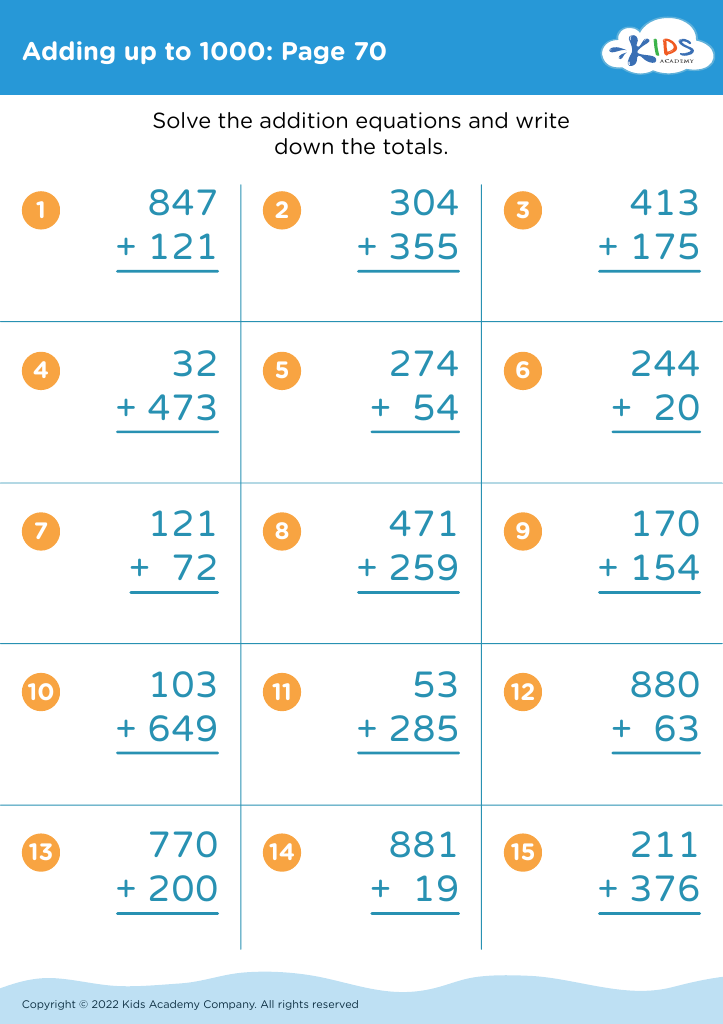
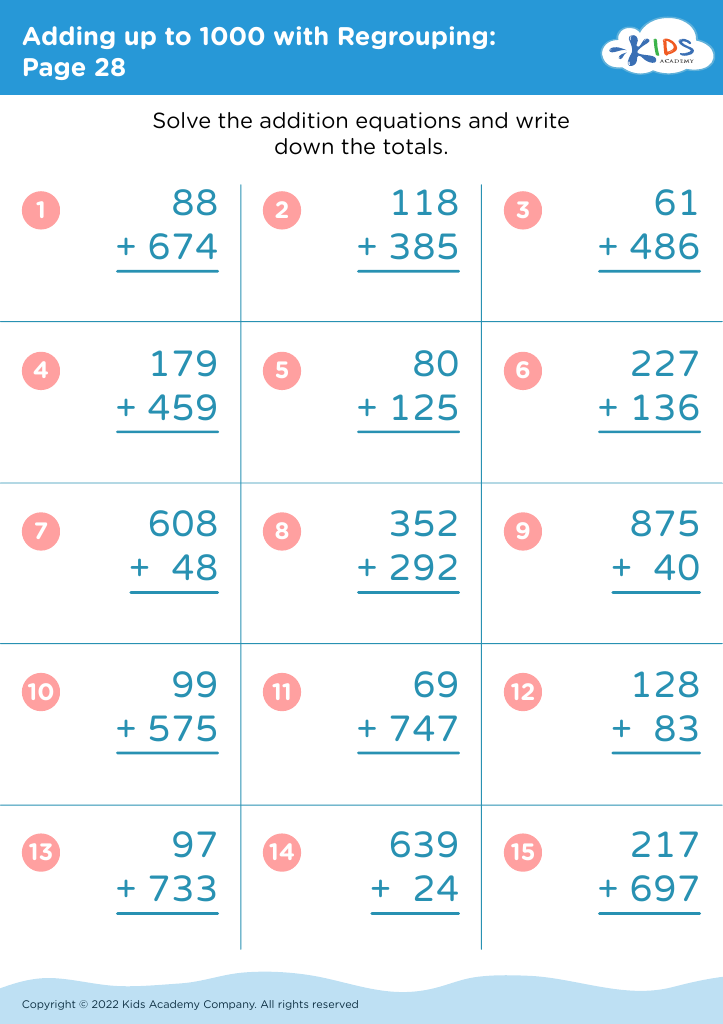
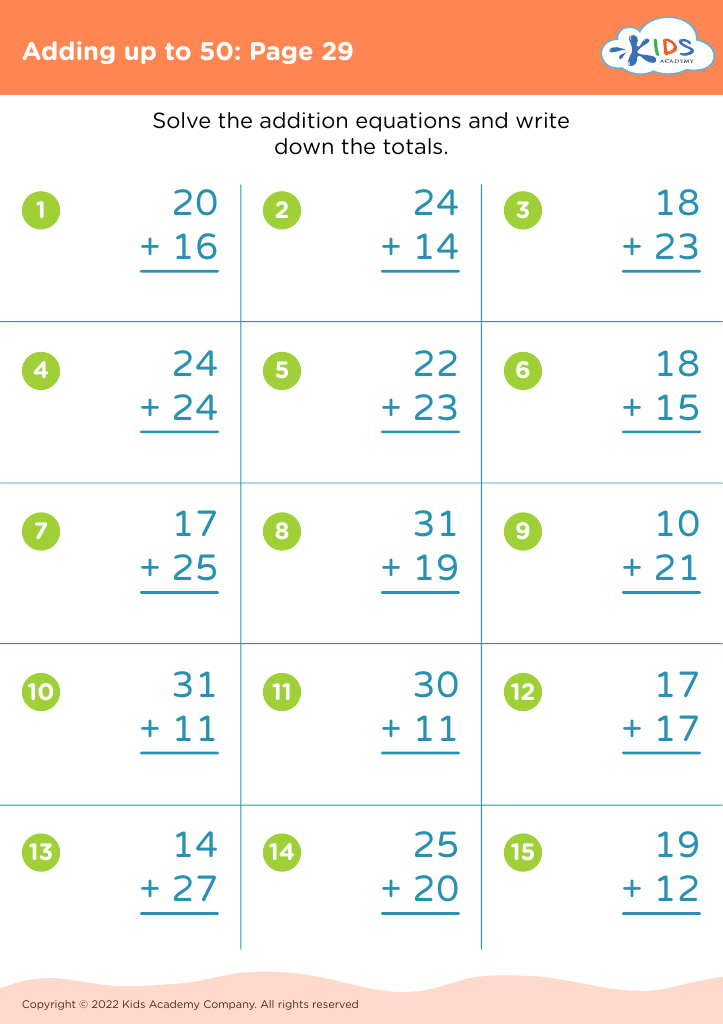
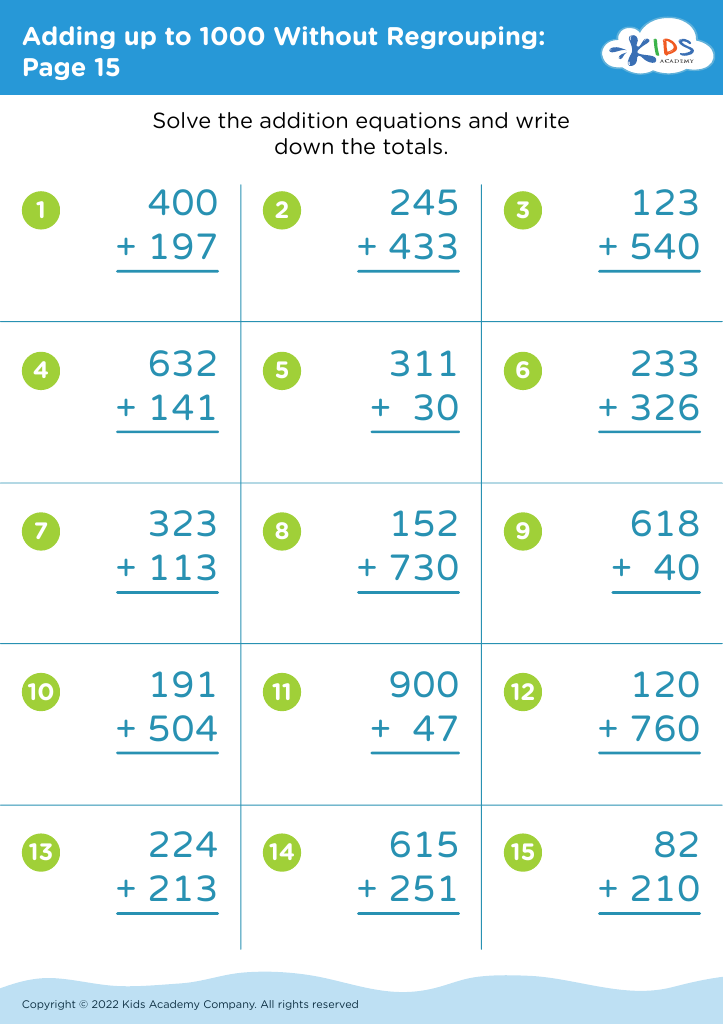







Parents and teachers should care about teaching fraction addition to children aged 5-7 because it's foundational to their mathematical development. At this early stage, children begin to form their understanding of numbers and relationships, which sets the groundwork for more complex concepts later on. Introduce simple fraction addition using visual aids—like pie charts or fraction strips—to illustrate how parts make a whole. This hands-on approach helps children grasp abstract ideas.
Additionally, understanding fractions is essential for everyday life skills, such as cooking, measuring, and sharing, and it feeds into broader math skills they'll encounter in later grades, including algebra and geometry. Providing children with a solid foundation in fraction addition boosts their confidence in math, encouraging a positive attitude toward the subject.
Moreover, many assessments later in school will build upon these basic principles. By engaging in enjoyable and relatable fraction activities, parents and teachers can foster a love for learning and skills that resonate beyond the classroom. Most importantly, learning fractions promotes critical thinking and problem-solving abilities, helping children apply logical reasoning in various contexts throughout their lives. Therefore, incorporating fraction addition into early education is vital for children's academic progress and overall confidence in math.








