Improve fine motor skills Addition Worksheets for Ages 5-7
3 filtered results
-
From - To
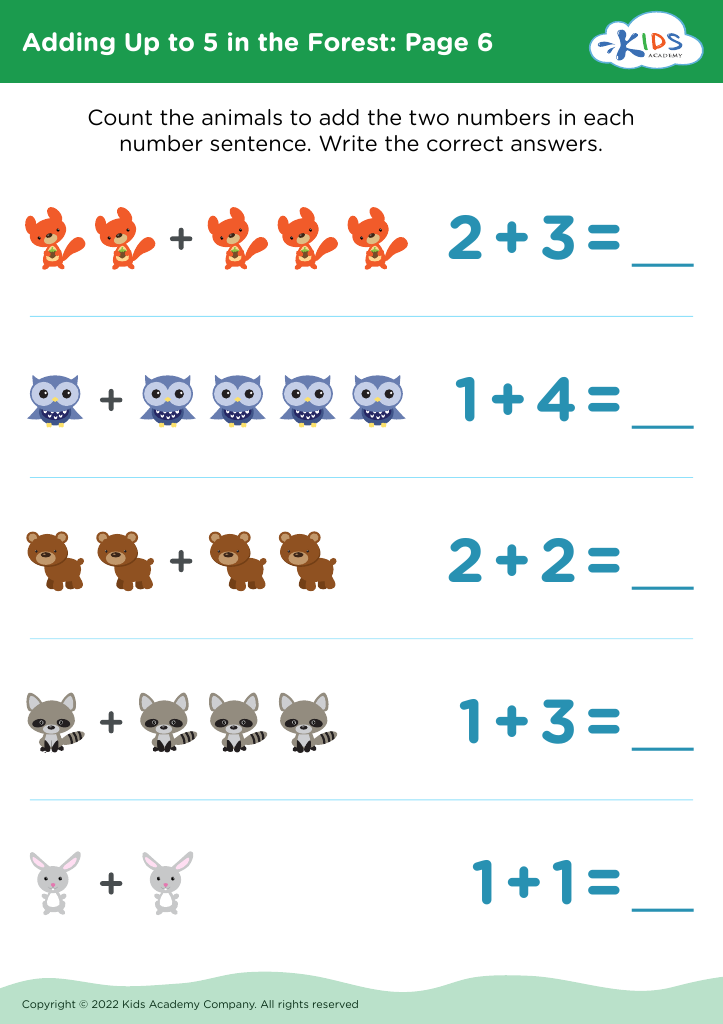
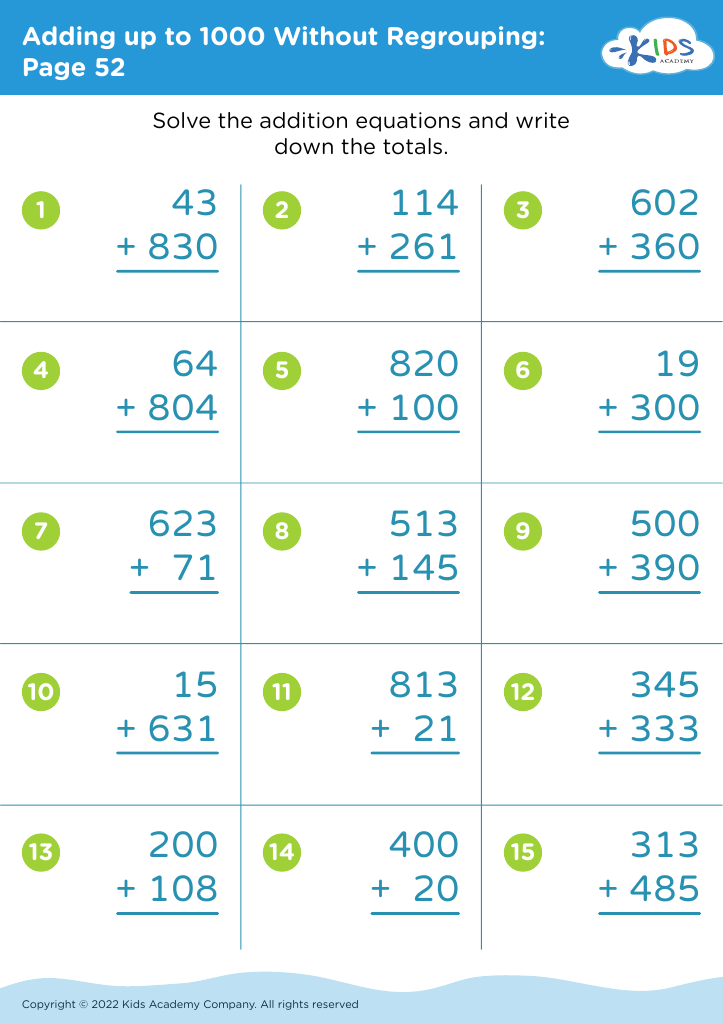
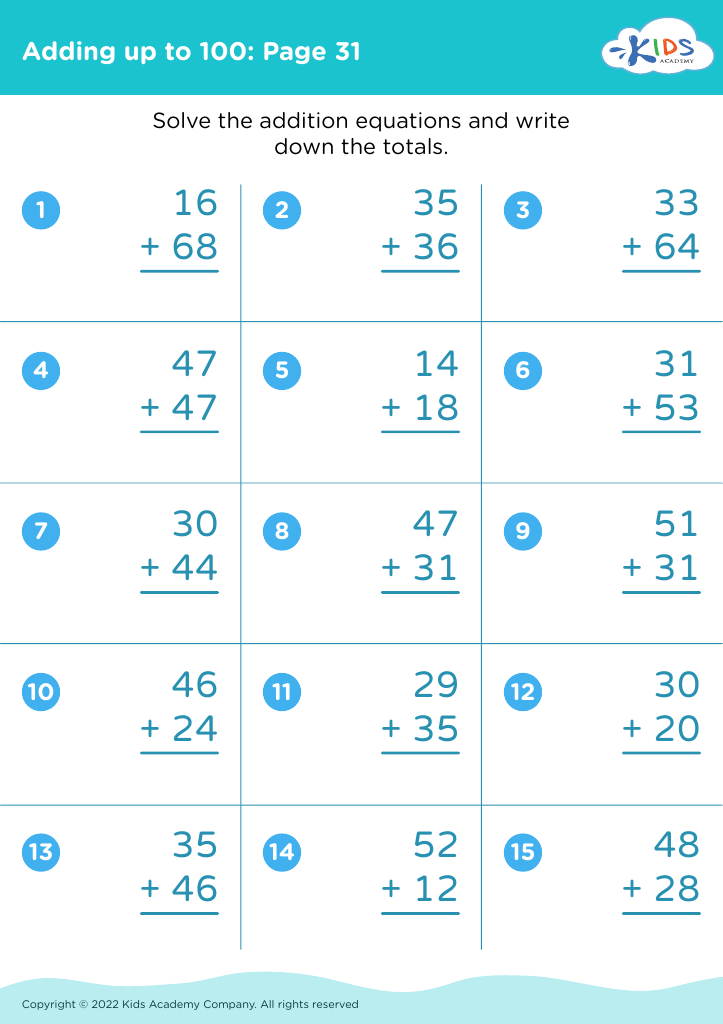
Enhance your child's fine motor skills with our engaging Addition Worksheets designed specifically for ages 5-7. These worksheets not only focus on basic addition but also integrate essential motor skill activities, such as tracing and gripping, to promote hand-eye coordination. Each worksheet is crafted to be both fun and educational, encouraging children to practice math while improving their dexterity. As they complete colorful exercises, they’ll gain confidence in their numeric abilities and develop the physical skills necessary for writing, crafting, and daily tasks. Perfect for home or classroom use, our worksheets lay the foundation for holistic learning and development.








Improving fine motor skills in children aged 5-7 is essential for their overall development and lays the foundation for lifelong learning. Fine motor skills involve the coordination of small muscles in the hands and fingers, crucial for tasks such as writing, cutting, and buttoning clothes. Parents and teachers should care about enhancing these skills because they directly influence a child's academic performance, self-esteem, and independence.
At this age, children are beginning to engage in more complex tasks that require precision. If they struggle with fine motor activities, they may face challenges in school, particularly in subjects like writing, art, and even math where accurate hand movements are necessary.
Additionally, strong fine motor skills contribute to a child’s ability to perform everyday tasks, fostering independence and boosting confidence. Engaging in activities like drawing, threading beads, or using scissors can strengthen these skills in a fun and interactive manner.
Moreover, early intervention can help identify any potential developmental delays, allowing parents and teachers to provide appropriate support. Ultimately, emphasizing the importance of fine motor skill development is crucial for preparing children for academic success and daily life as they grow.








