Improves counting skills Addition Worksheets for Ages 5-7
6 filtered results
-
From - To
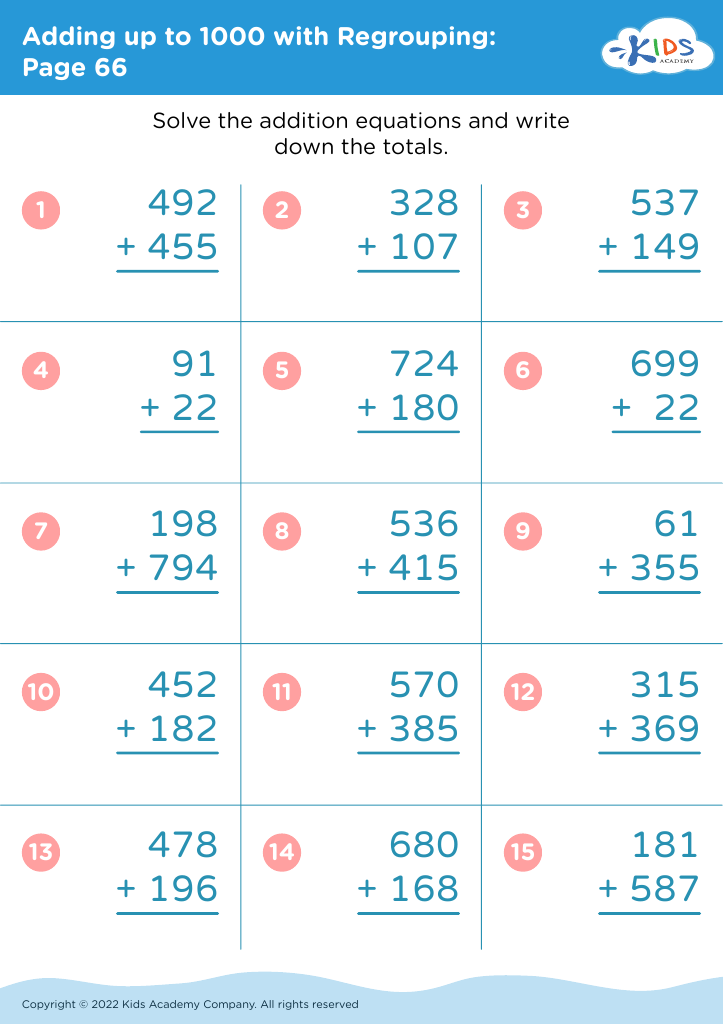
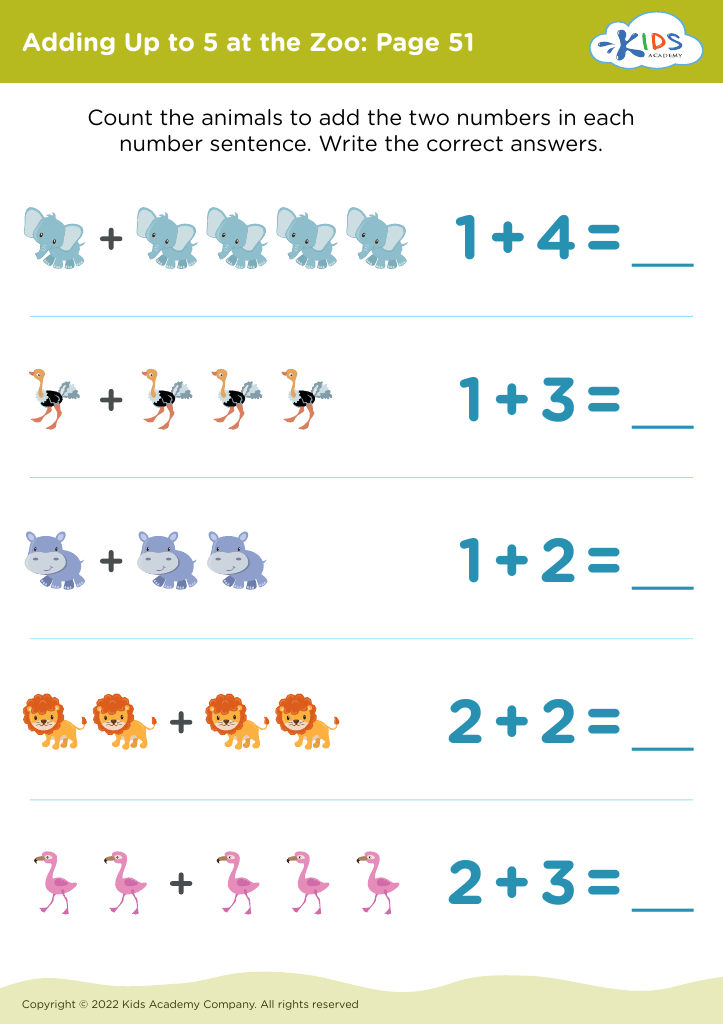
Boost your child's counting skills with our engaging Addition Worksheets designed specifically for ages 5-7. These activities not only promote essential math concepts but also enhance early numeracy by helping children recognize patterns and develop a strong foundation in addition. Our worksheets are colorful and interactive, making learning enjoyable while keeping your young learners motivated. Tailored to meet developmental needs, these resources encourage repeated practice and foster confidence in math. Empower your child to excel in their counting abilities as they navigate through fun exercises that lay the groundwork for more advanced math skills. Start their learning journey today!


.jpg)





Improving counting skills and addition in children aged 5-7 is crucial for their overall mathematical development and foundational learning. During these formative years, children are particularly receptive to new concepts, making it the ideal time to introduce them to basic numerical skills. Mastery of counting forms the groundwork for more complex mathematics, enabling kids to grasp higher-level concepts in the future.
For parents, fostering counting skills at home can significantly boost a child’s confidence and enthusiasm for math. Engaging in daily activities, like counting objects or involving them in simple addition tasks, can make learning fun and interactive.
For teachers, focusing on these skills in the classroom lays the foundation for collaborative and experiential learning. Implementing hands-on activities, games, and interactive lessons can enhance engagement and retention. It’s essential to cater to various learning styles, ensuring that all students, regardless of their initial proficiency, can progress in their mathematical journey.
Ultimately, a solid understanding of counting and addition at an early age not only equips children with essential life skills but also fosters a positive attitude towards math, paving the way for success in future academic pursuits. Therefore, parents and teachers should prioritize these essential skills in their young learners.








