Math problem-solving Addition Worksheets for Ages 5-7
11 filtered results
-
From - To
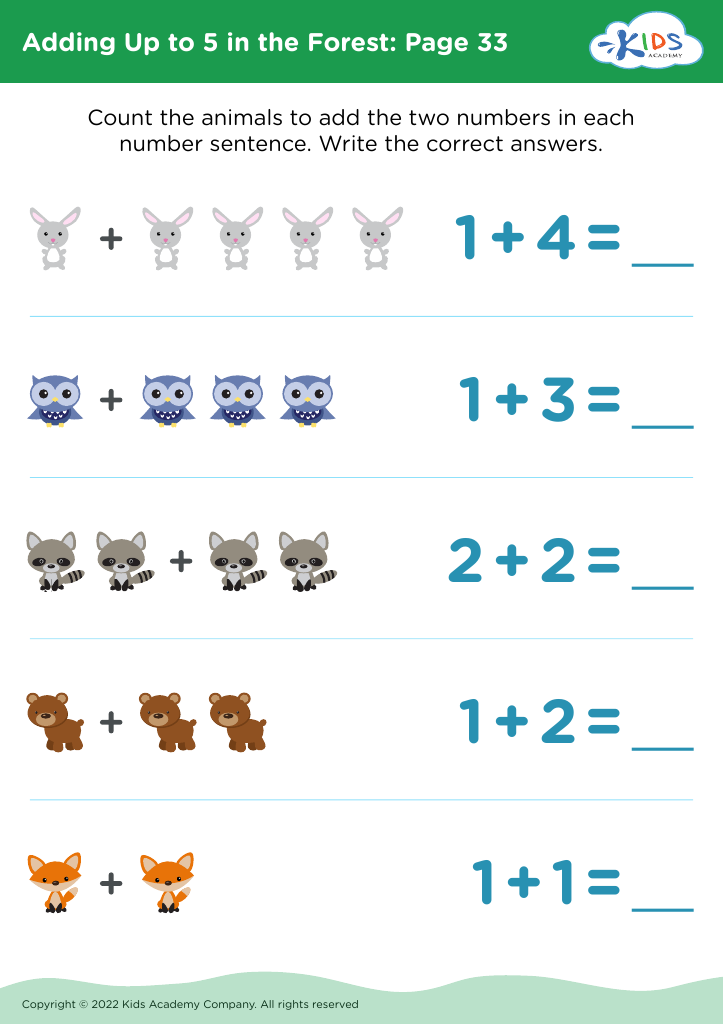
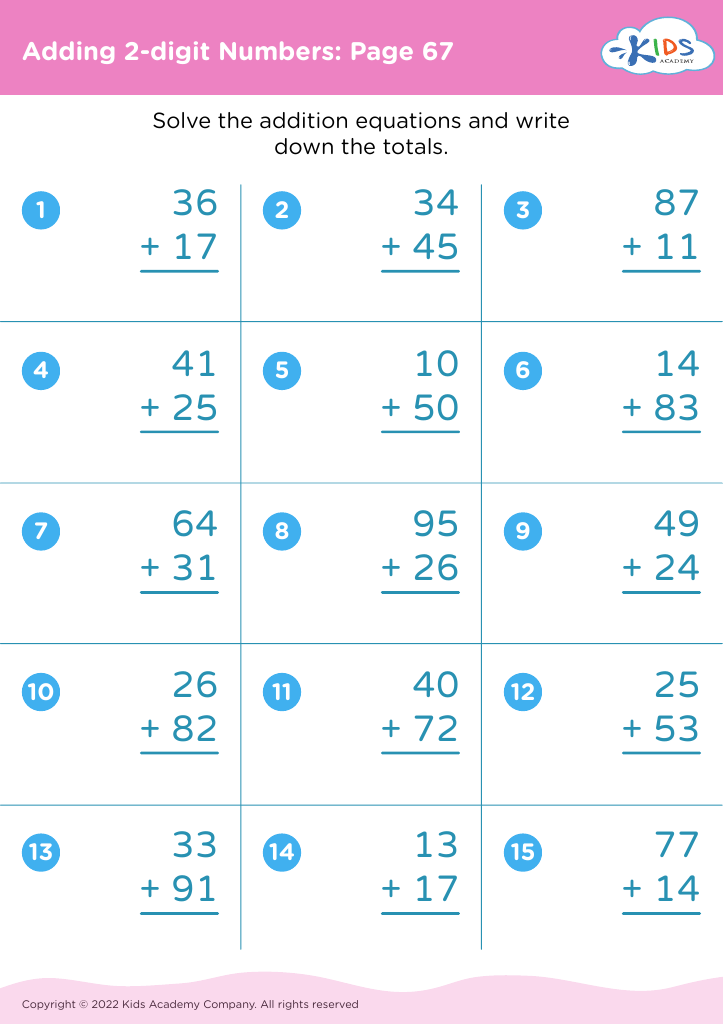
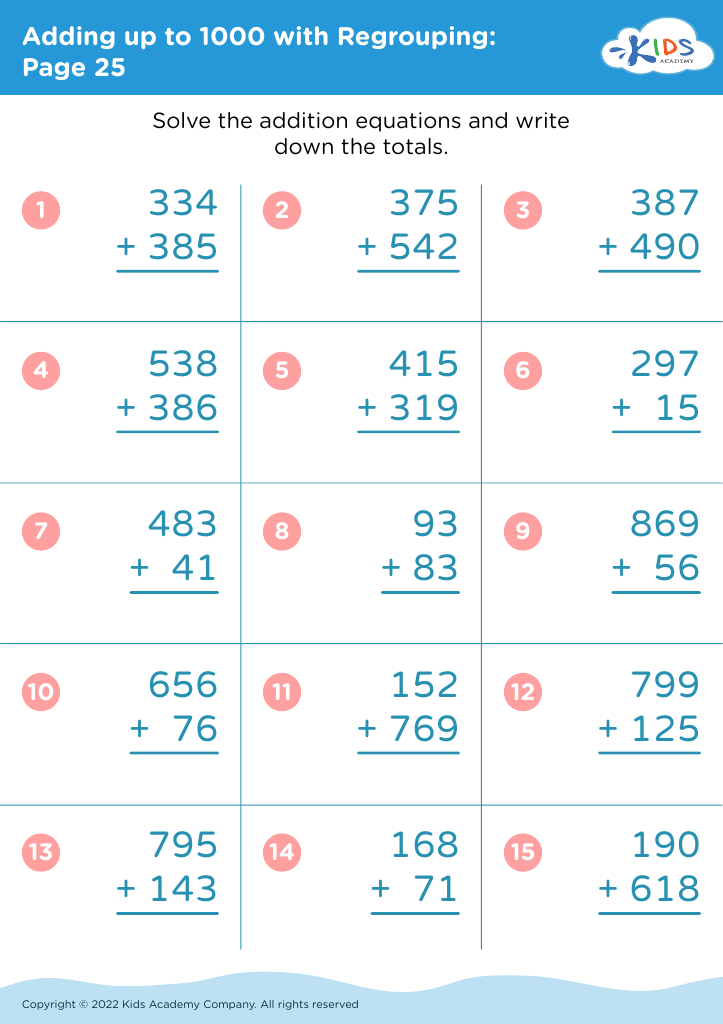
Boost your child's math skills with our engaging Addition Problem-Solving Worksheets, designed for ages 5-7! These printable worksheets from Kids Academy offer fun and interactive exercises that help young learners master basic addition. Each worksheet features varied and age-appropriate problems to enhance critical thinking and foster a love for math. Whether your child is just starting to learn or needs extra practice, these worksheets are the perfect resource to support their educational journey. Make math time enjoyable and effective with our expertly crafted Addition Worksheets. Visit Kids Academy to download your free printables today!
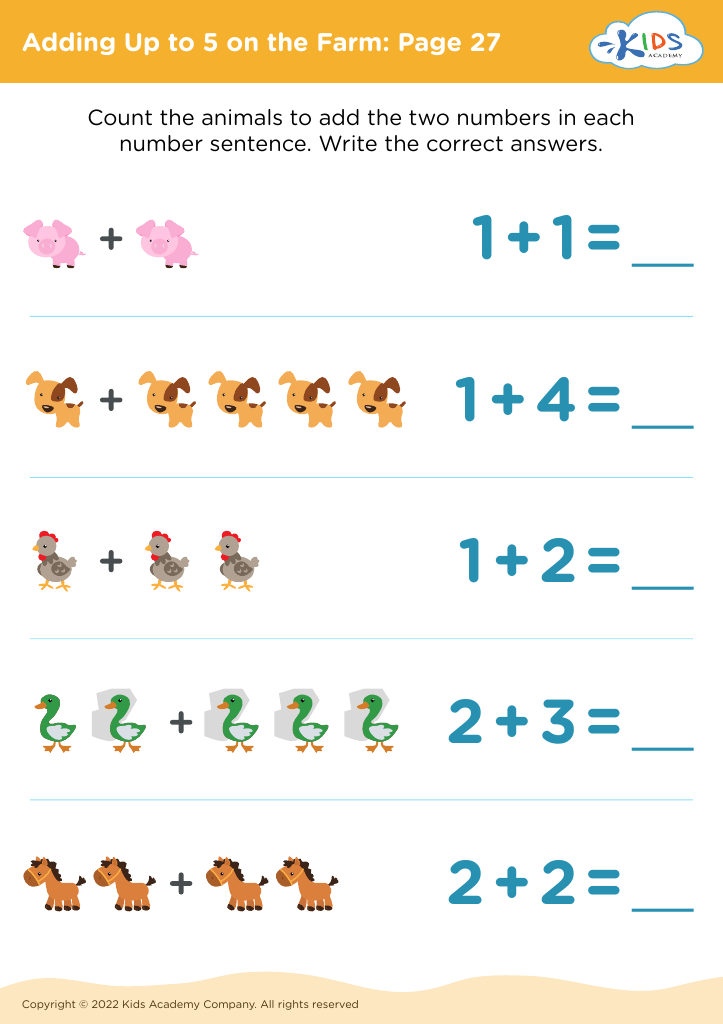
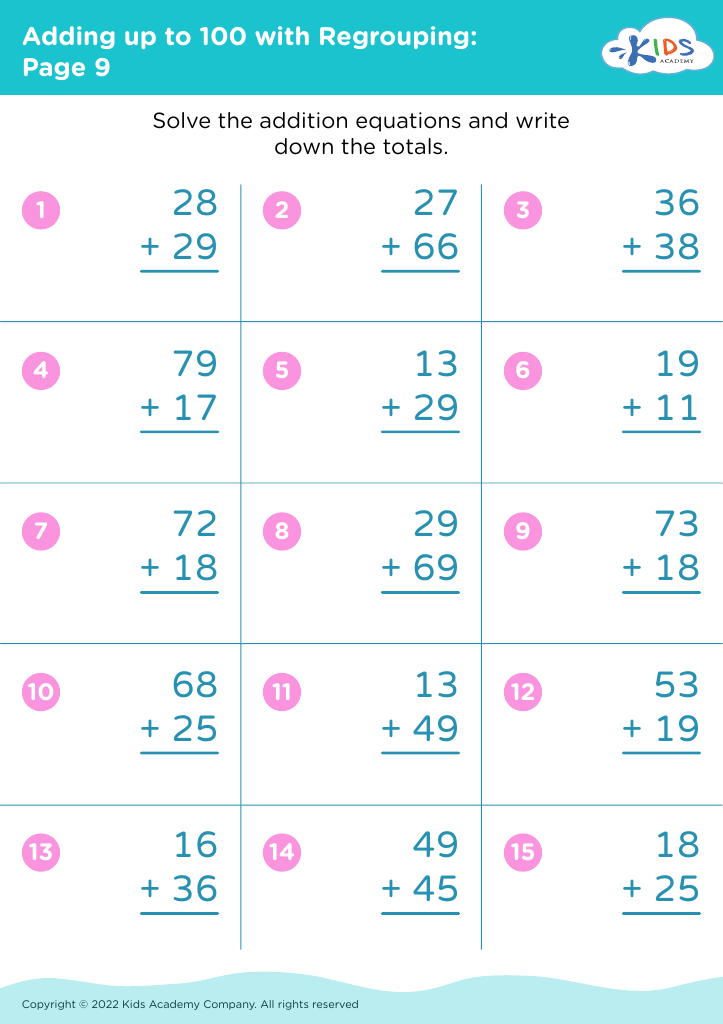
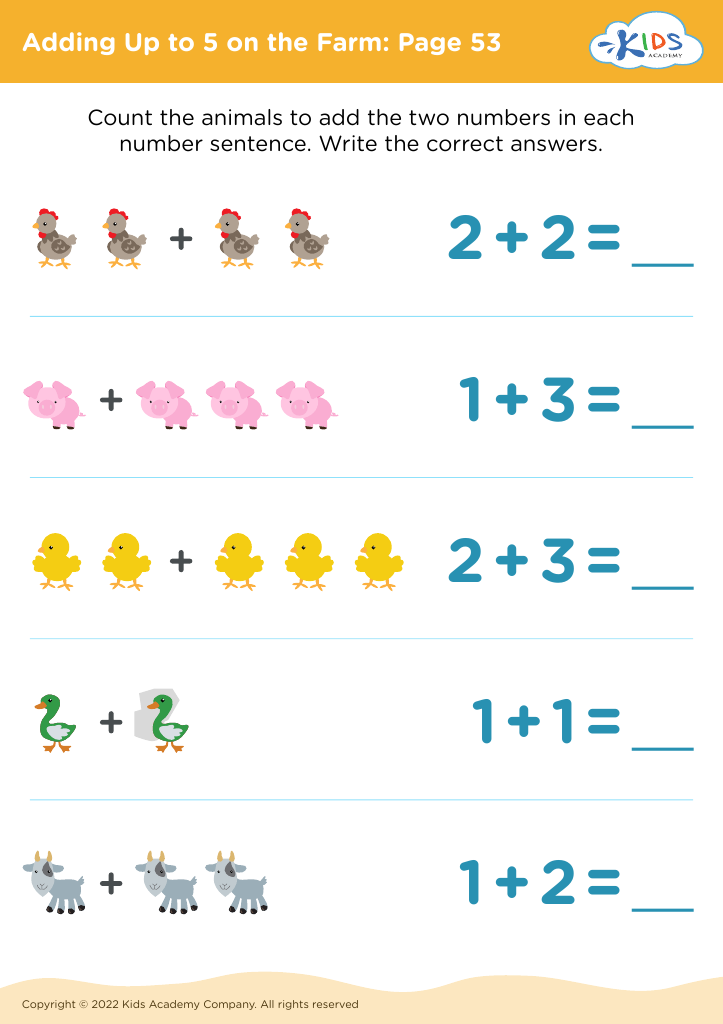
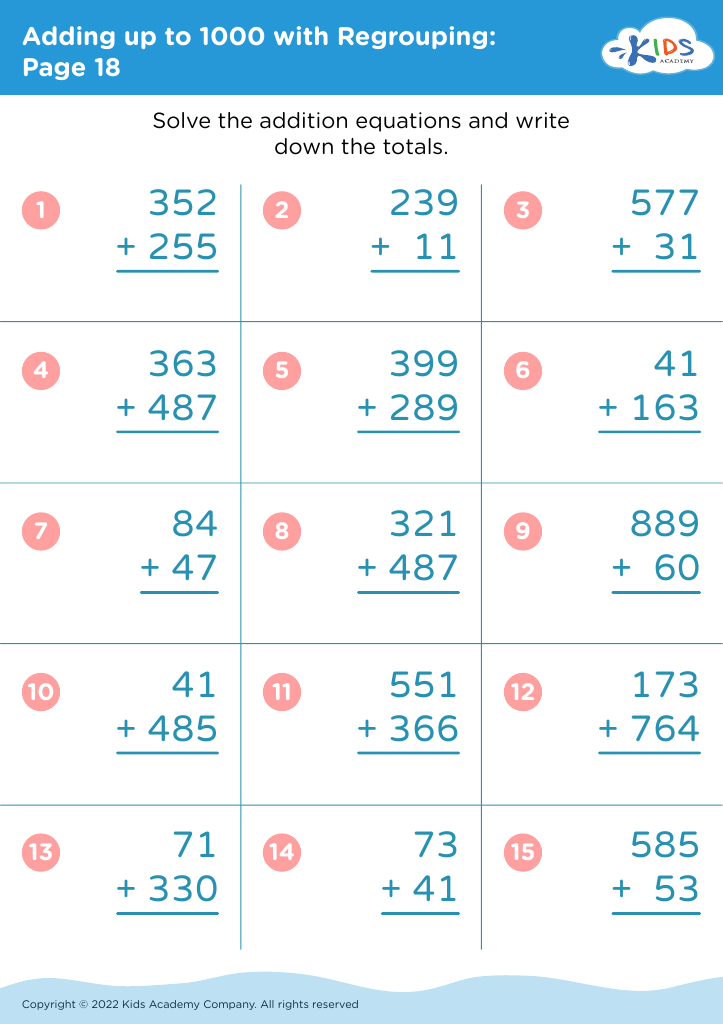
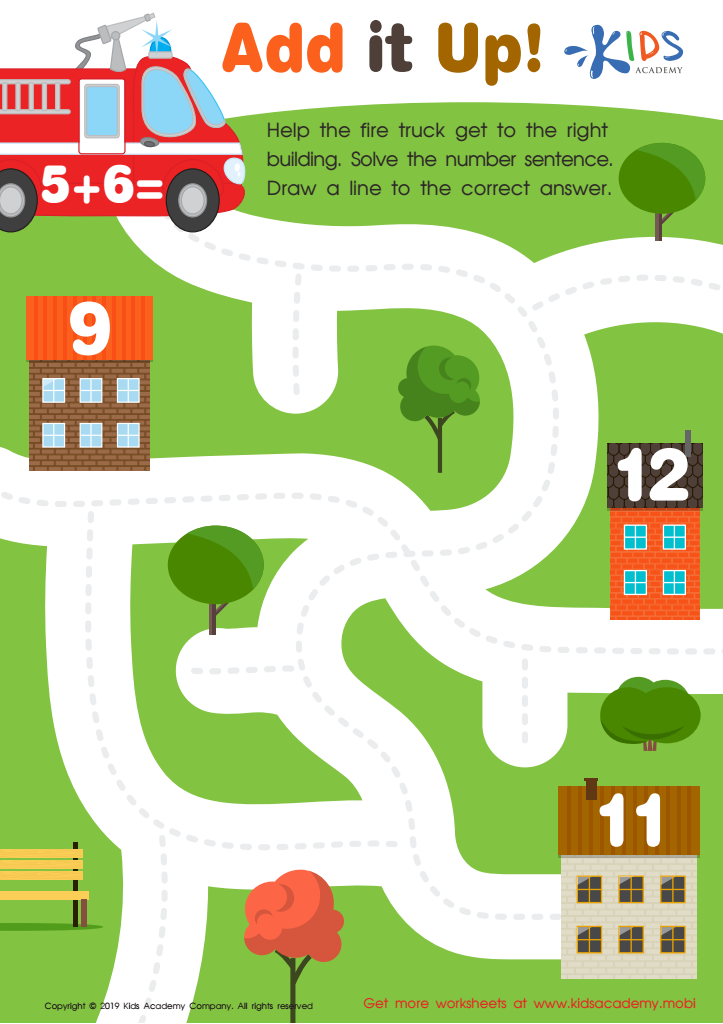
Add it Up Worksheet
 Assign to My Students
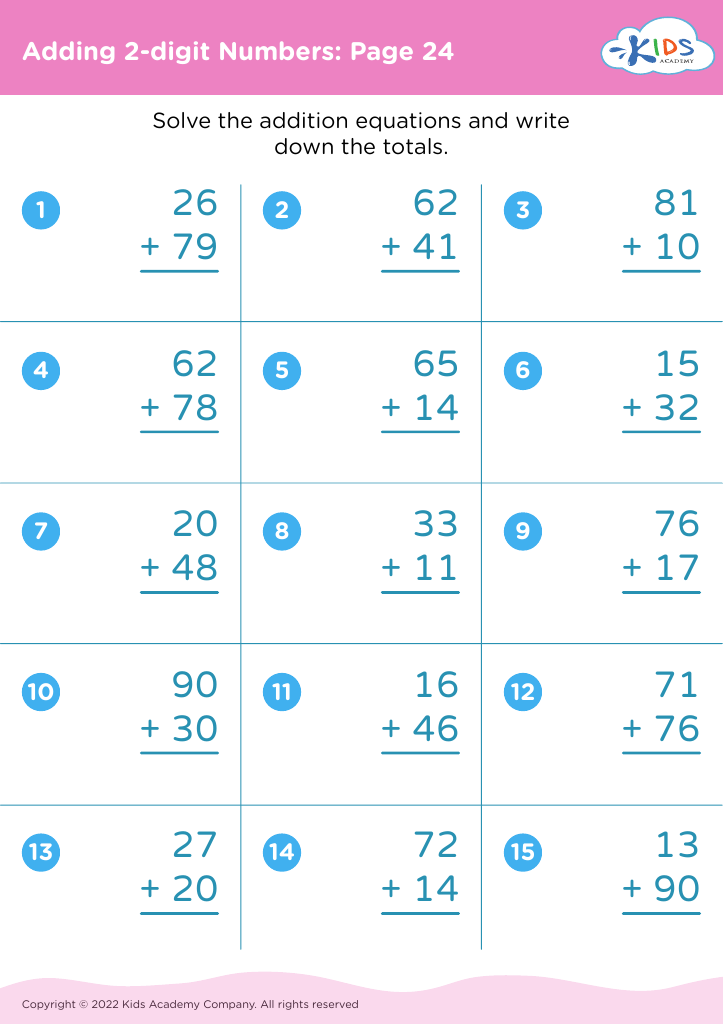
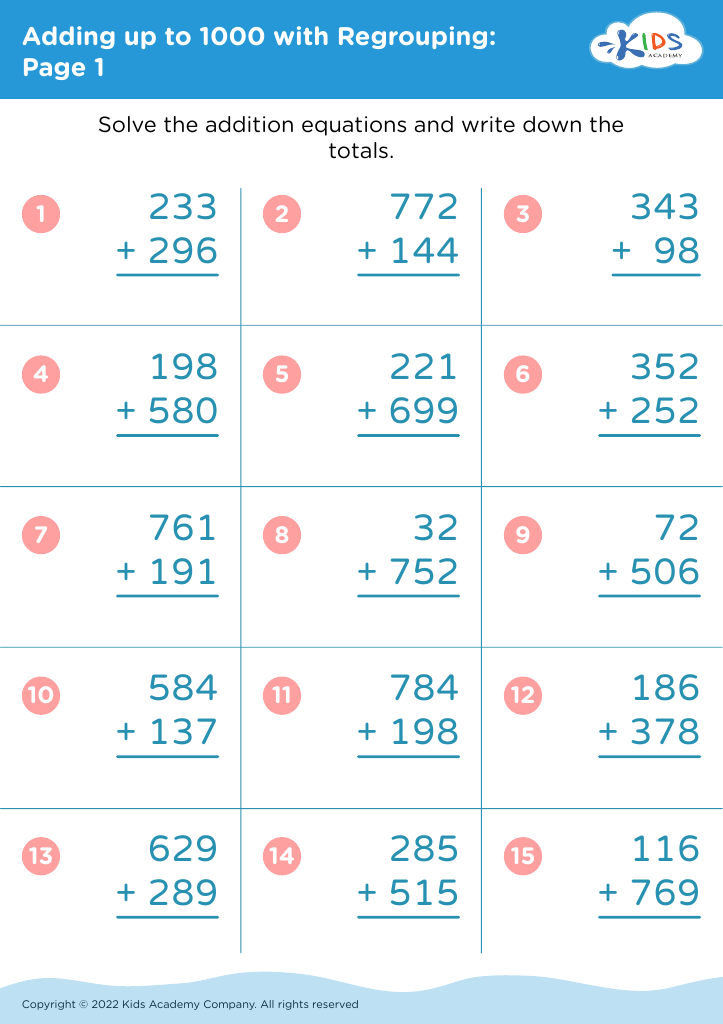
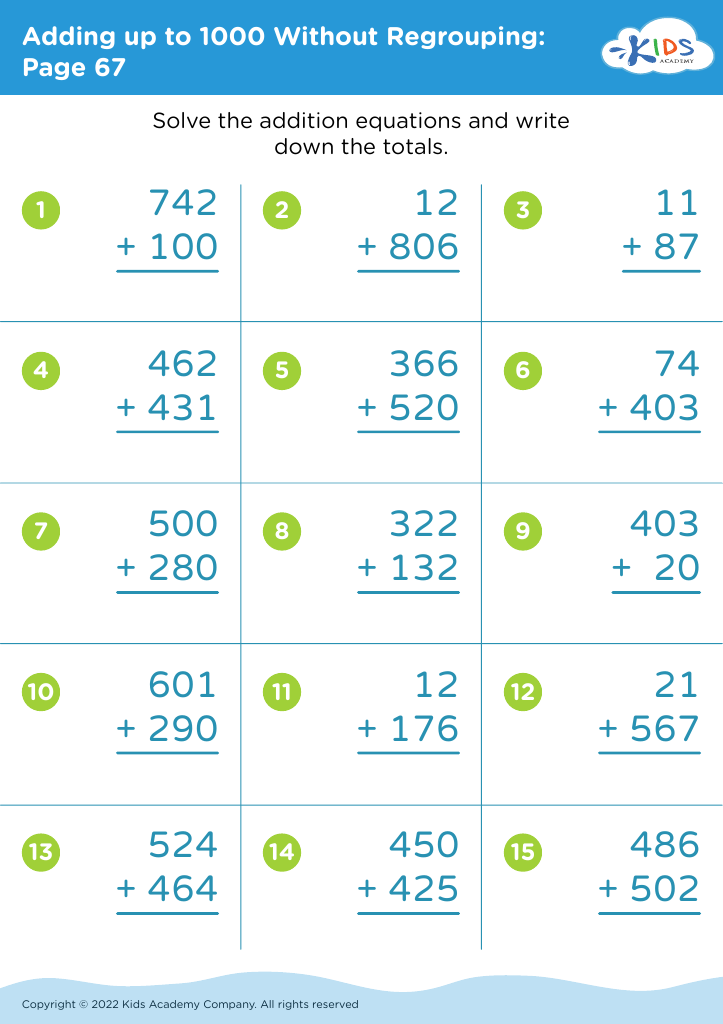








Parents and teachers should care about math problem-solving involving addition for ages 5-7 because this foundational skill is critical for children's overall academic development. At this stage, children's brains are like sponges, and mastering basic addition lays the groundwork for more complex mathematical concepts. Early proficiency in addition helps young learners develop essential cognitive skills such as logical reasoning, pattern recognition, and problem-solving abilities.
Furthermore, addition is not just confined to the classroom; it's a life skill. Children encounter situations daily that require basic arithmetic—whether it's counting toys, sharing snacks, or understanding time. Early mastery empowers them with confidence in their abilities, fostering a positive attitude towards math and learning in general.
Moreover, engaging students with addition activities can enhance social and emotional skills. Collaborative problem-solving encourages communication and teamwork, while individual tasks teach resilience and patience. These experiences are crucial for developing well-rounded individuals.
Finally, early success in addition sets the stage for a smoother transition into more advanced subjects. When children achieve competence and confidence in basic math, they are better prepared to tackle challenges in education and daily life, cultivating a lifelong interest in learning and discovery. Parents and teachers play a pivotal role in nurturing this development.








