Math problem-solving skills Addition Worksheets for Ages 5-7
3 filtered results
-
From - To
Boost your child's confidence in math with our "Math Problem-Solving Skills Addition Worksheets" designed specifically for ages 5-7. These engaging worksheets focus on strengthening your child's addition abilities through fun and interactive problems. Ranging from simple sums to slightly more challenging problems, every worksheet builds critical thinking and enhances problem-solving skills. Ideal for kindergarteners and first graders, our addition worksheets make learning math enjoyable and effective, ensuring a strong foundation for future numeracy skills. Watch your child progress effortlessly and develop a love for math with our expertly crafted, colorful, and kid-friendly worksheets.
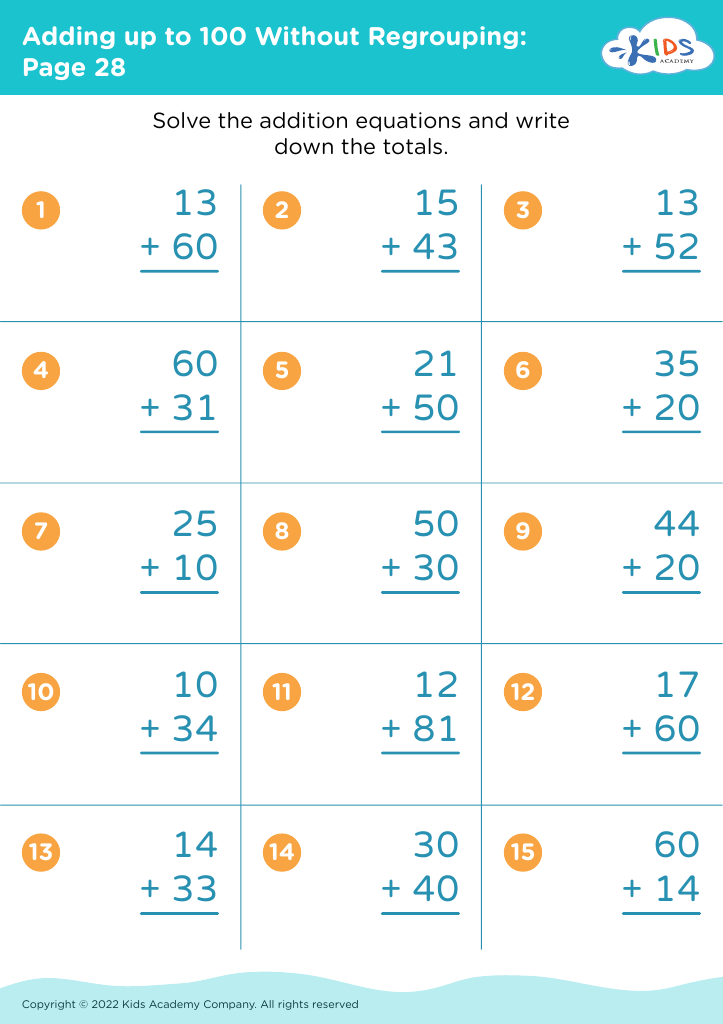
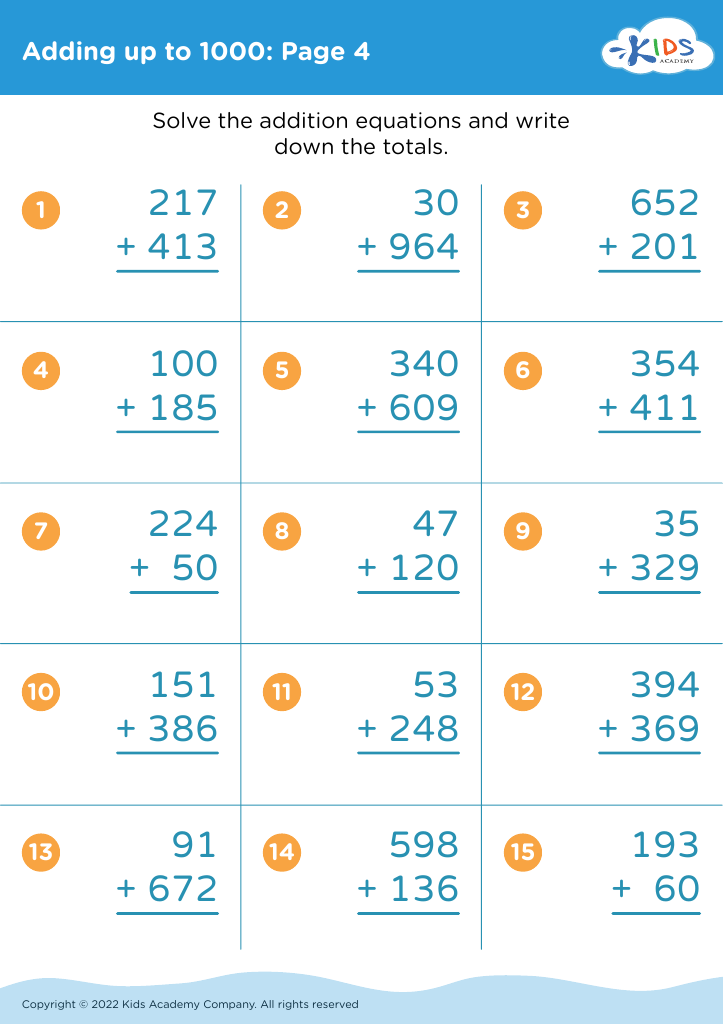
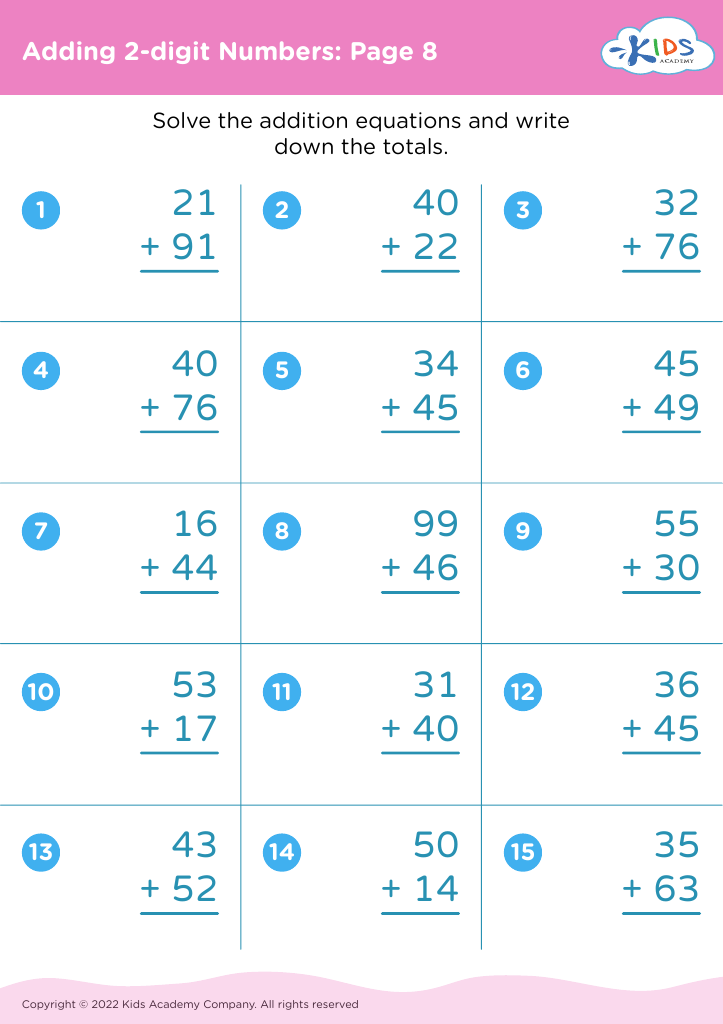








Math problem-solving skills, particularly addition, are essential for children aged 5-7 because they lay the groundwork for future academic and real-life success. Teaching addition in early grades helps to build a strong numerical foundation, making it easier for children to grasp more advanced math concepts as they progress in their education. Basic addition skills promote critical thinking by encouraging children to recognize patterns, make connections, and develop strategies to approach various problems.
At this stage, children are naturally curious and absorb new information readily. Introducing them to addition in a structured yet engaging way helps to foster a positive attitude toward math, which is crucial for developing long-term cognitive skills and academic confidence. Moreover, early proficiency in math-related tasks is linked to better performance in other subject areas, enhancing overall educational development.
Parents and teachers should also recognize the practical benefits of addition skills. Simple tasks such as counting toys, dividing snacks, or understanding time all require basic arithmetic. Developing strong math skills can empower children to be more independent and confident, both in school and daily activities. In sum, nurturing addition problem-solving skills in young children paves the way for future academic achievements and practical life skills, forming a critical part of their overall growth and development.








