Reading analog clocks Addition Worksheets for Ages 5-7
4 filtered results
-
From - To
Enhance your child's math skills with our engaging "Reading Analog Clocks Addition Worksheets" designed for ages 5-7. These worksheets combine the basics of telling time with addition practice, making learning fun and interactive. Children will develop their ability to read analog clocks and seamlessly incorporate understanding of time into addition problems. Each worksheet offers colorful graphics and intuitive exercises that cater to young learners' diverse learning styles. Perfect for home or classroom use, these resources foster a solid foundation in both math and time management skills. Jumpstart your child's learning journey today with our thoughtfully crafted worksheets!
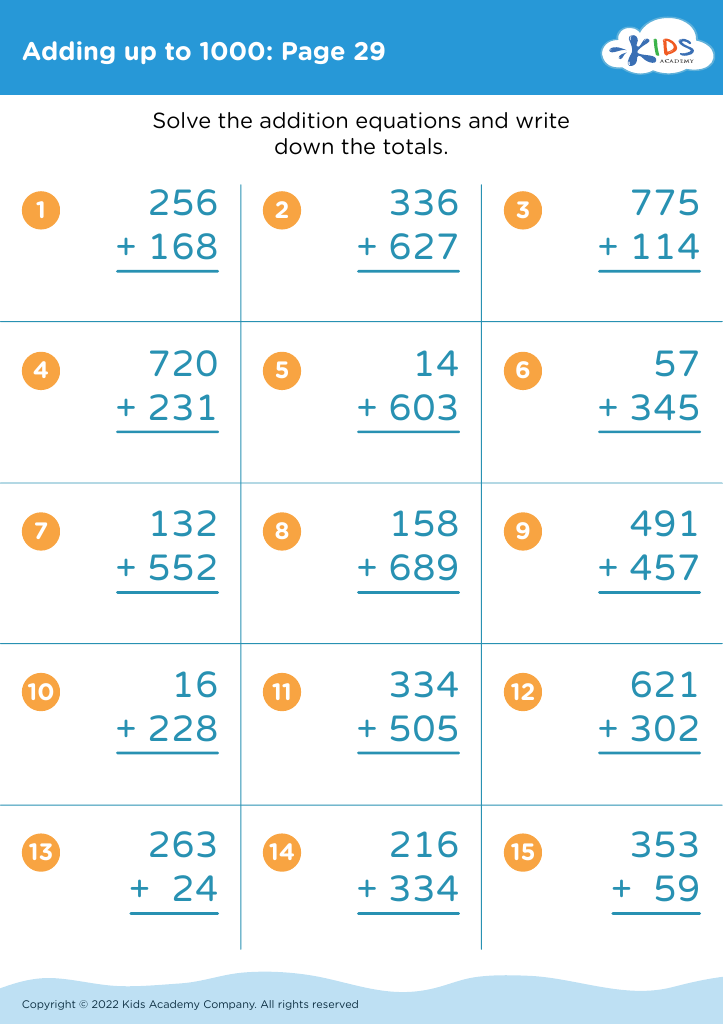
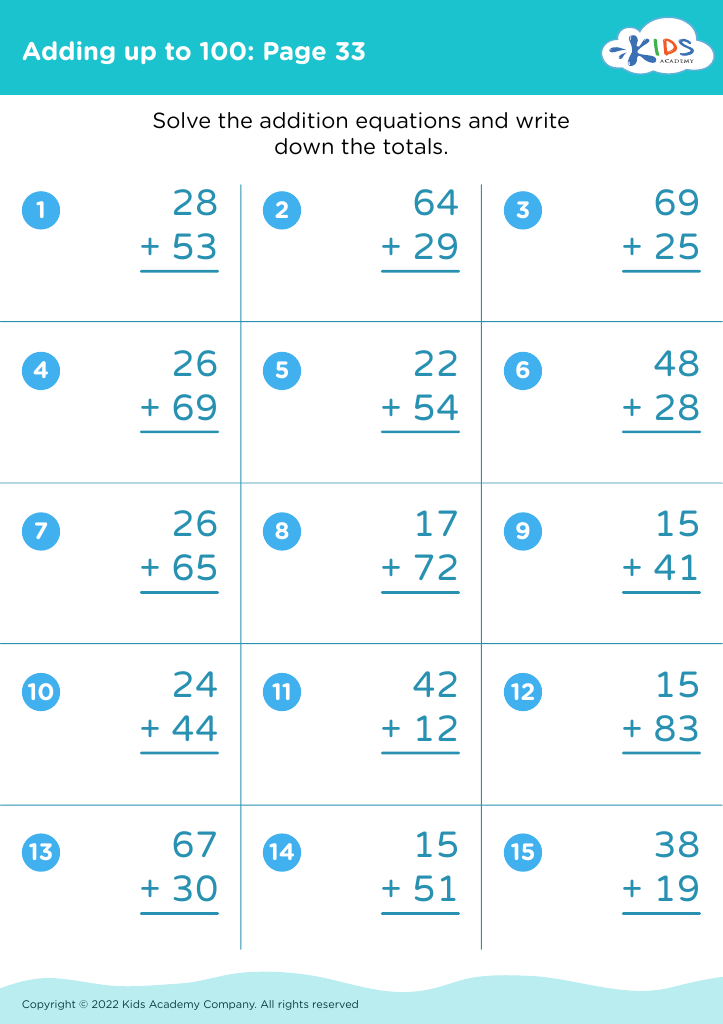
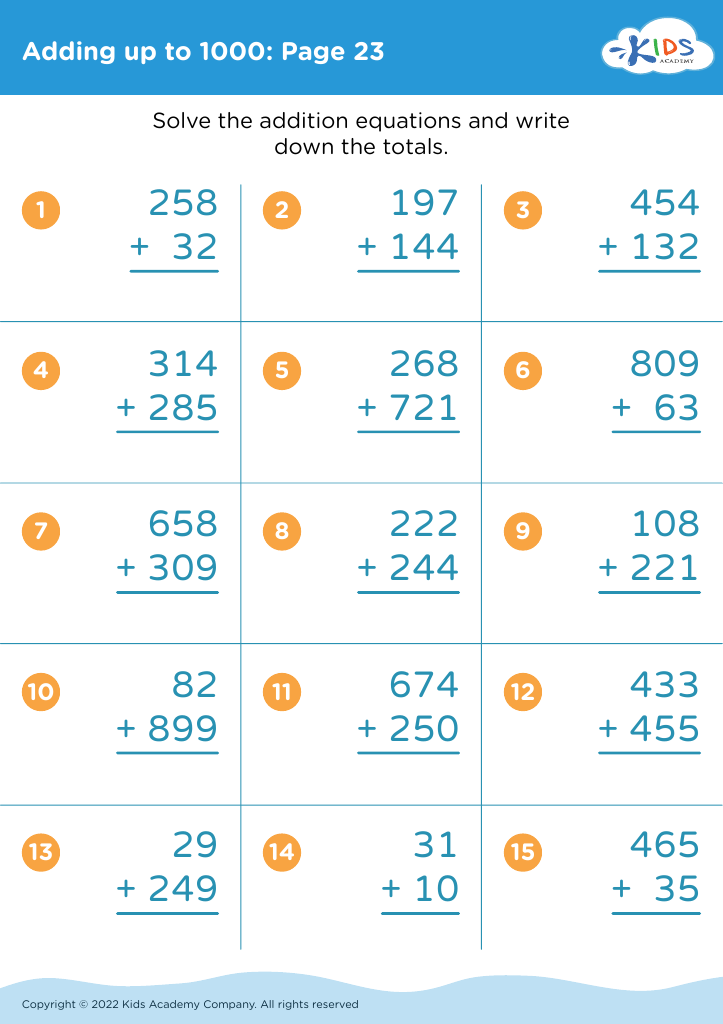
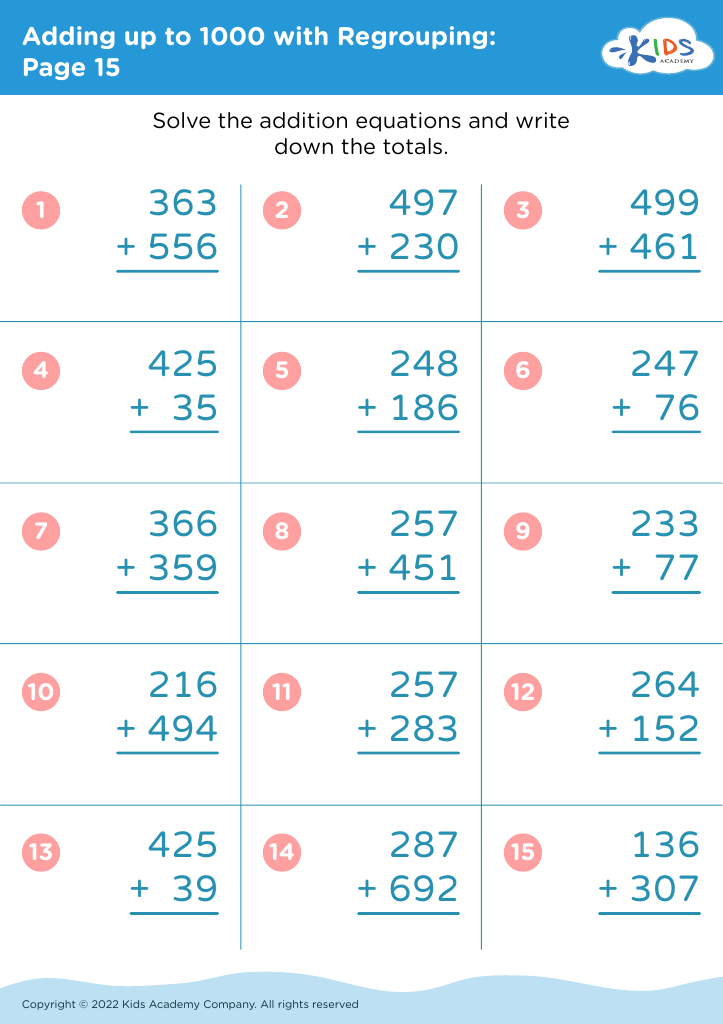








Teaching children to read analog clocks and perform addition skills simultaneously from ages 5-7 is crucial for several reasons. Firstly, mastering these skills enhances children's understanding of time, a concept that is foundational in daily life. Recognizing that time is finite helps children plan their activities, manage schedules, and develop a sense of responsibility as they learn to allocate time for tasks.
Incorporating addition through clock reading makes mathematical concepts more tangible. For example, if a child learns that it takes 30 minutes to play and one starts at 2:00, they can add this to tell their next activity starts at 2:30. This practical application helps reinforce their understanding of addition in real-world situations.
Moreover, learning to read an analog clock promotes cognitive development. It encourages critical thinking as students solve problems related to time (e.g., “what time will it be in 15 minutes?”) while sharpening their math skills.
Lastly, these competencies build confidence in young learners, paving the way for more complex mathematical concepts and independence in daily life. Parents and teachers should prioritize these skills to help children grow into capable and self-sufficient individuals.








