
Sequencing Skills Addition Worksheets for Ages 5-7
3 filtered results
Difficulty Level
Grade
Age
-
From - To
Subject
Activity
Standards
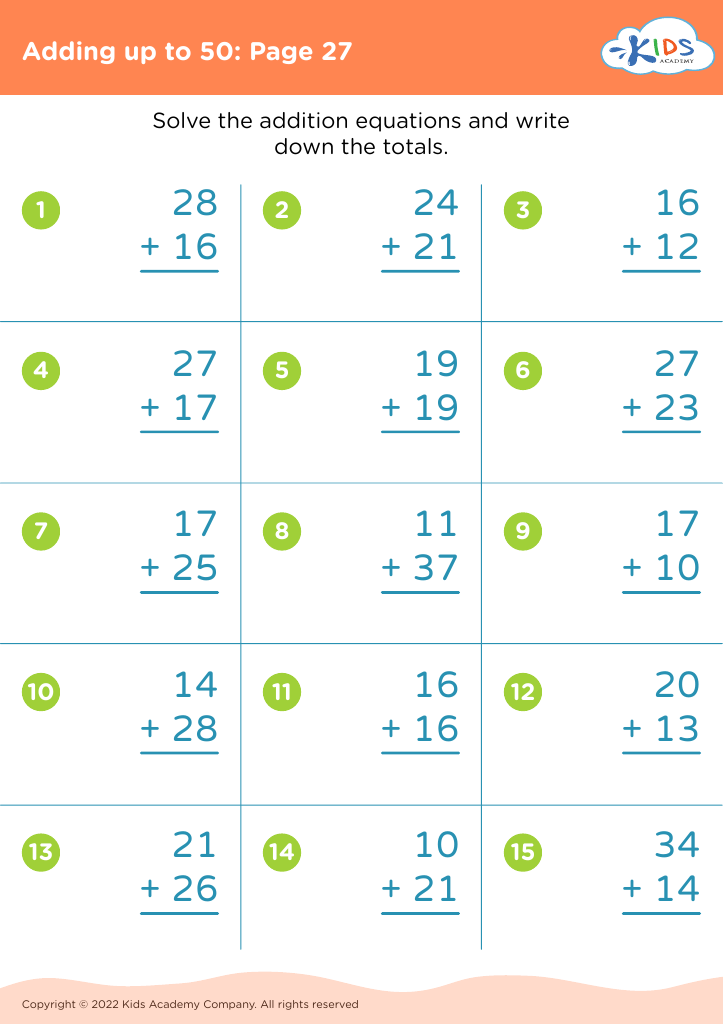
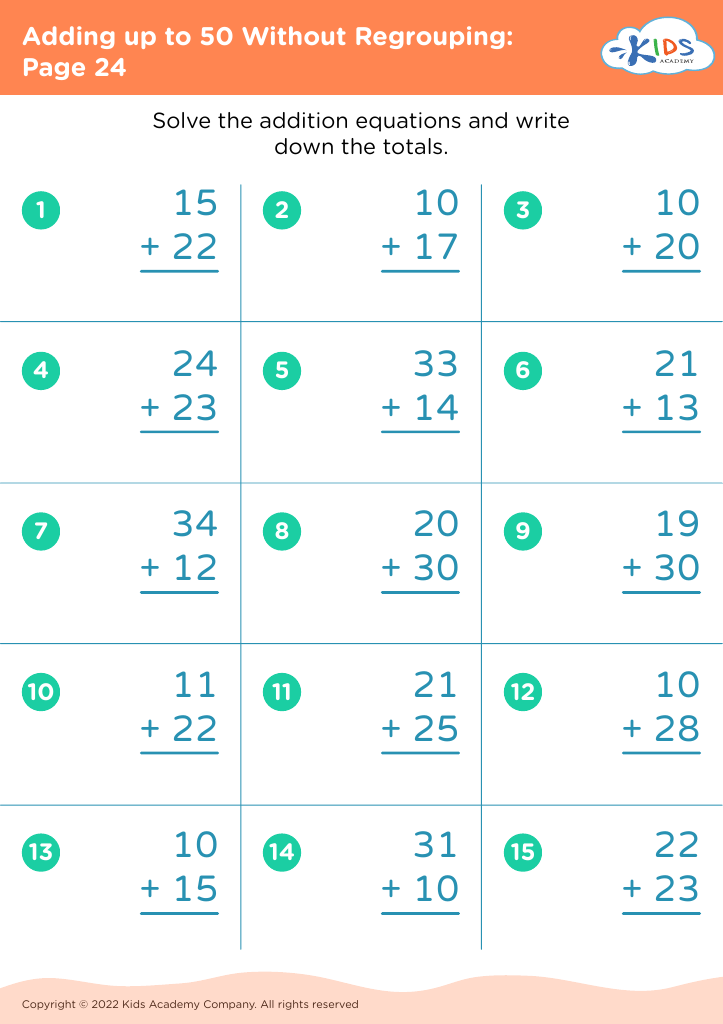
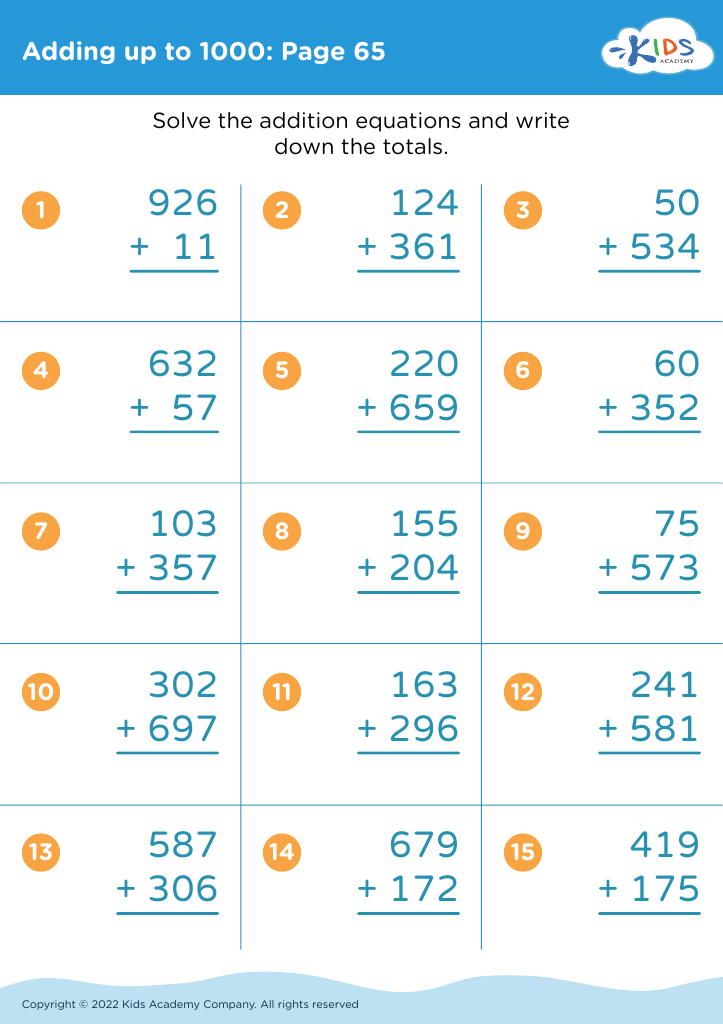
Enhance your child's math skills with our Sequencing Skills Addition Worksheets, specially designed for ages 5-7! These engaging worksheets help young learners master the concept of sequencing while practicing addition. Children will enjoy fun activities that improve their logical thinking and reduce math anxiety. Each worksheet features colorful graphics and age-appropriate challenges to maintain interest and promote active learning. Perfect for classroom or home use, these resources foster foundational math skills essential for future success. Join the fun as your child becomes a confident problem solver and enhances their numerical fluency, setting the stage for a lifelong love of learning!
Favorites
With answer key
Interactive
Join Kids Academy for Free
Who is primarily going to use this learning content?




.jpg)



Sequencing skills are fundamental to children's cognitive development, particularly for children ages 5-7, as they serve as a foundation for effective problem-solving, critical thinking, and language skills. In addition to being essential for literacy and numeracy, sequencing helps children understand the order of events and actions, which is crucial for following instructions, storytelling, and engaging in daily routines.
For parents and teachers, nurturing sequencing skills in children can significantly enhance their ability to grasp complex concepts later in life. The addition of sequencing in math helps children develop a coherent understanding of number operations; they learn to plan and execute steps in problem-solving efficiently. Furthermore, developing sequencing in activities such as storytelling or performing a task allows children to improve their memory retention and recall.
By fostering these skills at an early age, parents and teachers prepare children for future academic success and everyday life challenges. Engaging kids in sequencing activities, such as organizing objects, timelines, or events, promotes their executive functioning skills, including planning and organization. This ultimately leads to increased confidence in their abilities and a greater enthusiasm for learning, setting a strong academic foundation as they grow.








