Understanding number values Addition Worksheets for Ages 5-7
3 filtered results
-
From - To
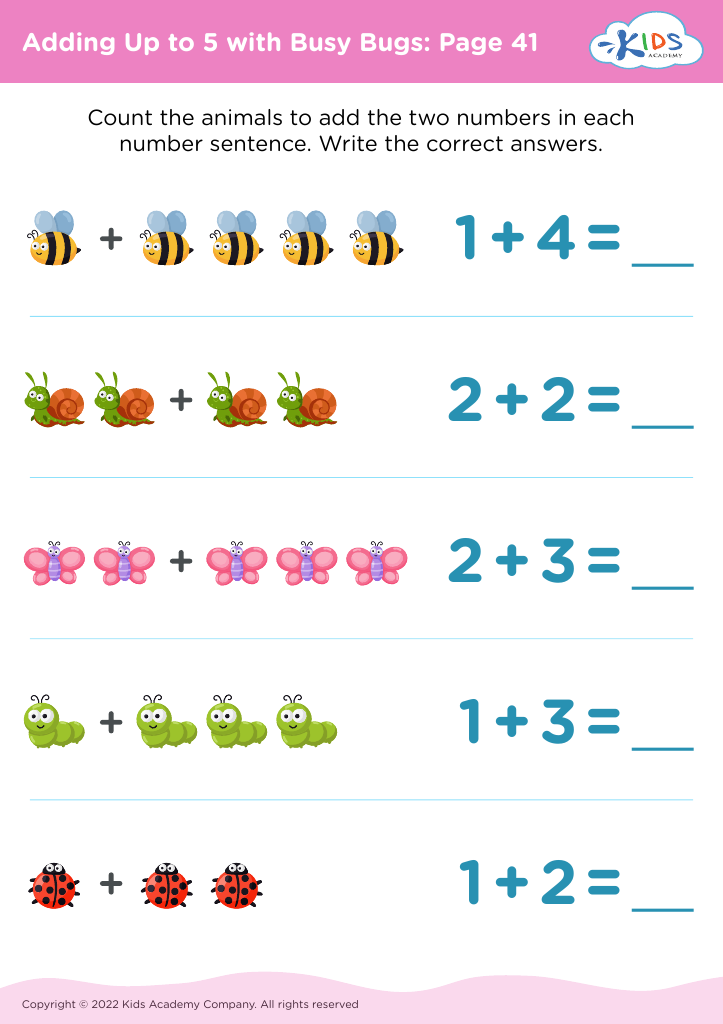
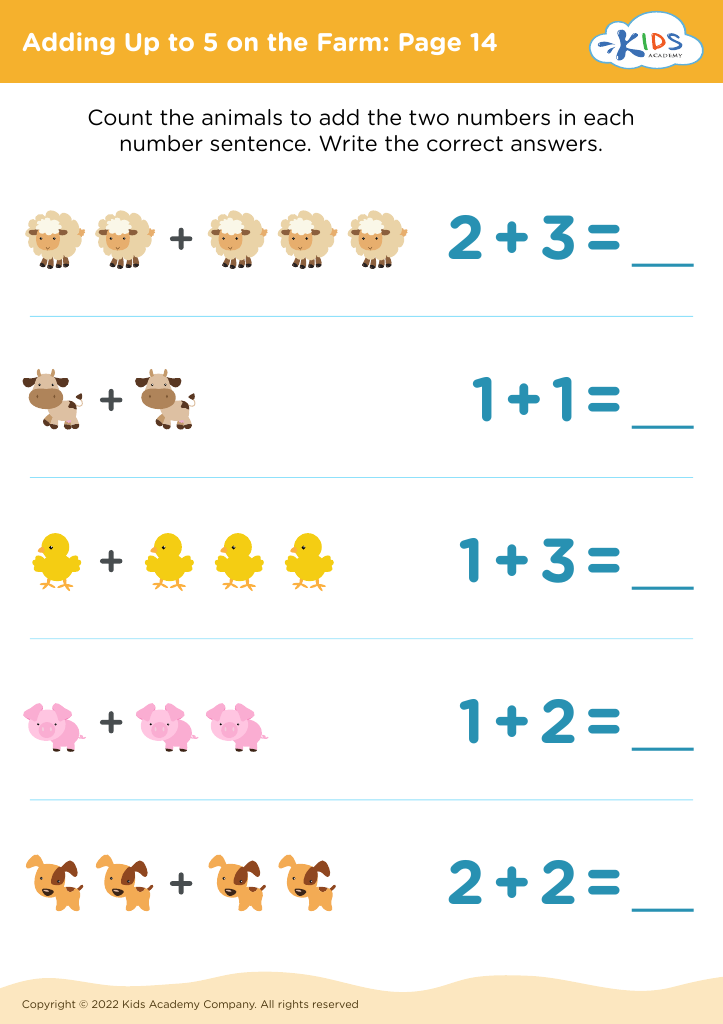
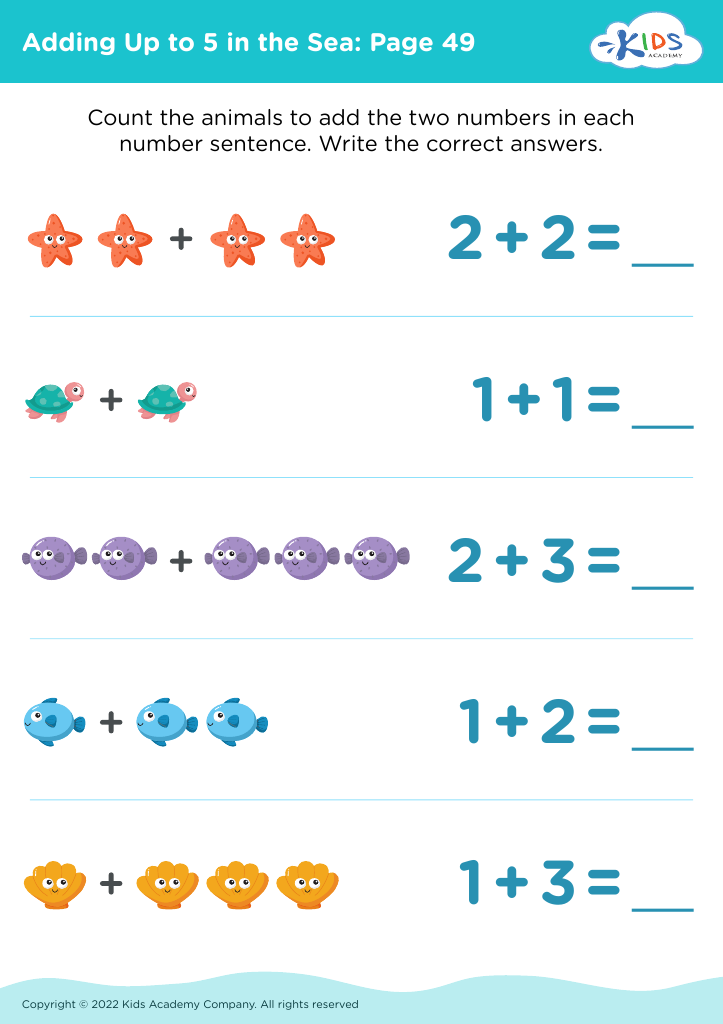
Unlock the joy of math with our "Understanding Number Values Addition Worksheets" designed for ages 5-7! These engaging and interactive worksheets help young learners grasp essential number values while seamlessly integrating addition concepts. Each activity is carefully crafted to promote foundational skills through vibrant visuals and relatable contexts, ensuring a fun learning experience. By practicing with these worksheets, children will enhance their number recognition, counting abilities, and basic addition skills. Foster a love for mathematics as they explore the world of numbers with confidence! Perfect for classroom or home learning, these resources support early math education with clarity and creativity. Start their math journey today!







.jpg)
Understanding number values and addition is foundational for children aged 5-7, making it crucial for parents and teachers to prioritize this learning. At this stage, children not only learn basic mathematical skills but also develop critical thinking and problem-solving abilities. Grasping number values aids children in recognizing numbers, understanding their relationships, and manipulating them through addition, which reinforces their numerical intuition.
When parents and teachers help children master addition, they foster a sense of confidence in their mathematical skills. This confidence encourages positive attitudes towards learning and lays the groundwork for more complex mathematical concepts later on. Additionally, an early grasp of these fundamental concepts supports other areas of learning, as math skills often intertwine with everyday life—whether during shopping trips, cooking, or playing interactive games.
Furthermore, early addition experiences promote cognitive development. As children practice addition, they enhance their memory, attention, and logical reasoning. Parental and teacher reinforcement, whether through games, stories, or real-world applications, makes learning engaging and relatable. Ultimately, investing time and effort into this foundational skill sets children on a path to long-term academic success and cultivates a love for learning that can last a lifetime.








