Basic geometry Math Worksheets for Ages 5-7
3 filtered results
-
From - To
Introducing our "Basic Geometry Math Worksheets for Ages 5-7"! These engaging worksheets are designed to make geometry fun and accessible for young learners. With a variety of activities, children will explore shapes, sizes, and spatial relationships while developing critical math skills. Our worksheets feature vivid illustrations and age-appropriate exercises that encourage creativity and problem-solving. Perfect for classroom use or home study, these resources aim to build a strong foundation in geometry and boost confidence in math. Dive into the world of shapes with our comprehensive worksheets and watch your child's mathematical abilities grow!
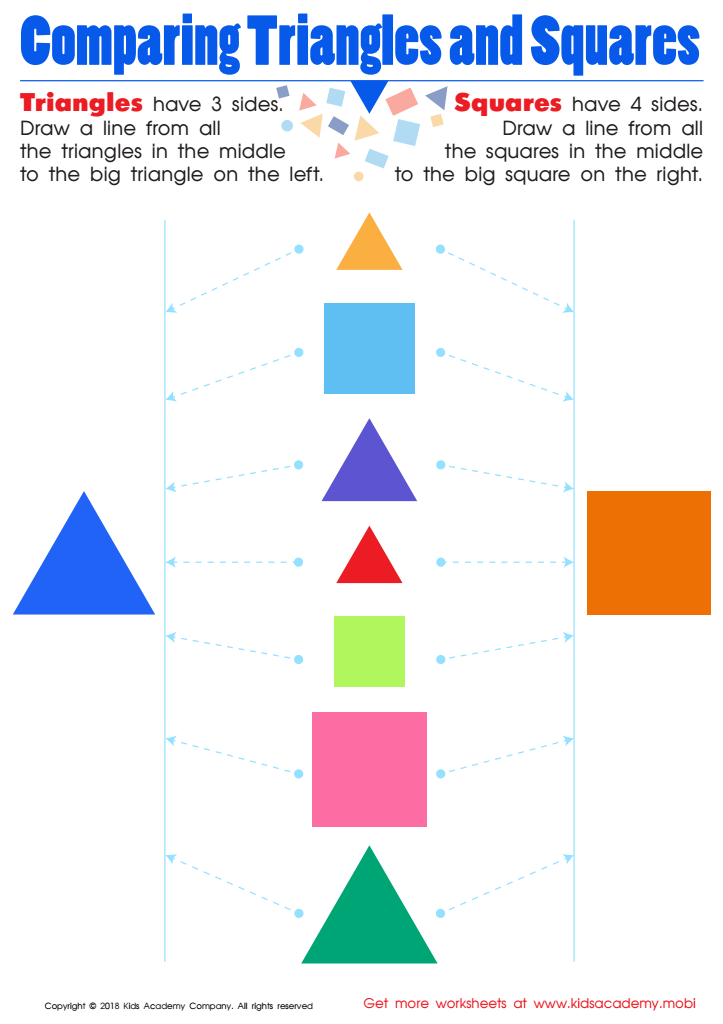
Comparing Triangles Squares Worksheet
 Assign to My Students
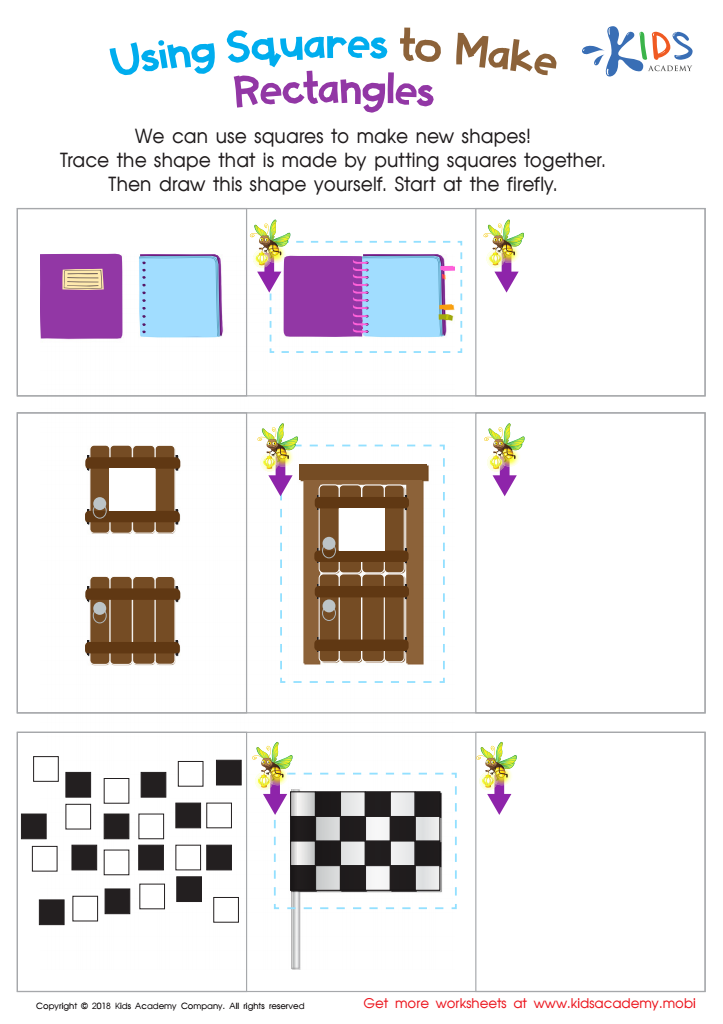
Using Squares to Make Rectangles Worksheet
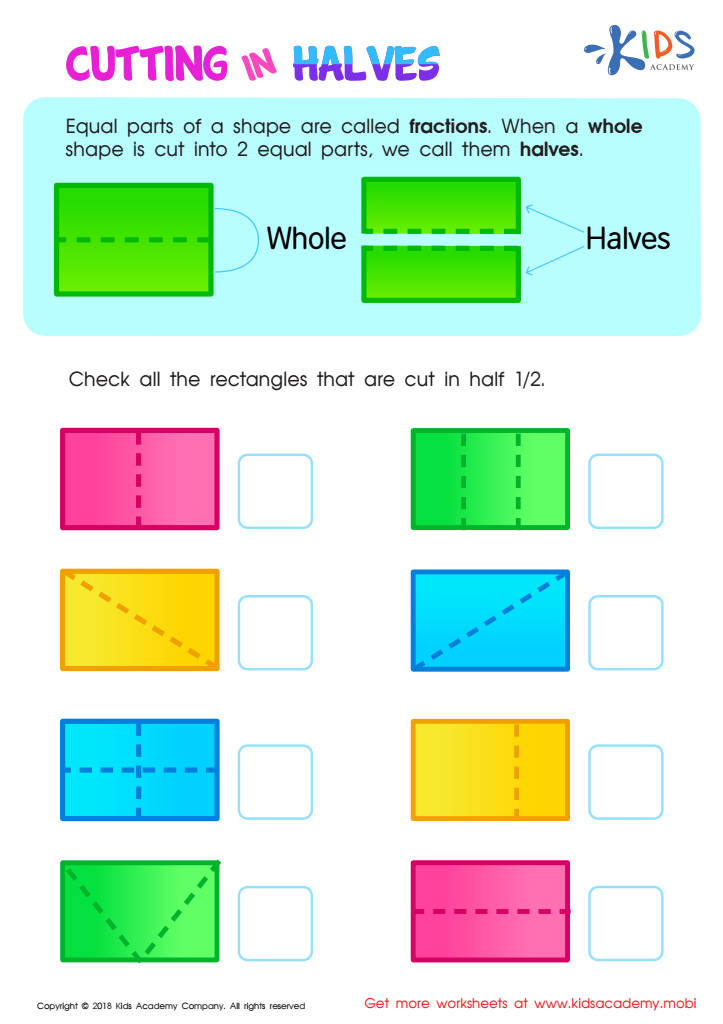
Cutting in Halves Worksheet








Basic geometry is a foundational element of early education, particularly for children ages 5-7. During this developmental stage, engaging with geometric concepts fosters critical thinking, spatial awareness, and problem-solving skills. Understanding shapes, sizes, and spatial relationships enhances a child's ability to visualize and interpret their environment, which is essential for future learning in math and science.
Moreover, geometry promotes creativity. Children discover patterns, symmetry, and design, allowing them to explore both artistic and mathematical thinking. By learning about geometric properties and relationships, they develop the ability to classify objects and understand how different shapes fit together, aiding in cognitive development.
Parents and teachers should prioritize basic geometry because it is not just about learning shapes; it lays the groundwork for more complex mathematical reasoning. As children progress, these fundamental concepts will be critical for mastering topics like measurement, area, and volume. Early exposure to geometry can spark interest in STEM fields, supporting not just academic performance but also future career possibilities. By nurturing an understanding of basic geometry, parents and teachers empower children to cultivate lifelong skills necessary for problem-solving and logical thinking.








