Develop counting skills Math Worksheets for Ages 5-7
6 filtered results
-
From - To
boost your child's counting abilities with our engaging math worksheets designed specifically for ages 5-7. These resources provide a fun, interactive way to reinforce basic counting concepts, helping young learners develop a strong numerical foundation. Our worksheets include various activities tailored to various skill levels, making learning both enjoyable and effective. From simple counting exercises to number recognition games, each worksheet is crafted to keep children motivated and inspired. Perfect for classroom use or home practice, our counting skills worksheets make learning math an exciting adventure, setting the stage for future numeracy success. Explore now and watch your child's confidence soar!
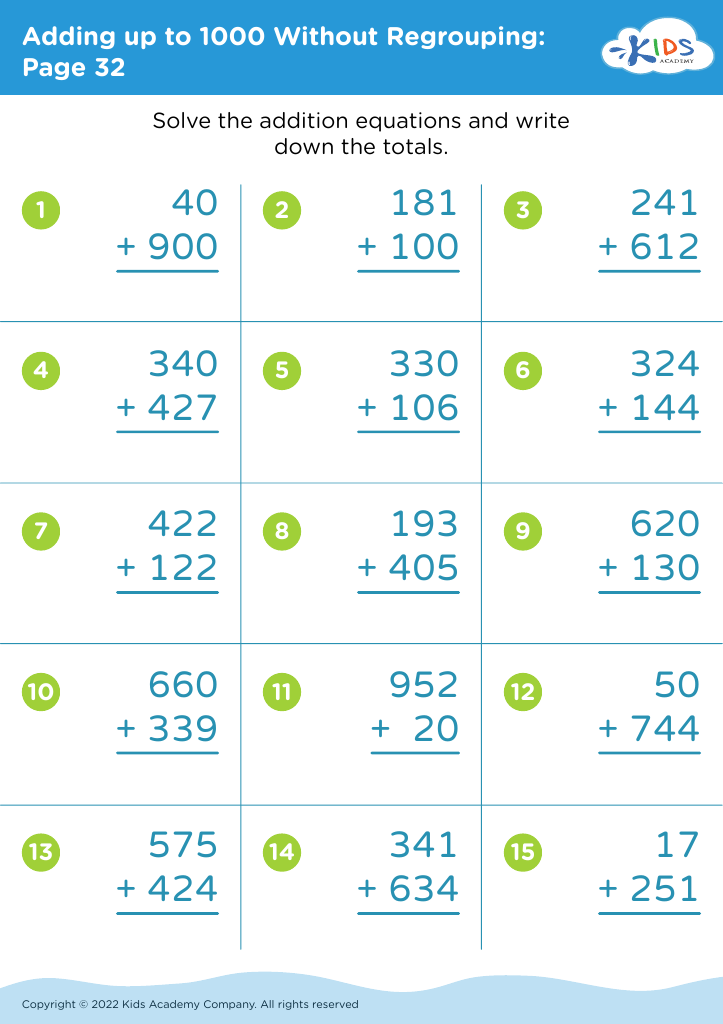
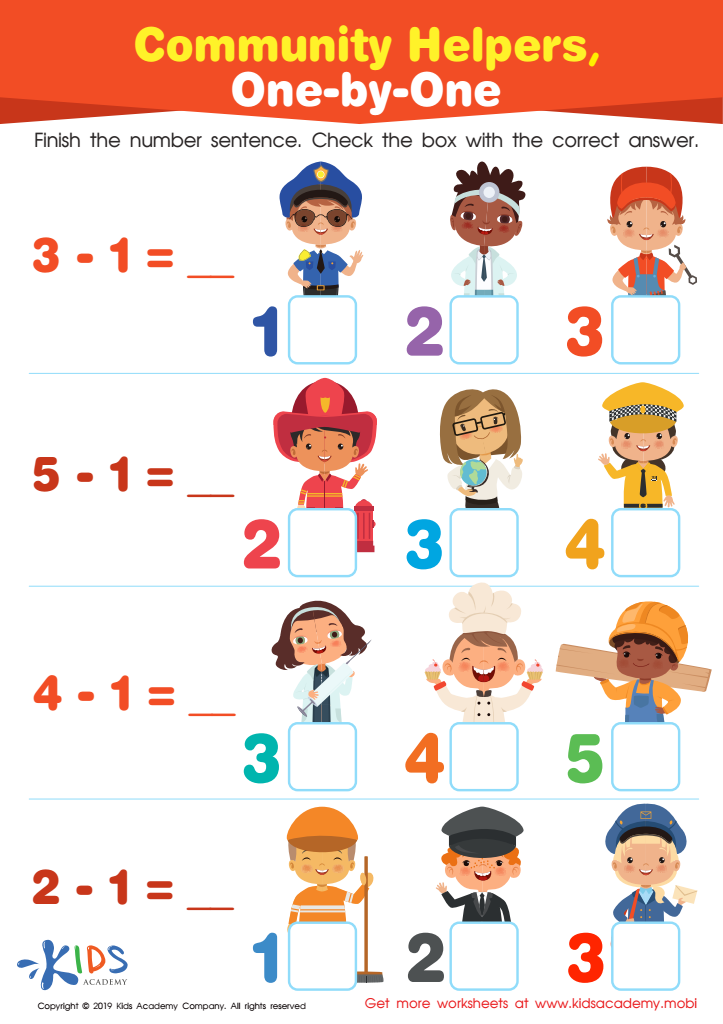
Community Helpers, One-by-One Worksheet
 Assign to My Students
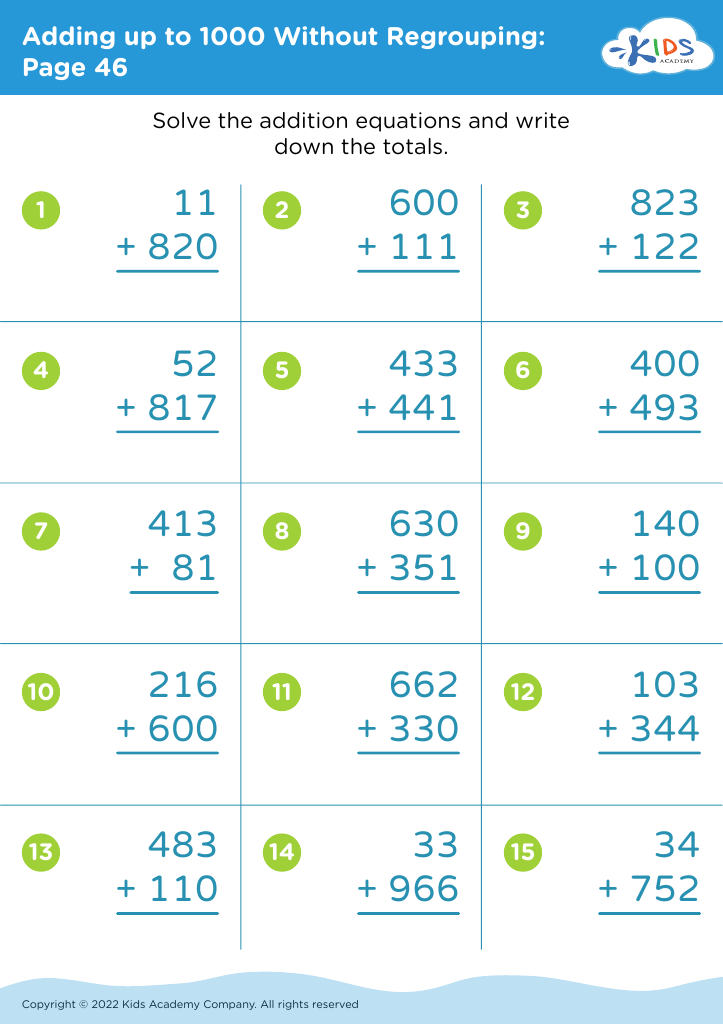
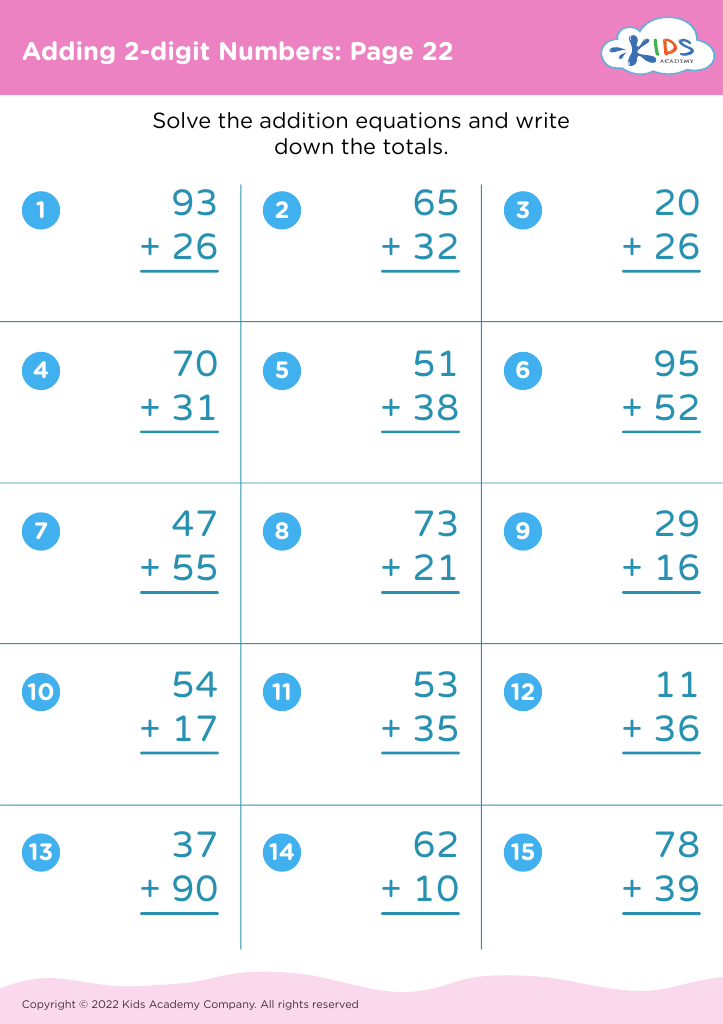
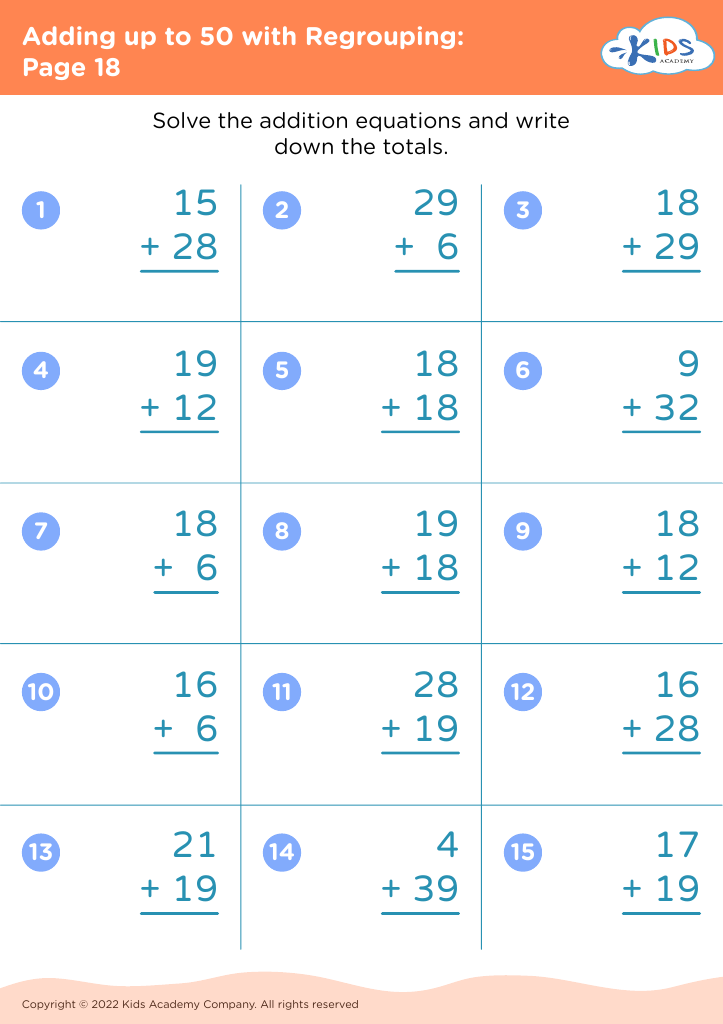
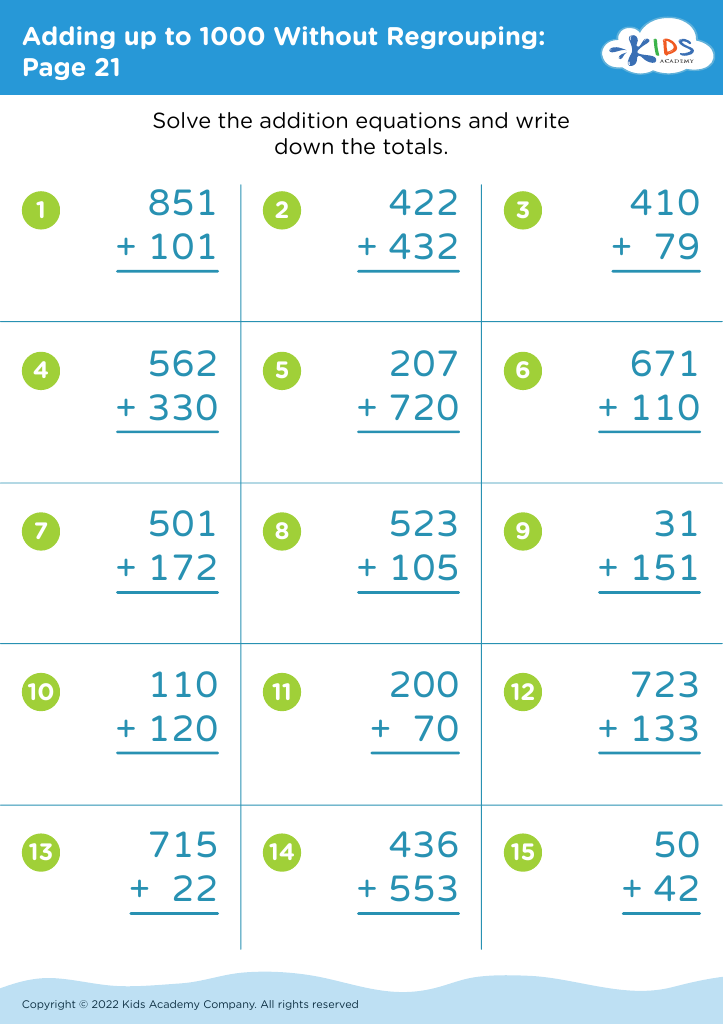








Developing counting skills in children aged 5-7 is crucial for their overall mathematical understanding and cognitive development. During these formative years, young learners establish the foundation for more complex mathematical concepts. When children strengthen their counting skills, they enhance their ability to recognize patterns, estimate, and perform basic arithmetic operations, which are essential later in life.
Parents and teachers should prioritize counting skills because they foster critical thinking and problem-solving abilities. Engaging with numbers helps children learn to compare quantities, understand value, and develop logical reasoning. Additionally, strong counting skills contribute positively to a child's confidence and attitude toward mathematics.
Integrating counting activities into daily routines and lessons—through games, songs, and practical applications—makes learning enjoyable, motivating students while reinforcing essential skills. As children progress, counting becomes a pathway for introducing concepts like addition and subtraction, making these ideas more accessible.
Moreover, early proficiency in counting supports academic success and helps minimize future learning challenges. By investing time and effort into nurturing counting skills, parents and teachers set children on a positive trajectory for lifelong learning and success in mathematics.








