Developing critical thinking Math Worksheets for Ages 5-7
3 filtered results
-
From - To
Welcome to our "Developing Critical Thinking Math Worksheets for Ages 5-7" page! Here, you'll discover an engaging collection of worksheets designed to enhance your child's analytical and problem-solving skills through fun math activities. Our resources cater specifically to early learners, encouraging them to think critically while tackling age-appropriate challenges. From puzzles to real-life applications, these worksheets help children build a solid mathematical foundation, fostering a love for learning. Ideal for both classroom and home use, our printables aim to make math enjoyable while promoting essential cognitive development. Explore our collection and watch your child's critical thinking soar!
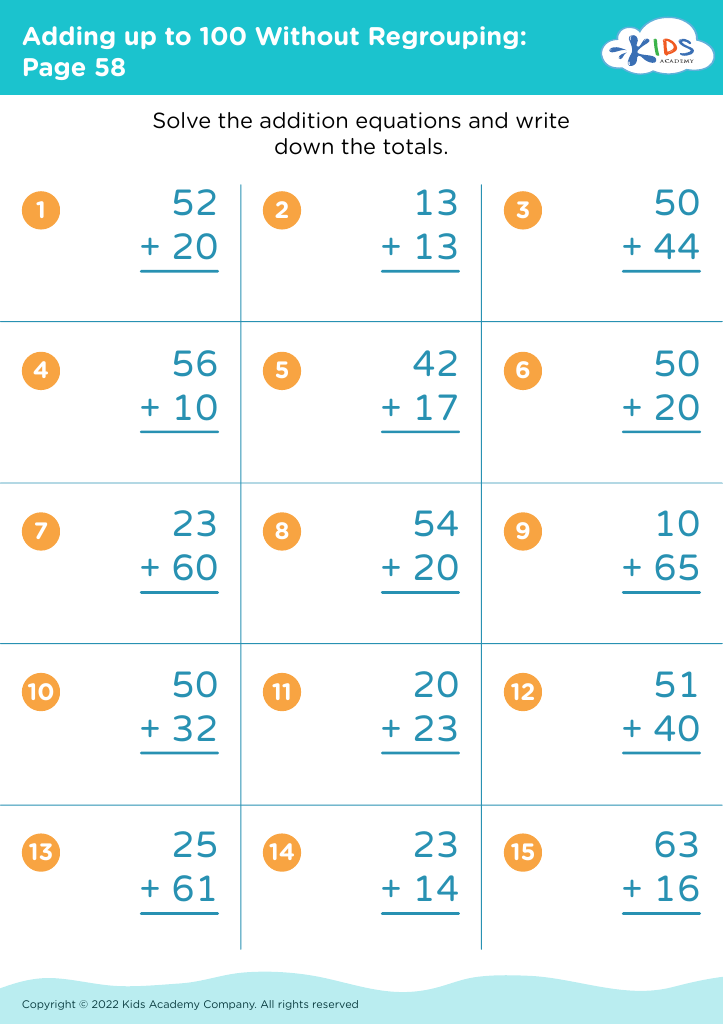
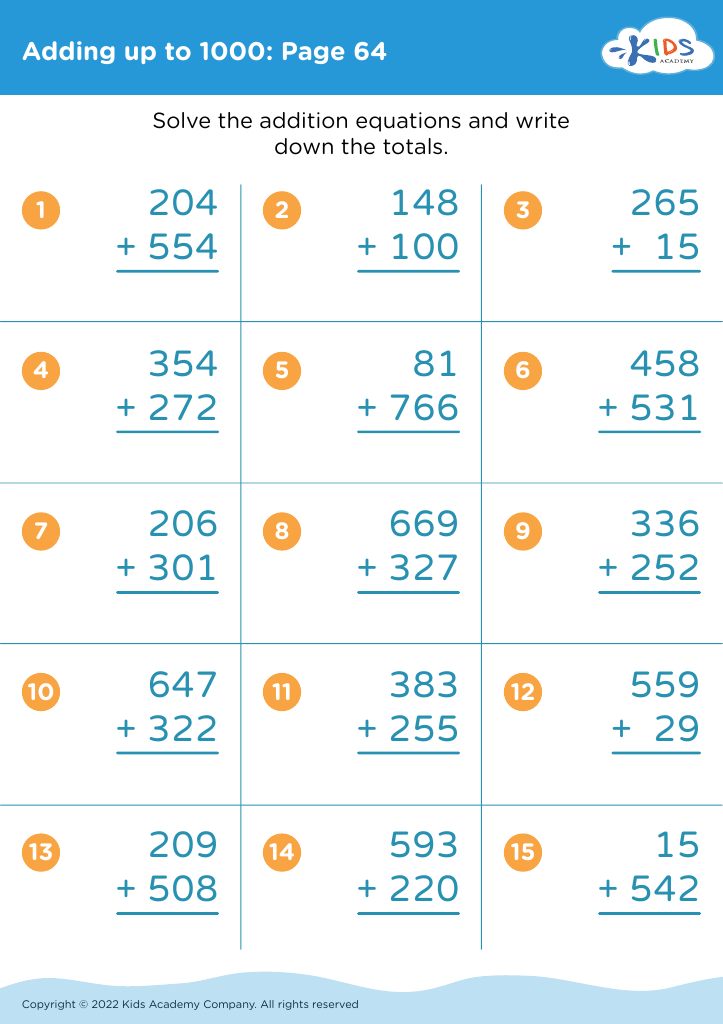
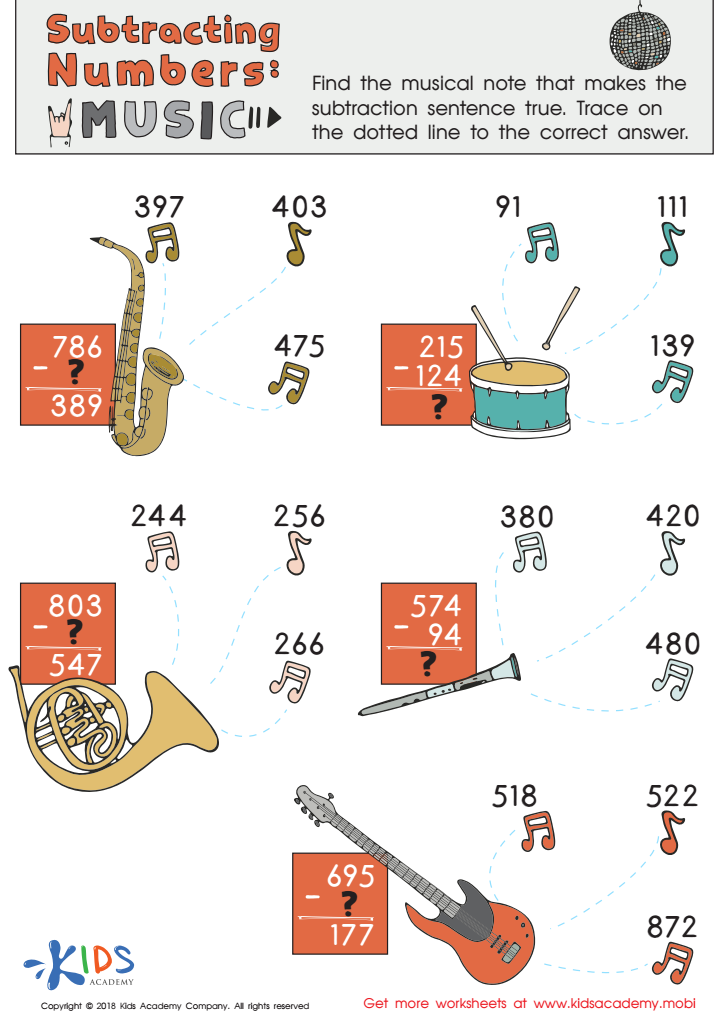
Subtracting Numbers: Music Worksheet
 Assign to My Students







Developing critical thinking in math for children aged 5-7 is essential for several reasons. At this early stage, children are not just learning mathematical concepts; they are also beginning to understand how to analyze problems and think independently. Cultivating critical thinking skills helps kids learn to approach challenges with a problem-solving mindset, enabling them to navigate various scenarios beyond math.
When parents and teachers encourage critical thinking, they foster an environment where children feel confident exploring ideas and seeking solutions. This will translate into improved mathematical comprehension, as students learn how to break down complex problems into manageable steps and evaluate possible outcomes.
Moreover, critical thinking skills promote perseverance and resilience. In an increasingly complex world, the ability to think critically will enable children to succeed academically and adapt to life’s challenges. By emphasizing inquiry and exploration rather than rote memorization, educators lay the groundwork for lifelong learning.
Ultimately, developing critical thinking in math during these formative years not only enhances children's academic performance but also equips them with vital skills necessary for informed decision-making and innovation in the future. This solid foundation is crucial for their overall success in school and beyond.








