Fraction Addition Math Worksheets for Ages 5-7
15 filtered results
-
From - To
Boost your child’s math skills with our Fraction Addition Math Worksheets, designed specifically for ages 5-7. These engaging worksheets introduce young learners to the basics of fractions and addition, making complex concepts simple and fun. Featuring colorful visuals and easy-to-follow instructions, each practice sheet helps students develop a strong foundation in fraction addition. Ideal for both classroom and at-home learning, our printable resources support kids in building confidence and accuracy in math. Dive into a world of fractions with creative exercises that transform learning into an enjoyable experience. Explore our collection today and watch your child's math abilities flourish!
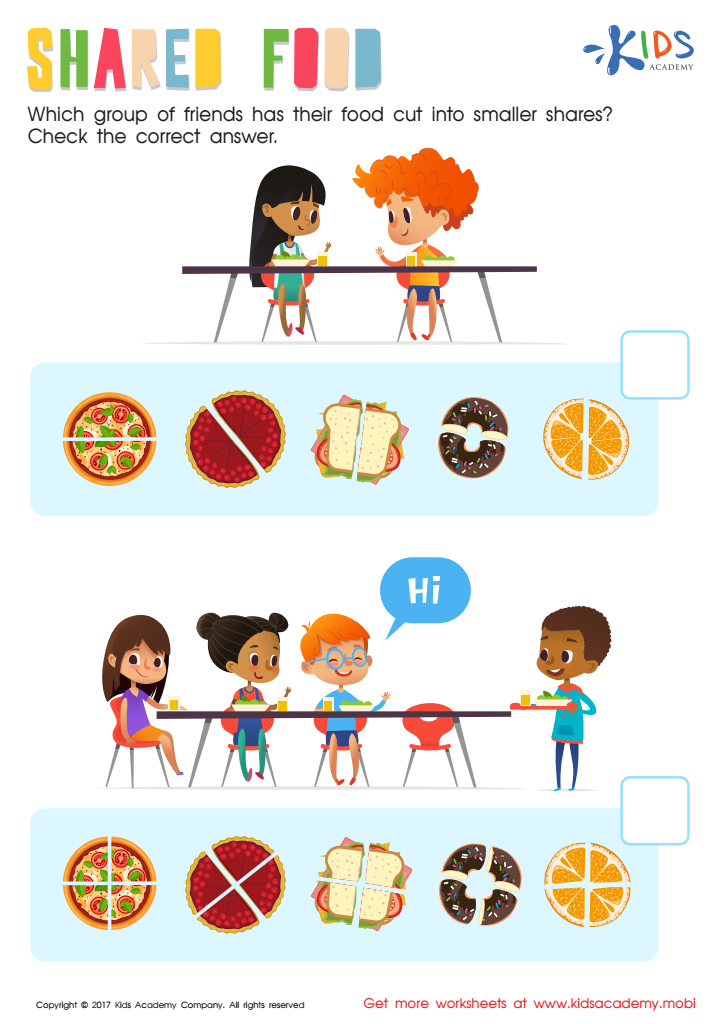
Shared Food Worksheet
 Assign to My Students
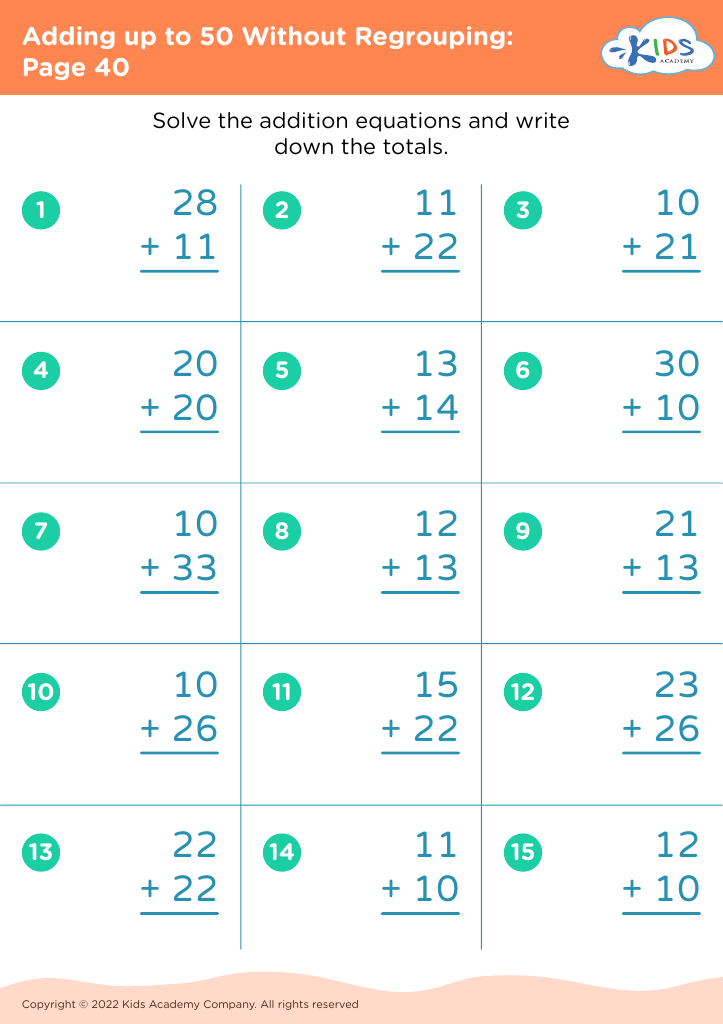
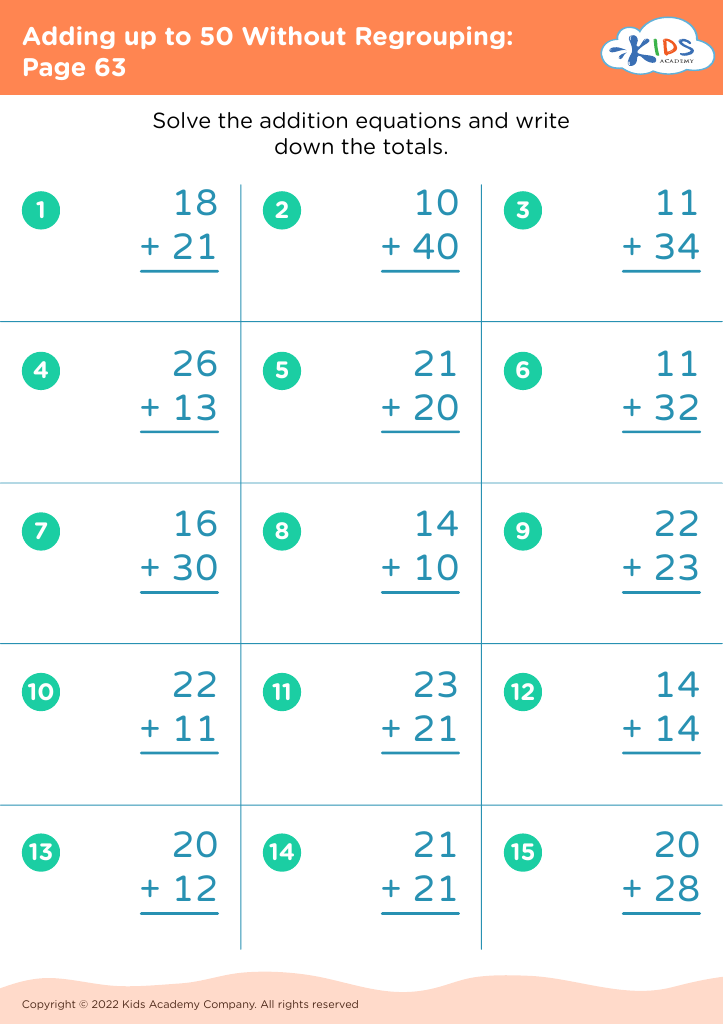
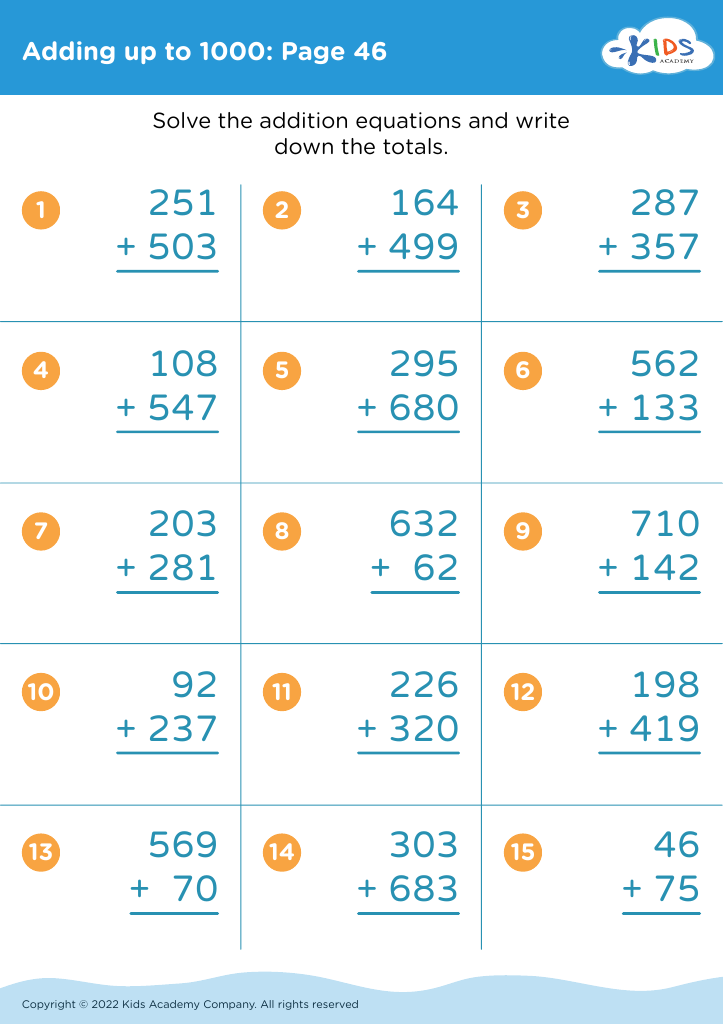







Introducing fraction addition to children aged 5-7 sets a solid foundation for their future mathematical learning. At this early age, their brains are highly receptive to new concepts, and understanding fractions initiates a broadened way of looking at numbers and quantities that goes beyond whole numbers.
Firstly, learning fraction addition enhances number sense, helping children grasp the idea that numbers can be split into parts. This is crucial for understanding that numbers are flexible and can be manipulated in different ways. For instance, seeing 1/2 and 1/3 combined to make 5/6 illustrates that numbers don't have to be whole to be useful or meaningful.
Secondly, it builds problem-solving and logical reasoning skills. Adding fractions encourages kids to engage in activities that require focus, patience, and analytical thinking. These skills extend beyond math, aiding in various problem-solving scenarios they'll encounter in life.
Lastly, introducing fraction addition through fun and relatable ways can instill a positive attitude towards mathematics. Using visual aids and hands-on activities like cutting fruits or sharing toys divides learning into enjoyable and digestible parts, fostering a natural curiosity and love for learning.
Parents and teachers who emphasize the importance of fraction addition are not just teaching math; they are building a child's overall cognitive development and preparing them for future academic challenges. This foundational skill is a critical stepping stone for advanced mathematical concepts and real-life tasks, ensuring a well-rounded education.








