Improving fine motor skills Math Worksheets for Ages 5-7
3 filtered results
-
From - To
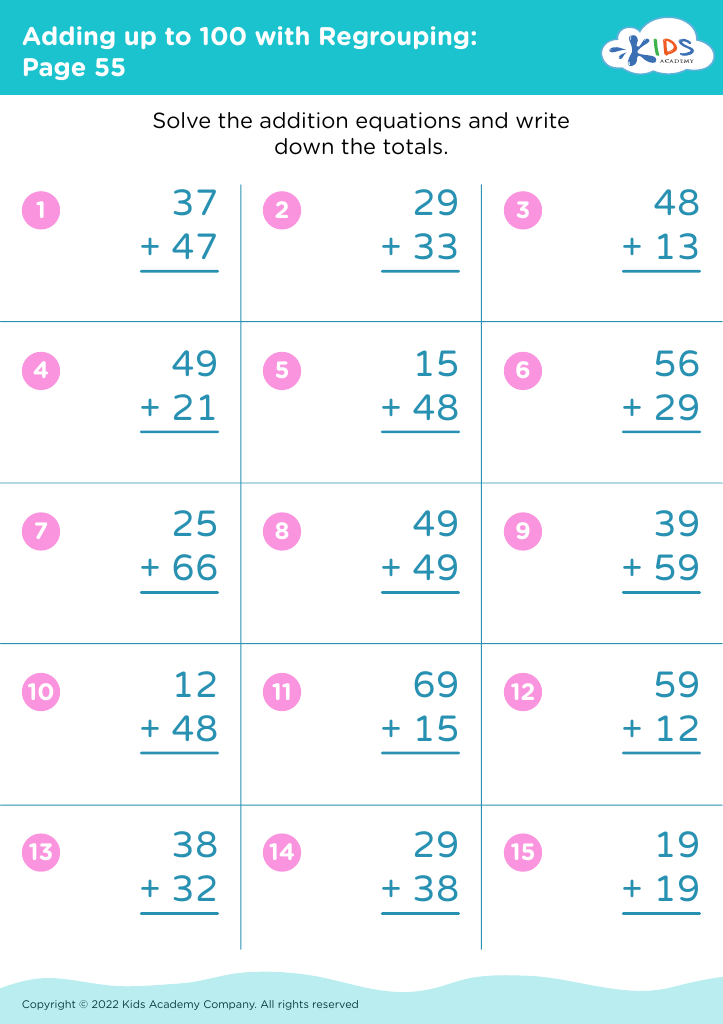
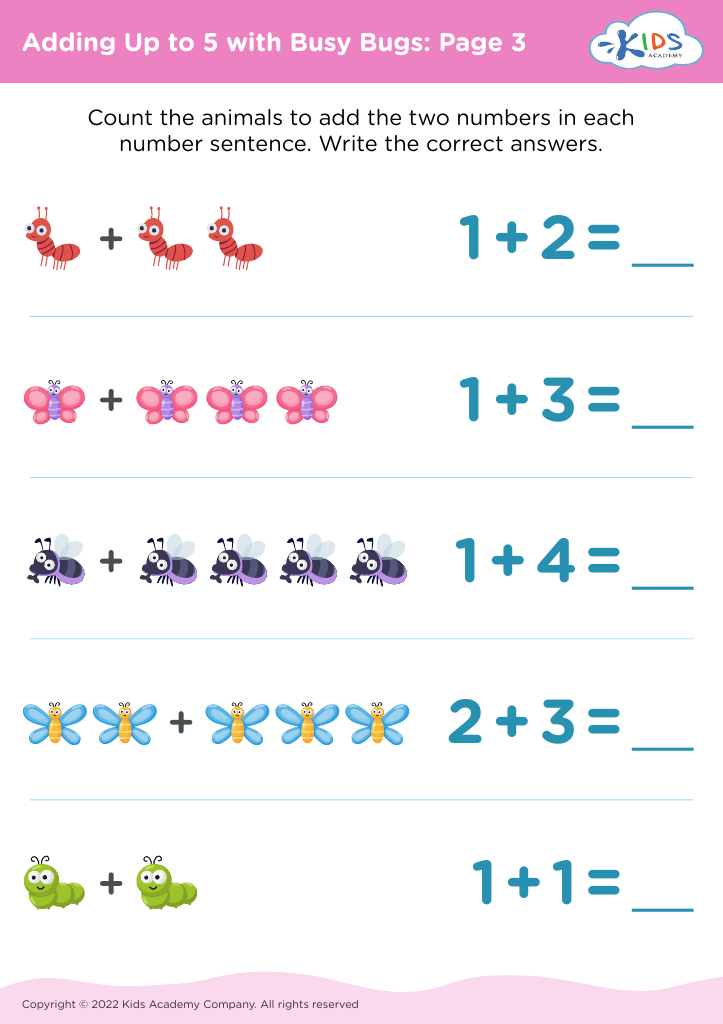
Unlock your child's potential with our "Improving Fine Motor Skills Math Worksheets" designed specifically for ages 5-7! These engaging worksheets seamlessly integrate handwriting practice with essential math concepts, helping young learners develop coordination and dexterity. Each activity is crafted to not only enhance fine motor skills but also support early math understanding, making learning both fun and effective. With vibrant visuals and age-appropriate challenges, your child will be motivated to practice, refine their skills, and build confidence. Explore our collection today and watch as your child excel in both math and fine motor abilities through enjoyable, interactive exercises!
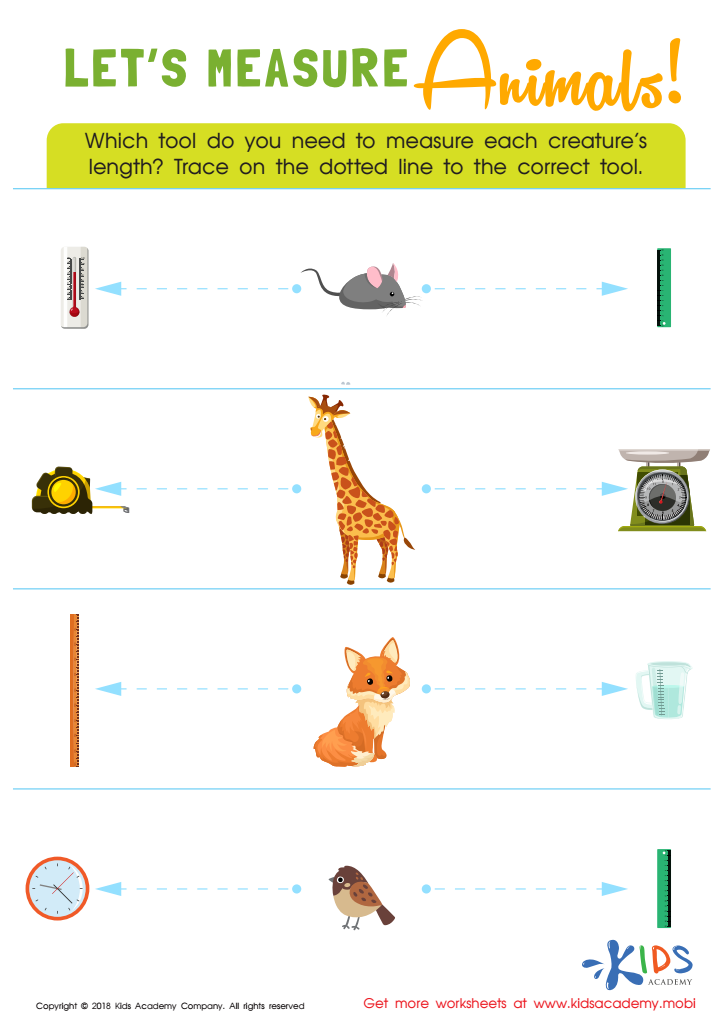
Let's Measure Animals! Worksheet
 Assign to My Students








Improving fine motor skills in children ages 5-7 is crucial for several reasons, particularly in the context of math education. Fine motor skills refer to the ability to use small muscles in the hands and fingers to perform precise movements. These skills are foundational for children's overall development, influencing their ability to manipulate tools and engage in activities that promote learning.
In math, fine motor skills are essential for tasks such as writing numbers, moving objects for counting, drawing shapes, and later, performing calculations. When children are adept at fine motor skills, they can handle pencils, rulers, and other educational tools with greater control and confidence. This proficiency allows them to express their mathematical understanding more effectively, whether through written work or hands-on activities.
Moreover, the development of fine motor skills enhances cognitive processes, as children improve coordination between their hands and minds. Engaging in activities like cutting, drawing, and building with blocks not only boosts fine motor coordination but also promotes problem-solving and critical thinking, integral components of math learning.
Ultimately, when parents and teachers prioritize fine motor skill development, they set the stage for a stronger mathematical foundation, leading to greater academic success and increased confidence in young learners.








