
Sorting abilities Math Worksheets for Ages 5-7
3 filtered results
Difficulty Level
Grade
Age
-
From - To
Subject
Activity
Standards
Boost your child's early math skills with our "Sorting Abilities Math Worksheets" designed for ages 5-7. These engaging activities help young learners develop logical thinking by categorizing objects based on different attributes like color, shape, and size. Ideal for both classroom and at-home practice, our worksheets make learning fun and interactive. Each sheet is carefully crafted to challenge and delight, ensuring kids enhance their sorting skills while enjoying their educational journey. Equip your child with foundational abilities essential for future academic success. Explore our collection of printable worksheets and turn sorting practice into an exciting adventure!
Favorites
With answer key
Interactive
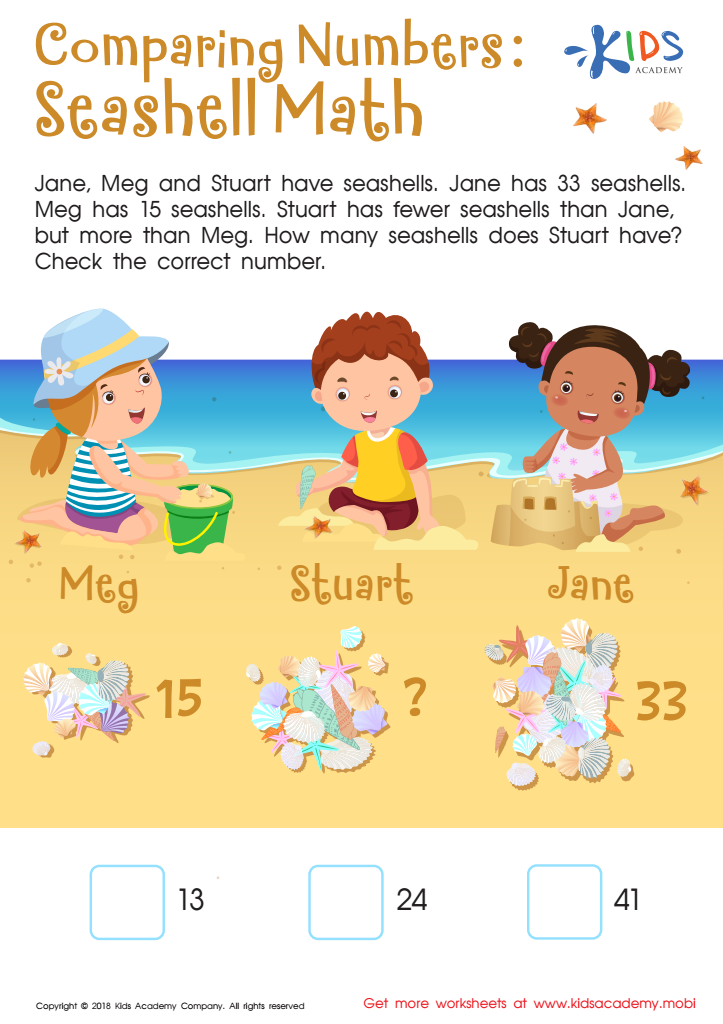
Seashell Collectors Worksheet
Bring beach fun into math with this printable worksheet! Carefully read the text with your child and figure out how many seashells Stuart has - more than Meg's, less than Jane's. Forget boring indoor math; your child won't want to miss out on this fun activity!
 Assign to My Students
Seashell Collectors Worksheet
Worksheet
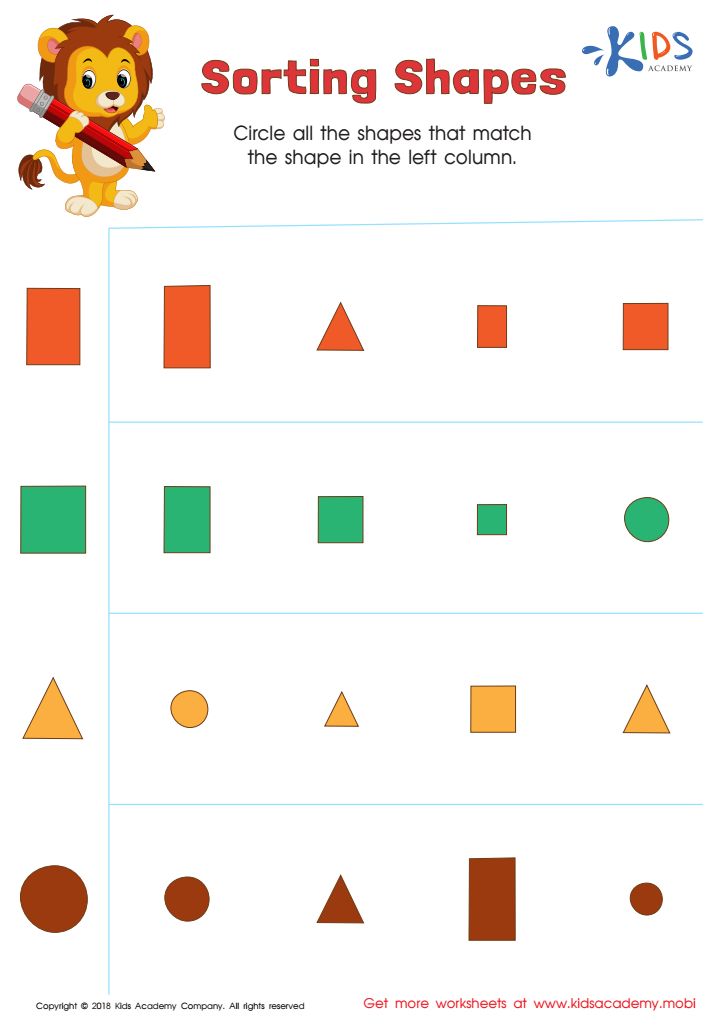
Sorting Shapes - Part 2 Worksheet
Tired of dull worksheets? Look no further than Kids Academy's colorful shape-sorting worksheet! It's perfect for challenging your toddler's problem-solving skills. Print the free PDF page and let your child practice the basics of geometry. Have them work down the left column, circling the shapes on the right that match. It's a great way to form a strong foundation in early learning.
Sorting Shapes - Part 2 Worksheet
Worksheet
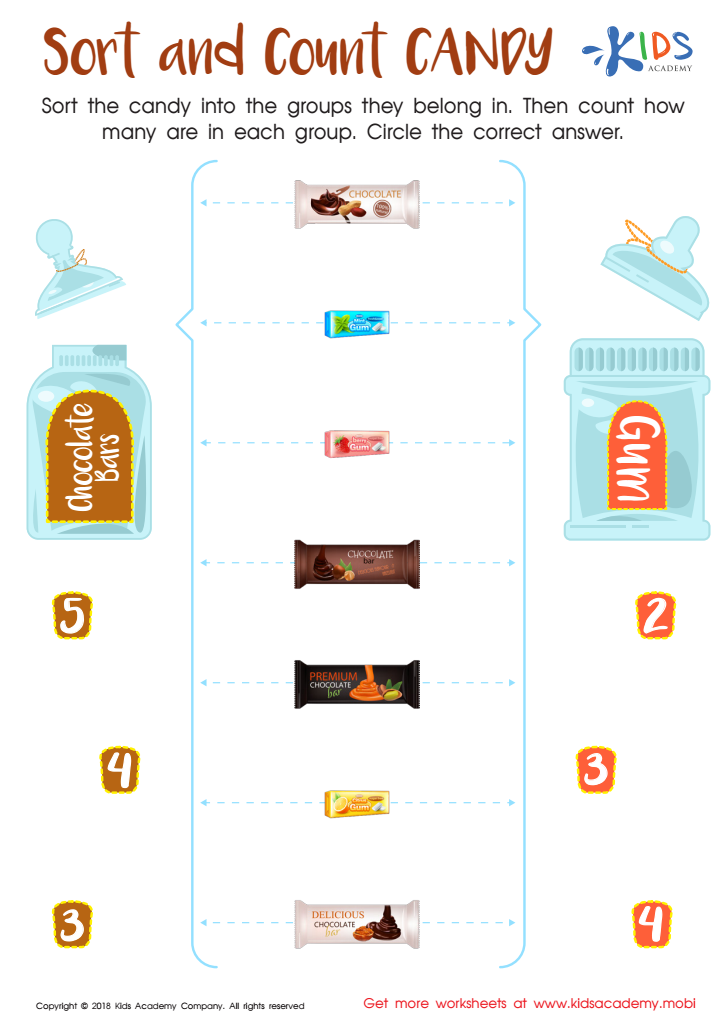
Sort and Count Candy Worksheet
Sort chocolate and candy with your kids! Help them use recognizable items and pictures to sort, practice counting with one-to-one representation, and develop their fine motor skills with the traceable lines. Download this free worksheet to get started. Yum!
Sort and Count Candy Worksheet
Worksheet
Join Kids Academy for Free
Who is primarily going to use this learning content?








Parents and teachers should care about developing sorting abilities in children aged 5-7 because it lays a crucial foundation for more complex mathematical and analytical skills. Sorting helps children to recognize patterns, categorize items, and understand relationships, which are essential components of mathematical reasoning. By learning to group objects based on attributes such as color, size, shape, or function, children begin to grasp the concept of classification, a fundamental skill in both math and science.
At this developmental stage, sorting also enhances children’s cognitive abilities, including decision-making and problem-solving. These skills are critical as they navigate more challenging academic tasks in future schooling. Additionally, sorting activities can strengthen a child's fine motor skills and attention to detail, further supporting their overall academic growth.
Moreover, engaging in sorting exercises helps build children's vocabulary and language skills. When discussing their sorting choices, children learn to articulate their thinking, giving them the tools to express logical thought processes clearly. This verbal articulation reinforces their understanding and retention of concepts.
Ultimately, early mastery of sorting not only boosts confidence in mathematical abilities but also nurtures a love for learning by making abstract concepts tangible and interactive. Prioritizing these skills thus ensures a strong, well-rounded cognitive and academic foundation for young learners.








