Basic Arithmetic Word Problems Worksheets for Ages 5-7
5 filtered results
-
From - To
Discover our engaging Basic Arithmetic Word Problems Worksheets designed specifically for children aged 5-7! These worksheets make learning fun and interactive, helping young learners develop essential math skills through relatable and age-appropriate scenarios. Each activity encourages problem-solving and critical thinking, enabling kids to apply their knowledge of addition and subtraction in real-life contexts. Perfect for homeschoolers or classroom use, our worksheets cater to different learning paces and styles. With colorful graphics and easy-to-understand language, your child will be excited to practice their math skills. Check out our collection and support your child's mathematical journey today!
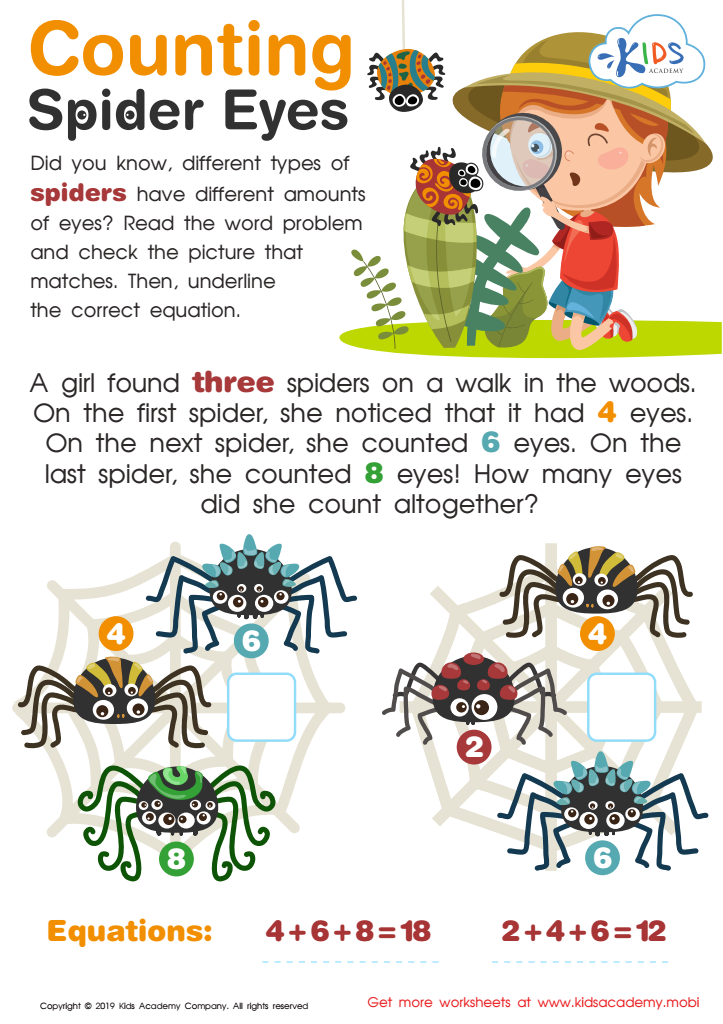
Counting Spider Eyes Worksheet
 Assign to My Students
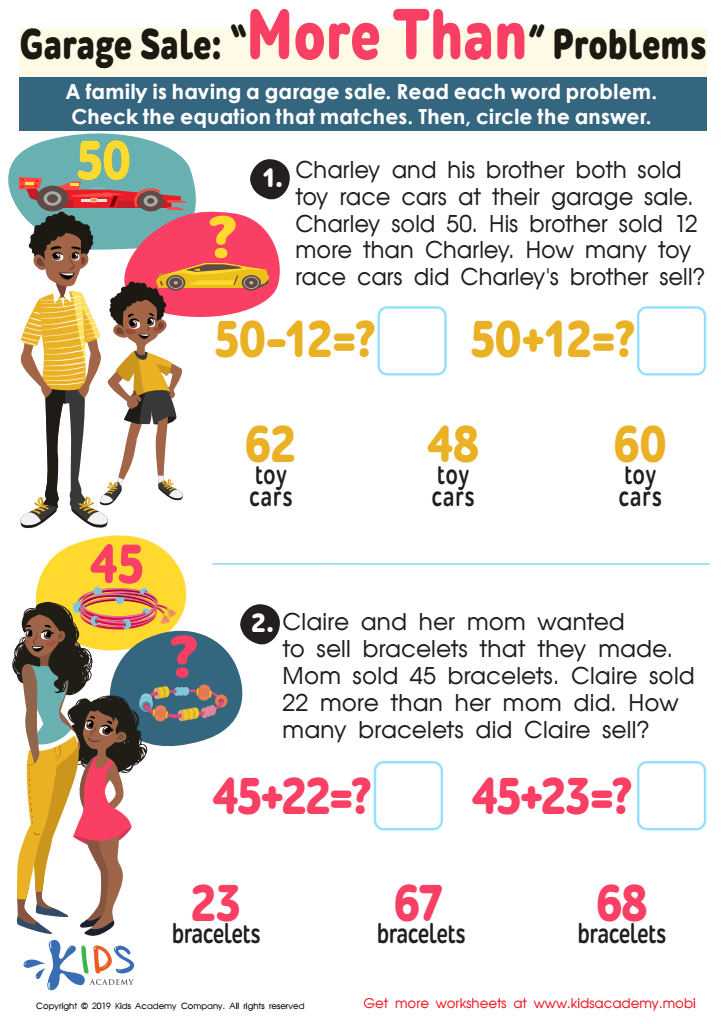
Garage Sale - More yhan Worksheet
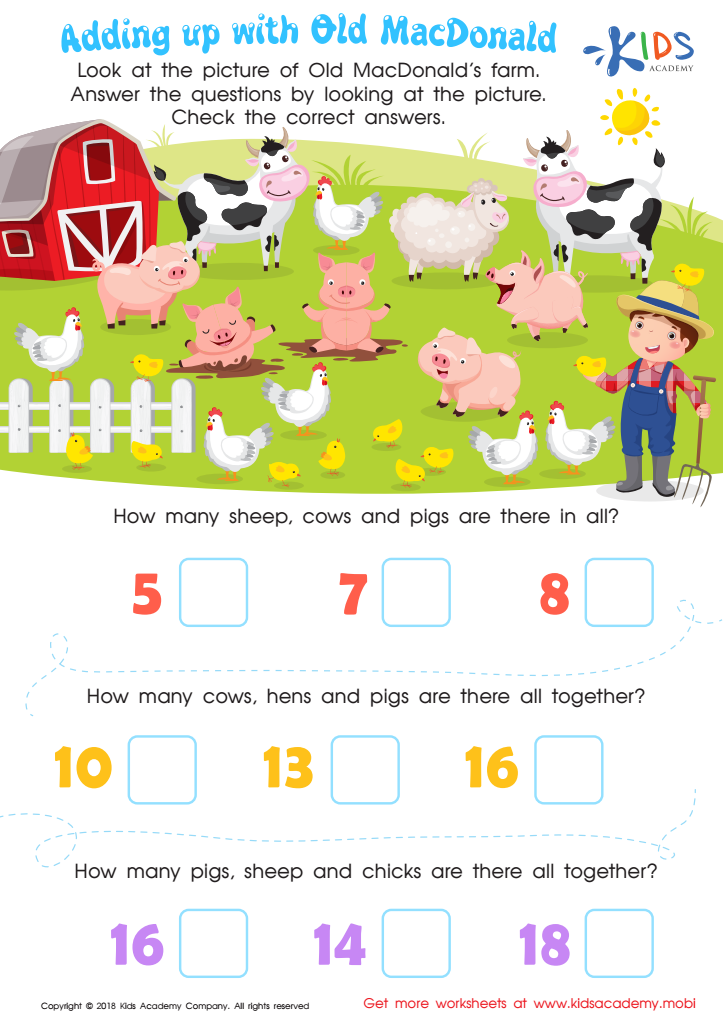
Adding Up with Old MacDonald Worksheet
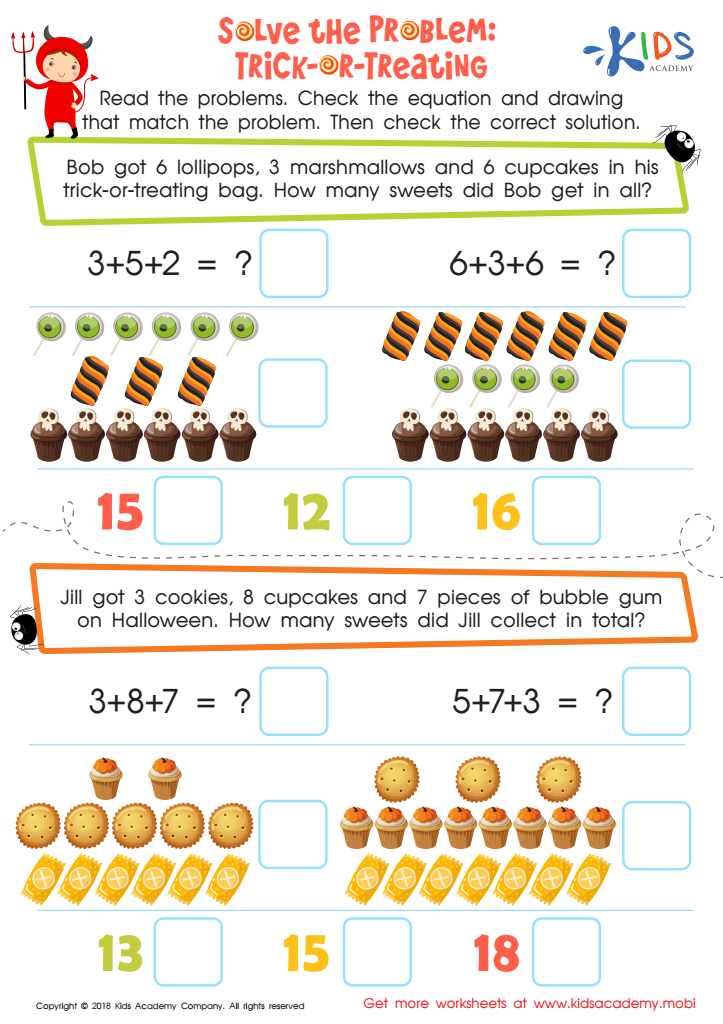
Solve the Problem: Trick–or–treating Worksheet
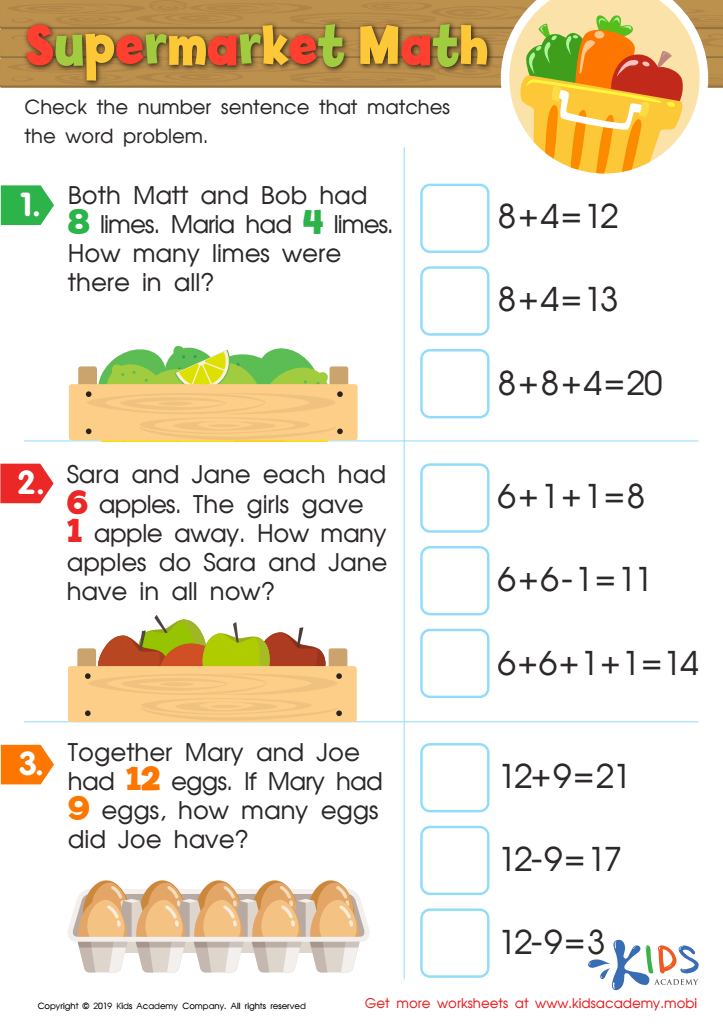
Supermarket Math Worksheet








Basic arithmetic word problems serve a crucial role in the mathematical development of children ages 5-7, and it is essential for both parents and teachers to recognize their importance. At this age, children are not only learning to perform basic calculations but also to understand that math is a way to solve real-life situations. Word problems encourage critical thinking and reasoning skills, moving beyond rote memorization to comprehension.
Children develop their language and reading skills as they decode the problems, enhancing both their mathematical and literacy abilities concurrently. Solving these problems cultivates perseverance, as students learn to navigate challenges and develop problem-solving strategies. Additionally, they create a context for mathematical concepts, helping children grasp the “why” behind the operations.
Moreover, engaging with word problems fosters communication skills; children learn to articulate their thought processes and reasoning aloud. This collaborative aspect can strengthen parent-child or teacher-student relationships, transforming math into a shared, enjoyable experience rather than a chore. By emphasizing basic arithmetic word problems, caregivers and educators are equipping children with foundational skills that promote overall cognitive development, resilience, and a positive attitude towards learning, setting the stage for more complex mathematical concepts in the future.








