Enhancing observation skills Reading Non-Fiction Worksheets for Ages 5-7
3 filtered results
-
From - To
Discover our "Enhancing Observation Skills Reading Non-Fiction Worksheets for Ages 5-7" – a dynamic resource designed to boost young learners' attention to detail and comprehension. Our engaging printable worksheets provide interactive activities to sharpen observational skills through age-appropriate non-fiction texts. Each worksheet is specifically tailored to help children identify key information, understand context, and observe details within the text. Perfect for classroom or at-home learning, these worksheets are crafted by educators to support the development of critical reading skills and a lifelong love for learning. Equip your young readers today and watch their skills flourish!
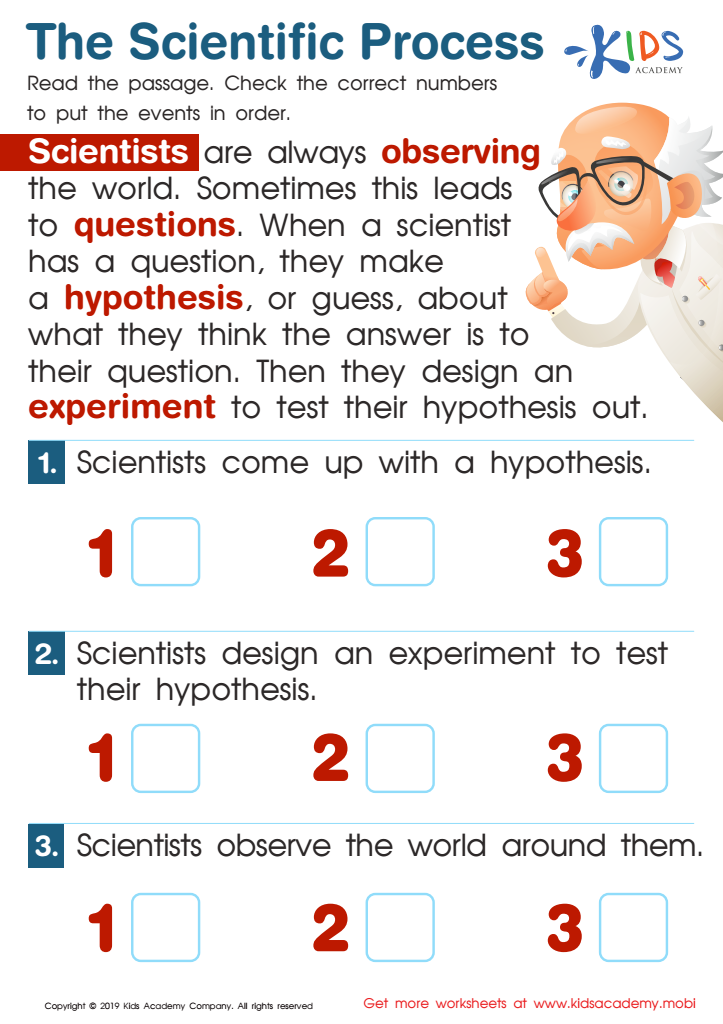
The Scientific Process Worksheet
 Assign to My Students
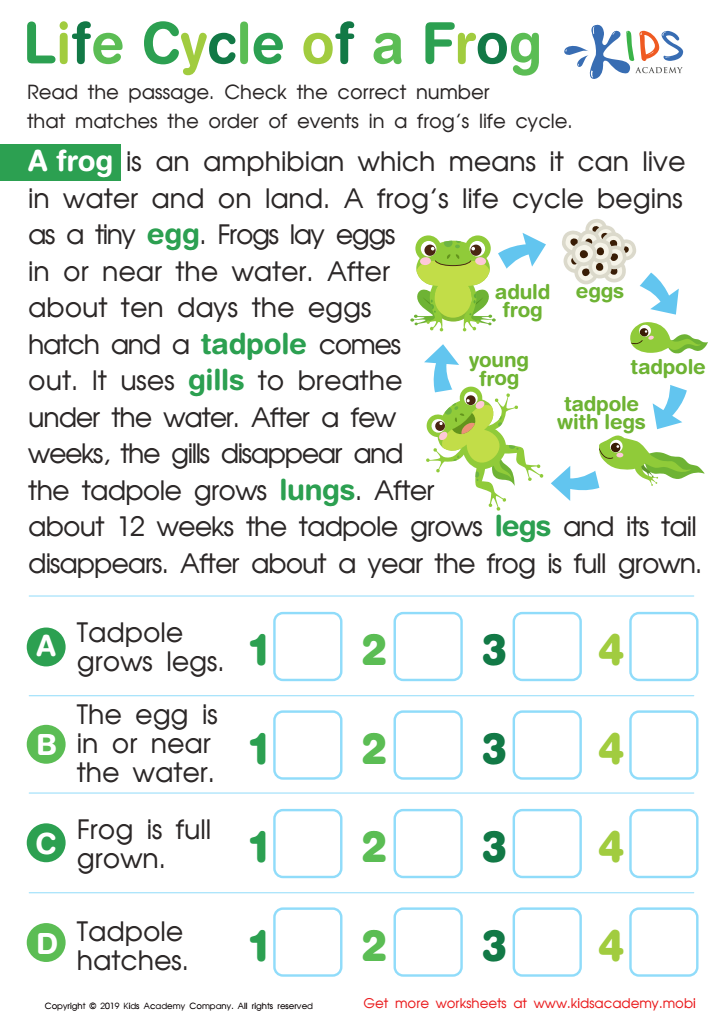
Life Cycle of a Frog Worksheet
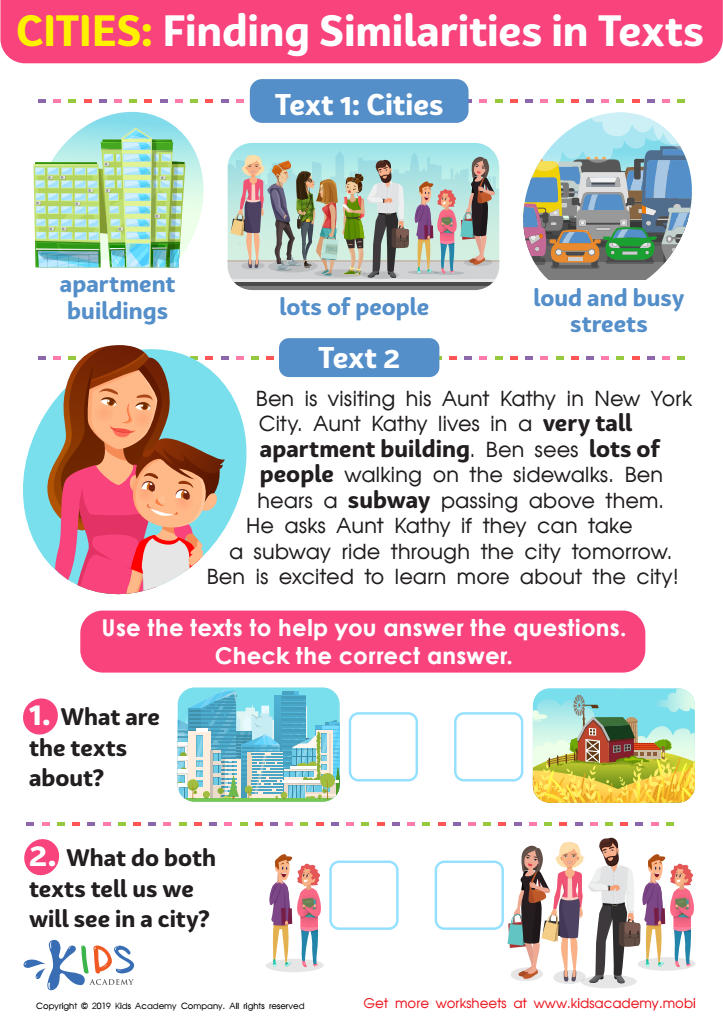
Cities: Finding Similarities Worksheet








Enhancing observation skills while reading non-fiction for ages 5-7 lays an essential foundation for lifelong learning. At this early developmental stage, children are naturally curious and eager to explore their world. By fostering meticulous observation skills during reading activities, parents and teachers can significantly enhance children's ability to understand and engage with factual content.
Reading non-fiction books helps young learners develop a keen eye for detail. As they identify and comprehend facts, patterns, and sequences, their cognitive and analytical skills are sharpened. This attention to detail aids in memory retention, enabling children to recall and apply information more effectively.
Moreover, nurturing observational skills improves children's language and vocabulary. As they read non-fiction, they are exposed to a diverse array of terminology and concepts that spoken or fictional narratives might not cover. This broader vocabulary promotes better communication skills and builds academic confidence.
Additionally, observing and discussing non-fiction content encourages critical thinking and inquiry-based learning. When children ask questions about what they read, it stimulates intellectual curiosity and fosters an investigative mindset. These early skills are crucial for success in future academic endeavors and in their daily lives.
Ultimately, integrating observation skills in reading non-fiction allows children to become attentive readers and thoughtful learners, setting them up for future academic and personal success.








