Historical Knowledge Reading Non-Fiction Worksheets for Ages 5-7
5 filtered results
-
From - To
Welcome to our "Historical Knowledge Reading Non-Fiction Worksheets" tailored for ages 5-7! These engaging resources are designed to introduce young learners to the fascinating world of history through fun, age-appropriate reading materials. Our worksheets feature captivating non-fiction texts that spark curiosity and promote comprehension skills. Each activity encourages children to explore significant historical events, figures, and concepts, fostering a love for learning. Ideal for classroom or home use, these worksheets aid in developing critical thinking, vocabulary, and reading comprehension. Discover the joy of history with engaging content that makes learning exciting and accessible for early readers!
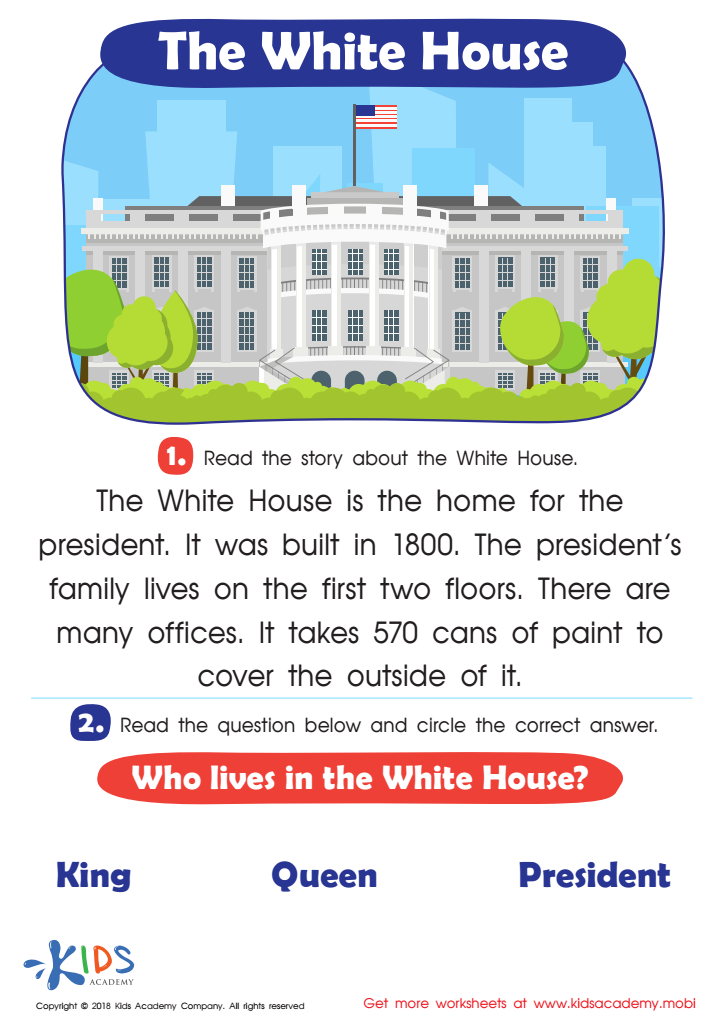
White House Worksheet
 Assign to My Students
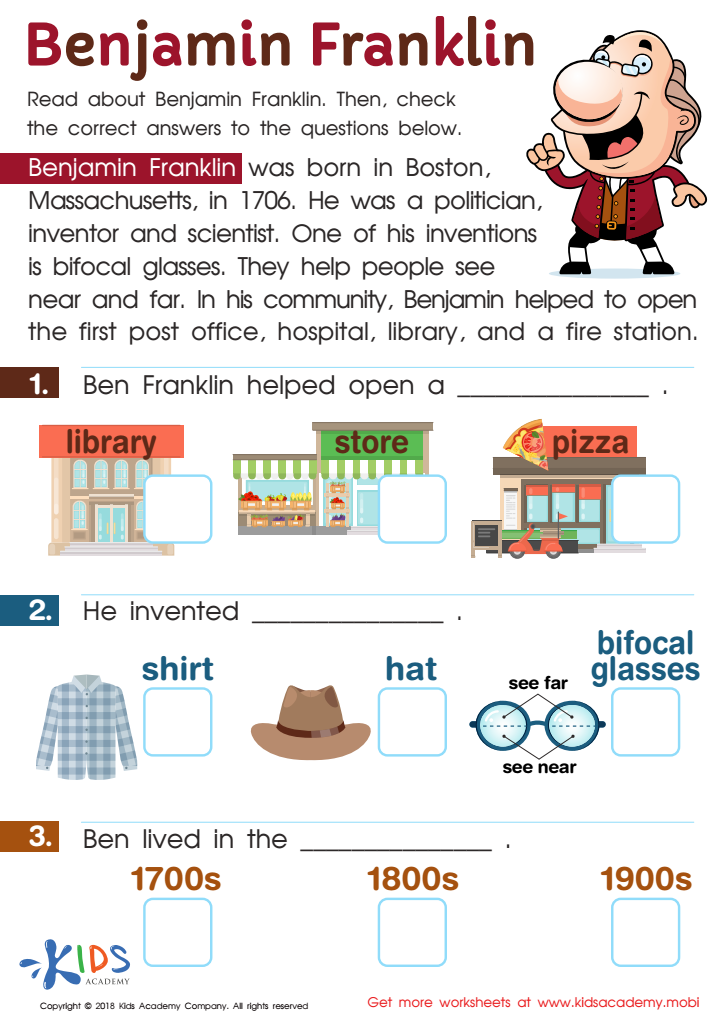
Benjamin Franklin Worksheet
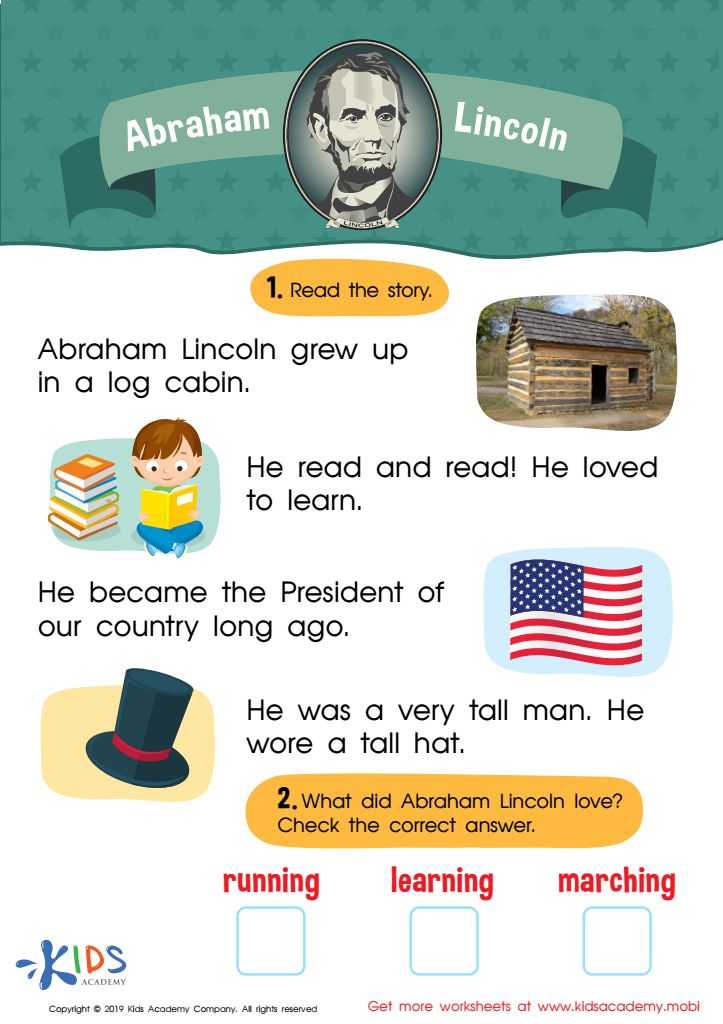
Abraham Lincoln Worksheet
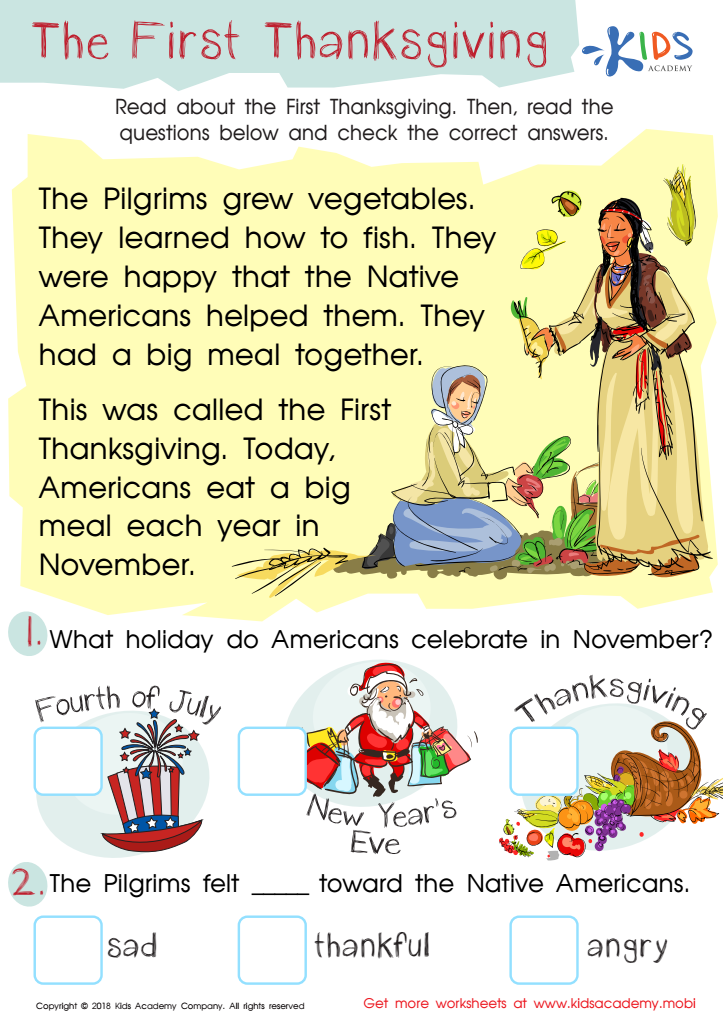
Assessment: First Thanksgiving Worksheet
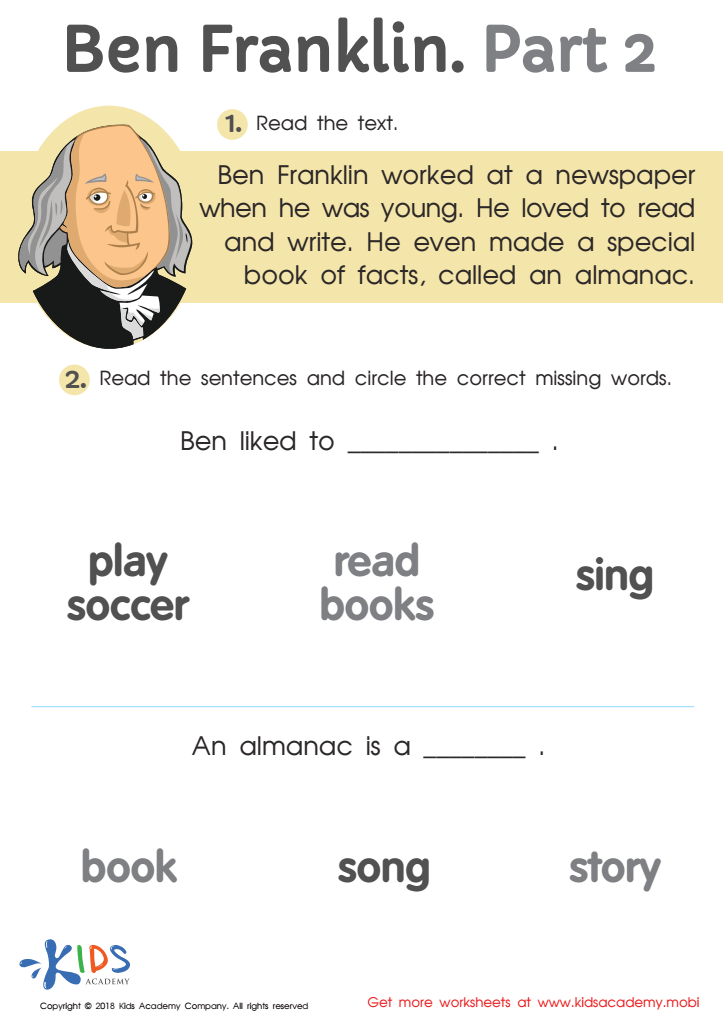
Ben Franklin Part 2 Worksheet








Parents and teachers should prioritize historical knowledge reading non-fiction for children ages 5-7 because it fosters early critical thinking skills and enhances cognitive development. At this age, children are naturally curious about the world around them. By introducing them to historical events, figures, and cultural experiences through engaging non-fiction texts, we nurture their ability to ask questions, draw connections, and understand context.
Non-fiction history books often present facts in a relatable and age-appropriate manner, making complex topics accessible and enjoyable. This can ignite a passion for learning and a lifelong interest in history. Moreover, early exposure to non-fiction supports literacy development by expanding vocabulary and enhancing reading comprehension.
Understanding history also helps children to develop empathy as they learn about diverse cultures and the challenges different societies have faced. This awareness fosters inclusivity and respect for others, which is crucial in our increasingly globalized world.
In sum, reading non-fiction about history equips young learners with essential skills, nurtures their curiosity, and cultivates a love for learning, all while preparing them to be informed, open-minded citizens in the future. Encouraging historical knowledge at an early age lays a solid foundation for lifelong exploration and understanding of the world.








