Logical Reasoning Reading Non-Fiction Worksheets for Ages 5-7
3 filtered results
-
From - To
Unlock the power of critical thinking with our Logical Reasoning Reading Non-Fiction Worksheets for Ages 5-7! Designed specifically for early learners, these engaging worksheets teach children to analyze, interpret, and reason through non-fiction texts. Each worksheet features age-appropriate reading passages that spark curiosity and encourage comprehension skills. Kids will improve their logical reasoning abilities while exploring fascinating topics. Perfect for enhancing classroom learning or enjoyable at-home activities, our worksheets boost confidence and foster a lifelong love of learning. Dive into exciting non-fiction adventures and watch your child's analytical skills flourish with our fun and educational resources!
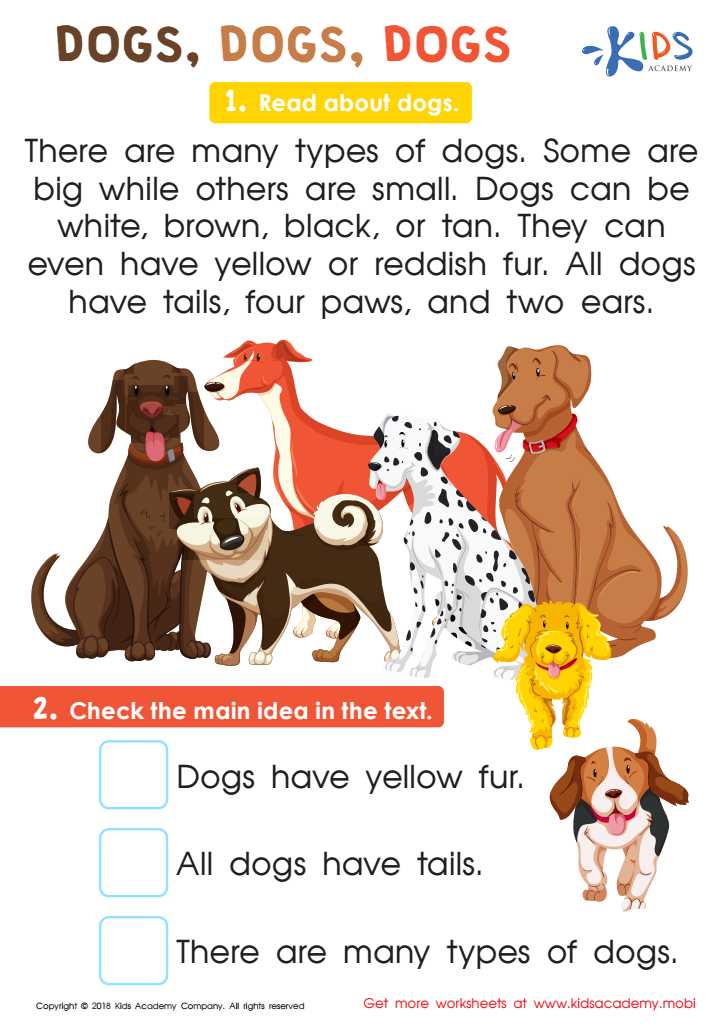
Dogs, Dogs Worksheet
 Assign to My Students
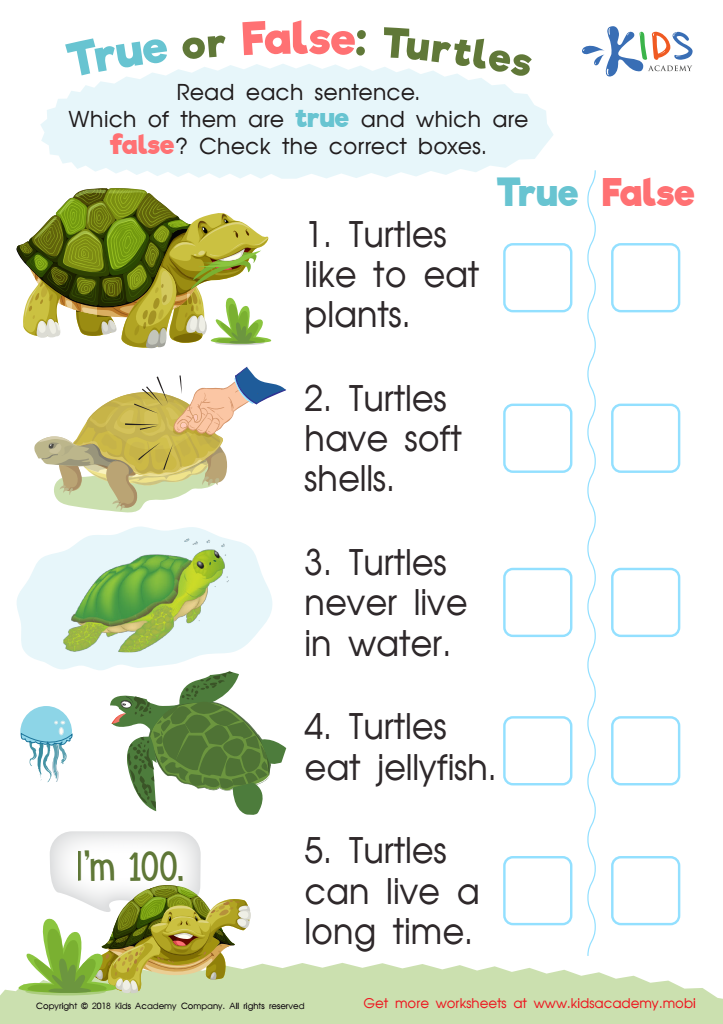
True or False: Turtles Worksheet
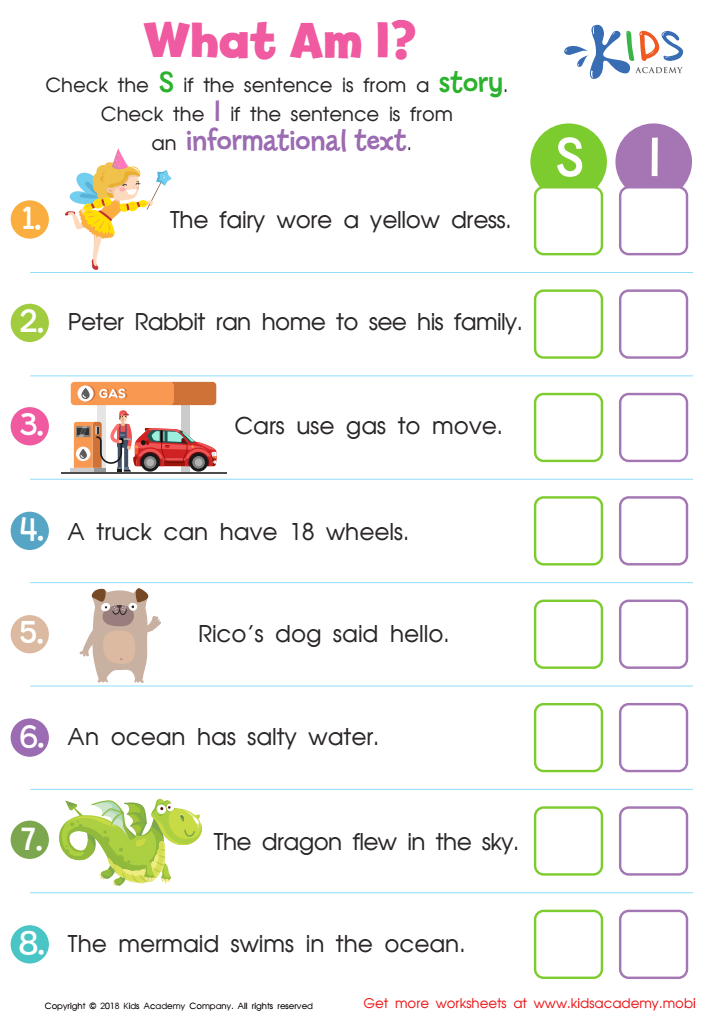
What Am I? Worksheet








Parents and teachers should prioritize Logical Reasoning Reading Non-Fiction for children ages 5-7 as it lays foundational skills for critical thinking and comprehension. At this stage, children are naturally curious and eager to understand the world around them; introducing them to non-fiction texts nurtures this curiosity. Non-fiction reading exposes young learners to factual information, fostering their ability to analyze, compare, and synthesize knowledge.
Logical reasoning is crucial in developing problem-solving abilities. Engaging with non-fiction helps children learn how to present arguments, identify cause and effect, and make connections between different concepts. This type of reading enriches vocabulary and enhances comprehension skills, which are vital for academic success.
Moreover, exposure to a variety of real-world topics can stimulate interest in science, history, and social studies, ultimately encouraging lifelong learning. When parents and teachers actively support logical reasoning through engaging non-fiction texts, they empower children to become inquisitive, informed individuals capable of critical thought. Early experiences with logical reasoning not only enrich literacy skills but also equip children to tackle complex challenges as they grow, making it essential for their overall cognitive development.








