Reading Skills Reading Non-Fiction Worksheets for Ages 5-7
3 filtered results
-
From - To
Enhance your child's reading proficiency with our engaging "Reading Skills: Non-Fiction Worksheets" designed for ages 5-7. These thoughtfully created worksheets help young learners develop critical reading skills through age-appropriate and informative content. Children will explore fascinating topics while practicing essential skills, such as comprehension, vocabulary building, and summarization. Each worksheet encourages exploration and critical thinking, making learning enjoyable and interactive. Perfect for home or classroom use, these resources support a comprehensive reading curriculum, helping budding readers gain confidence and knowledge. Start your child's journey into the world of non-fiction today and nurture a lifelong love for reading!
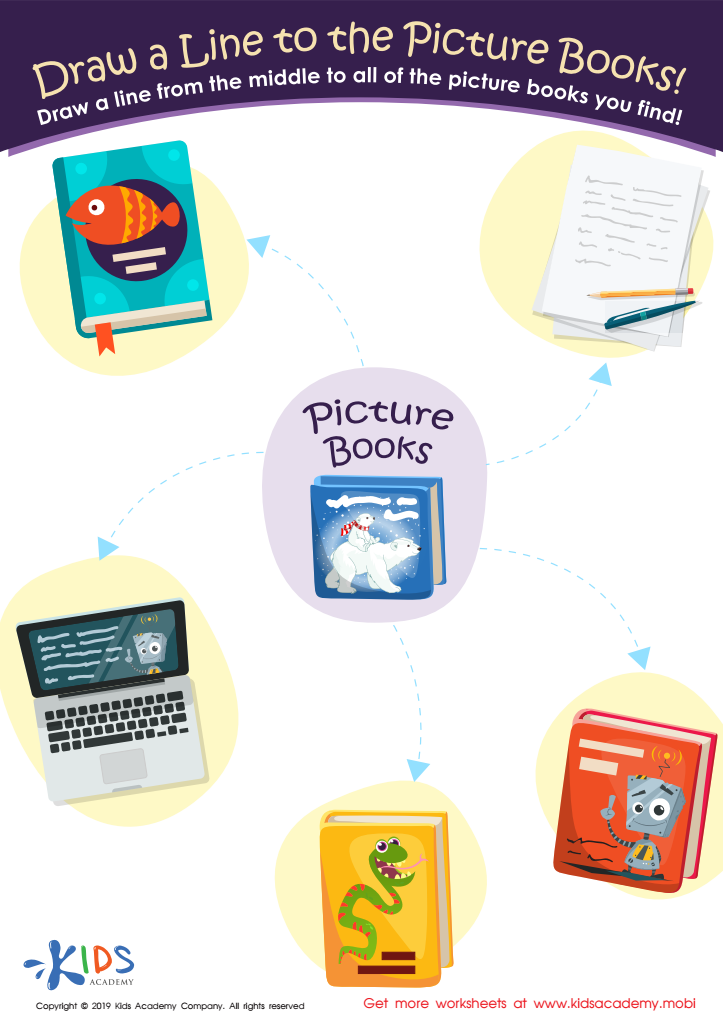
Draw a Line to the Picture Books Worksheet
 Assign to My Students
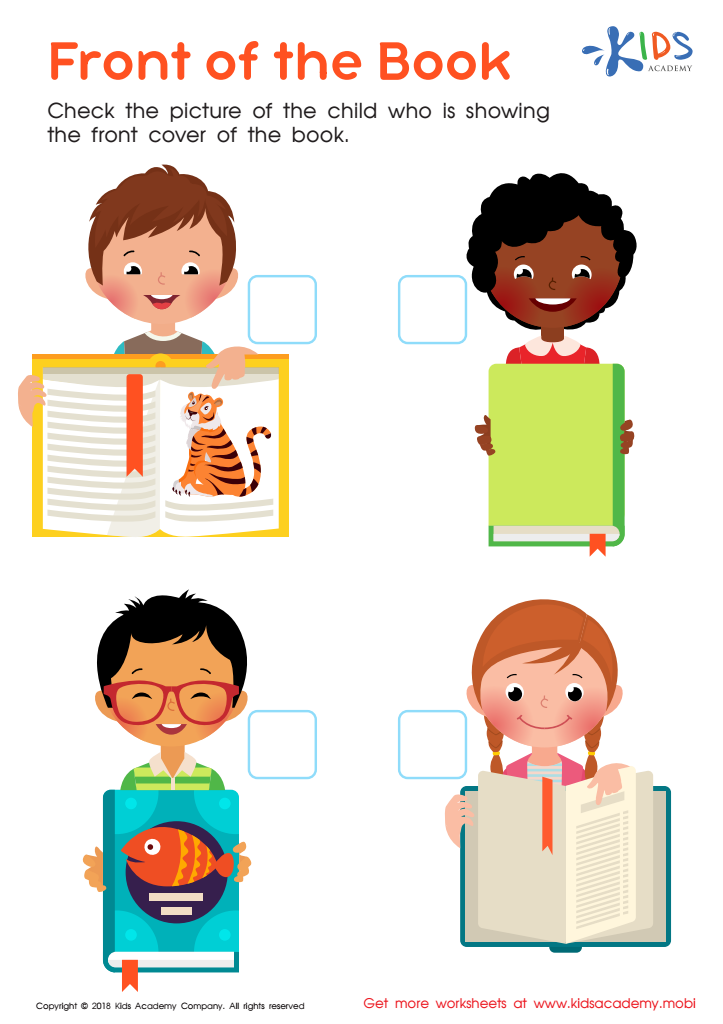
Front of the Book Worksheet
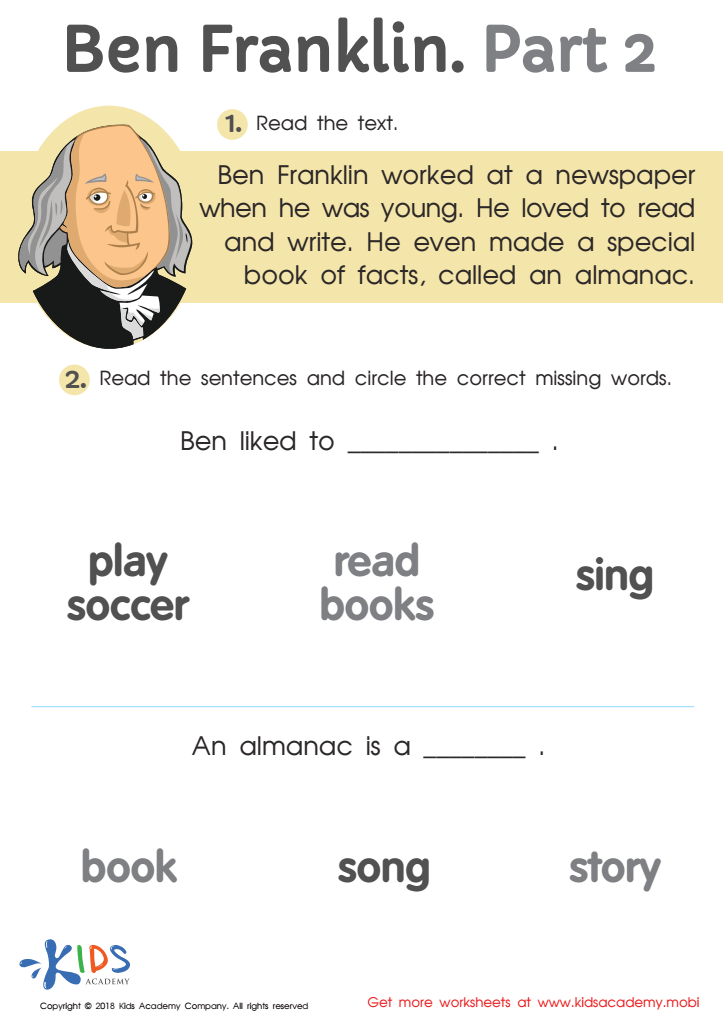
Ben Franklin Part 2 Worksheet








Parents and teachers should prioritize developing reading skills in non-fiction for children aged 5-7 because this foundational ability greatly enriches their understanding of the world. At this age, children are naturally curious and open to learning, making it an ideal time to introduce them to factual texts that can satiate their curiosity and answer their questions about how things work, nature, and history.
Reading non-fiction aids in vocabulary expansion, promoting the understanding of specific terminology related to various subjects. It enhances critical thinking skills as children learn to differentiate between facts and opinions and develop the ability to analyze information. Furthermore, engaging with non-fiction cultivates a love for reading by connecting literature to real-world contexts, making it relatable and relevant.
Additionally, building these reading skills lays the groundwork for future academic success. Early mastery of non-fiction reading equips children with the tools needed to tackle more complex subjects as they advance in their education. Overall, fostering reading skills in non-fiction not only supports cognitive development but also encourages lifelong learning, curiosity, and an informed perspective on the world around them. Thus, both parents and teachers must advocate for these essential skills during these formative years.








