Understanding life cycles Reading Non-Fiction Worksheets for Ages 5-7
3 filtered results
-
From - To
Explore the exciting world of life cycles with our engaging non-fiction reading worksheets designed for ages 5-7! These thoughtfully crafted resources will help young learners understand the fascinating processes of growth and development in plants and animals. Each worksheet encourages critical thinking and expands vocabulary while supporting reading skills through fun, accessible content. Kids will enjoy colorful illustrations and interactive activities that make learning about nature both educational and entertaining. Perfect for classroom use or at-home learning, our worksheets provide a valuable opportunity for children to connect with the natural world around them. Start your journey into life cycles today!
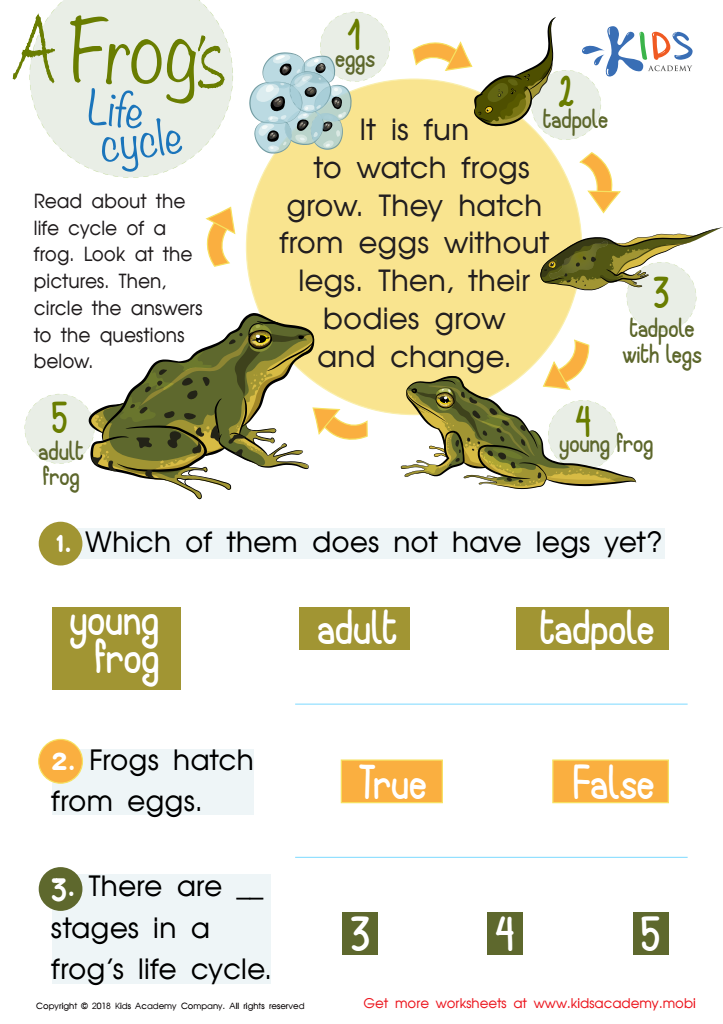
A Frog’s Life Cycle Worksheet
 Assign to My Students
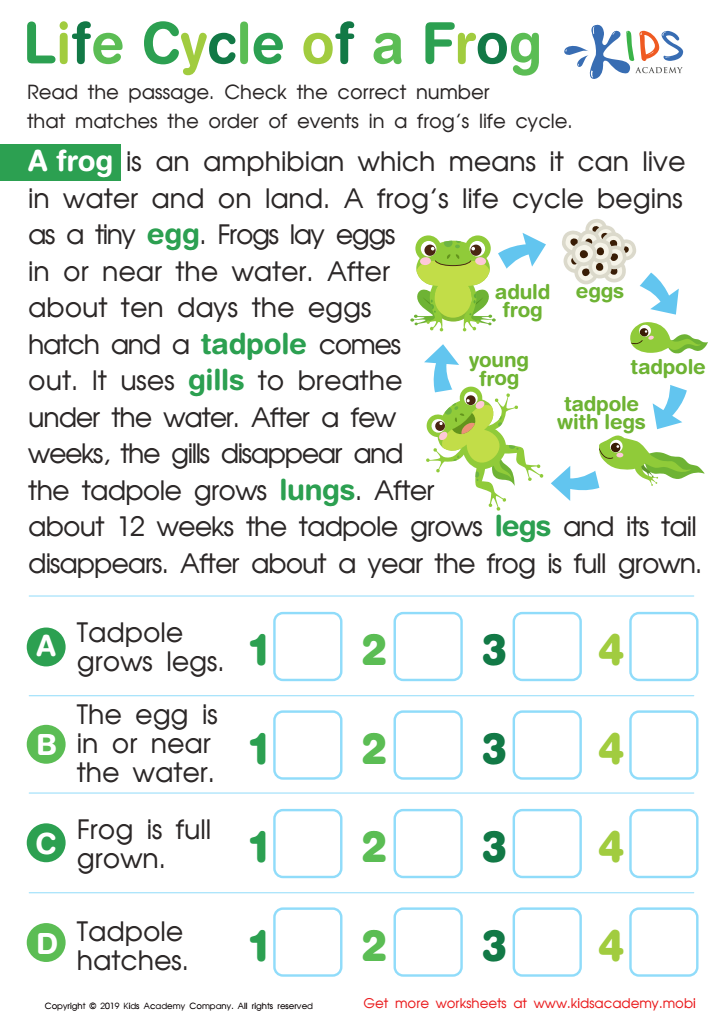
Life Cycle of a Frog Worksheet
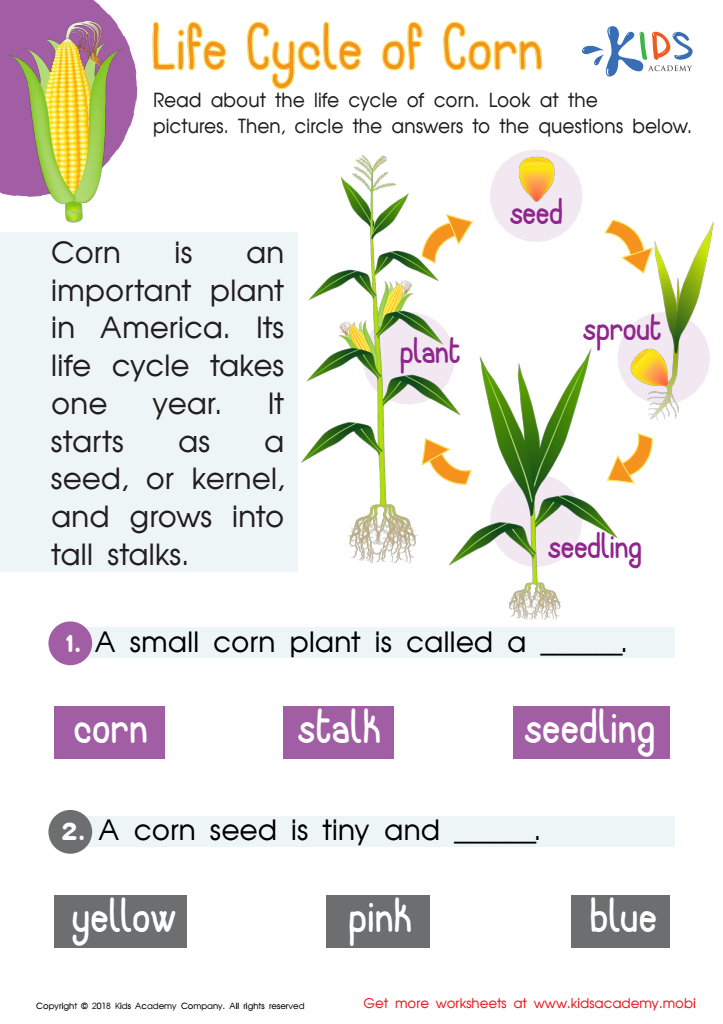
Life Cycle of Corn Worksheet








Understanding life cycles through reading non-fiction is essential for children aged 5-7 because it nurtures curiosity while grounding their knowledge in reality. At this developmental stage, children are naturally inquisitive about the world around them. Non-fiction texts provide factual information about the life cycles of various organisms, such as insects, plants, and animals, helping children grasp concepts like growth, change, and interdependence within ecosystems.
Parents and teachers should care about integrating this subject as it fosters critical thinking and observational skills. When children encounter real-life processes, they learn to ask questions, explore habitats, and draw connections between different species. This enhances their comprehension abilities and encourages a love for reading by engaging them with vibrant illustrations and context-rich narratives.
Moreover, understanding life cycles can build empathy in children towards all living things. It helps them appreciate the natural world and recognize the importance of environmental conservation. Early exposure to these concepts can also lay the foundation for future academic success in science and environmental studies. In essence, engaging with life cycles in non-fiction opens up a world of learning that benefits cognitive development and promotes responsible global citizenship.








