Understanding patterns Sight Words Worksheets for Ages 5-7
8 filtered results
-
From - To
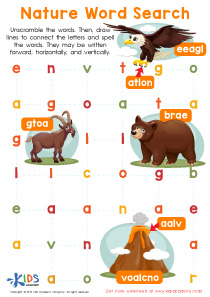
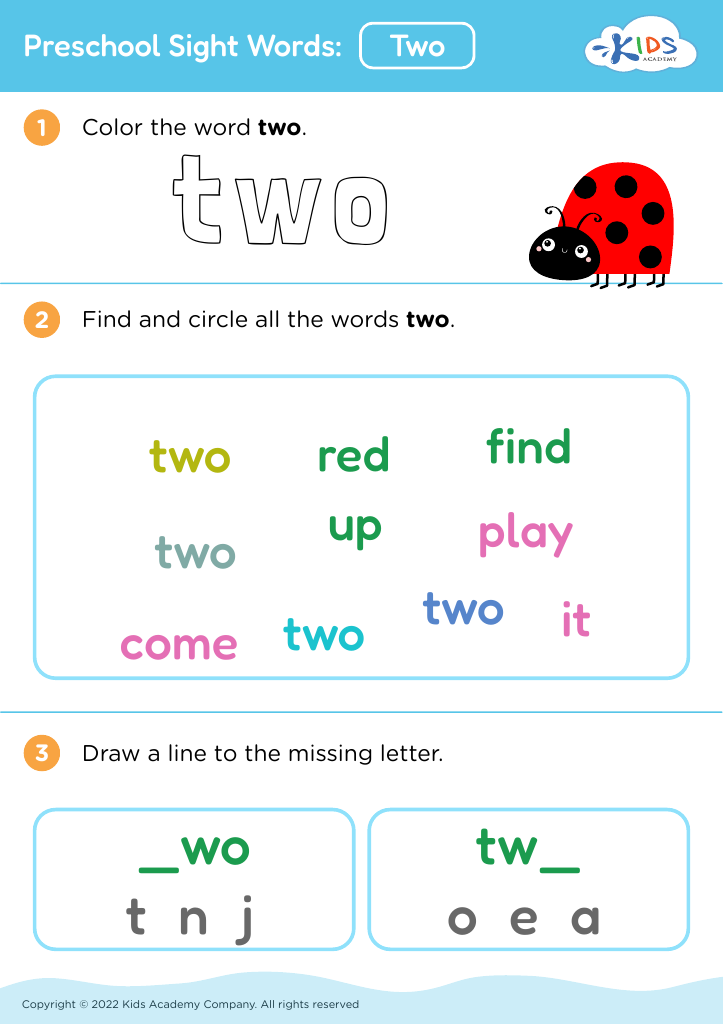
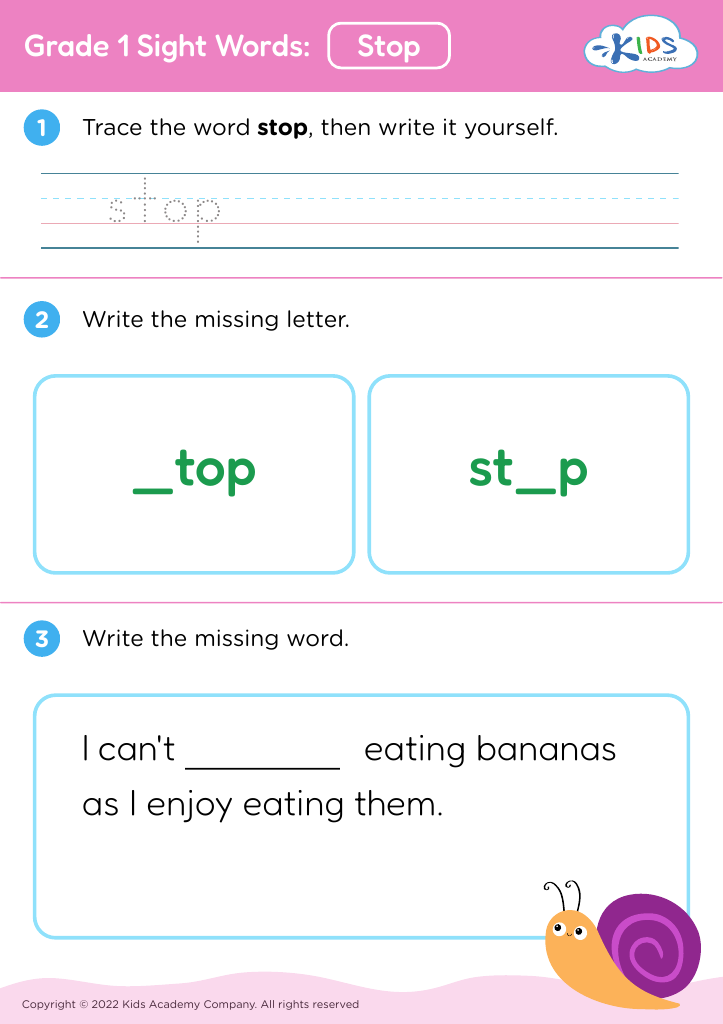
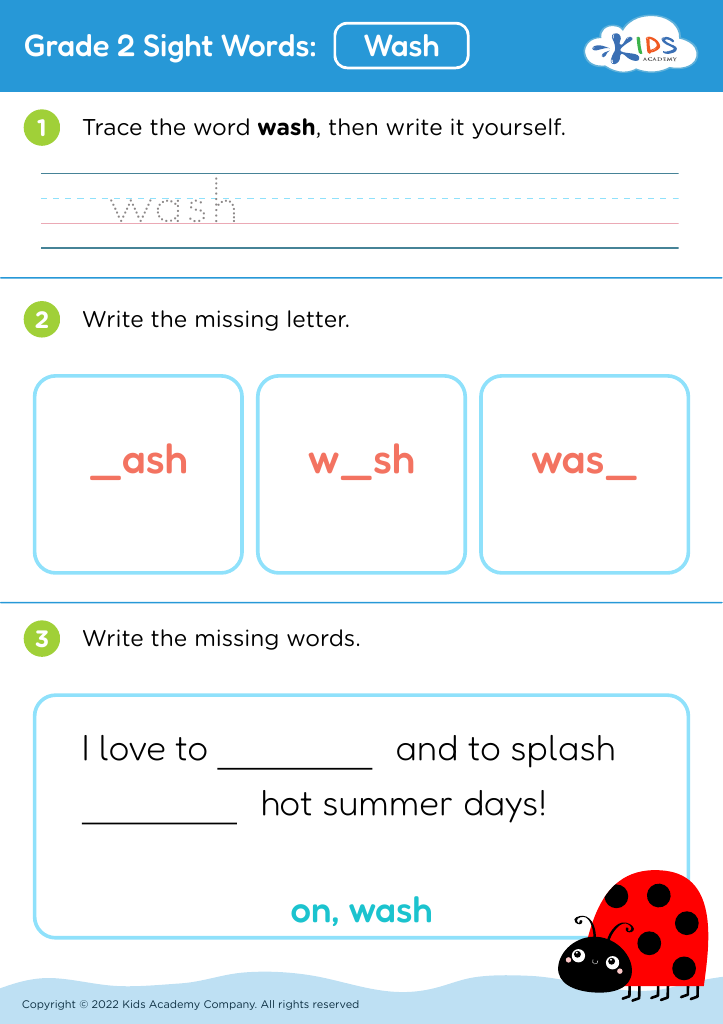
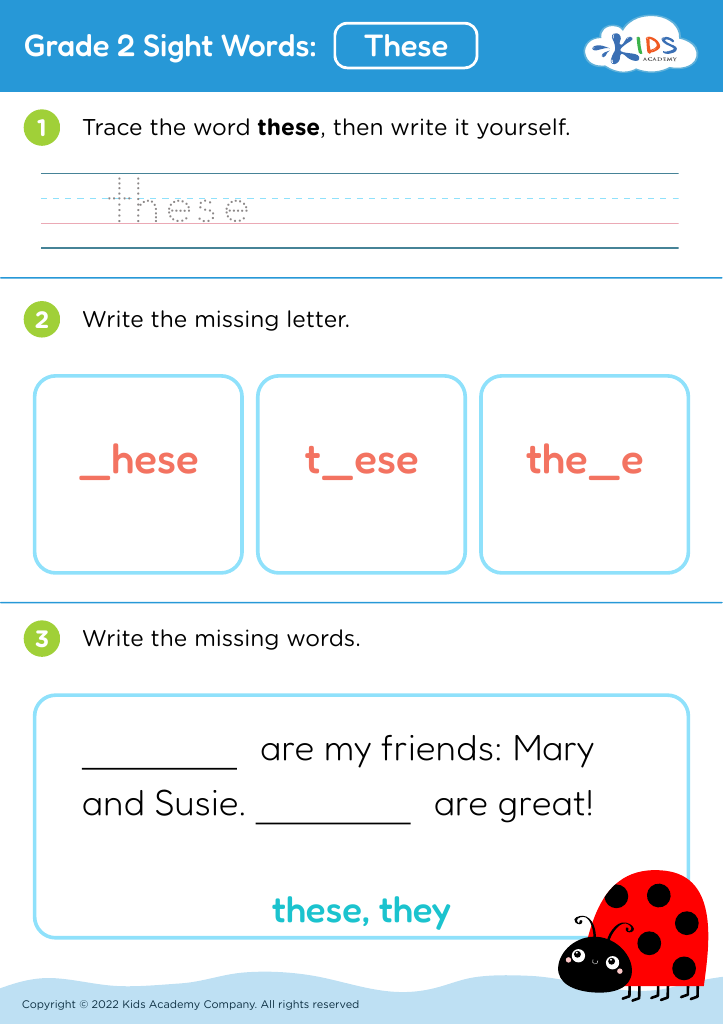
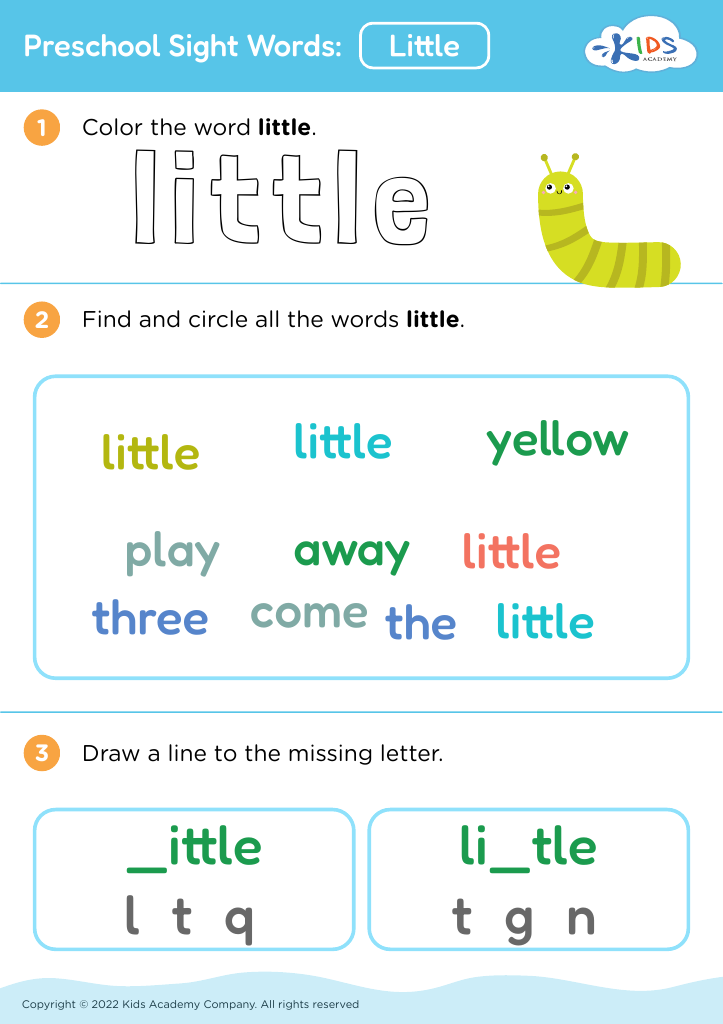
Explore our "Understanding Patterns Sight Words Worksheets" designed for children aged 5-7! These engaging worksheets help young learners recognize and comprehend basic sight words through fun patterns. By associating words with visual sequences, kids enhance their reading fluency and observational skills. Perfect for home and classroom use, our resources foster a love for reading while boosting vocabulary retention. Each worksheet encourages independent learning while providing educators and parents with a structured way to reinforce essential sight word recognition. Start your child's literacy journey today with these interactive and educational design tools tailored to keep them motivated and excited about reading!







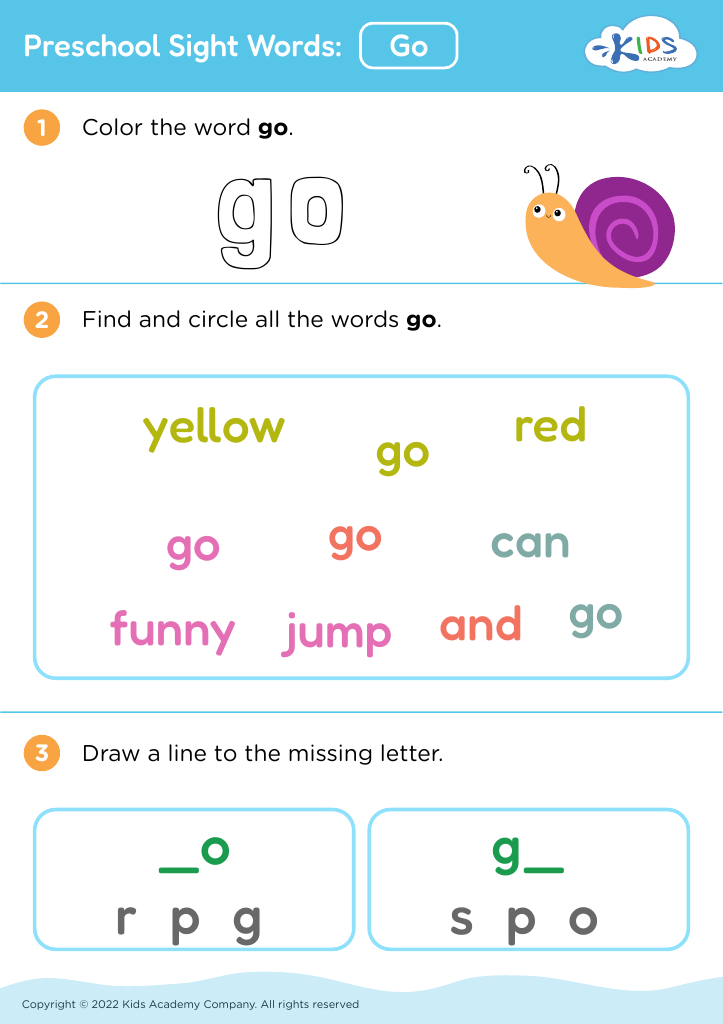
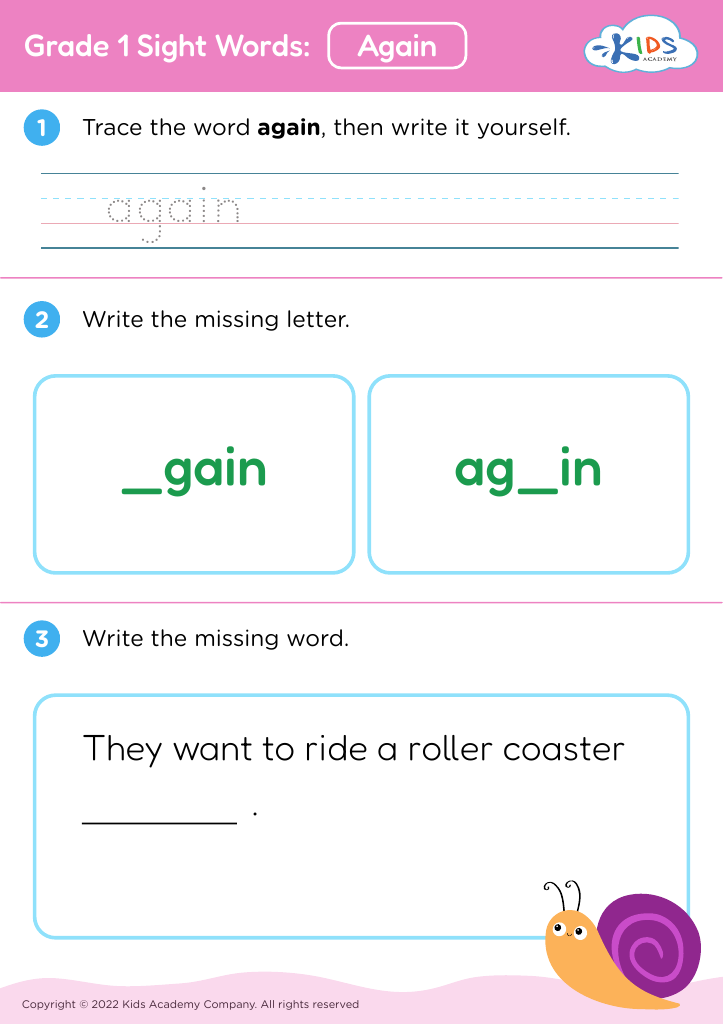
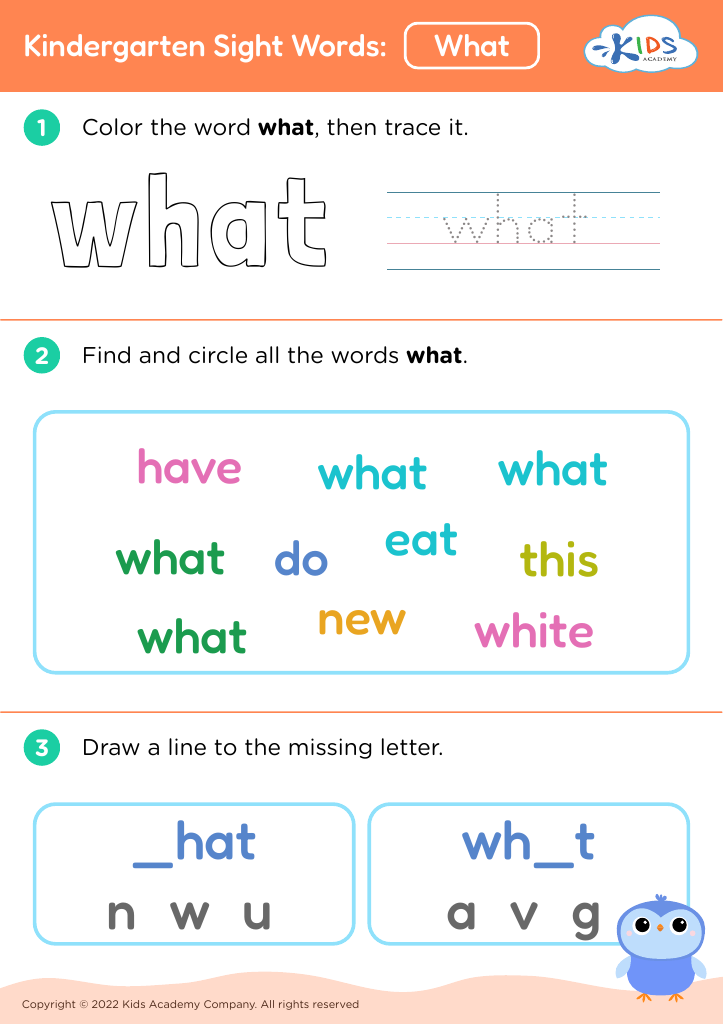








Understanding patterns and sight words is crucial for children ages 5-7 as it forms the foundation of their reading skills. At this developmental stage, children are eager to make connections and comprehend the world around them. Recognizing patterns in language helps them predict what comes next in a story or sentence, enhancing their comprehension and fluency.
Sight words—common words that appear frequently in written text—are essential for building reading confidence. The majority of children’s literature relies on a limited set of sight words, and being familiar with these words allows young learners to engage with texts independently. By mastering sight words, children spend less time decoding, allowing them to focus on meaning and enjoy the reading process.
Furthermore, understanding patterns and sight words supports cognitive development and enhances critical thinking skills. It encourages children to look for relationships between words, sounds, and sentences, paving the way for more advanced literacy skills as they progress in their education.
Parents and teachers should prioritize these elements in early literacy instruction, as they significantly influence a child’s motivation and attitudes toward reading. Developing these skills early on sets the stage for a lifetime of learning and academic success.