
Vocabulary development Animals Worksheets for Ages 5-7
4 filtered results
Difficulty Level
Grade
Age
-
From - To
Subject
Activity
Standards
Enhance your child's vocabulary with our exciting “Vocabulary Development Animals Worksheets” designed for ages 5-7. These engaging worksheets from Kids Academy are perfect for early learners to explore the fascinating world of animals while boosting their language skills. Through fun activities, children will learn and practice new animal-related words, improve pronunciation, and understanding. Ideal for both classroom and home learning, these expertly crafted resources support your child's educational journey by making science and vocabulary development a delight. Empower young minds with a love for animals and learning with our comprehensive vocabulary worksheets.
Favorites
With answer key
Interactive
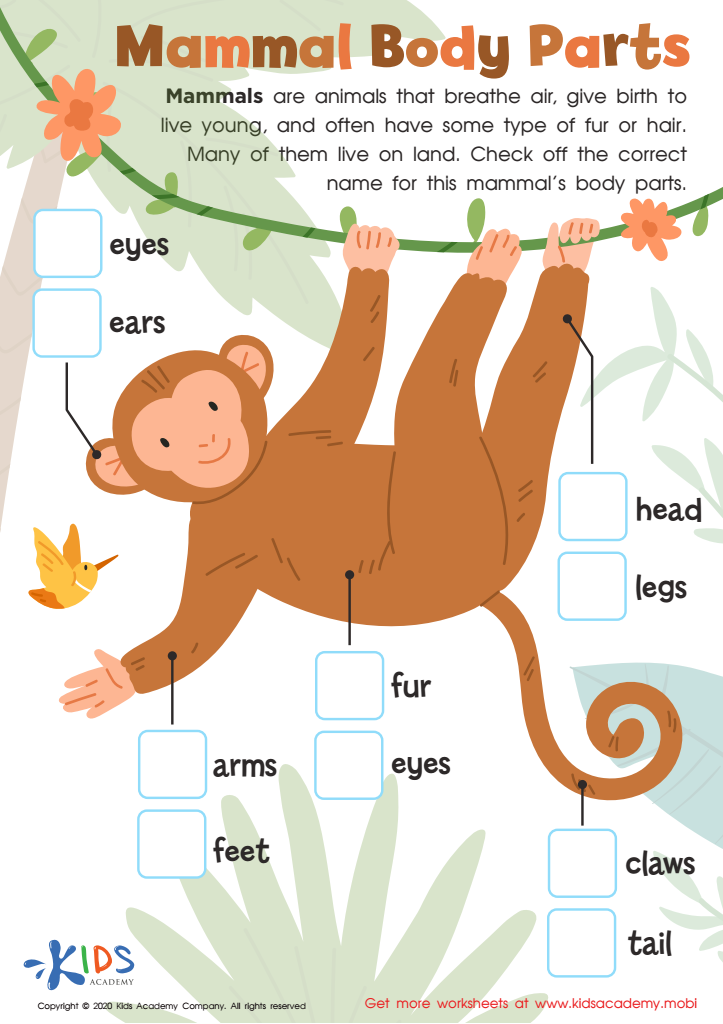
Mammal Body Parts Worksheet
Help your little scientist identify a mammal's body parts with this cute and colorful worksheet. It includes fur, arms, legs, tails, and more! Read the passage to learn what makes an animal a mammal, then have them check off the boxes to identify parts of the monkey. It's a fun way to learn about animals in the animal kingdom!
 Assign to My Students
Mammal Body Parts Worksheet
Worksheet
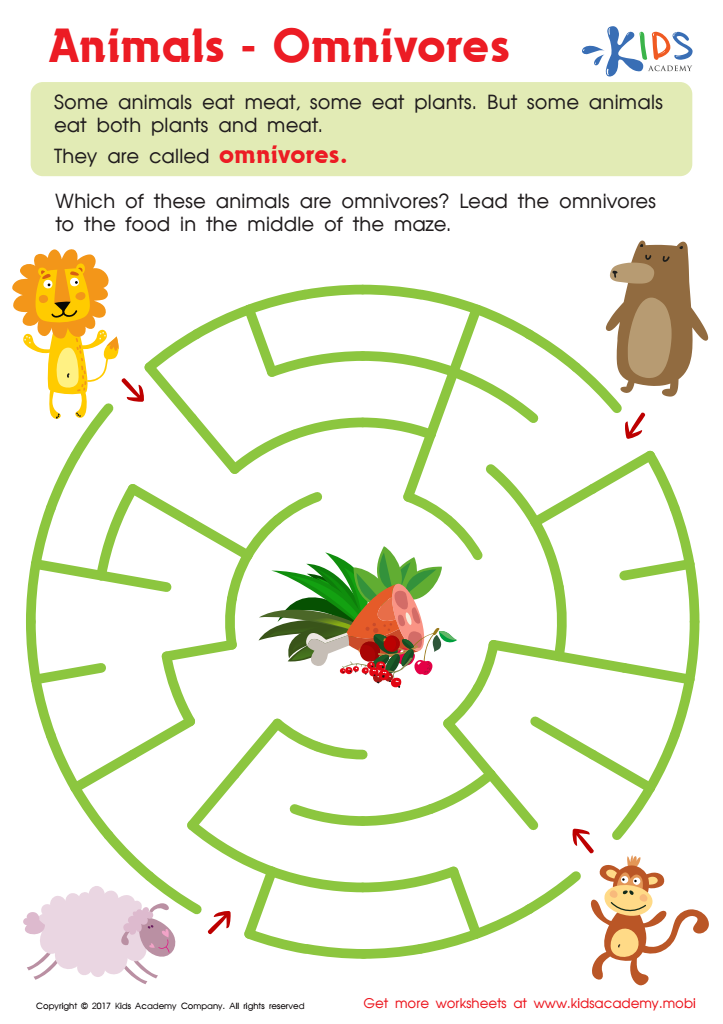
Omnivores Animals Worksheet
Kids can explore omnivores animals with this worksheet! It presents herbivores, carnivores and omnivores, with the main activity being a maze. Kids must guide a bear through it to get to its food. See how much they know about omnivores!
Omnivores Animals Worksheet
Worksheet
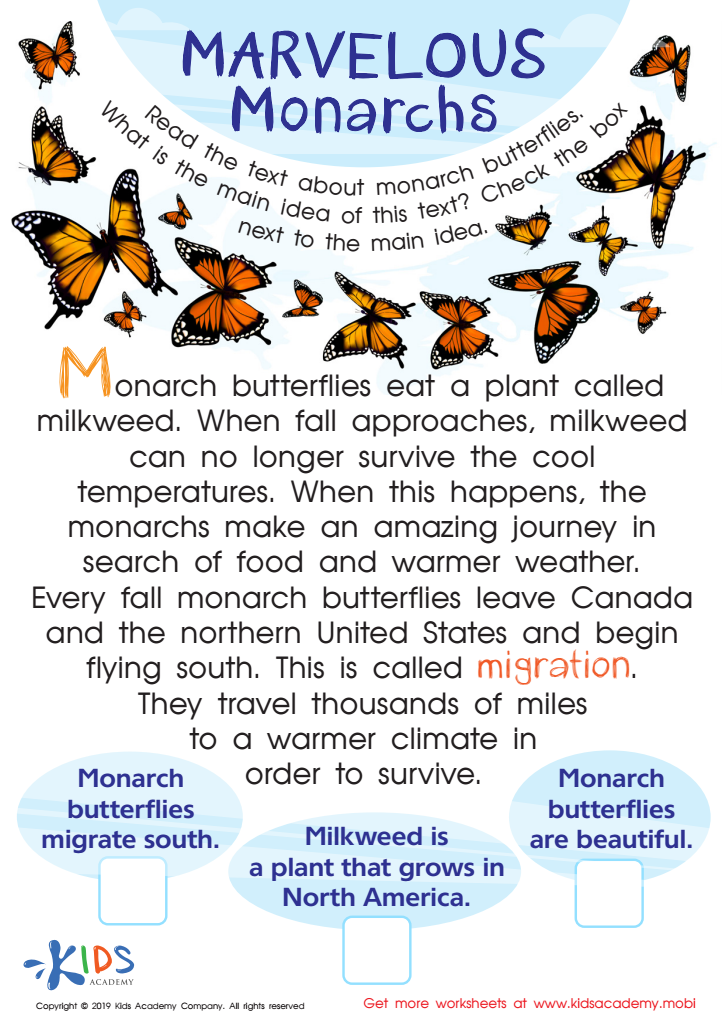
Marvelous Monarchs Worksheet
Help your kids have fun while reading - start with small words and short sentences. This worksheet can test your kids' reading and comprehension skills. Ask them to read the text about Monarch butterflies and help them locate the main idea.
Marvelous Monarchs Worksheet
Worksheet
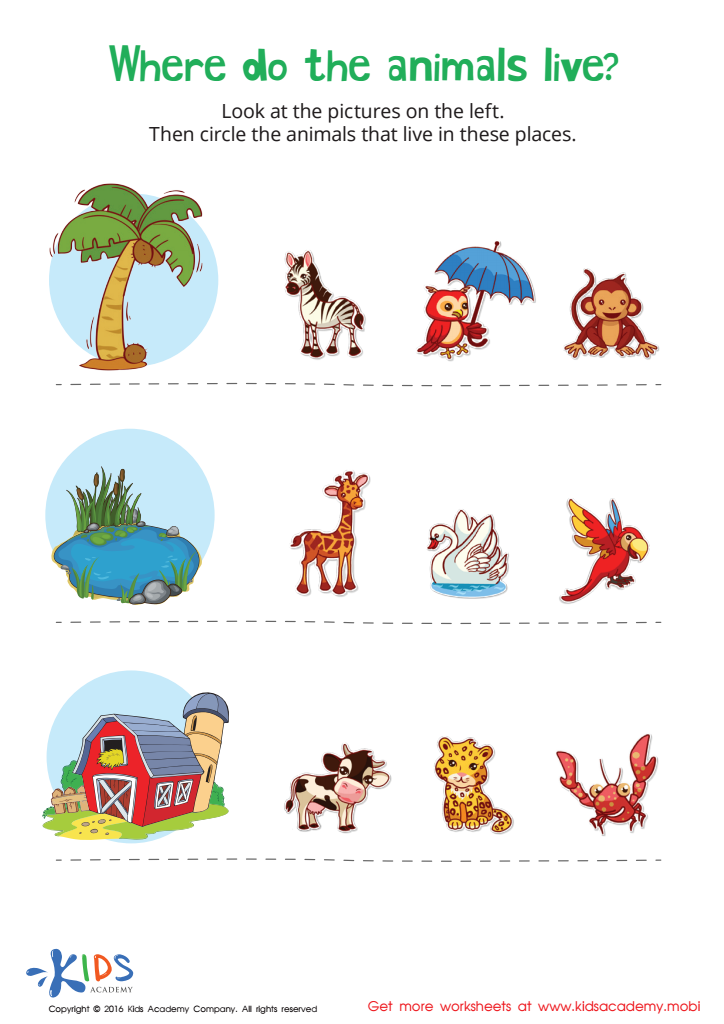
Where Animals Live Worksheet
Teaching early reading and math skills is important, but don't forget about science. With the Where Animals Live PDF worksheet, kids can identify their favorite animals and the environments they live in. Ask them what type of environment the animals like and introduce them to geography. It's great for logical reasoning and classification skills. Your kid will practice with their favorite animals and love the trip to the zoo afterwards!
Where Animals Live Worksheet
Worksheet
Join Kids Academy for Free
Who is primarily going to use this learning content?








Vocabulary development is crucial, particularly in children aged 5-7, as this stage lays the foundation for future literacy and cognitive skills. Focusing on themes like animals can greatly enhance this development. Firstly, kids are naturally fascinated by animals, making them a captivating and relatable subject. This intrinsic interest can boost engagement and enthusiasm for learning new words.
Animals have diverse and unique traits, behaviors, and habitats, introducing a wide range of descriptive vocabulary. Learning words like "nocturnal," "herbivore," or "camouflage" sharpens children's understanding and usage of more sophisticated language. Moreover, discussing animals often involves storytelling, questions, and exploration, all of which are rich in verbal interactions that promote language acquisition.
Additionally, a development focus on animals can help with cognitive skills. Classifying animals by types, habitats, and behaviors enhances children's critical thinking and categorization abilities. It also promotes a sense of curiosity and scientific inquiry.
Finally, a strong vocabulary is a gateway to effective communication, reading comprehension, and academic success. Children with robust vocabularies find it easier to understand new concepts, follow instructions, and express themselves clearly. Therefore, fostering vocabulary development through engaging and educational themes like animals is essential for young learners' overall development.








