Sound recognition Beginning Consonants Worksheets for Ages 5-8
3 filtered results
-
From - To
Discover engaging sound recognition worksheets focused on beginning consonants, perfect for children ages 5 to 8! These carefully crafted activities help young learners develop essential phonemic awareness by identifying the initial sounds of words. With colorful illustrations and interactive exercises, kids will enjoy practicing their consonant sounds while enhancing their reading and writing skills. Each worksheet is designed to foster a love for language and boost confidence in early literacy. Great for classroom use or at-home learning, our sound recognition worksheets make phonics fun and enjoyable. Get started today and watch your child thrive in their language journey!
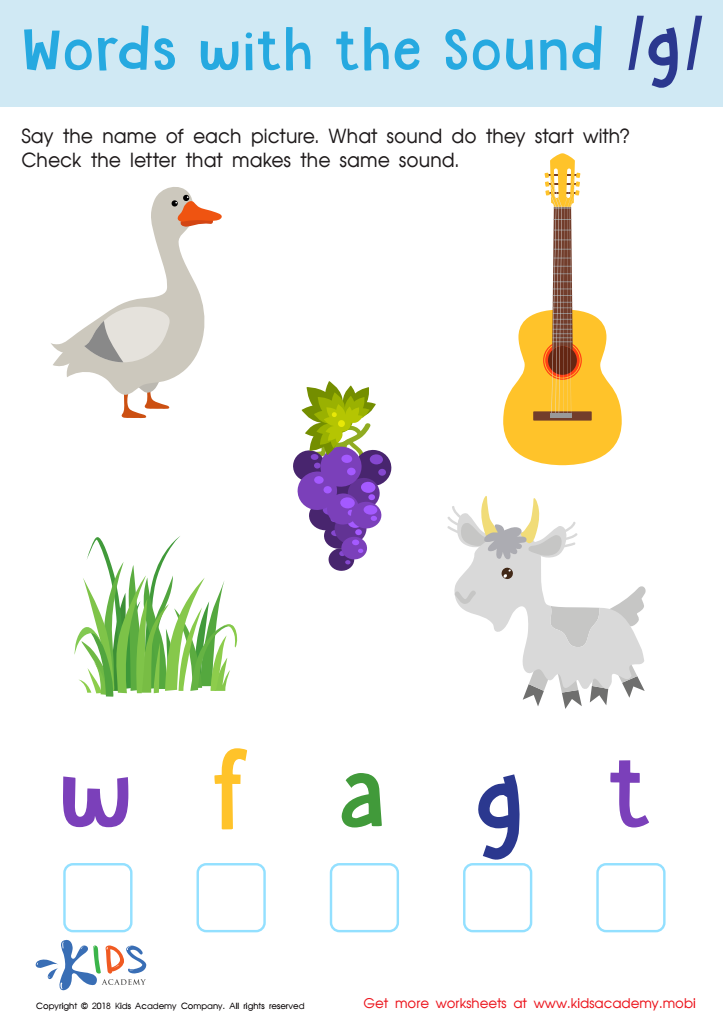
Words with sound g Reading Worksheet
 Assign to My Students
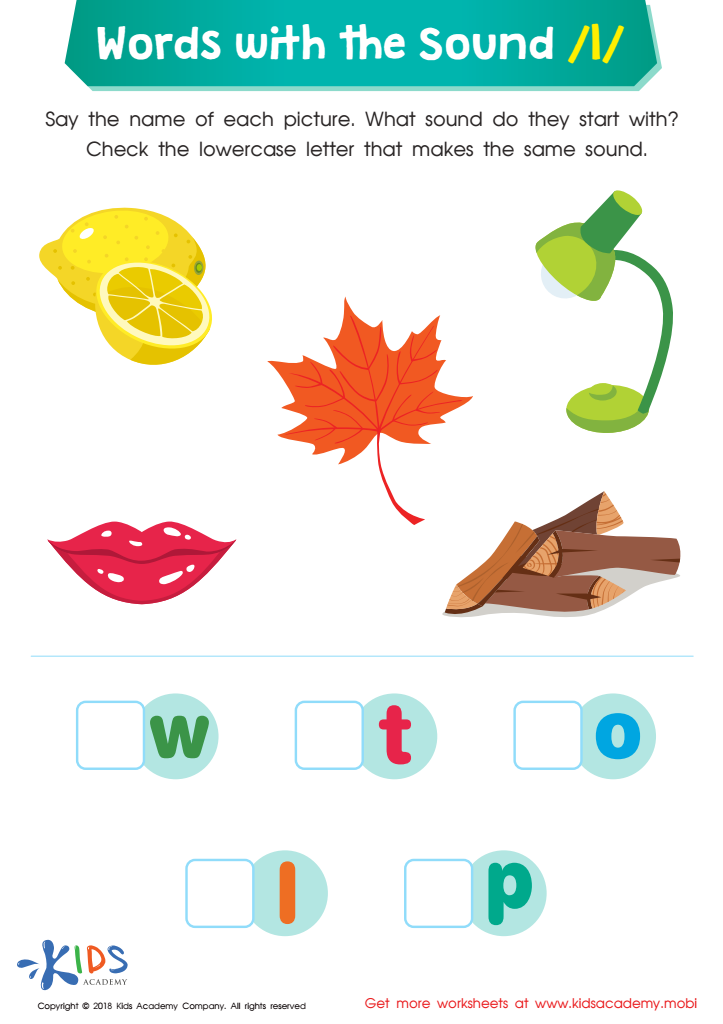
Words with Sound L Reading Worksheet
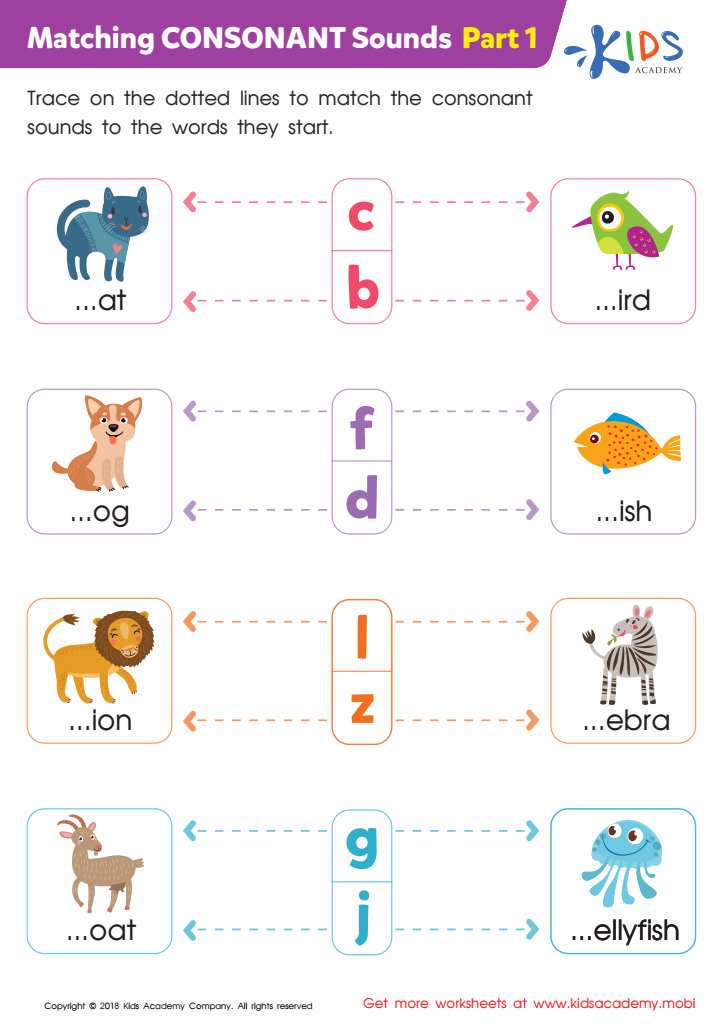
Matching Consonant Sounds: Part 1 Worksheet


Sound recognition, particularly in beginning consonants, is crucial for children aged 5-8 as it lays the foundation for reading and literacy skills. At this age, children are transitioning from recognizing letters to linking sounds with those letters, which is vital for decoding words. By mastering consonant sounds, students can blend them with vowel sounds to form simple words—a key step in developing reading fluency.
Parents and teachers play an essential role in this developmental stage. By fostering an environment where sound recognition is prioritized, they equip children with the tools needed for successful reading and communication. Engaging activities, such as rhymes, phonics games, and interactive storytelling, can enhance children's awareness of sounds while making learning enjoyable.
Moreover, strong early literacy skills positively impact overall academic performance. Children who excel at sound recognition are more likely to have confidence in their reading abilities, contributing to a lifelong love of literature and learning. Supporting this area of development is therefore not just about academic achievement; it also nurtures critical thinking, creativity, and self-expression. In essence, sound recognition in beginning consonants serves as a bridge to a child's literacy journey, making it imperative that parents and educators actively promote it.