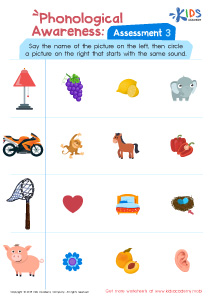
Letter recognition Beginning Sounds Worksheets for Ages 5-8
3 filtered results
-
From - To
Enhance your child's reading skills with our engaging Letter Recognition Beginning Sounds Worksheets, designed for ages 5-8! These carefully crafted worksheets focus on helping young learners identify letters and associate them with their corresponding sounds. By participating in fun activities, children will strengthen their phonemic awareness and ability to distinguish initial sounds in words. Perfect for reinforcing classroom learning or supporting at-home education, these worksheets promote early literacy skills in an enjoyable and interactive way. Download now to inspire a love for reading and writing in your child as they embark on this exciting learning adventure!
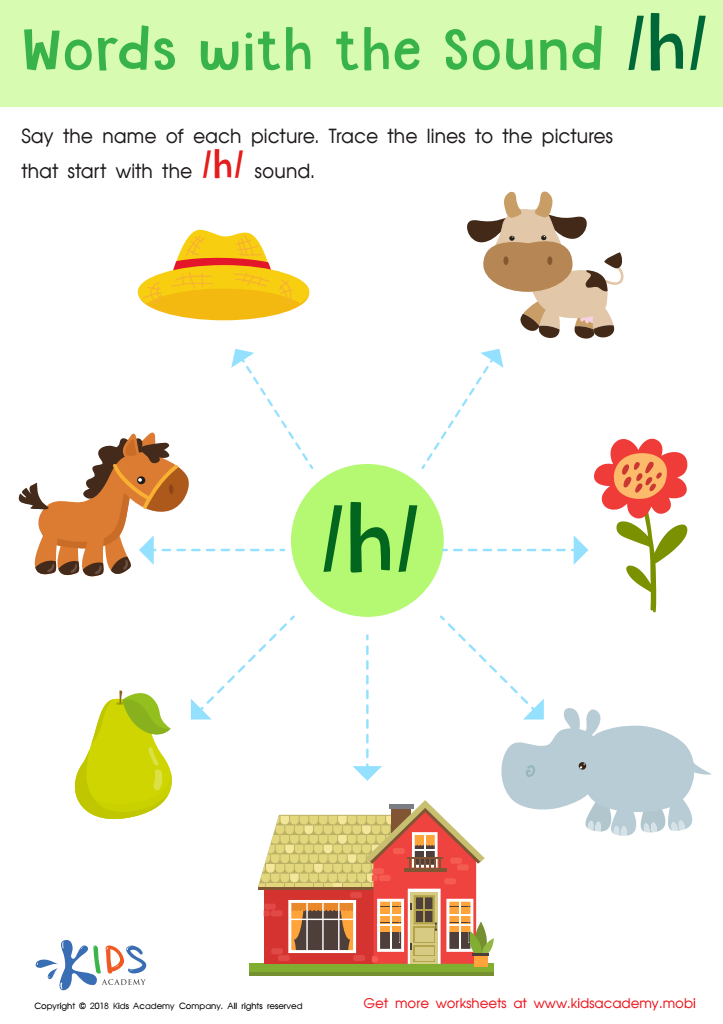
Words with sound h Reading Worksheet
 Assign to My Students
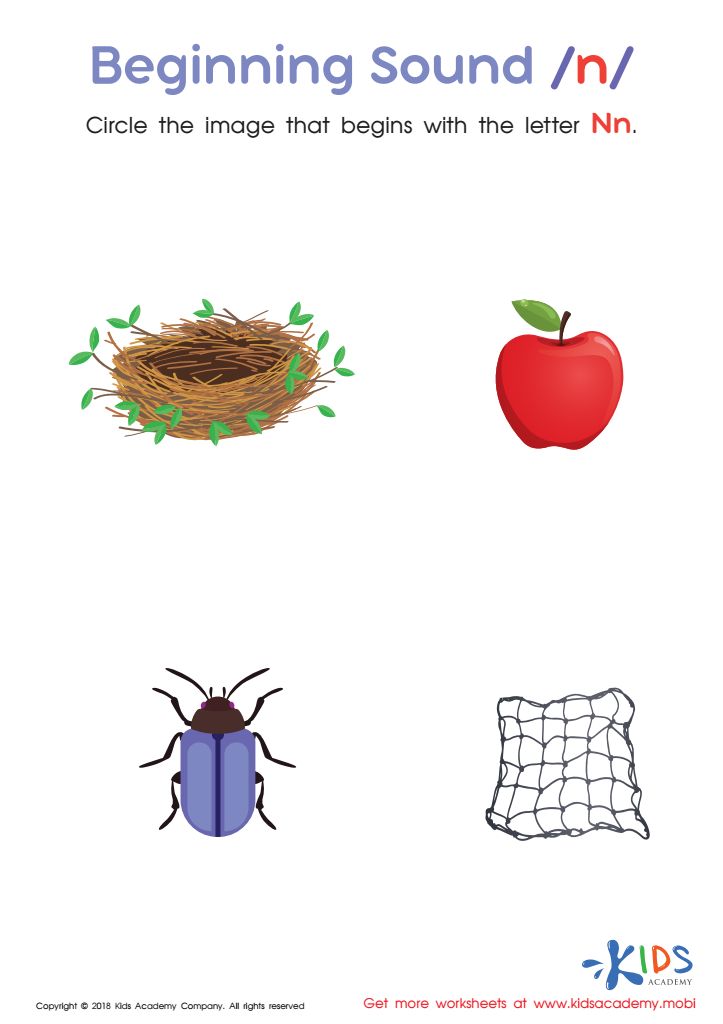
Beginning Sound «n» Worksheet
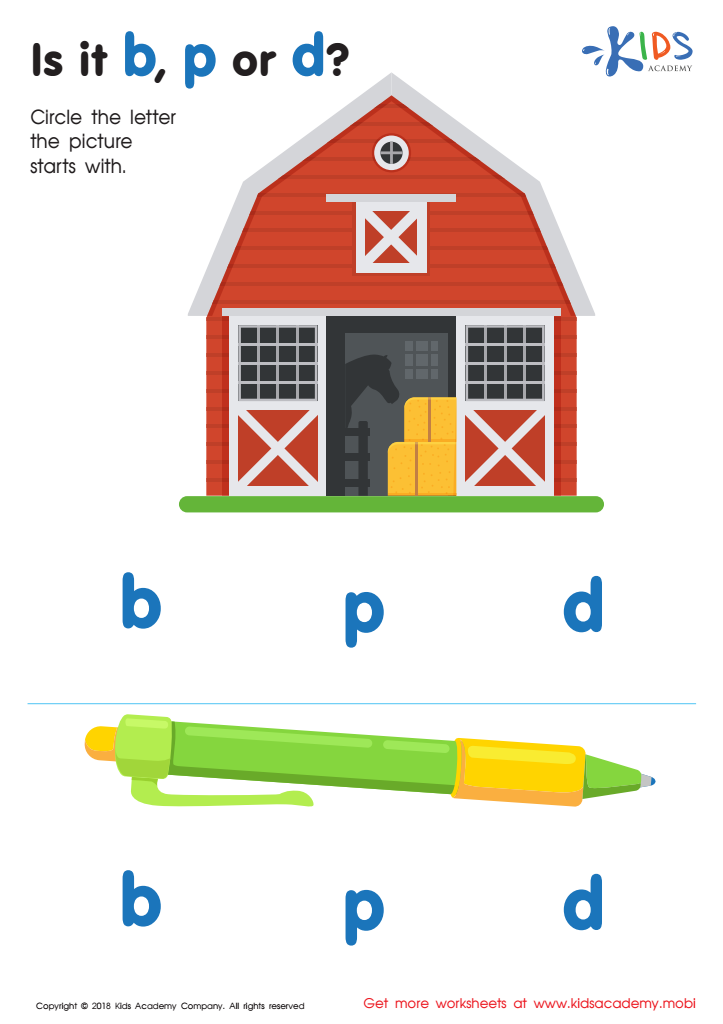
Is it b, p or d? Worksheet








Letter recognition and beginning sounds are critical components of early literacy skills for children aged 5-8. At this developmental stage, children are beginning to make connections between letters and their corresponding sounds, which lays the foundation for reading and writing. Recognizing letters helps children understand that printed words represent verbal language, a crucial insight in the journey to becoming proficient readers.
Beginning sounds help children identify and differentiate between words, enhancing their decoding skills. When children can recognize the first sound in a word, they improve their ability to sound out unfamiliar words, fostering reading independence and confidence. This skill is especially important for developing phonemic awareness, which is the ability to hear, identify, and manipulate individual sounds in spoken words.
Parents and teachers should prioritize these skills because they directly influence academic success. Children who struggle with letter recognition and beginning sounds often face challenges in learning to read and write, which can lead to frustration and feelings of inadequacy. By fostering a supportive environment that emphasizes these essential skills through play, practice, and reinforcement, caregivers can set children on a path toward lifelong literacy and a love for learning. Ultimately, these foundational skills contribute to overall cognitive development and success in school.