Alphabet Recognition Letter Sounds Worksheets for Ages 5-8
4 filtered results
-
From - To
Unlock the world of reading for your child with our "Alphabet Recognition Letter Sounds Worksheets for Ages 5-8." These expertly crafted worksheets make learning fun and effective, helping kids identify letters and understand their corresponding sounds. Each worksheet is designed to engage young learners through colorful illustrations, interactive activities, and consistent practice. Perfect for kids aged 5-8, these resources aim to build a strong groundwork in literacy by developing essential skills in alphabet recognition and phonemic awareness. Give your child a head start in their reading journey with our comprehensive and enjoyable alphabet worksheets.
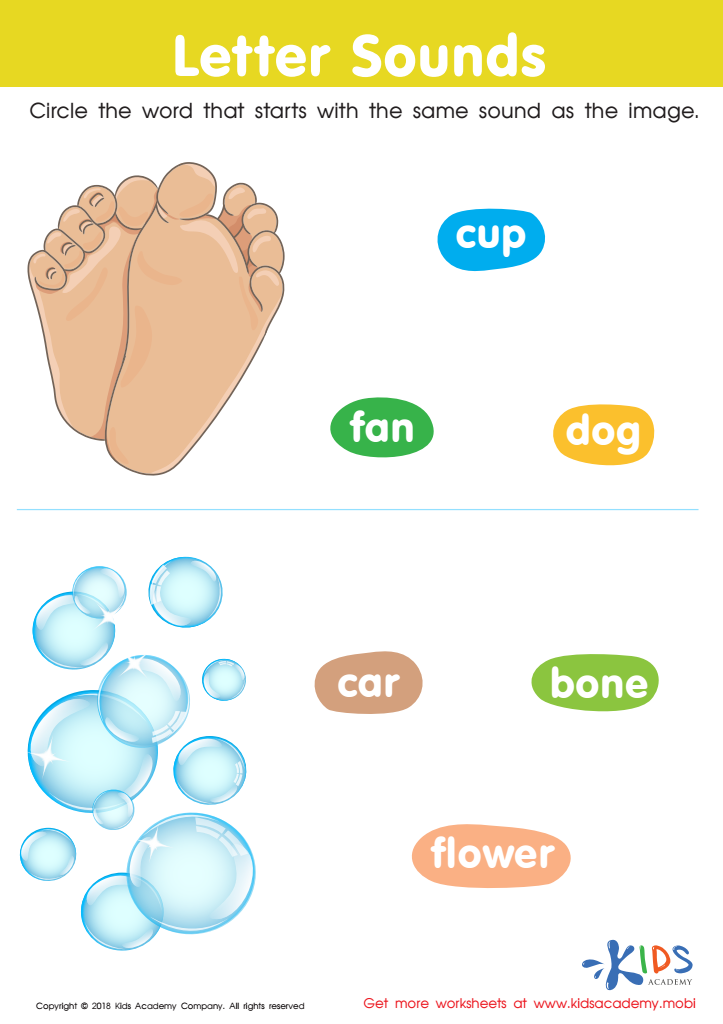
letter sounds Worksheet
 Assign to My Students
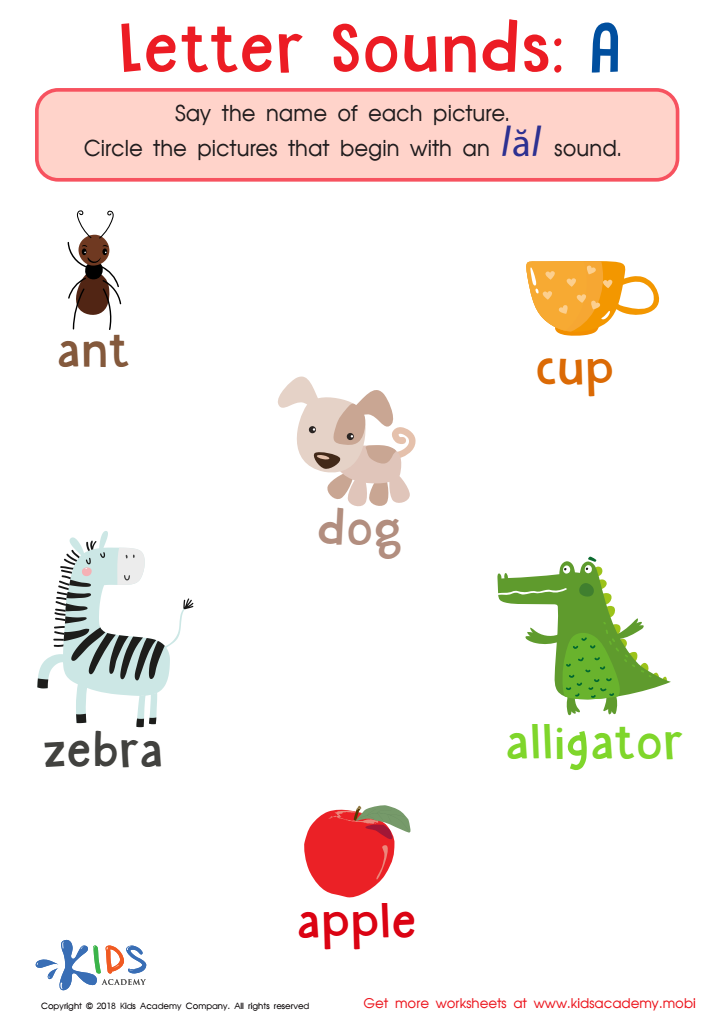
Letter A Sounds Worksheet
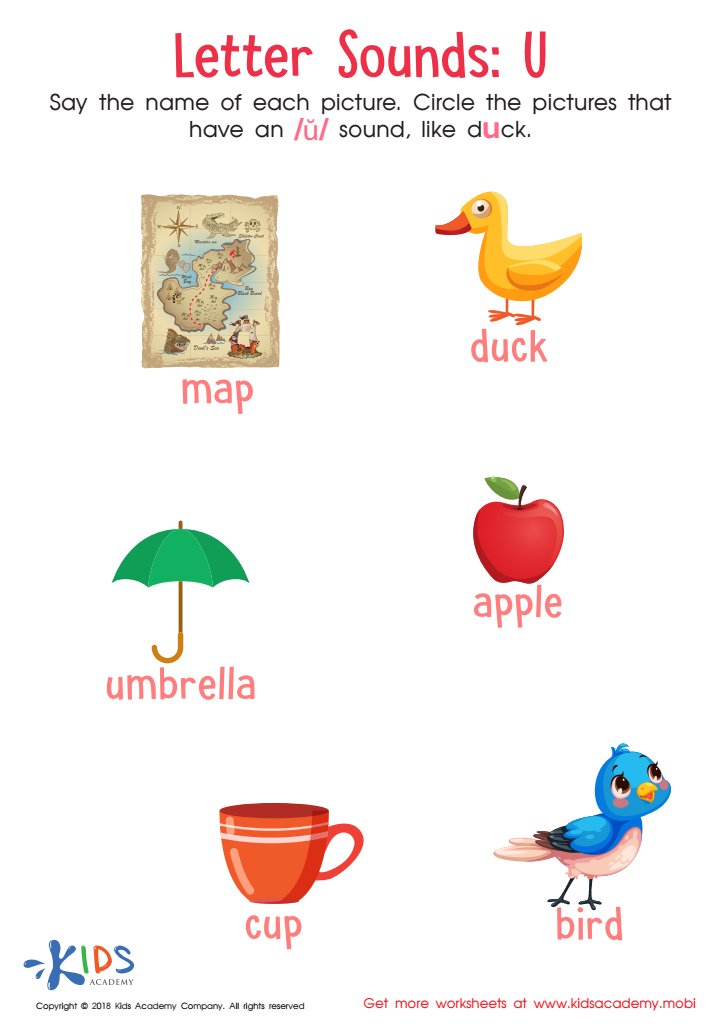
Letter U Sounds Worksheet
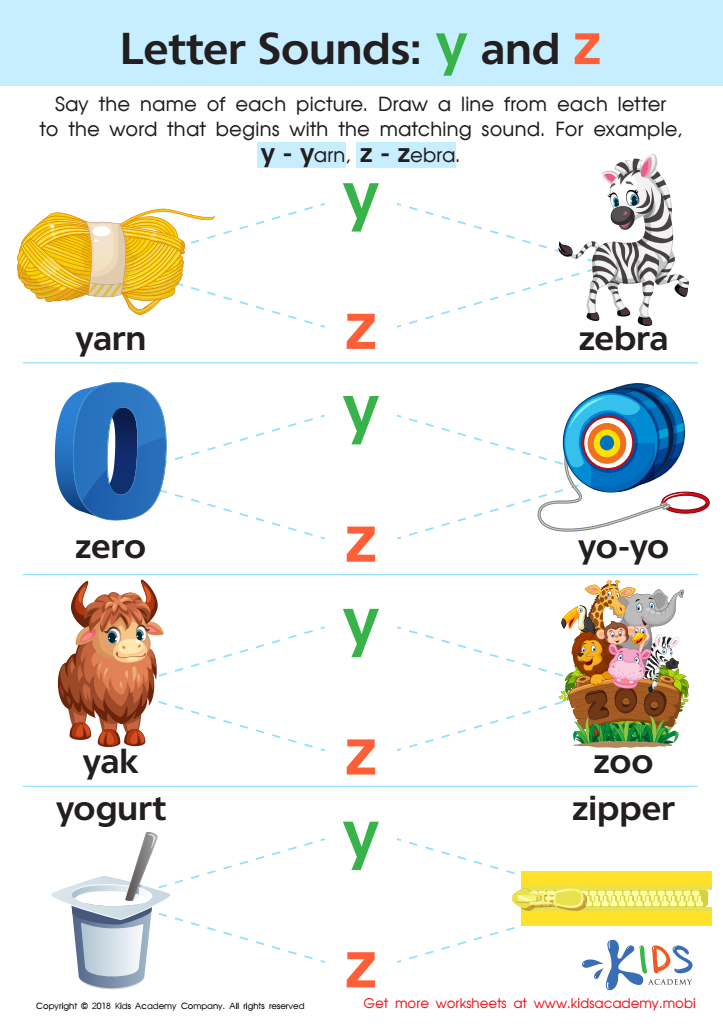
Letter Y and Z Sounds Worksheet








Alphabet recognition and letter sounds are fundamental building blocks in early childhood education, especially for children aged 5-8. For parents and teachers, prioritizing these skills is crucial for several reasons:
Firstly, mastering the alphabet and its sounds is vital for reading development. Understanding that letters correspond to specific sounds allows children to decode words, a critical step towards fluent reading. Early reading skills are strongly linked with academic success in later years.
Secondly, children who can recognize letters and sounds are more likely to enjoy reading. This enjoyment fosters a positive attitude toward learning and encourages a lifelong love of reading. Books expose children to new ideas, cultures, and vocabularies, significantly enriching their education and understanding of the world.
Moreover, these foundational skills support spelling and writing. Recognizing letters and their sounds aids children in correctly spelling words and forming sentences, which are essential literacy skills. A strong literacy foundation enhances communication, critical thinking, and the ability to learn new subjects.
Additionally, early literacy skills contribute to self-esteem and confidence in young learners. When children recognize letters and sounds, they experience a sense of accomplishment, motivating them to tackle more challenging tasks.
In conclusion, alphabet recognition and letter sounds are critical for building early literacy, fostering a love for reading, enhancing academic achievement, and boosting self-confidence. Parents and teachers should place a strong emphasis on these skills to support children's educational development.







