Filters

7 filtered results

Clear all filters
Favorites
With answer key
Interactive

7 filtered results

Difficulty Level

Grade


Enhance your child’s reading skills with our Phonics Recognition Letter Sounds Worksheets designed specifically for ages 5-8. These engaging worksheets provide playful activities focused on helping children identify and pronounce letter sounds, a crucial step in developing essential reading abilities. Each worksheet incorporates colorful illustrations and interactive exercises to make learning fun and effective. With a variety of tasks that promote phonemic awareness, your child will gain confidence in their literacy skills and improve their ability to read and write. Perfect for homeschooling or classroom use, our worksheets ensure your young learner gains a strong foundation in phonics recognition.

Check out this FREE Trial Lesson on Letter Sounds for age 5-8!

One-to-one Letter-sound Correspondence

Favorites
With answer key
Interactive
  • 5-8
  • Phonics recognition
  • Letter Sounds
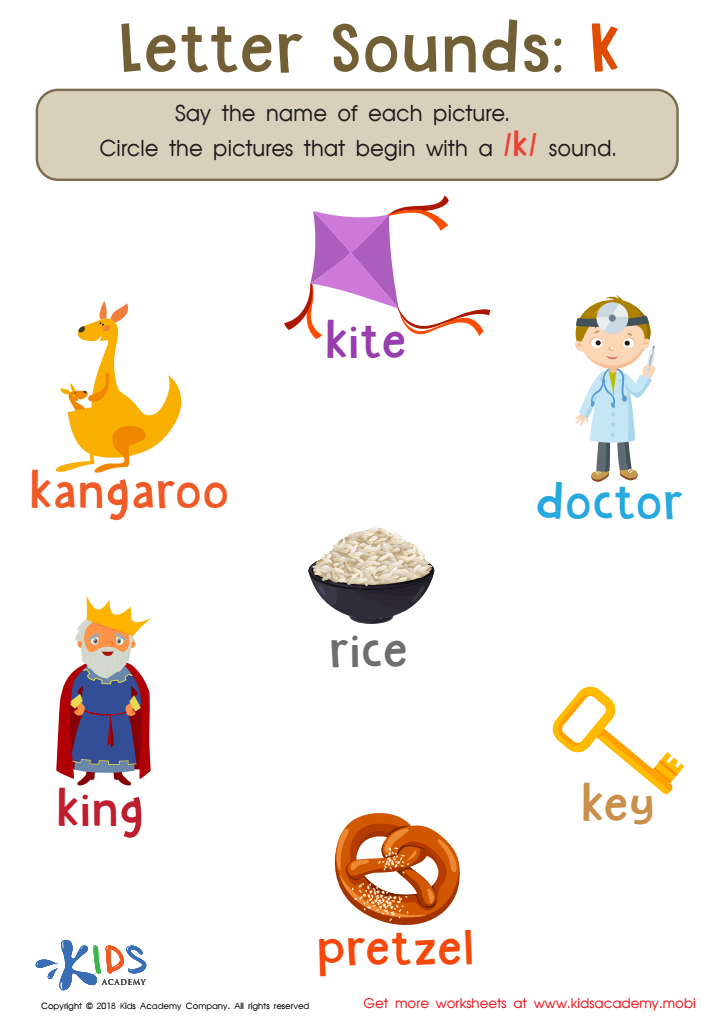
Letter K Sounds Worksheet

Letter K Sounds Worksheet

Help your child practice phonics with Kids Academy's illustrated worksheet! Have them look at the pictures, read the words and say them aloud. Only circle those that start with a hard 'K' sound. Perfect for preschoolers and kindergarteners! Plus, they'll learn the silent K used in a few words.
Letter K Sounds Worksheet
Worksheet
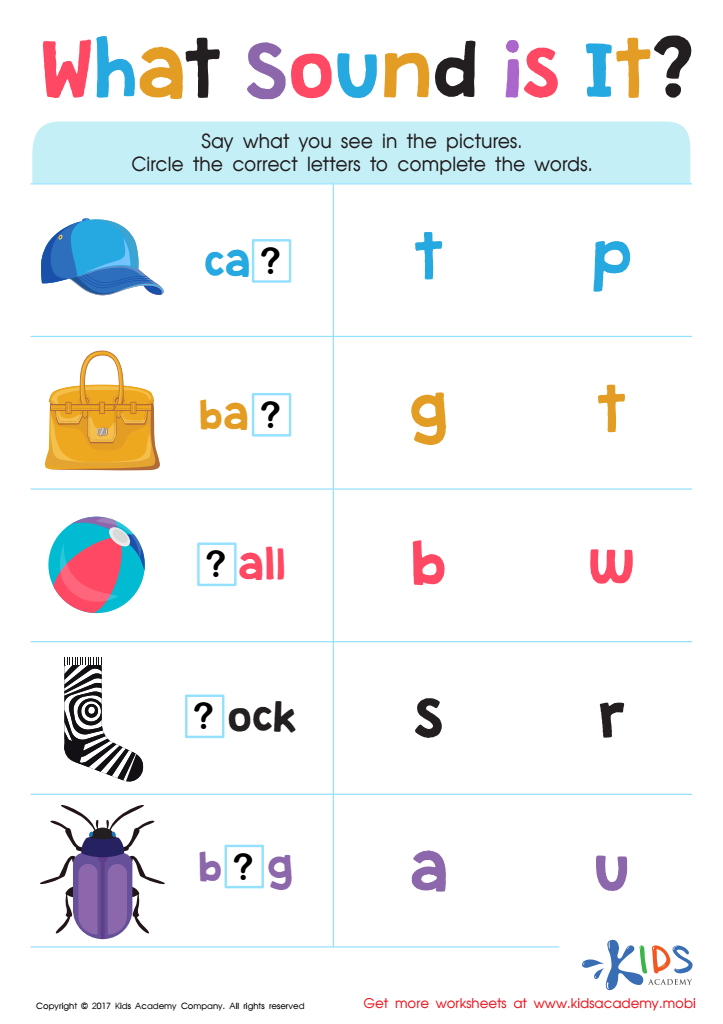
What Sound Is it? Worksheet

What Sound Is it? Worksheet

Have your child say the words for the pictures on this fun worksheet. As he or she sounds out the word, your child will use the provided letter choices to complete it, building reading and phonics skills. Visual cues make it easier to identify the correct beginning, middle, or end sound.
What Sound Is it? Worksheet
Worksheet
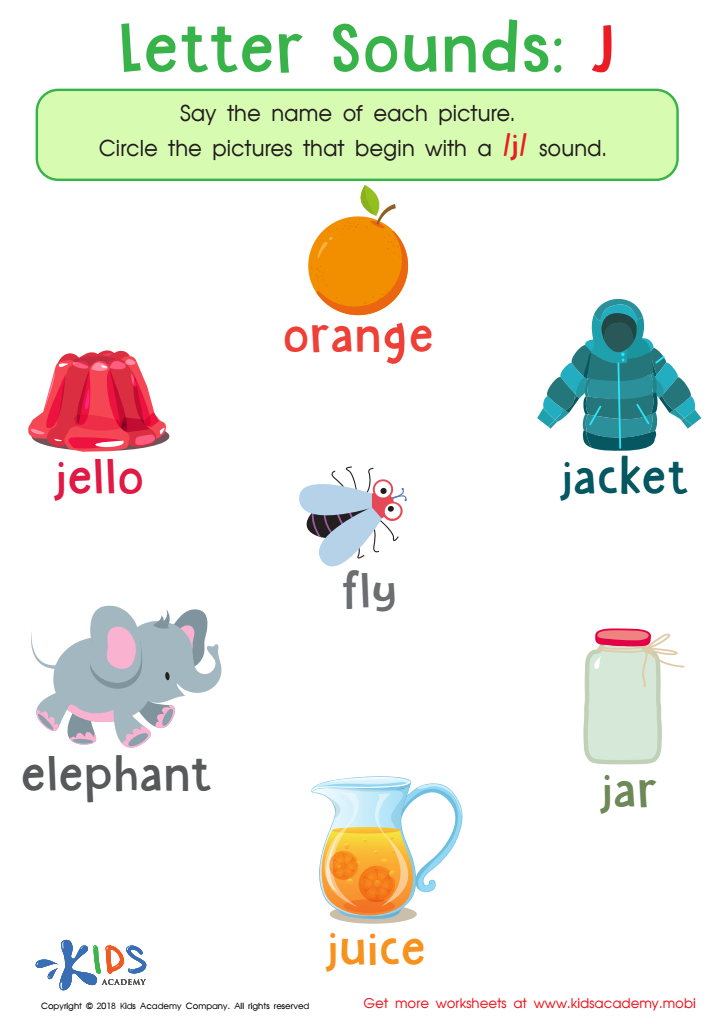
Letter Sounds: J Printable Worksheet

Letter Sounds: J Printable Worksheet

Preschoolers can learn to identify letter sounds by focusing on beginning sounds. This cute and colorful worksheet reviews the hard “j” sound. Kids can point it out by naming the words and circling only those starting with the “j” sound. Read the text out loud and listen closely!
Letter Sounds: J Printable Worksheet
Worksheet
Choose a Sound Worksheet

Choose a Sound Worksheet

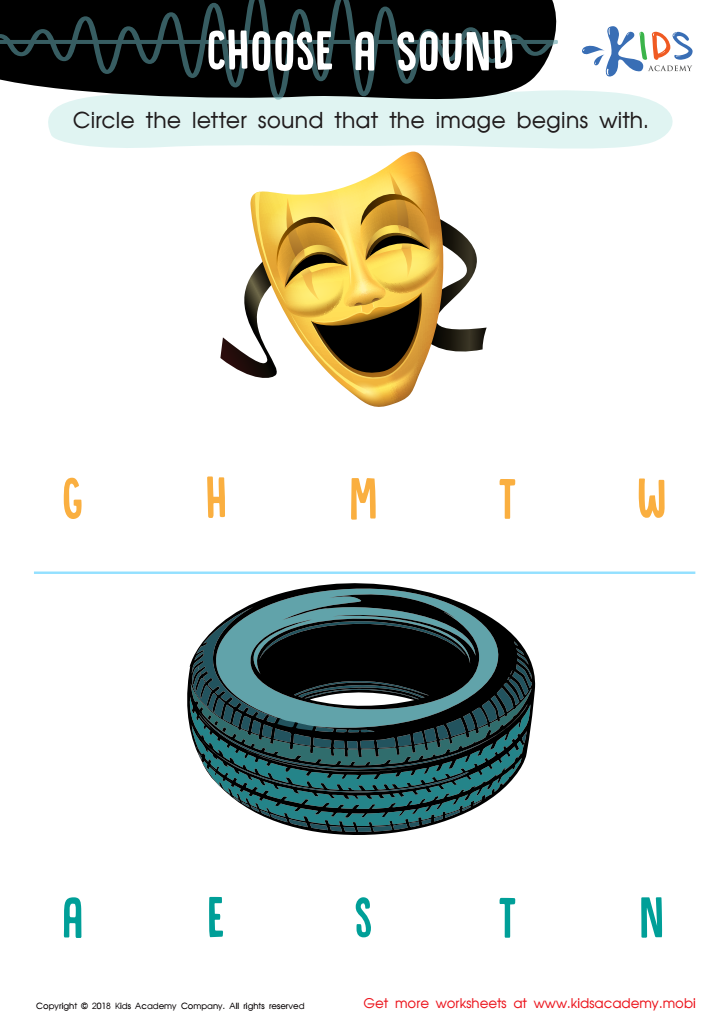
Help your child hone pre-reading skills with this colorful worksheet! They'll practice tracing letter sounds, develop phoneme awareness, and gain confidence. Plus, it's a fun way to work on their fine motor skills.
Choose a Sound Worksheet
Worksheet
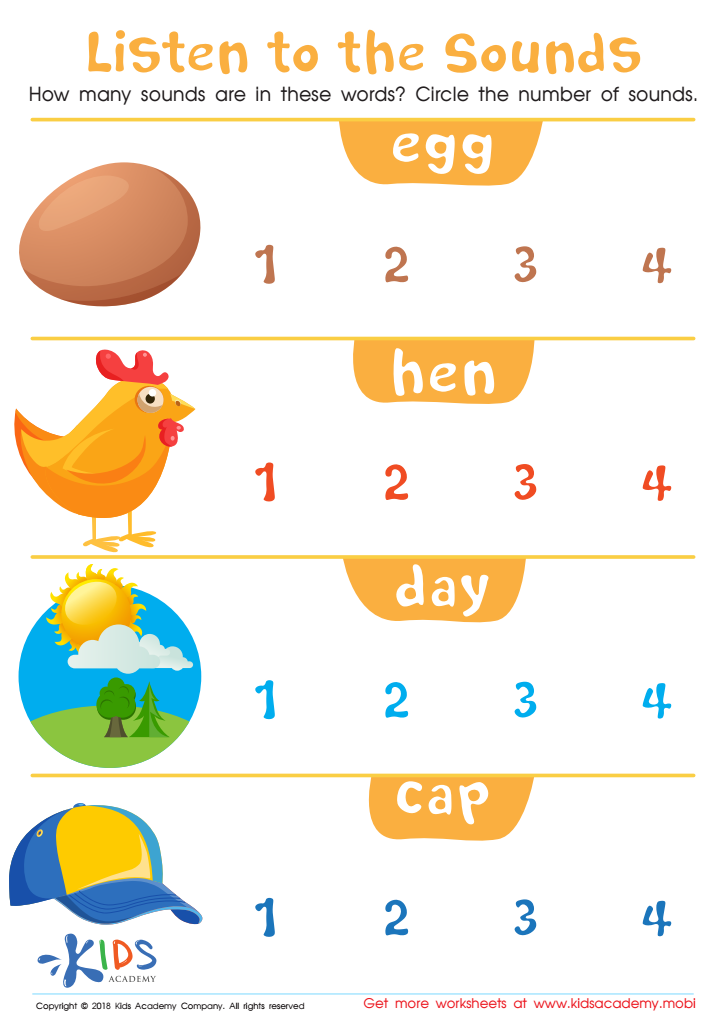
Listen to the Sounds Worksheet

Listen to the Sounds Worksheet

This worksheet builds emerging readers' skills in using sounds for reading and spelling. It helps strengthen auditory processing by having them count the sounds in each word, then trace the corresponding number. Fun and cheerful!
Listen to the Sounds Worksheet
Worksheet
Let's Count the Sounds Worksheet

Let's Count the Sounds Worksheet

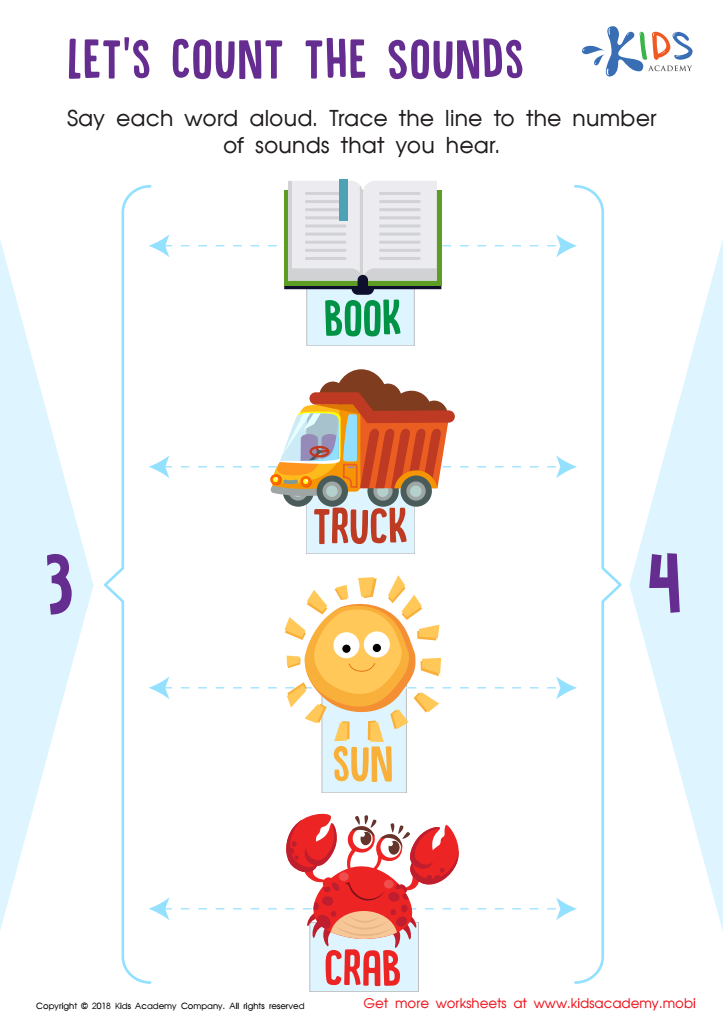
This bright and cheery traceable worksheet encourages children to practice auditory discrimination and phonological awareness. Using picture clues, they read each word and trace the line that represents the number of sounds heard. This builds decoding skills and helps them become successful readers.
Let's Count the Sounds Worksheet
Worksheet
Let's Check for «i» Sounds Worksheet


Let's Check for «i» Sounds Worksheet

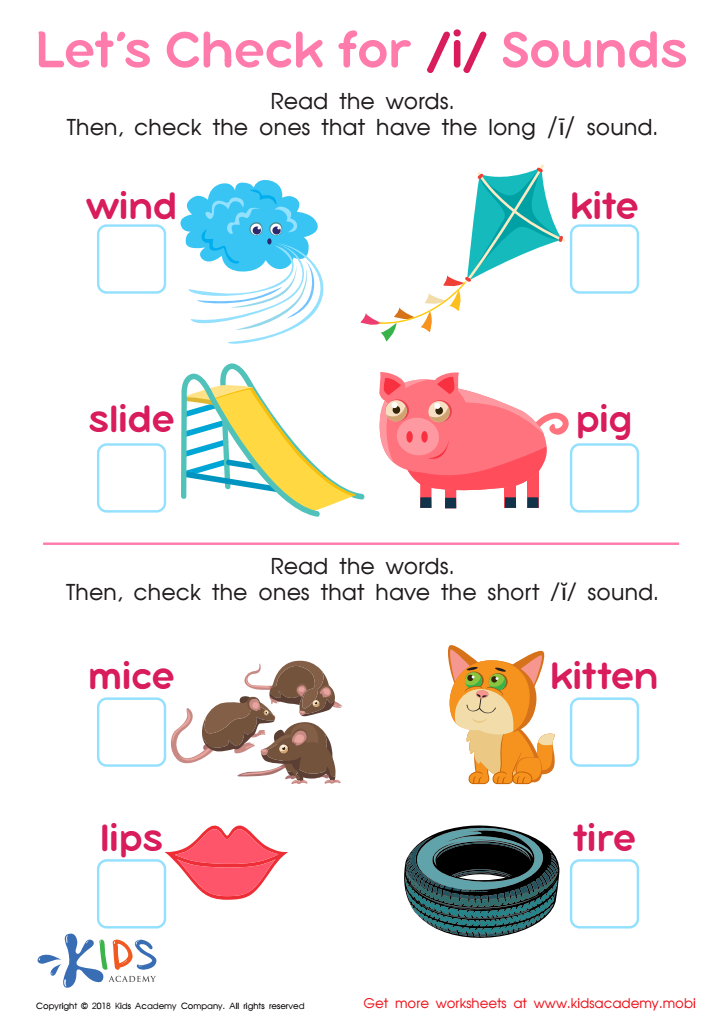
This fun worksheet with pictures boosts phonics skills - differentiating between long «ī» and short «i» sounds in 1- and 2-syllable words. Kids use picture clues to read words, then check off the correct ones. It's a great way for new readers to practice early reading skills and find success on their own.
Let's Check for «i» Sounds Worksheet
Worksheet


Phonics recognition and letter sounds are foundational skills critical for early literacy development in children aged 5 to 8. Understanding these concepts enables young learners to decode and read words, thus fostering their confidence and enthusiasm for reading. When children grasp the connection between sounds and letters, they develop strong reading fluency, allowing them to tackle increasingly complex texts as they progress in school.

For parents and teachers, supporting phonics recognition is vital because it directly impacts a child's overall academic success. Early phonics skills not only improve literacy but also enhance spelling and writing capabilities. Children who can read well are more likely to engage with the curriculum, leading to better comprehension and critical thinking skills across all subjects.

Moreover, strong phonics skills help prevent literacy delays and setbacks. If children struggle in these early years, they may experience frustration, leading to a lifelong aversion to reading. By prioritizing phonics recognition, parents and teachers can create a positive, encouraging environment that supports children's growth as learners, setting the stage for future academic achievement and a lifelong love of reading. Investing time in phonics education now yields vast benefits for children's educational journeys ahead.