Rhyming skills Rhyming Worksheets for Ages 5-8
3 filtered results
-
From - To
Boost your child's literacy with our engaging rhyming worksheets for ages 5-8! Designed to develop foundational rhyming skills, these worksheets offer fun activities that enhance phonemic awareness, vocabulary, and reading readiness. Perfect for students learning to recognize patterns and sounds, each worksheet promotes creativity while making learning enjoyable. With various colorful illustrations and interactive exercises, your child will love exploring the magic of rhymes. Access our comprehensive collection of printable resources to support their learning journey. Help them build confidence in their reading abilities and enjoy seamless learning experiences that make mastering rhymes exciting and effective!
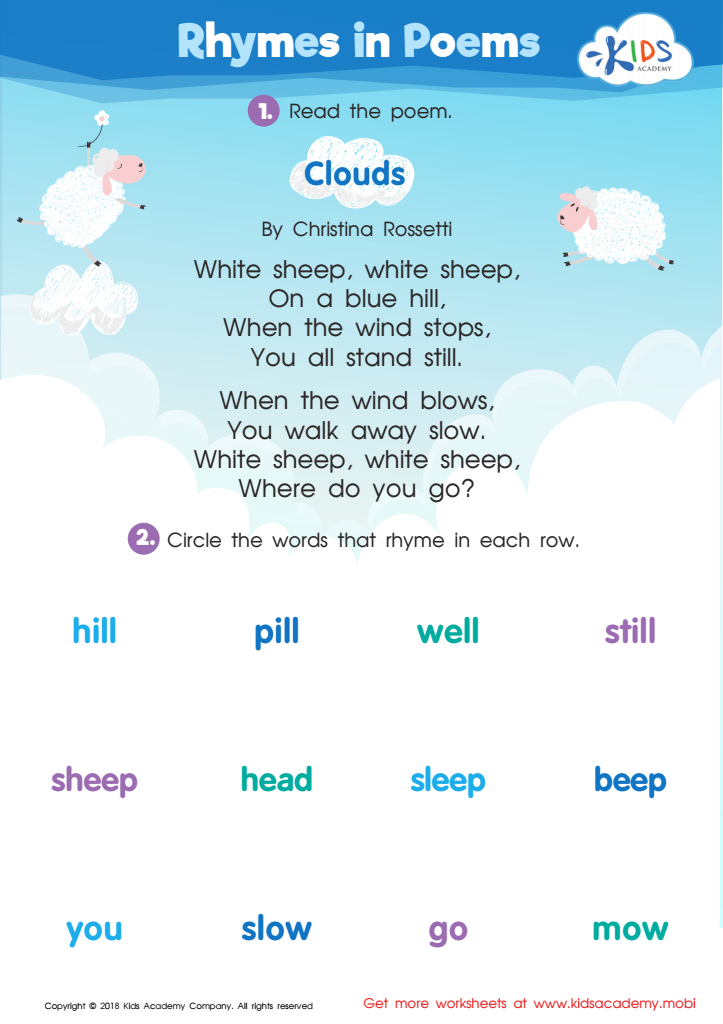
Rhymes in Poems Worksheet
 Assign to My Students
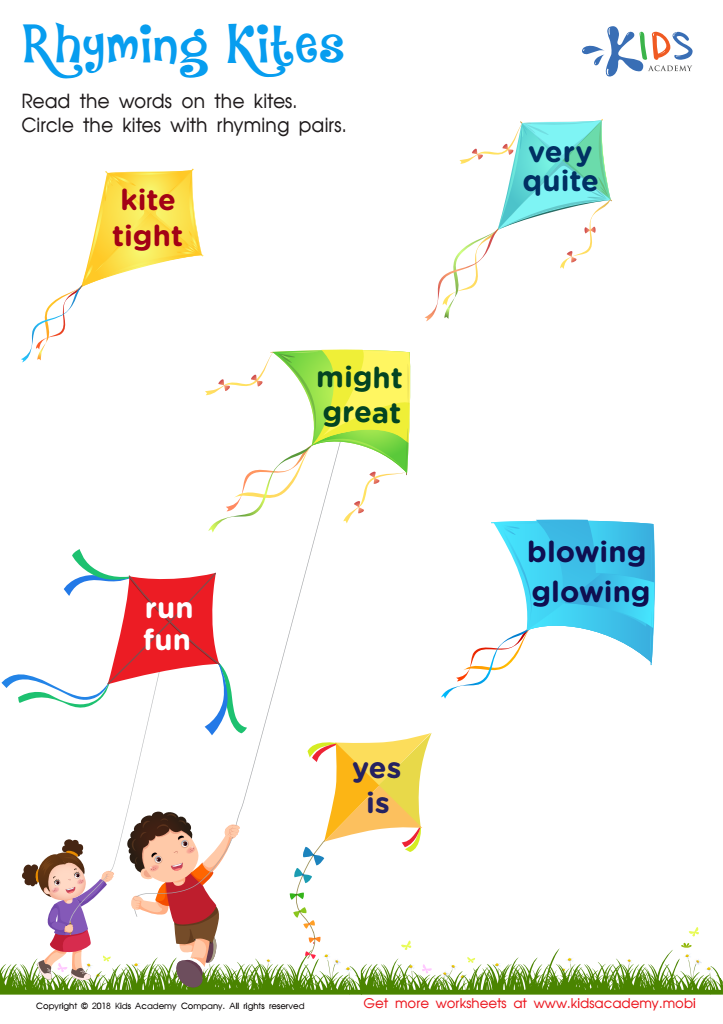
Rhyming Kites Worksheet
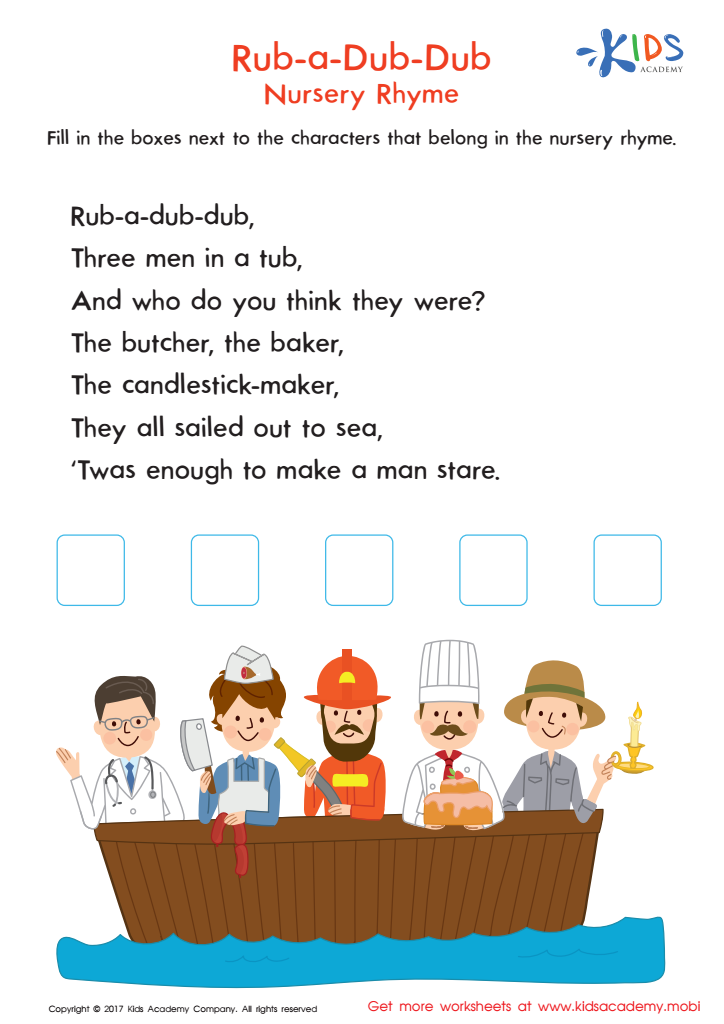
Rub a Dub Dub Printable







Rhyming skills play a crucial role in early literacy development for children aged 5-8. First and foremost, rhyming enhances phonemic awareness, enabling children to recognize sound patterns in words. This skill is fundamental for reading success, as it helps learners connect letters to sounds, making it easier for them to decode unfamiliar words.
Additionally, rhyming fosters vocabulary expansion. When children engage with rhymes, they are introduced to new words and their meanings, enriching their language skills and improving communication. It also aids comprehension, as rhythmic patterns help children to remember and recall information more effectively.
Beyond the academic benefits, rhyming is a fun and engaging way to develop social skills through collaborative activities like singing, storytelling, and games. Such engagement foster a love for language and literacy, nurturing lifelong learners.
Moreover, rhyming promotes cognitive development through pattern recognition and creative thinking. It encourages imaginative play, which is essential for emotional and social growth.
In essence, parents and teachers should prioritize rhyming activities, not just for their educational importance, but also for the joy and creativity they bring to children's learning experiences. Cultivating these skills early on lays a strong foundation for future academic success and a genuine love for reading.







