
Phonics practice Vowels and Consonants Worksheets for Ages 5-8
4 filtered results
Difficulty Level
Grade
Age
-
From - To
Subject
Activity
Standards
Unlock your child's reading potential with our engaging Phonics Practice Vowels and Consonants Worksheets for ages 5-8. These expertly crafted worksheets make mastering vowels and consonants fun and effective. Each activity is designed to enhance early reading skills, allowing young learners to recognize, differentiate, and pronounce both vowels and consonants with confidence. Ideal for beginners, these practice sheets provide an interactive approach to phonemic awareness, aiding in the development of essential literacy skills. Perfect for home or classroom use, our vibrant worksheets offer a solid foundation for a lifelong love of reading and learning.
Favorites
With answer key
Interactive
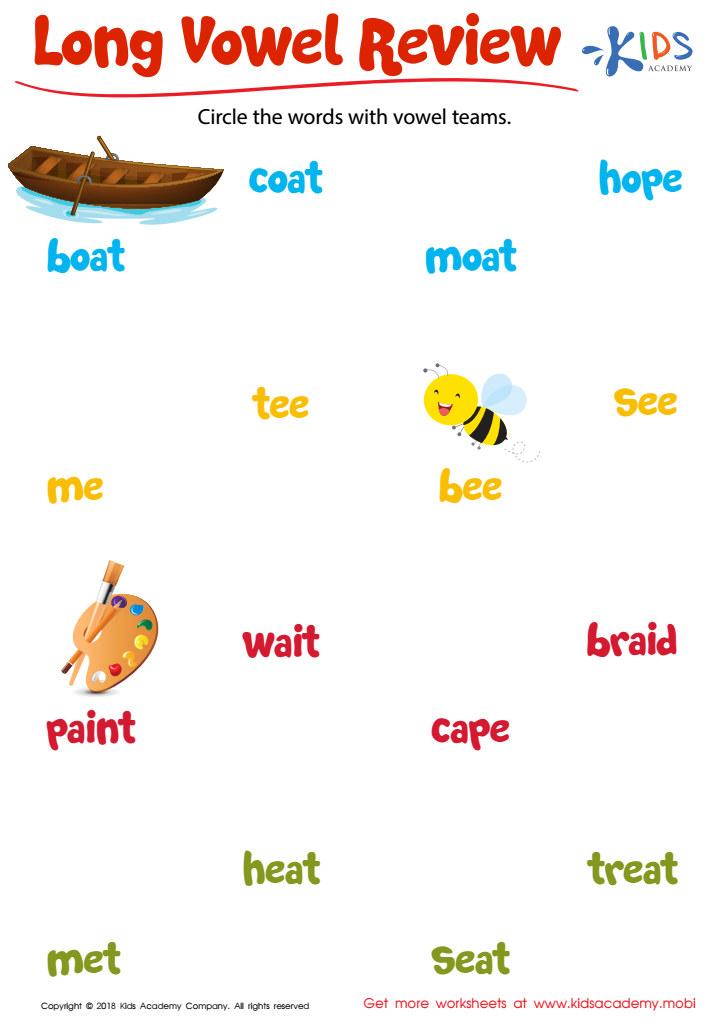
Long Vowel Review Worksheet
Vowel teams like "ea" and "ai" help us make words, and understanding these patterns aids emerging readers in becoming more fluent. This review worksheet has students finding words with vowel teams that make the long vowel sound, and helps them recognize high-frequency words.
 Assign to My Students
Long Vowel Review Worksheet
Worksheet
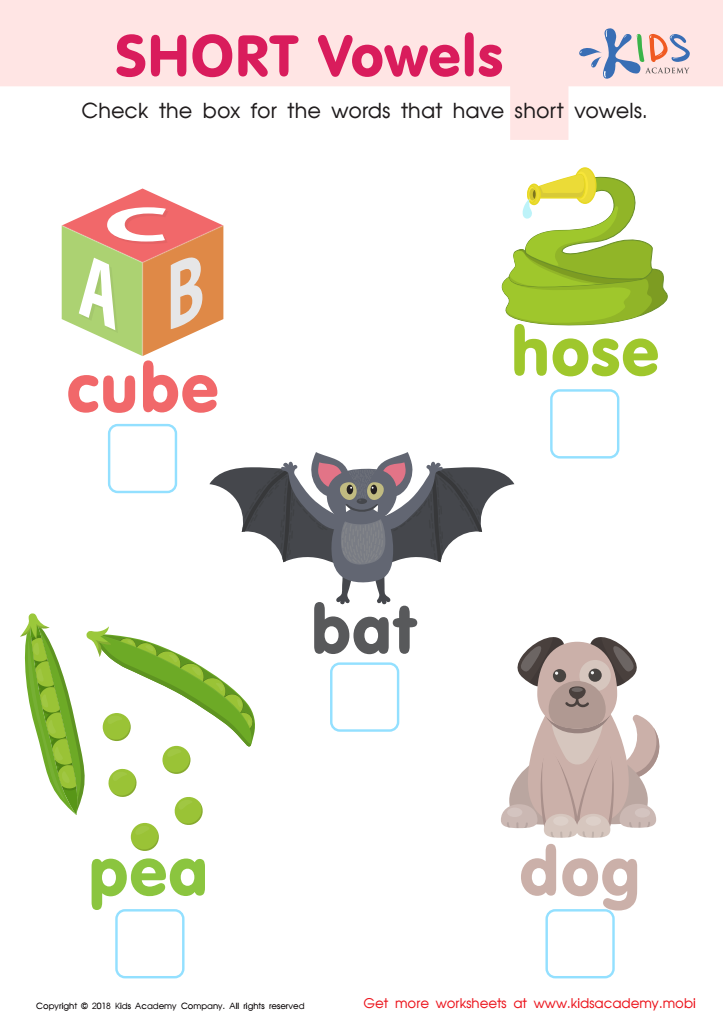
short vowels Worksheet
Say "dog" and notice how long it takes to pronounce the vowel. Is it short or long? Compare it to "pea" and use this worksheet to quickly assess your child's mastery. Have them name each picture and listen for the vowel sounds. Only check the boxes for words with short vowel sounds.
short vowels Worksheet
Worksheet
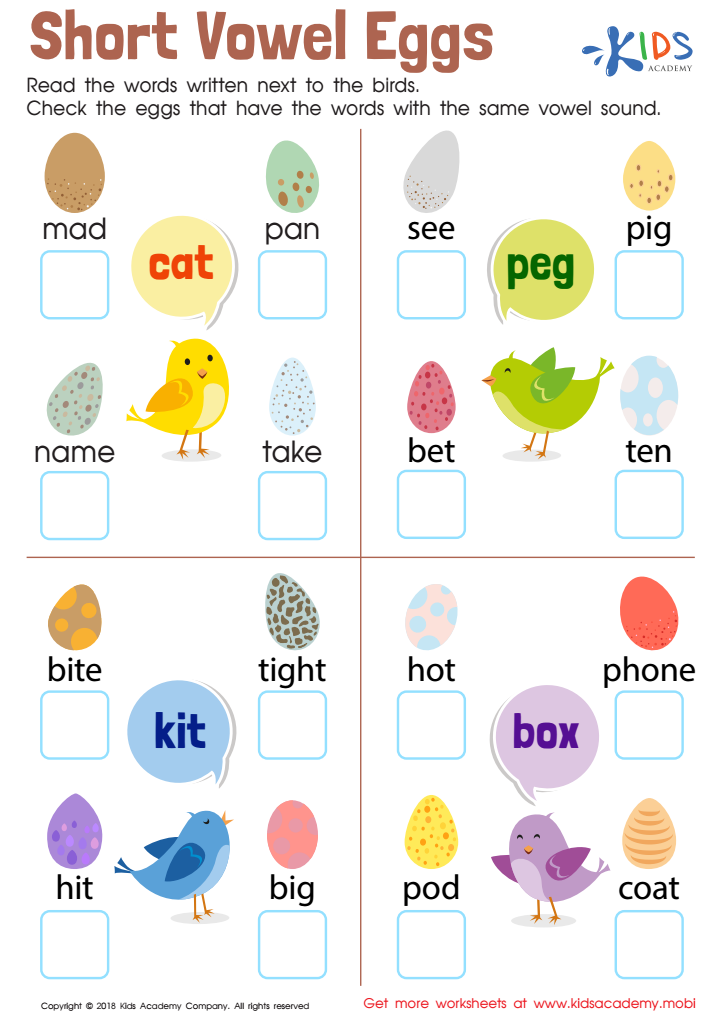
Short Vowel Eggs Worksheet
Your students will love helping these birdies pick the short vowel eggs! Have them read the words in the thought bubbles, then check off the boxes with the same short vowel sounds. The bright colors of this free Worksheet will draw them in and get them practicing their vowels!
Short Vowel Eggs Worksheet
Worksheet
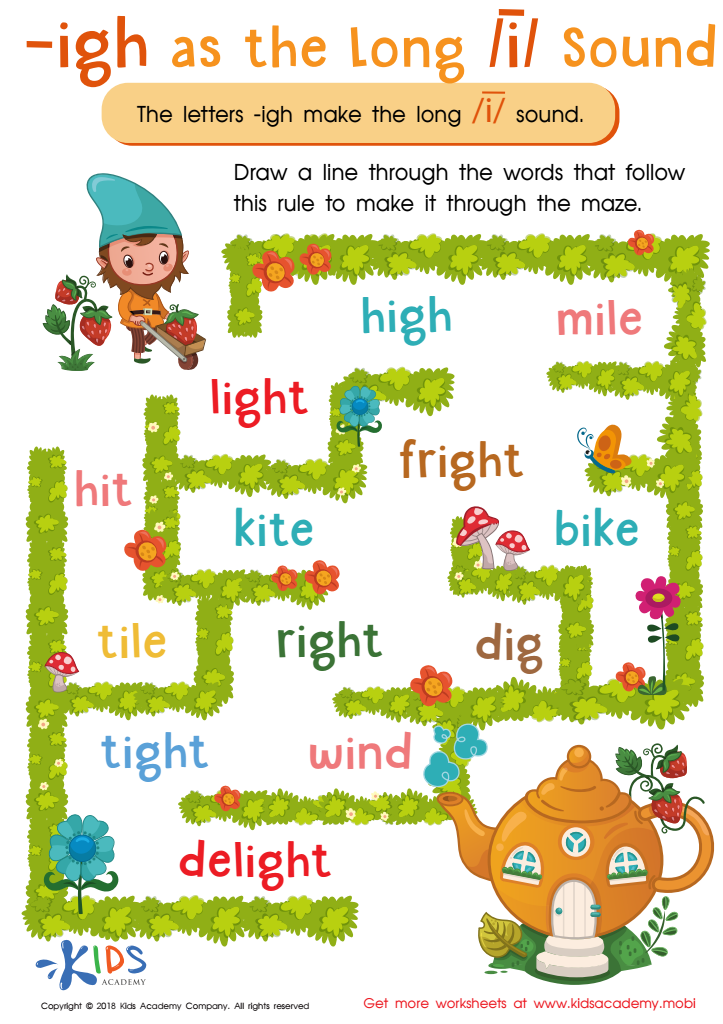
Reading: IGH as Long I Worksheet
Kids can have fun and learn with this maze! They'll look for and read words with the 'long I' sound spelled 'igh'. Most words ending with 'T' have this spelling. Decode words while learning about long vowel sounds and their spellings.
Reading: IGH as Long I Worksheet
Worksheet
Join Kids Academy for Free
Who is primarily going to use this learning content?



Phonics practice focusing on vowels and consonants for children ages 5-8 is crucial for several key developmental reasons. Phonics instruction serves as the foundational step in phonemic awareness, which is a child's ability to hear, identify, and manipulate individual sounds in spoken words. By learning the basic sounds associated with vowels and consonants early on, children acquire the essential building blocks for reading and writing.
Children aged 5-8 are typically in the early stages of kindergarten through second grade, a critical period for literacy development. Effective phonics practice helps them decode new words, supporting reading fluency and comprehension. Understanding the relationship between letters and sounds allows them to read more efficiently, making the process more enjoyable and less frustrating.
Moreover, early mastery of phonics impacts spelling skills. It enables children to better understand word formation, enhancing their ability to spell unfamiliar words using phonetic rules. This foundational knowledge supports broader academic success, as reading and writing competence underpins all subject areas, including math, science, and social studies.
Lastly, confidence building is another vital component. When children successfully engage with phonics activities, they gain self-confidence, fostering a more positive attitude towards learning. Hence, parents and teachers should prioritize phonics practice for vowels and consonants to nurture capable, confident readers and lifelong learners.







