
Basic geometry skills Worksheets for Ages 5-8
4 filtered results
Difficulty Level
Grade
Age
-
From - To
Subject
Activity
Standards
Discover our engaging Basic Geometry Skills Worksheets designed for children ages 5-8! These worksheets help young learners develop foundational understanding in shapes, spatial reasoning, and measurement. Featuring fun, colorful illustrations and age-appropriate activities, our resources make learning geometry enjoyable and interactive. Kids practice identifying shapes, understanding their properties, and solving simple geometric problems, all while enhancing their problem-solving skills. Perfect for home or classroom use, these worksheets align with early learning standards, ensuring your child gains confidence in their math abilities. Download now and watch them explore the exciting world of geometry through creative and educational exercises!
Favorites
With answer key
Interactive
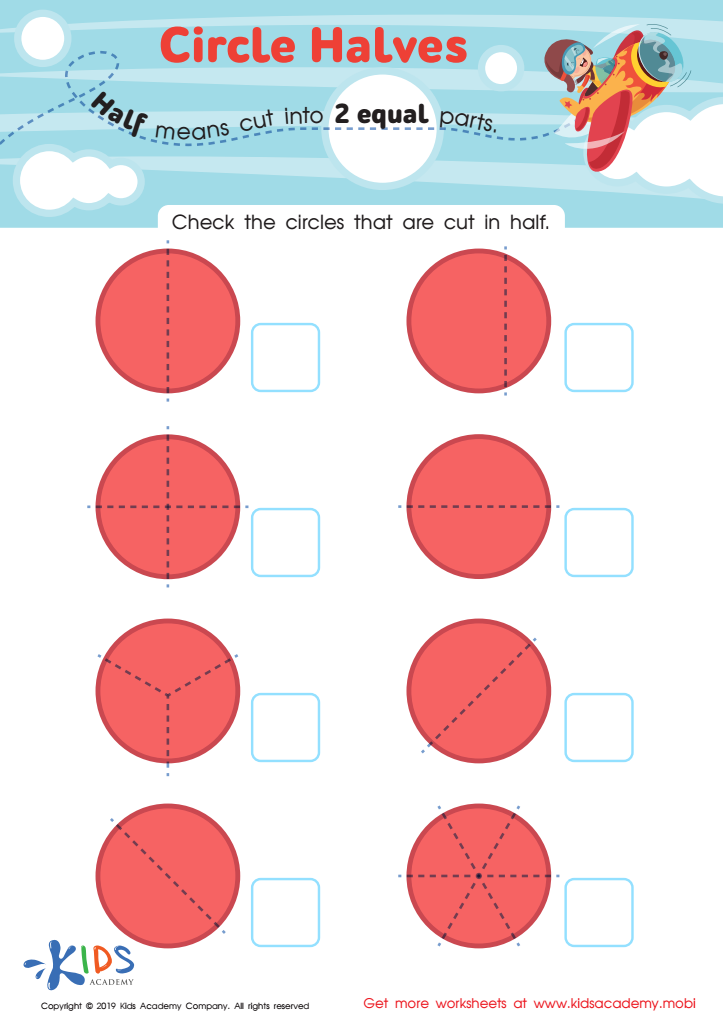
Circle Halves Worksheet
Remind your kindergartners that objects can be divided into halves, thirds and fourths. Now, look at this worksheet with your students and help them check the circles cut in half.
 Assign to My Students
Circle Halves Worksheet
Worksheet
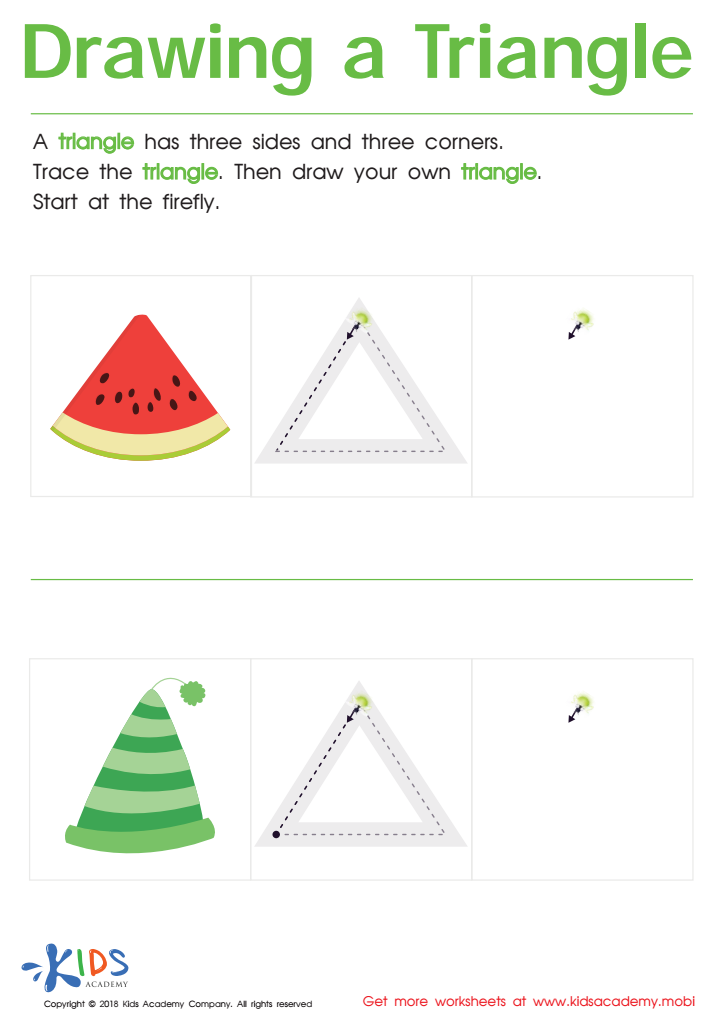
Drawing a Triangle Worksheet
Help your child develop fine motor skills with this fun, traceable printable! It teaches them how to draw a triangle, with easy steps and cute picture motivation. They'll work on pre-writing skills, pencil position, and grip control without even realizing it. With this basic shape, they'll gain a foundation for strong writing and drawing skills.
Drawing a Triangle Worksheet
Worksheet
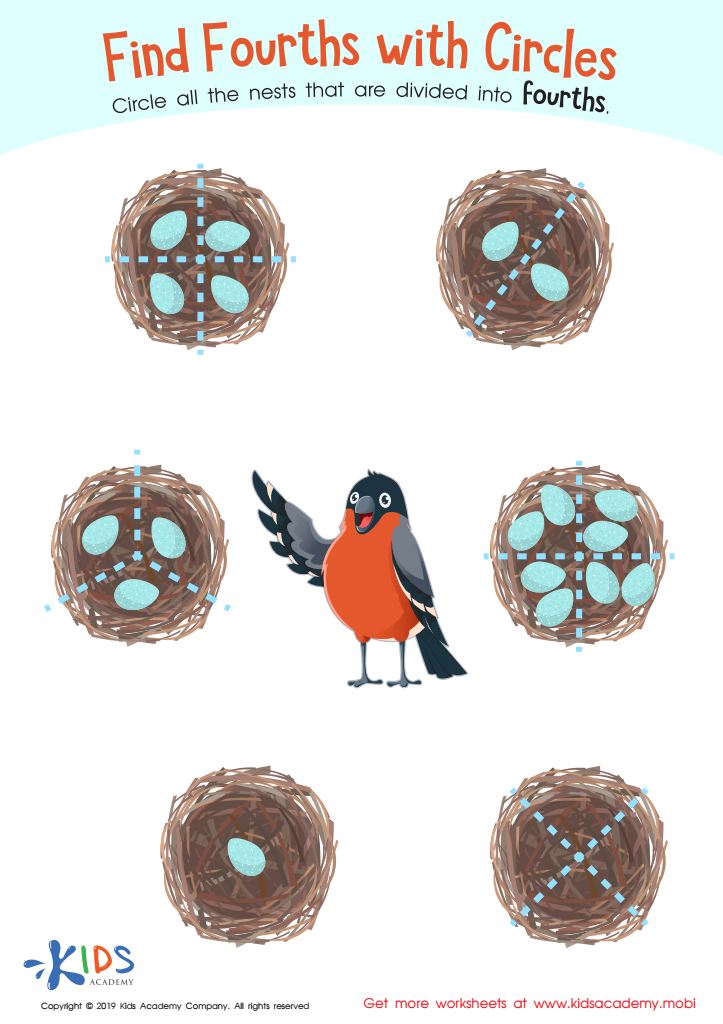
Find Fourths Circles Worksheet
Finding fractions with this Find Fourths with Circles worksheet can be fun! Your child will see a picture of circles divided into different fractions and circle the nests divided into fourths. With the help of their cheery bird friend, they can look for nests with four equal parts and be successful in finding the correct nest.
Find Fourths Circles Worksheet
Worksheet
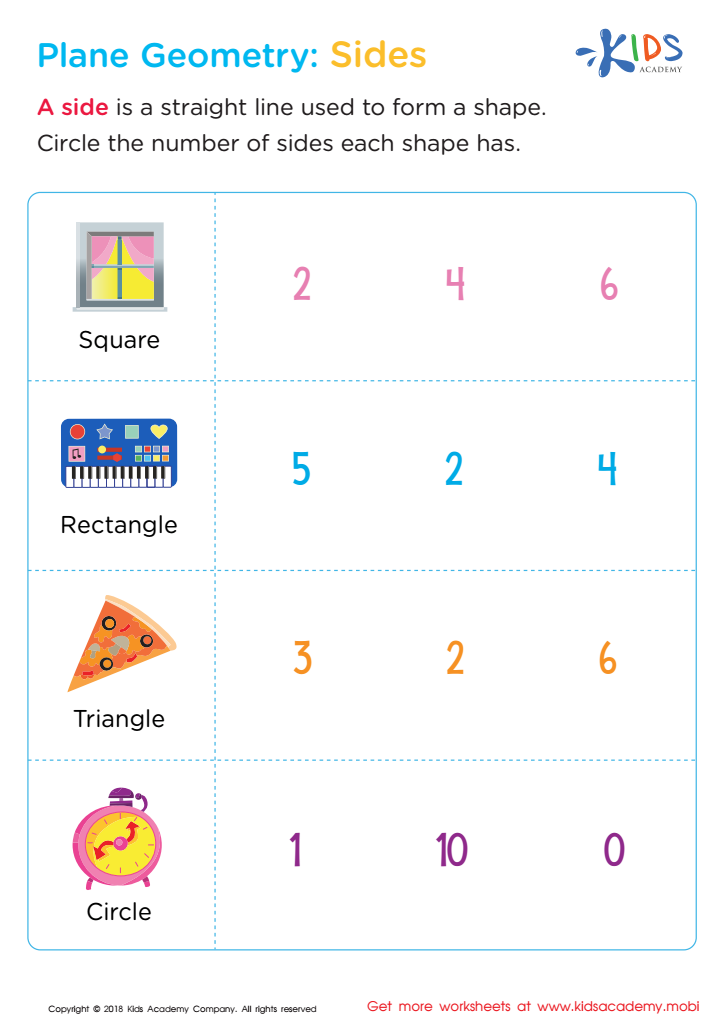
Plane Geometry: Sides Worksheet
Knowing the properties of basic geometric shapes is a great skill to have. Download this free worksheet and let your kids learn about sides and shapes using colorful pictures. They'll see each shape has its own number of sides, laying the groundwork for identifying and recognizing shapes in the future.
Plane Geometry: Sides Worksheet
Worksheet
Join Kids Academy for Free
Who is primarily going to use this learning content?





Basic geometry skills are essential for children aged 5-8 as they lay the foundation for critical thinking and problem-solving abilities. During these formative years, children explore shapes, sizes, and spatial relationships, which are fundamental in understanding the world around them. Parents and teachers should prioritize these skills because they promote cognitive development and help kids make connections between math and everyday life.
Understanding basic geometry aids in enhancing spatial awareness, allowing children to navigate their environment more effectively and develop visualization skills. It fosters creativity; for example, when children construct shapes or engage in art, they apply geometric concepts intuitively. Furthermore, strong geometry skills are vital for success in future math education, as they serve as a precursor to more complex topics such as measurement and algebra.
Moreover, basic geometry skills are applicable in various subjects, including science, art, and physical education, enriching a child's overall learning experience. By valuing and teaching geometry, parents and teachers can help children not only excel academically but also develop a lifelong appreciation for learning, paving the way for their future endeavors. Overall, investing in these skills builds confidence and equips children with the tools they need to succeed in realistic and practical scenarios.








