
Chess piece identification Worksheets for Ages 5-8
3 filtered results
Difficulty Level
Grade
Age
-
From - To
Subject
Activity
Standards
Discover our engaging Chess Piece Identification Worksheets designed specifically for children ages 5-8! These fun, educational printables will help young learners quickly recognize and master the names and moves of each chess piece. Perfect for developing essential critical thinking and problem-solving skills, the worksheets come with colorful illustrations and simple explanations. Whether your child is just getting started or enhancing their chess knowledge, these worksheets make learning enjoyable and effective. Empower your young chess enthusiasts today with our expertly crafted resources designed to make learning chess both fun and easy!
Favorites
With answer key
Interactive
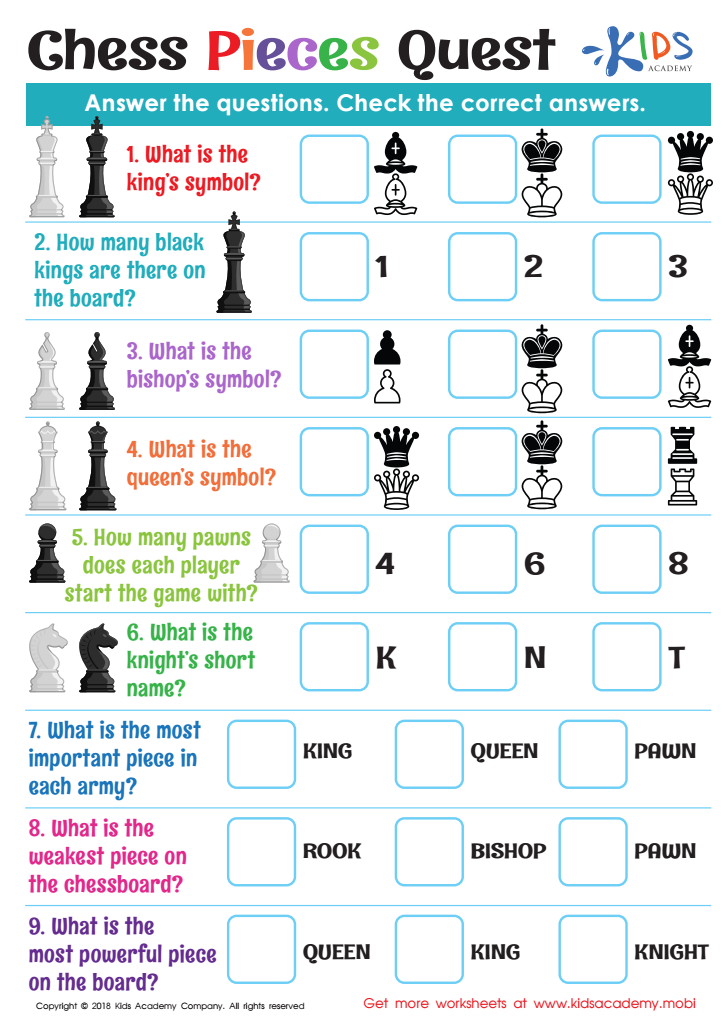
Chess Pieces Quest Worksheet
Help your child prepare for the chess quest by refreshing their knowledge of the symbols and characteristics of each chess piece. Then, have them try the 9 questions on this worksheet. These questions will assess their understanding of the symbols and how many pieces each player starts with.
 Assign to My Students
Chess Pieces Quest Worksheet
Worksheet
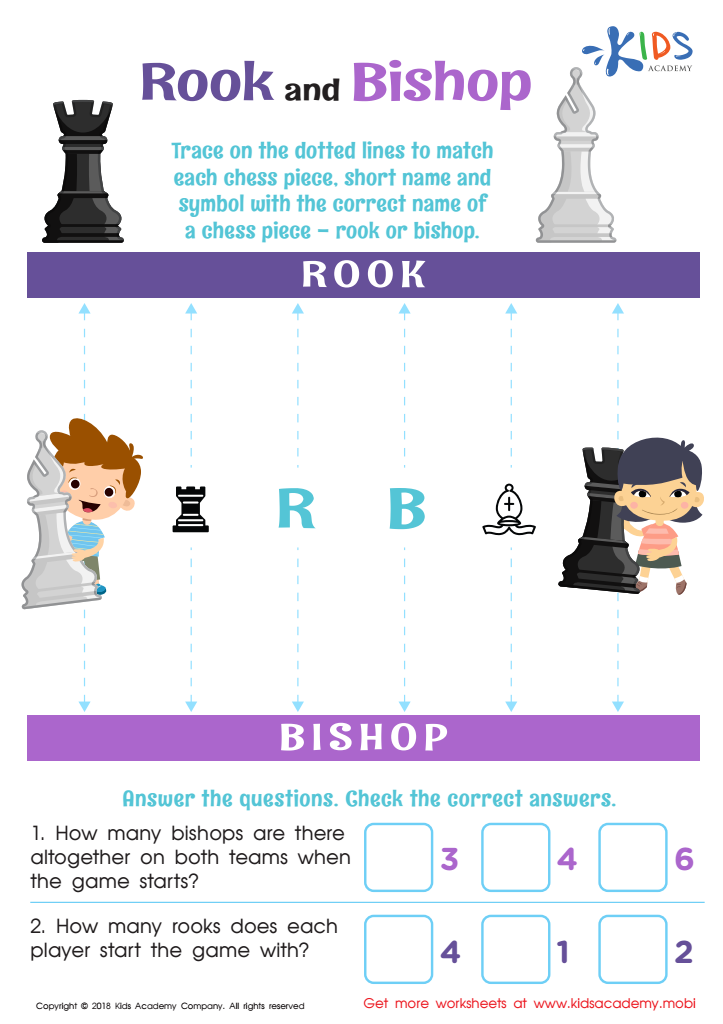
Rook and Bishop Worksheet
This tracing sheet helps your child learn chess pieces by matching each piece, short name and symbol to the correct name. After tracing, have them answer the questions and check their answers. It's a great way for them to become familiarized with chess.
Rook and Bishop Worksheet
Worksheet
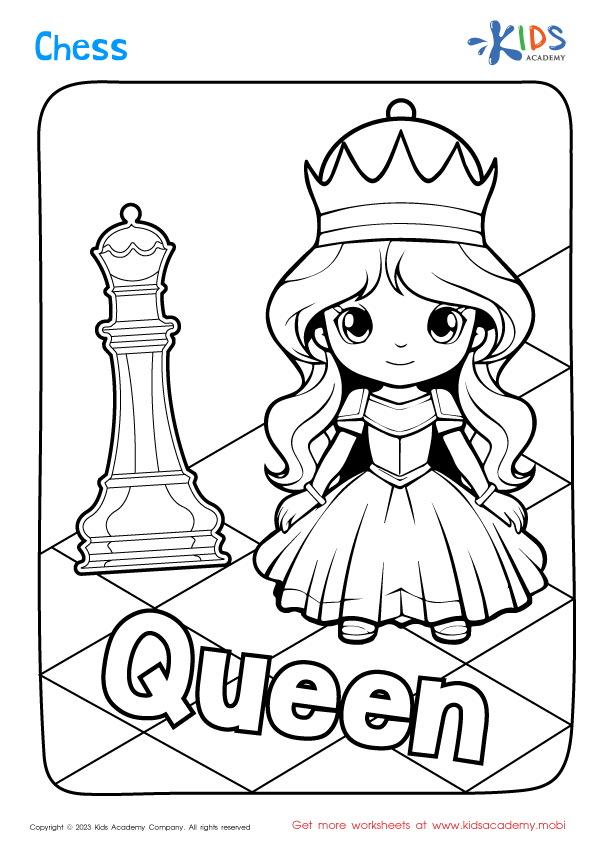
Join Kids Academy for Free
Who is primarily going to use this learning content?






.jpg)
Introducing chess piece identification to children aged 5-8 can offer numerous benefits that bolster cognitive development and social skills. At these early ages, children's brains are incredibly receptive to absorbing new information and forming foundational skills. Recognizing and understanding the different chess pieces, including their names, movements, and roles in the game, hones memory and enhances attention to detail. This can lead to improved concentration and patience, traits essential for success both in academics and everyday activities.
Additionally, chess helps foster critical thinking and problem-solving abilities. By identifying and strategizing with various pieces, children learn to anticipate consequences and develop foresight, which is beneficial for decision-making in real-life situations.
Socially, chess can be an excellent tool for teaching sportsmanship and respectful competition. When children play chess with peers or adults, they learn to take turns, follow rules, manage losses gracefully, and share the joy of victories, all important social skills that transfer to other areas of their lives.
Parental or teacher involvement in chess piece identification can also strengthen adult-child connections, providing a platform for positive interaction and collaborative learning experiences. Thus, investing time in teaching chess piece identification offers multifaceted developmental advantages that extend beyond the game itself.








