Comparing weights Worksheets for Ages 5-8
4 filtered results
-
From - To
Discover our engaging "Comparing Weights Worksheets for Ages 5-8" designed to enhance critical thinking and math skills in young learners. These worksheets feature colorful graphics and fun activities to help children understand the concept of weight comparison through hands-on practice. Each sheet includes exercises that allow kids to compare and contrast different objects, fostering their ability to estimate and measure weight effectively. Perfect for both classroom use and homeschooling, our worksheets ensure a playful, educational experience that promotes foundational skills crucial for early learning. Explore our range today and watch your child’s confidence in handling measurements soar!
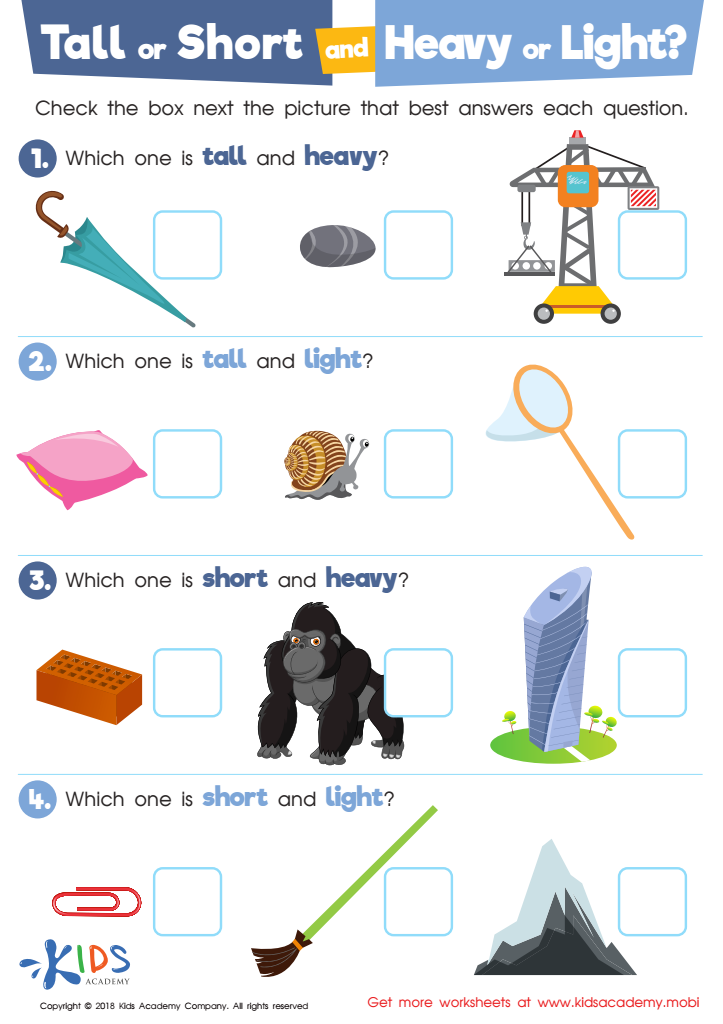
Tall or Short and Heavy or Light? Worksheet
 Assign to My Students
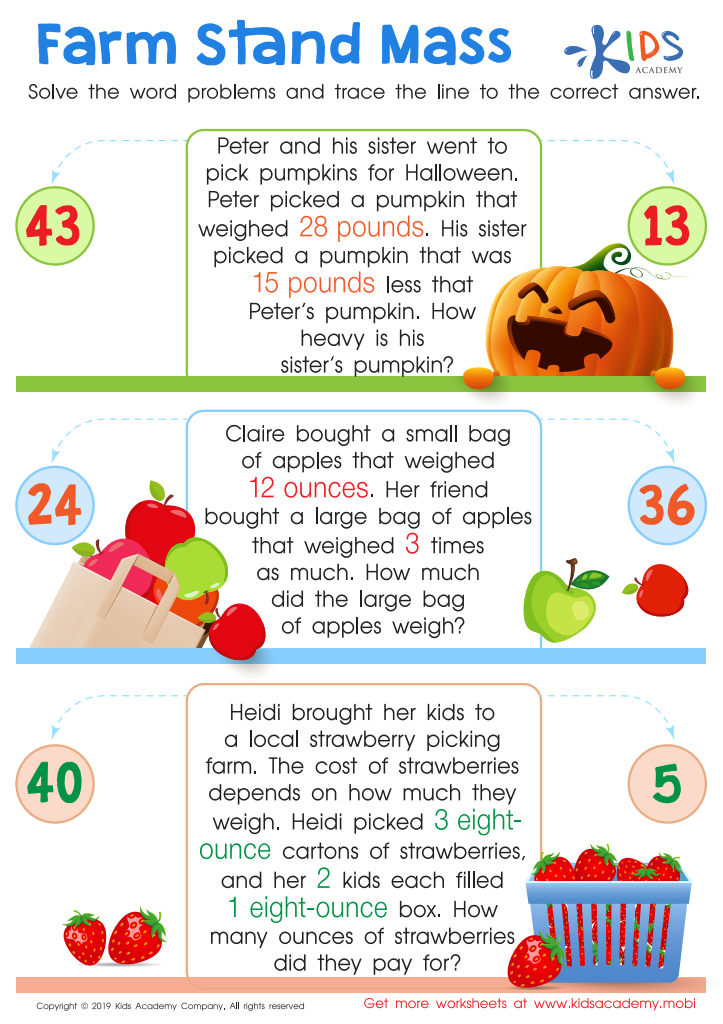
Farm Stand Mass Worksheet
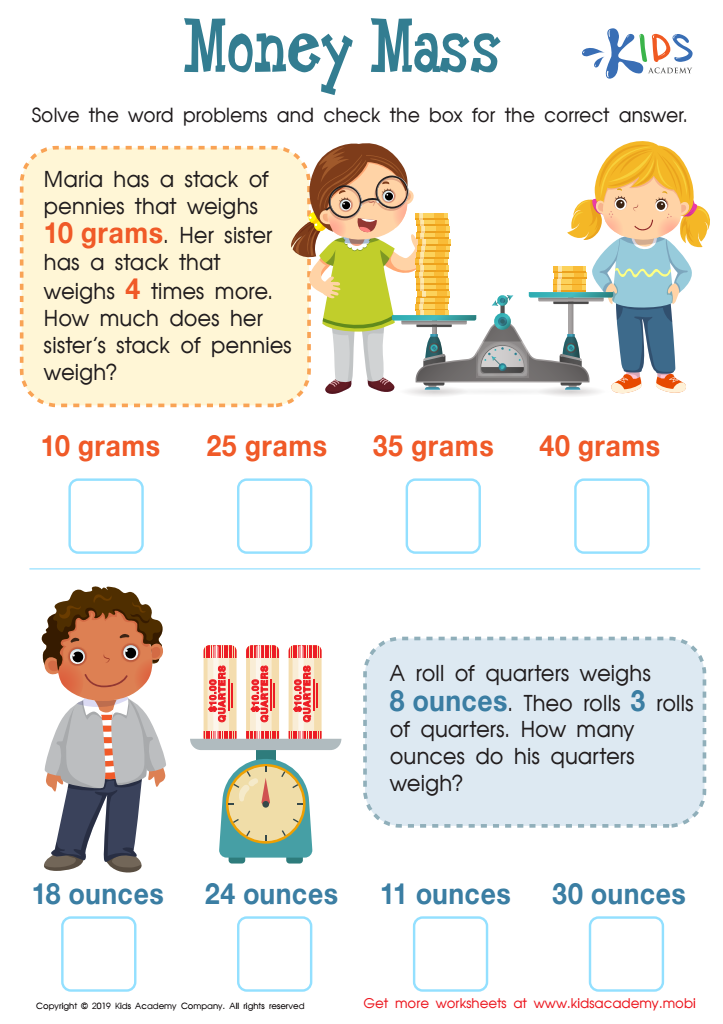
Money Mass Worksheet




%20(1).jpg)



Comparing weights is a foundational skill that supports the development of early mathematical and scientific understanding in children ages 5-8. By engaging in activities that involve weighing objects and comparing their weights, children enhance their abilities to observe, predict, measure, and describe their surroundings in quantifiable terms.
This kind of practice helps build their comprehension of measurement concepts, which are essential for solving real-life problems and for their future academic journey in subjects like math, science, and engineering. It introduces children to the idea that objects may look different yet can have similar or differing weights, fostering critical thinking and reasoning skills.
Additionally, comparing weights can support vocabulary development, as children learn specific terms such as "heavier," "lighter," "equal," and names of units like grams, ounces, or pounds. It's also a hands-on activity that engages kinesthetic learners and makes abstract concepts more tangible and understandable.
For parents and teachers, incorporating weight comparison activities provides an engaging way to teach these significant concepts and supports overall cognitive development. These tasks are not only educational but also fun, fostering a love for learning and exploration which can have long-term positive effects on a child's academic enthusiasm and success.








