
Develop analytical thinking Worksheets for Ages 5-8
5 filtered results
Difficulty Level
Grade
Age
-
From - To
Subject
Activity
Standards
Unlock your child's analytical prowess with our engaging worksheets designed for ages 5-8! At Kids Academy, we offer a rich collection of printable activities catered to young minds eager to explore logical connections and problem-solving skills. Through fun puzzles, patterns, and critical thinking exercises, children develop essential analytical abilities in a playful yet educational environment. Each worksheet is curated to nurture curiosity and build a strong foundation in logical reasoning, promoting confidence and intellectual growth. Perfect for both classroom and at-home learning, these resources make cognitive development an enjoyable adventure. Let’s inspire young thinkers, one worksheet at a time!
Favorites
With answer key
Interactive
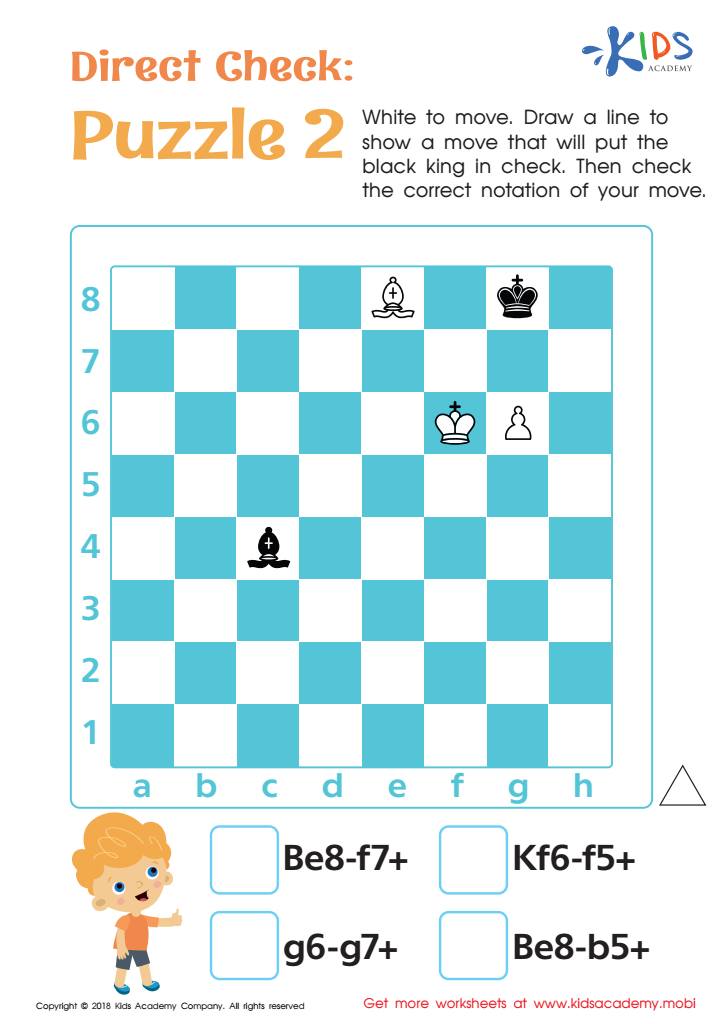
Direct Check: Puzzle 2 Worksheet
Test your kid's chess skills with this worksheet. Help them draw a line to put the black king in checkmate, then check the correct notation from the provided options. This will help them understand the correct notation of each move they make.
 Assign to My Students
Direct Check: Puzzle 2 Worksheet
Worksheet
Join Kids Academy for Free
Who is primarily going to use this learning content?








Developing analytical thinking in children aged 5-8 is crucial for both their current academic progress and long-term cognitive development. At this age, children's brains are rapidly growing and are highly receptive to learning and new forms of thinking. Introducing them to analytical thinking helps nurture their ability to solve problems, make decisions, and understand complex concepts.
Analytical thinking improves skills such as pattern recognition, logical reasoning, and critical analysis. These foundational skills are not only essential for subjects like math and science but also enhance reading comprehension and creativity. For instance, identifying patterns in storylines or breaking down a task into steps cultivates a versatile and dynamic mind.
Moreover, fostering these skills boosts children's confidence. When they understand how to approach a problem and find a solution, they gain a sense of accomplishment, fostering a positive attitude towards learning. This self-assurance encourages a lifelong love of education and the continual pursuit of knowledge.
In addition, analytical thinking equips children with tools to navigate social interactions and daily life challenges, promoting emotional resilience and adaptability. By teaching them how to think critically about their actions and consequences, parents and teachers lay the groundwork for responsible and capable individuals. Investing in analytical thinking at this early age is thus a powerful strategy for well-rounded development.








