Financial literacy Worksheets for Ages 5-8
6 filtered results
-
From - To
Discover our engaging Financial Literacy Worksheets for Ages 5-8, designed to introduce young learners to essential money concepts in a fun and interactive way! These worksheets cover foundational topics such as saving, budgeting, and basic money management. Each activity promotes critical thinking and encourages children to explore their understanding of coins, bills, and the value of money. Perfect for classrooms or home learning, our resources empower kids to develop smart financial habits early on. Equip your child with the skills to make wise financial choices in the future. Explore our collection today and nurture their path to financial savvy!
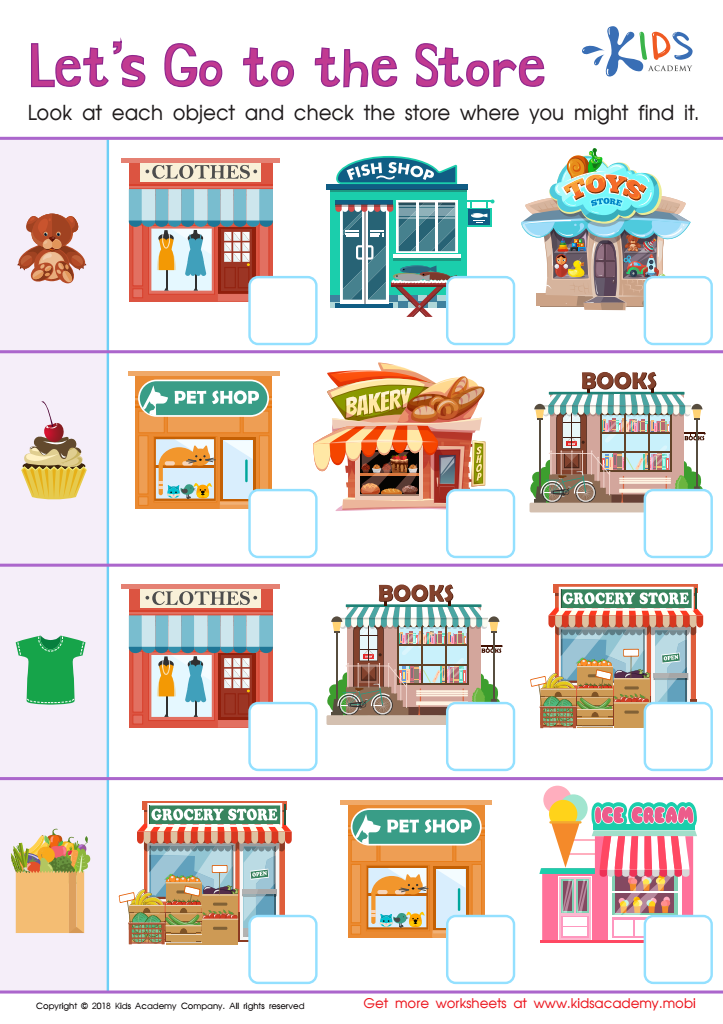
Let's Go to the Store! Worksheet
 Assign to My Students
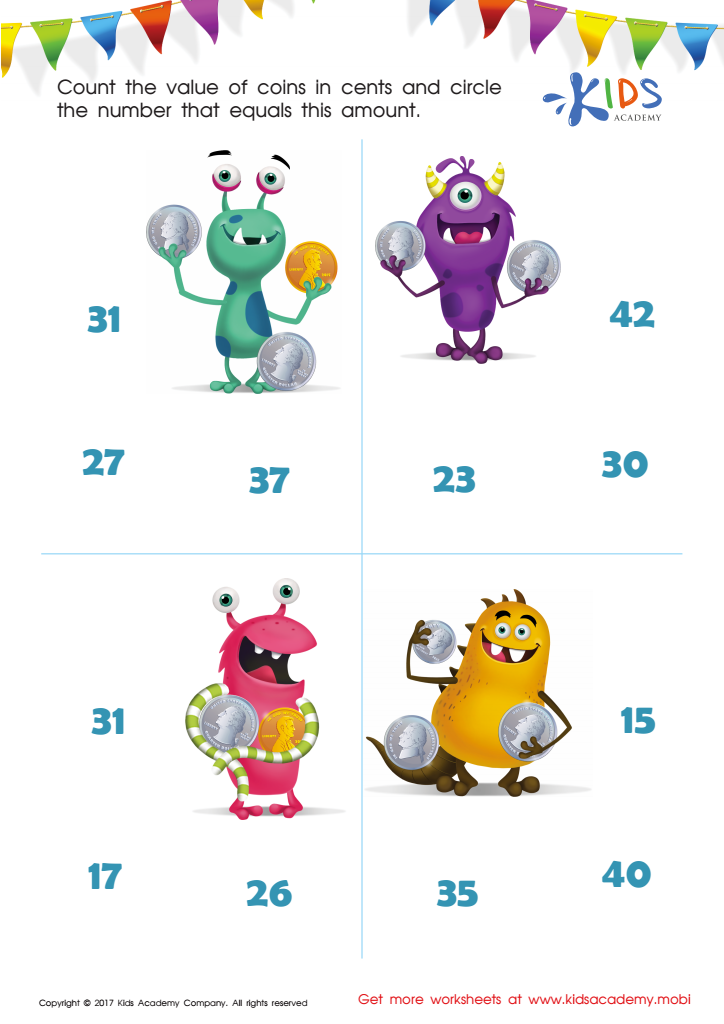
How Many Coins Money Worksheet
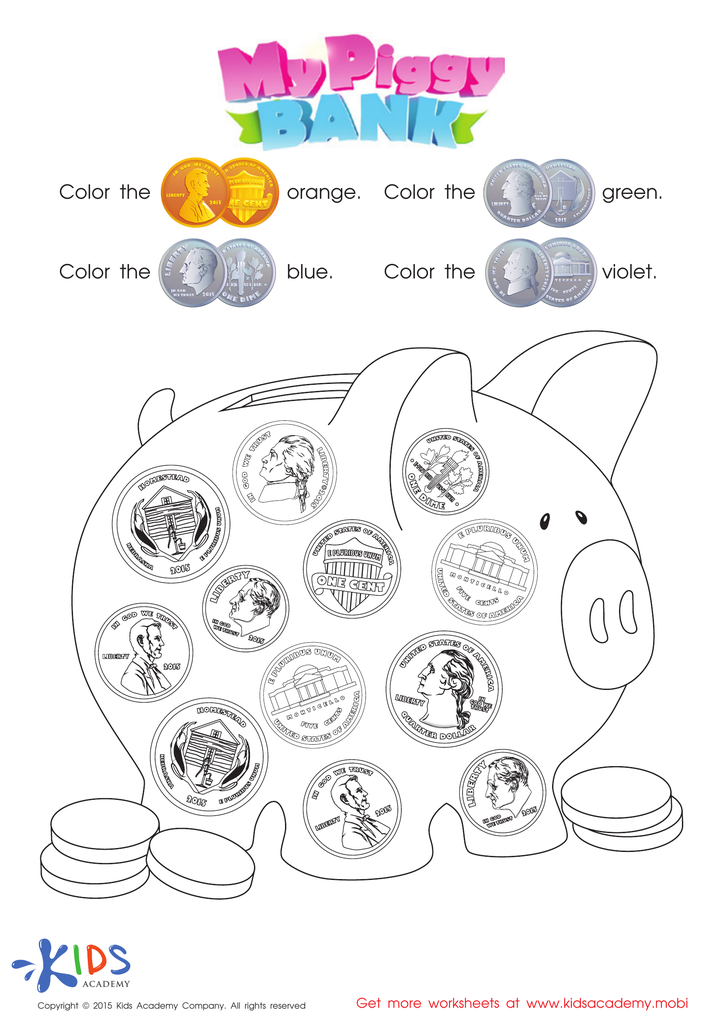
Recognizing Money Money Worksheet
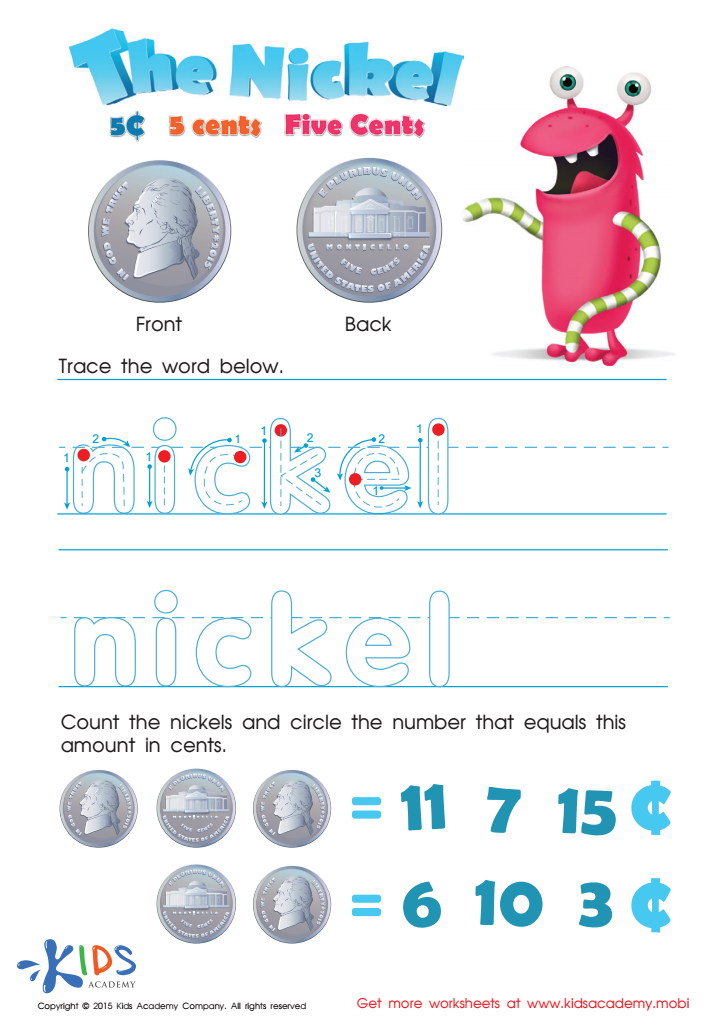
Five Cents or the Nickel Money Worksheet
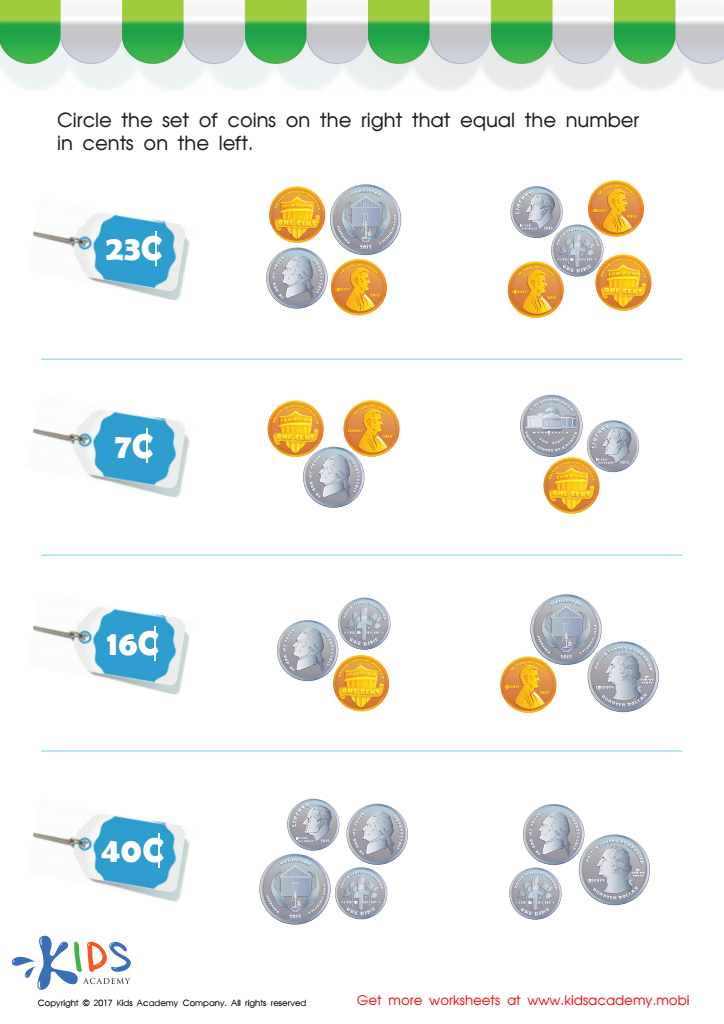
Picking the Coins You Need Money Worksheet








Financial literacy is crucial for children aged 5 to 8 as it lays the foundation for healthy financial habits and encourages responsible decision-making in the future. At this stage, children are highly impressionable and eager to learn, making it an ideal time to introduce basic financial concepts such as saving, spending, and sharing.
By teaching financial literacy early, parents and teachers can instill values of resourcefulness and gratitude. Understanding the difference between needs and wants helps children make thoughtful choices and develops their ability to delay gratification. These skills not only promote sound financial behavior but also enhance critical thinking and problem-solving abilities.
Incorporating fun and interactive elements, like games and storytelling about money management, can make learning enjoyable and relatable. Engaging children in discussions about money encourages their confidence and sparks curiosity about economic principles.
Furthermore, with the increasing importance of digital transactions and economic awareness in today’s world, early financial education prepares children for responsible participation in society. Ultimately, prioritizing financial literacy provides children with the tools they need for a secure and prosperous future, benefiting their overall well-being and assisting parents and teachers in nurturing well-rounded individuals.








