
Interpreting information Worksheets for Ages 5-8
3 filtered results
Difficulty Level
Grade
Age
-
From - To
Subject
Activity
Standards
Discover our engaging "Interpreting Information Worksheets" tailored for children ages 5 to 8! These worksheets are designed to enhance critical thinking and comprehension skills by inviting young learners to analyze and decode various types of information. Each activity fosters essential skills in interpreting graphs, reading maps, and understanding visual data. With vibrant illustrations and age-appropriate questions, these worksheets make learning fun and interactive. Perfect for both classroom use and at-home practice, our resources help young minds develop confidence in their abilities to interpret information effectively. Download our worksheets today and support your child’s journey toward becoming a critical thinker!
Favorites
With answer key
Interactive
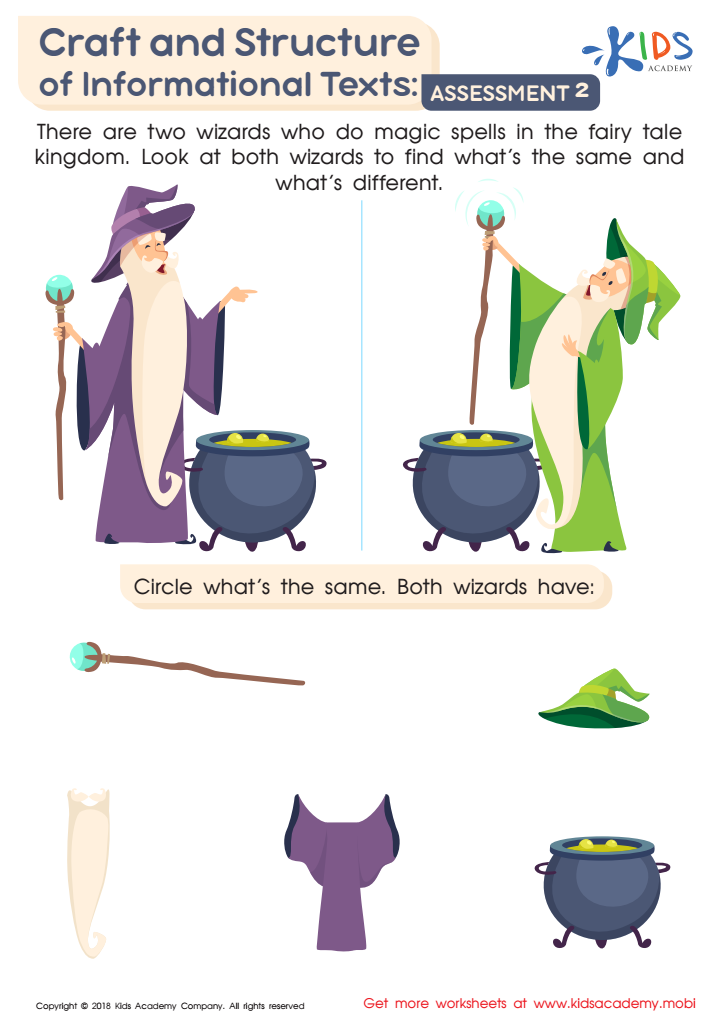
Craft and Structure of Informational Texts: Assessment 2 Worksheet
This assessment has kids looking at two similar fairy tale wizards, focusing on their visuals to find the similarities and differences. Then, they'll circle the things they both have. It's a great way to help children hone their detail-oriented comprehension skills, which is essential when using informational texts.
 Assign to My Students
Craft and Structure of Informational Texts: Assessment 2 Worksheet
Worksheet
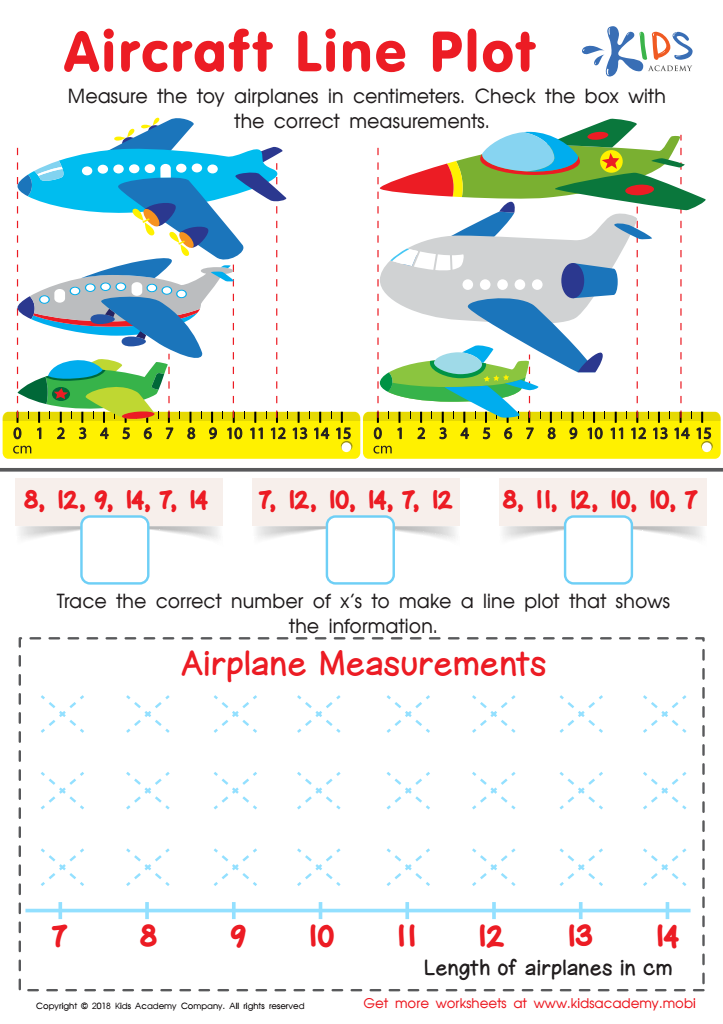
Aircraft Line Plot Worksheet
If your kids are aviation enthusiasts, they'll love this worksheet! Look at the picture with them, then ask them to measure the toy planes in cm. Check the box with the right measurements and then trace the x's to make a line plot with the data.
Aircraft Line Plot Worksheet
Worksheet
Join Kids Academy for Free
Who is primarily going to use this learning content?








Interpreting information is a critical skill for children aged 5-8, laying the foundation for their academic success and lifelong learning. At this age, children are naturally curious and begin to engage with different forms of information, including texts, images, and simple data. Parents and teachers should care about this skill for several reasons.
Firstly, the ability to interpret information fosters critical thinking. When children learn to analyze and make sense of what they see and hear, they become better decision-makers. This skill is essential not just for schoolwork but for navigating an increasingly complex world filled with media and technology.
Secondly, mastering information interpretation supports literacy development. As children learn to understand context, draw connections, and determine meaning, they enhance their reading comprehension—an essential skill for all future learning.
Moreover, by helping children become adept at interpreting information, parents and teachers encourage curiosity and a love for learning. This intrinsic motivation boosts engagement with the material and ultimately leads to better educational outcomes.
In summary, prioritizing information interpretation equips children with essential skills, facilitates academic progress, and nurtures a lifelong enthusiasm for knowledge. It's a simple yet powerful way to empower the next generation as informed contributors to society.








