
Learning scientific vocabulary Worksheets for Ages 5-8
3 filtered results
Difficulty Level
Grade
Age
-
From - To
Subject
Activity
Standards
Boost your child's scientific vocabulary with our engaging worksheets tailored for ages 5-8! Our carefully crafted materials introduce young learners to essential science terms in a fun and interactive way. Through activities like matching, fill-in-the-blanks, and word searches, children will explore fundamental concepts in areas like biology, physics, and Earth science. Each worksheet is designed to enhance comprehension, inspire curiosity, and foster a love for learning. Perfect for home or classroom use, these resources encourage critical thinking and vocabulary development. Start your child's scientific adventure today and watch their confidence grow as they master new words!
Favorites
With answer key
Interactive
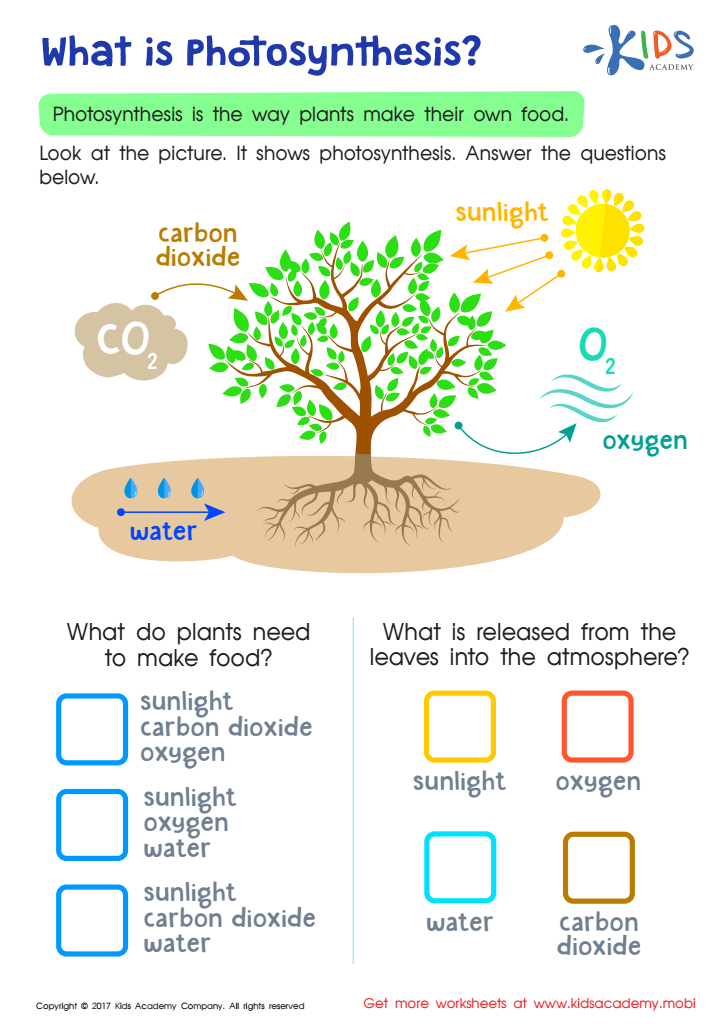
What is Photosynthesis Printable
Plants need to eat too; they make their own food from the air. Introduce them to photosynthesis with this fun worksheet!
 Assign to My Students
What is Photosynthesis Printable
Worksheet
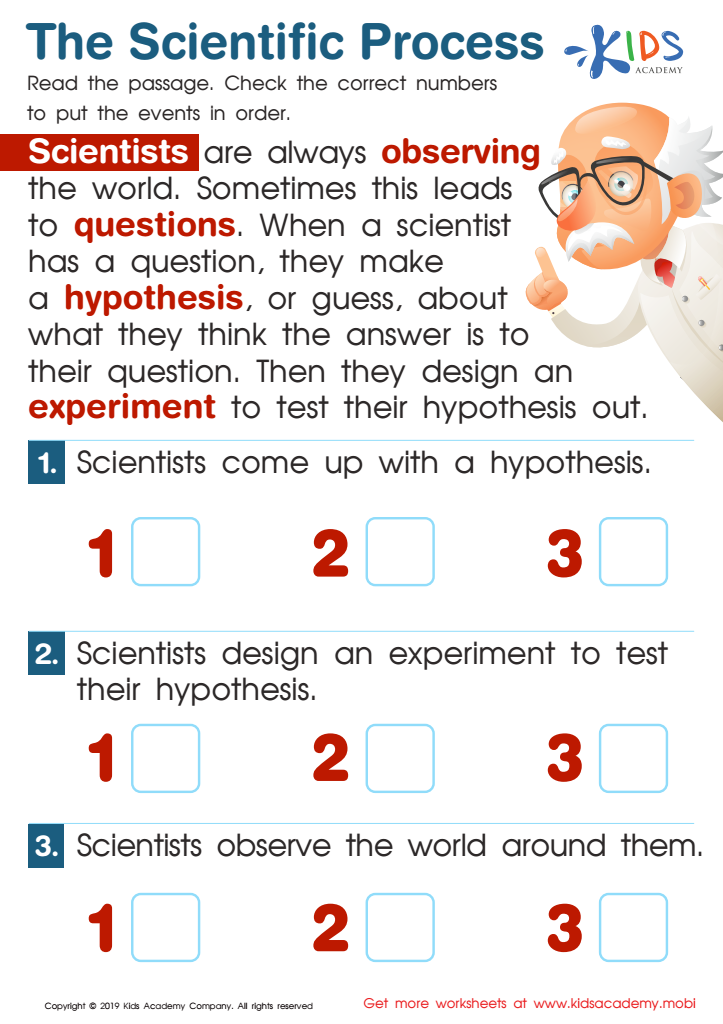
The Scientific Process Worksheet
Help your kids read the passage, then ask them to explain what they've learnt. Ask the questions and help put the events in order. Through this worksheet, your kids will learn more about science and practice reading skills. It's a fun way to explore science! (80 words)
The Scientific Process Worksheet
Worksheet
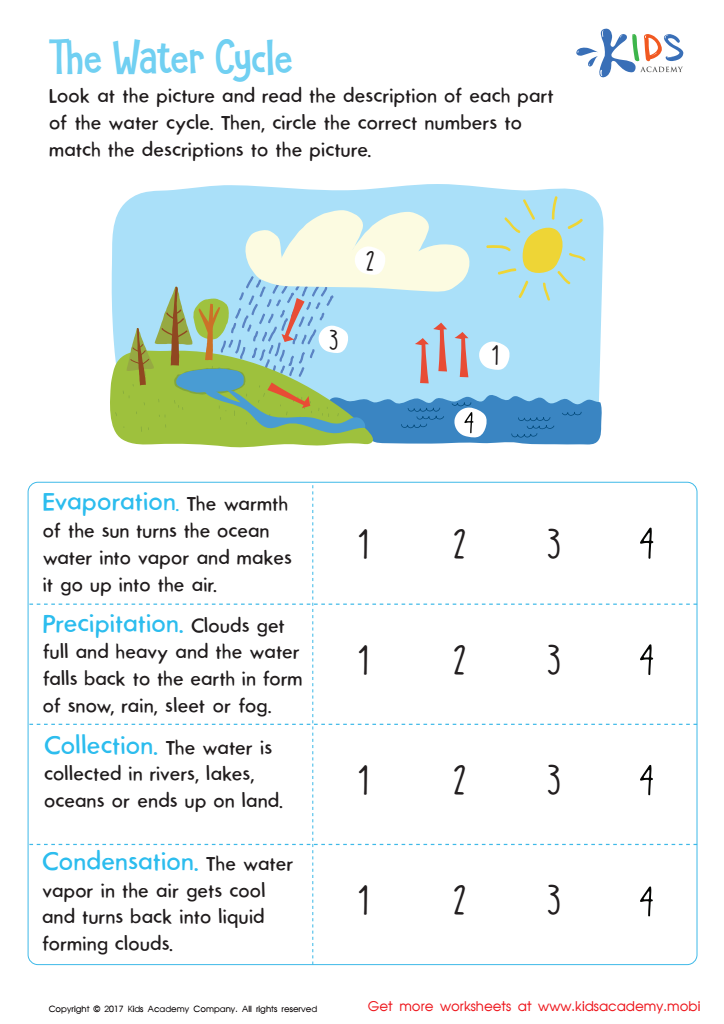
The Water Cycle Worksheet
Kids love science because it sparks their curiosity, so use this worksheet to introduce them to earth science and build a strong foundation for future learning.
The Water Cycle Worksheet
Worksheet
Learning Skills
Join Kids Academy for Free
Who is primarily going to use this learning content?








Parents and teachers play a crucial role in the development of young learners, particularly in enhancing their scientific vocabulary during the ages of 5 to 8. At this developmental stage, children are naturally curious about the world around them. They engage with fundamental scientific concepts, such as weather, animals, and plants, and understanding scientific vocabulary is essential for fostering this curiosity.
Developing a rich scientific vocabulary helps children articulate their observations and thoughts about experiments and phenomena, enabling them to ask deeper questions. When parents and teachers promote the use of specific terminology, they equip children with the tools to communicate effectively about their experiences in science, enhancing their comprehension and retention of knowledge.
Furthermore, a solid foundation in scientific vocabulary supports future academic success. As students progress in their education, they will encounter more complex concepts; without a grasp of basic scientific terms, they may struggle to understand lessons, thereby hindering their enthusiasm for learning. Early exposure not only strengthens literacy skills but promotes critical thinking and problem-solving abilities.
In summary, nurturing scientific vocabulary in young learners empowers them to explore, learn, and engage with the natural world, laying a strong groundwork for lifelong learning and discovery in science.








