Number comparison skills Worksheets for Ages 5-8
3 filtered results
-
From - To
Discover our engaging Number Comparison Skills Worksheets, designed for children ages 5-8, at Kids Academy! These worksheets help young learners build a solid foundation in comparing numbers, enhancing their math proficiency with fun and interactive exercises. Our carefully crafted activities guide students through the concepts of greater than, less than, and equal to, fostering critical thinking and problem-solving skills. Ideal for both classroom use and at-home practice, our worksheets make learning enjoyable and effective. Strengthen your child’s number comparison abilities today with Kids Academy's expertly designed resources! Visit us now to get started on the path to math success.
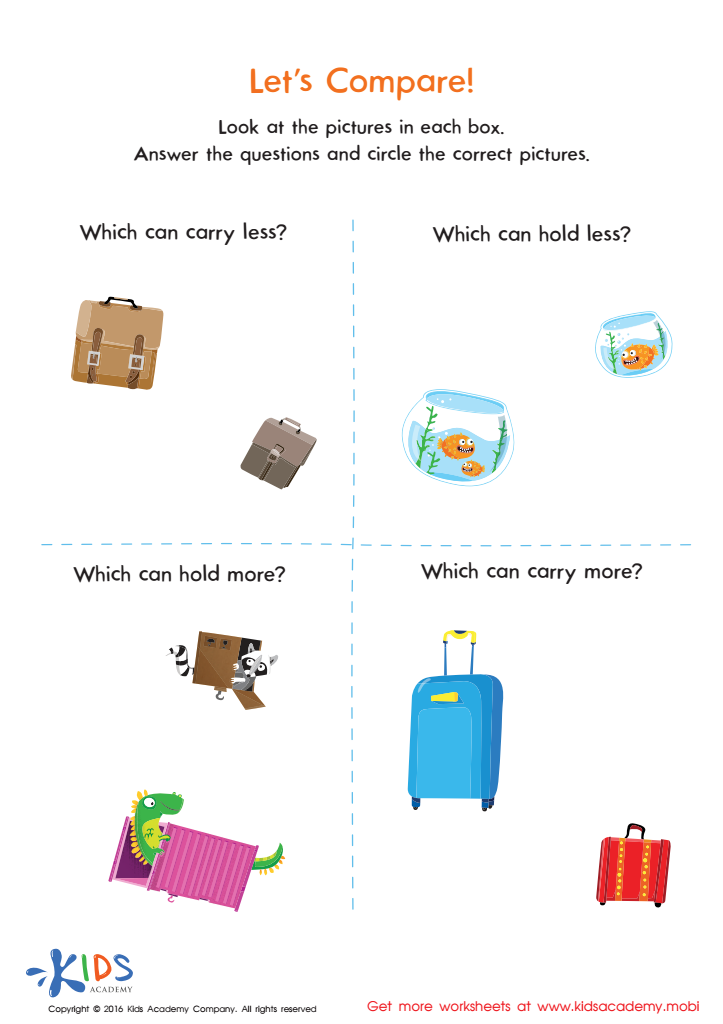
Let's Compare Worksheet: Big or Small
 Assign to My Students
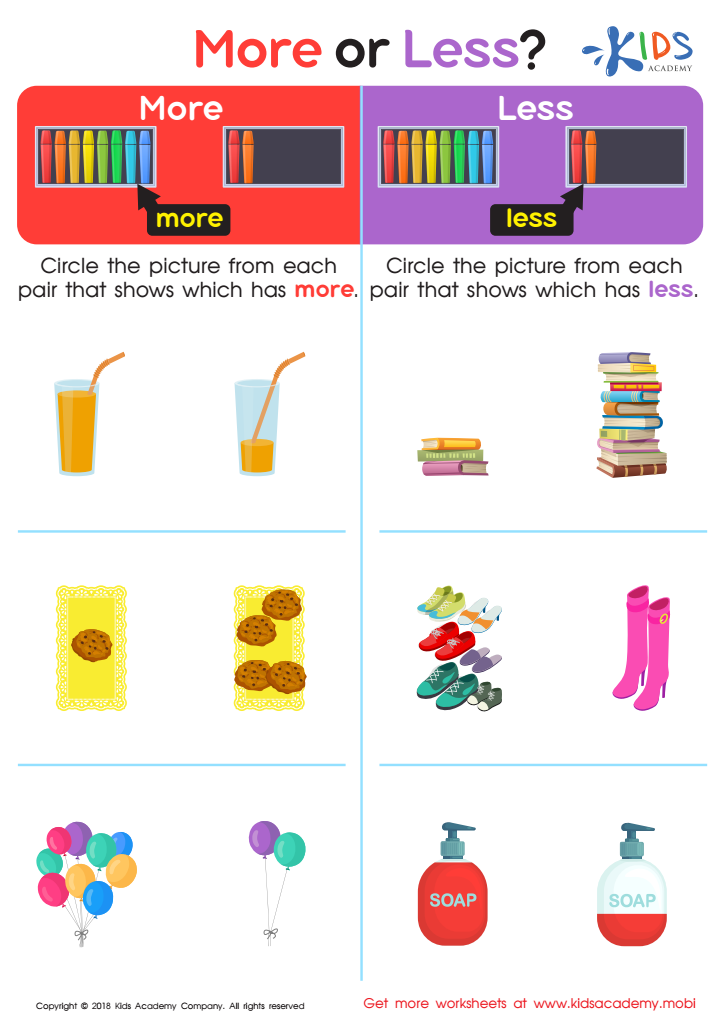
More or Less? Worksheet
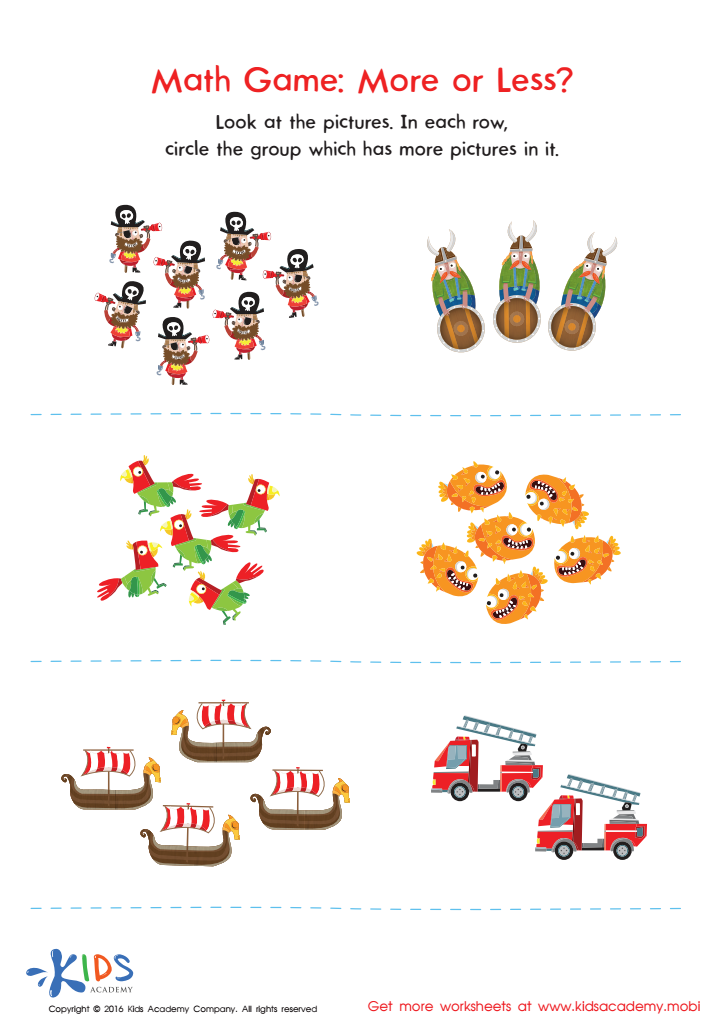
More or Less Worksheet


.jpg)


.jpg)
.jpg)

Number comparison skills are a fundamental aspect of early childhood education, playing a crucial role in laying the foundation for more advanced mathematical concepts. During ages 5-8, children are developing their understanding of numbers and quantities, which is essential for their academic success and everyday problem-solving abilities.
When parents and teachers focus on number comparison skills, they help children recognize numerical relationships, such as knowing which number is larger or smaller. This understanding fosters critical thinking and logical reasoning, which are vital for all areas of learning. By comparing numbers, children develop a sense of place value, can better grasp arithmetic operations, and are more prepared for tasks that involve measurement, data interpretation, and geometrical understanding.
Moreover, fostering these skills at an early age instills confidence in young learners. When children succeed in comparing numbers, they experience a sense of achievement, providing motivation and a positive attitude towards mathematics. This early success is crucial, as it sets the stage for a child's lifelong relationship with the subject.
In summary, number comparison skills are not just about understanding numbers; they promote cognitive development, logical reasoning, and confidence. Teachers and parents should thus prioritize these skills to ensure children build a strong mathematical foundation for future learning and the practical challenges of everyday life.








