Numerical comparisons Worksheets for Ages 5-8
3 filtered results
-
From - To
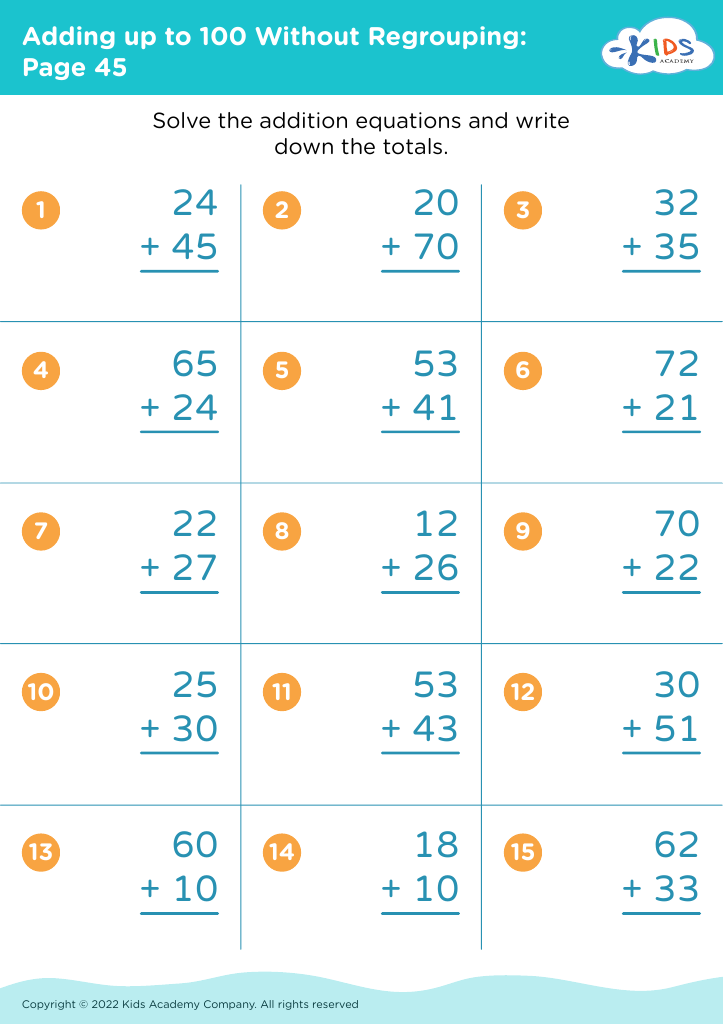
Welcome to our exciting Numerical Comparisons Worksheets for ages 5-8! Designed to engage young learners, these interactive worksheets help children enhance their math skills by comparing numbers in various fun and educational activities. From identifying greater or lesser values to developing a solid understanding of more and less, your child will enjoy grasping essential concepts through colorful graphics and approachable exercises. Our printable resources are designed to foster critical thinking alongside number recognition, ensuring a comprehensive learning experience. Perfect for homeschooling, tutoring, or classroom activities, these worksheets provide a fantastic way for children to build confidence in their numerical abilities.







Numerical comparisons are fundamental skills for children aged 5-8 that lay the groundwork for their mathematical understanding and critical thinking. During these early years, children develop a conceptual understanding of numbers, quantities, and how they relate to one another. By focusing on numerical comparisons, parents and teachers can greatly enhance a child's numerical fluency and cognitive abilities.
Understanding numerical comparison helps children make sense of their world. For example, when they compare quantities, they learn to categorize and organize information, skills vital for daily decision-making. Engaging children in activities that involve comparing numbers fosters problem-solving skills, as they analyze and interpret differences and similarities.
Furthermore, proficiency in numerical comparisons supports their proficiency in more advanced math topics such as addition, subtraction, and early algebra. Teachers can reinforce these concepts through playful activities, like games and hands-on activities, making learning enjoyable.
Involvement from parents—like discussing comparisons in everyday situations—creates a collaborative learning atmosphere. When children understand how to compare numbers and quantities, they build a strong foundation for future academic success and lifelong skills in analytical thinking and reasoning. Therefore, investing time in numerical comparisons is crucial for creating competent and confident young learners.








