Unlock your child's potential with our comprehensive Reading Skills Development Worksheets for ages 5-8! These engaging, age-appropriate activities are designed to enhance vocabulary, comprehension, and critical thinking skills. Each worksheet offers fun exercises that promote a love for reading while helping young learners master essential concepts such as phonics, sight words, and sentence structure. Perfect for both home and classroom use, our worksheets cater to various learning styles, ensuring that every child can thrive. Dive into a world of imagination and language, and watch your child's confidence grow as they develop foundational reading skills for lifelong learning!

Check out this FREE "Reading skills development" Trial Lesson for age 5-8!

One-to-one Letter-sound Correspondence

Favorites
With answer key
Interactive
  • 5-8
  • Reading skills development
Words with Sound N Reading Worksheet

Words with Sound N Reading Worksheet

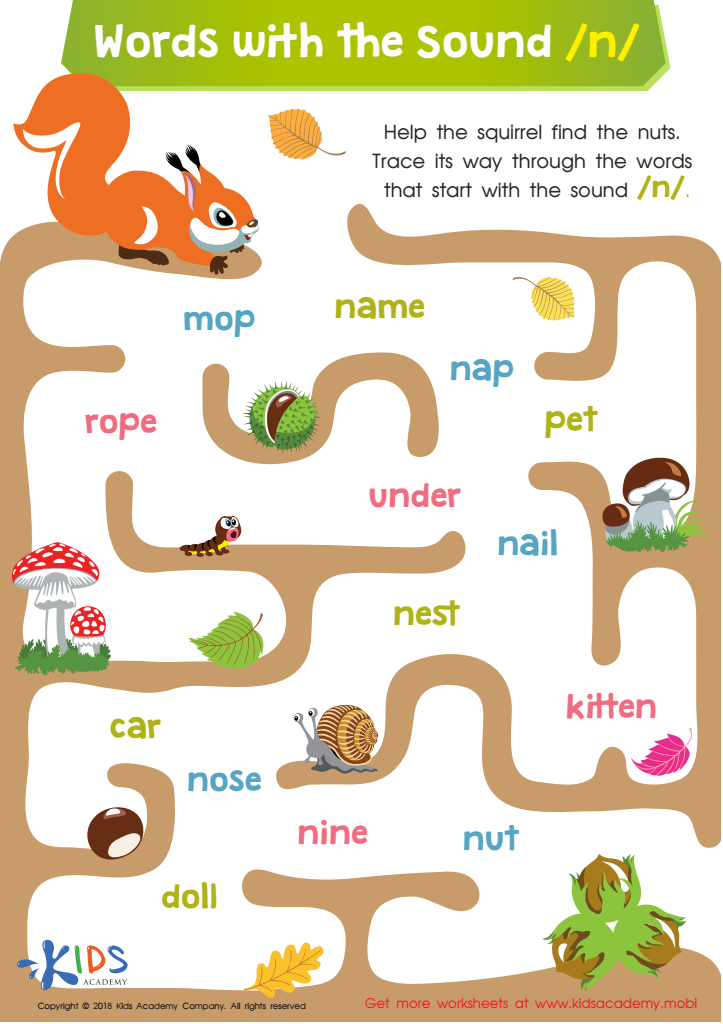
Young readers will love the colourful pictures and simple sight words on this download worksheet. They can trace their way through the maze as they help the cute squirrel reach his acorns, finding words with the sound "n" as they go. It's a fun way to work on reading skills - they won't even realise they're learning!
Words with Sound N Reading Worksheet
Worksheet
Spell the Word Worksheet

Spell the Word Worksheet

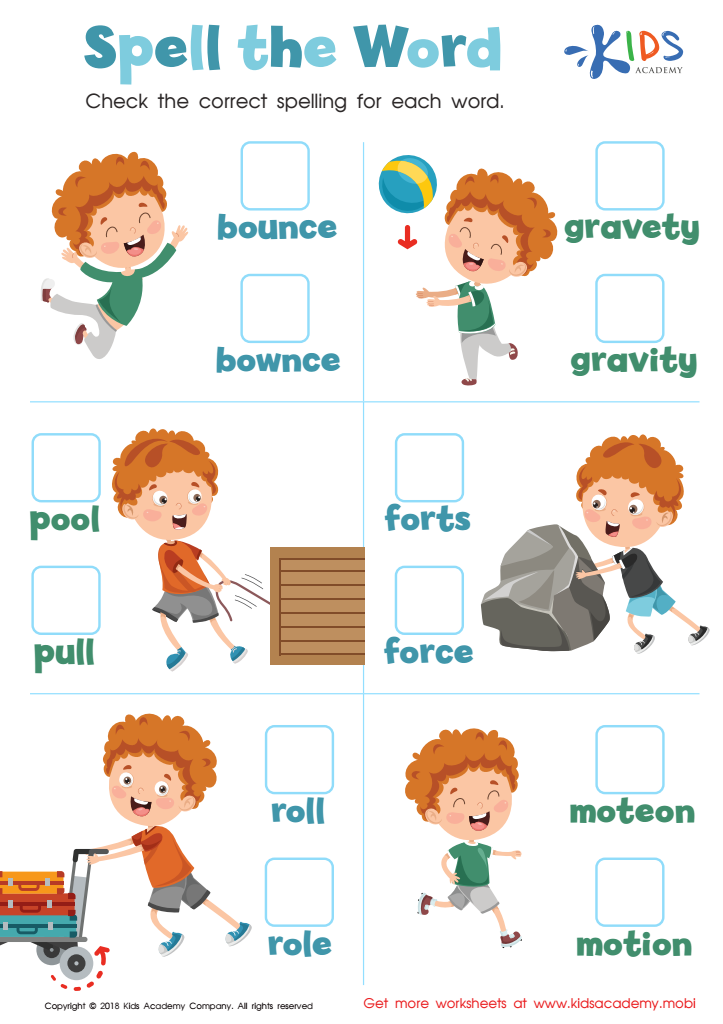
Spelling can be fun for your students with this colorful worksheet. Ask them to identify what the boy is doing in each picture, then check the correct spelling of the words. Let them practice and have fun while learning!
Spell the Word Worksheet
Worksheet
Let's Look for Consonants Worksheet

Let's Look for Consonants Worksheet

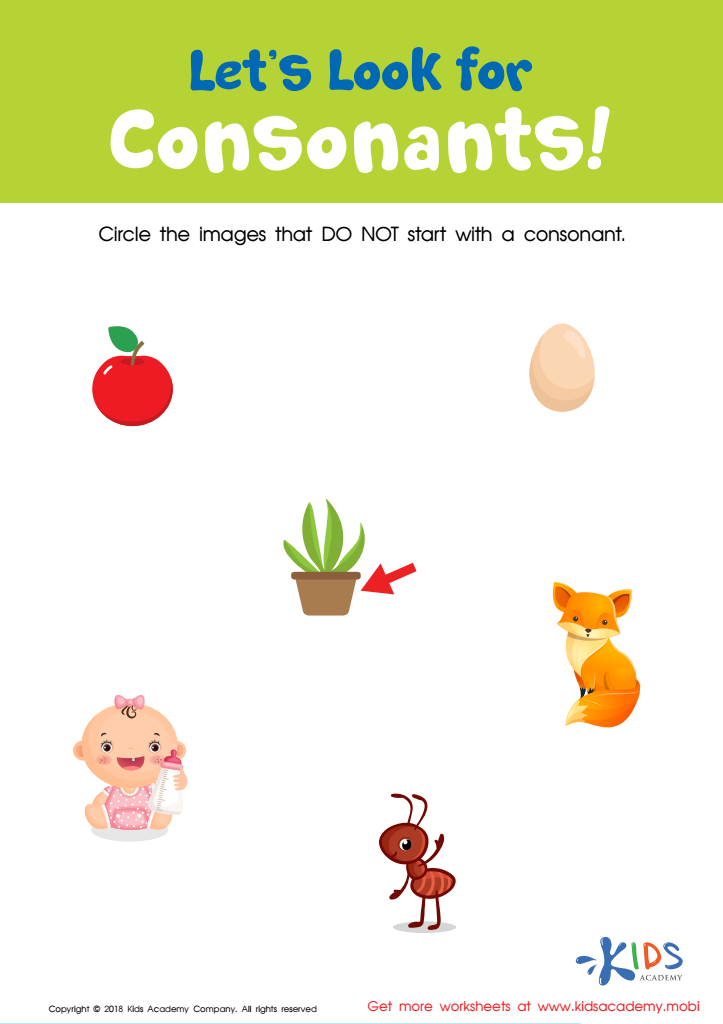
Help kids learn consonants and words that start with them. Ask them to recite the alphabet, then explain consonants are all letters but the 5 vowels. Use the worksheet to ask them to circle items without a consonant. Emphasize that's 21 consonants.
Let's Look for Consonants Worksheet
Worksheet
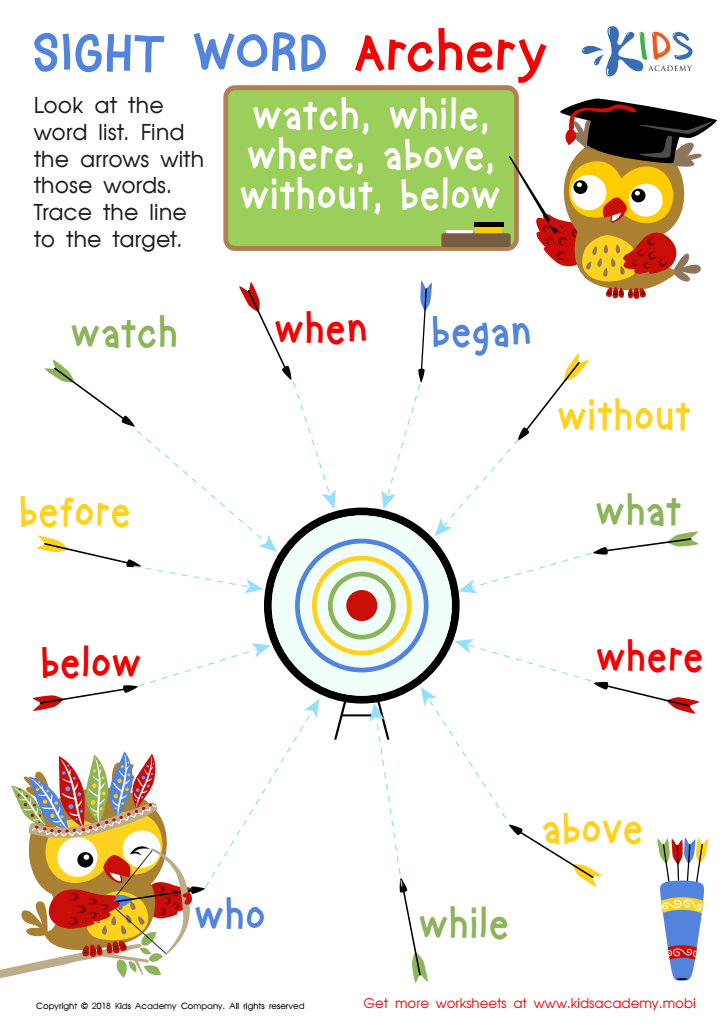
Sight Word Archery Worksheet

Sight Word Archery Worksheet

Read the words list with your kids, pointing at each one. Ask them to do the same. Help them find the arrows with those words and trace the line to the target in the centre.
Sight Word Archery Worksheet
Worksheet
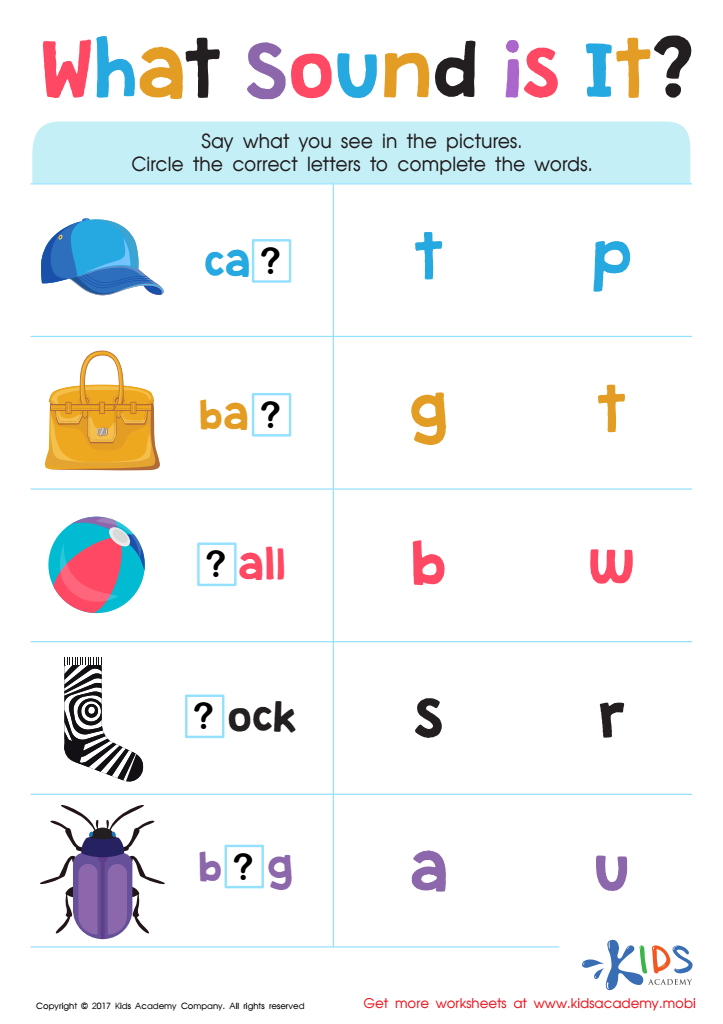
What Sound Is it? Worksheet

What Sound Is it? Worksheet

Have your child say the words for the pictures on this fun worksheet. As he or she sounds out the word, your child will use the provided letter choices to complete it, building reading and phonics skills. Visual cues make it easier to identify the correct beginning, middle, or end sound.
What Sound Is it? Worksheet
Worksheet
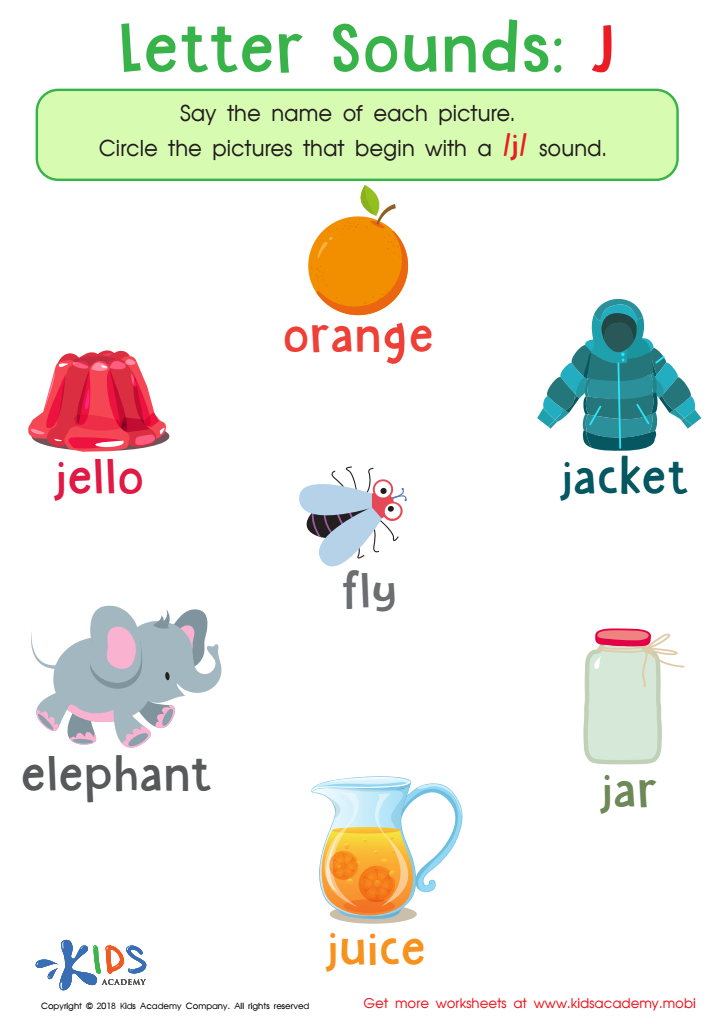
Letter Sounds: J Printable Worksheet

Letter Sounds: J Printable Worksheet

Preschoolers can learn to identify letter sounds by focusing on beginning sounds. This cute and colorful worksheet reviews the hard “j” sound. Kids can point it out by naming the words and circling only those starting with the “j” sound. Read the text out loud and listen closely!
Letter Sounds: J Printable Worksheet
Worksheet
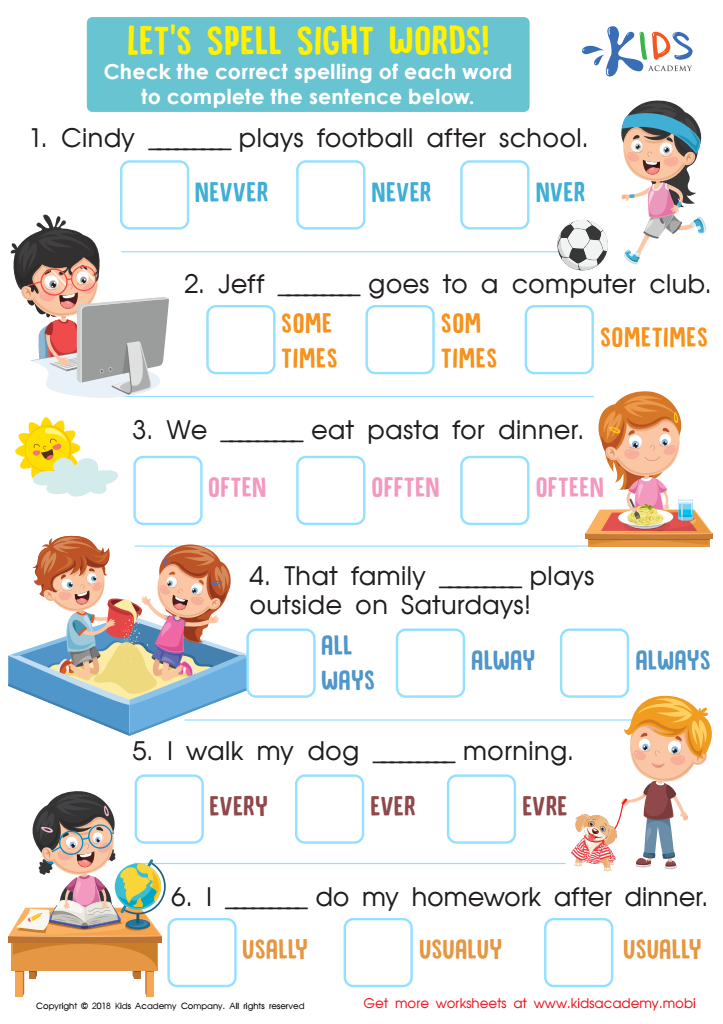
Let's Spell Sight Words Worksheet

Let's Spell Sight Words Worksheet

Help your kids spell tricky sight words by asking them to spot differences in the sentences of activities they do regularly. This worksheet contains incomplete sentences, with the correct spelling of the word in the options for them to fill in. Get them to look out for words with the wrong spellings.
Let's Spell Sight Words Worksheet
Worksheet
Feeling Words: The Boy Who Cried Wolf Worksheet

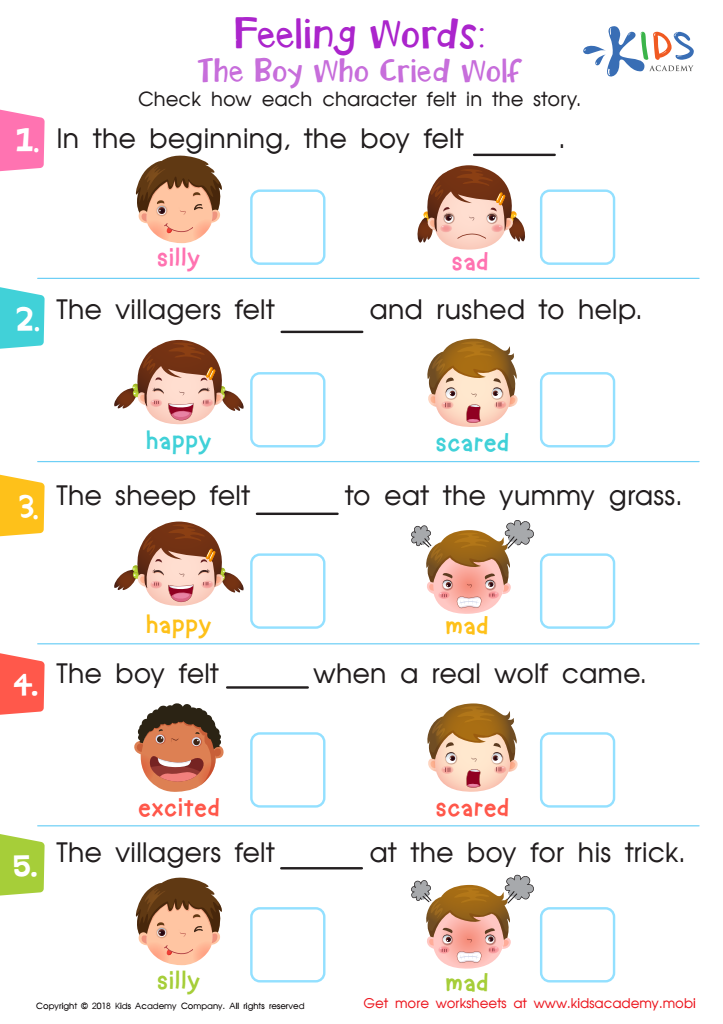
Feeling Words: The Boy Who Cried Wolf Worksheet

This worksheet helps students infer characters' traits and feelings by reading The Boy Who Cried Wolf. They choose the correct emotion for each character to improve their story comprehension. A great resource for the reading classroom, it teaches an essential comprehension skill.
Feeling Words: The Boy Who Cried Wolf Worksheet
Worksheet
Silent e worksheet
Silent e worksheet

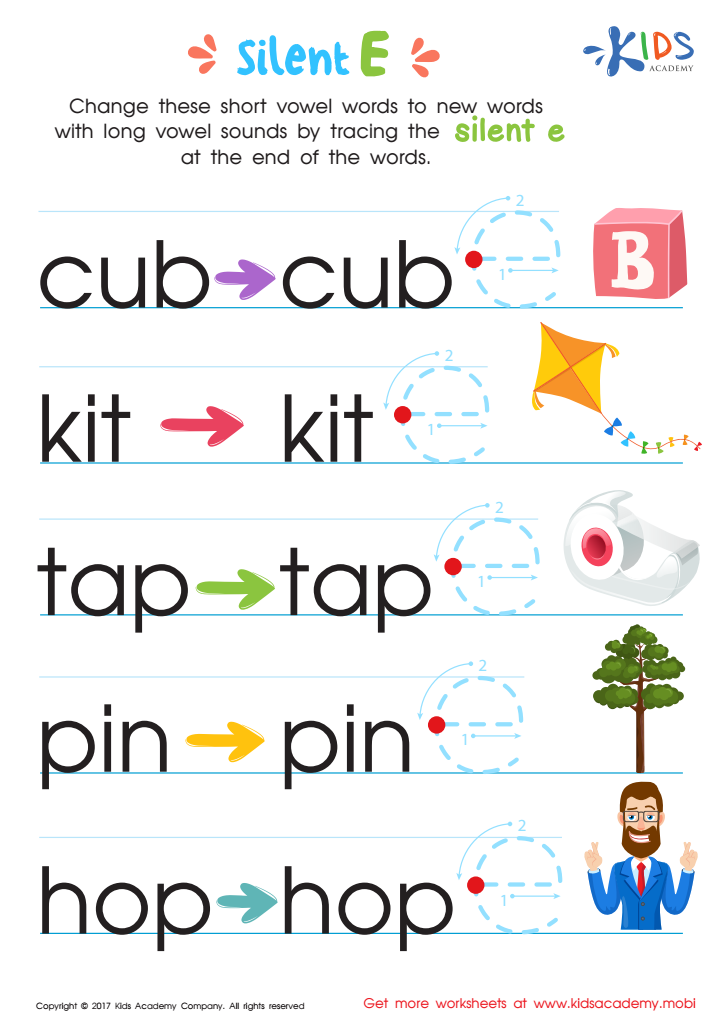
Silent E Words Worksheet

The letter e is amazing - it changes words without making a sound! Boost spelling and phonics with this Silent e worksheet from Kids Academy - fun and colorful!
Silent E Words Worksheet
Worksheet
Sight Word Sentences Worksheet

Sight Word Sentences Worksheet

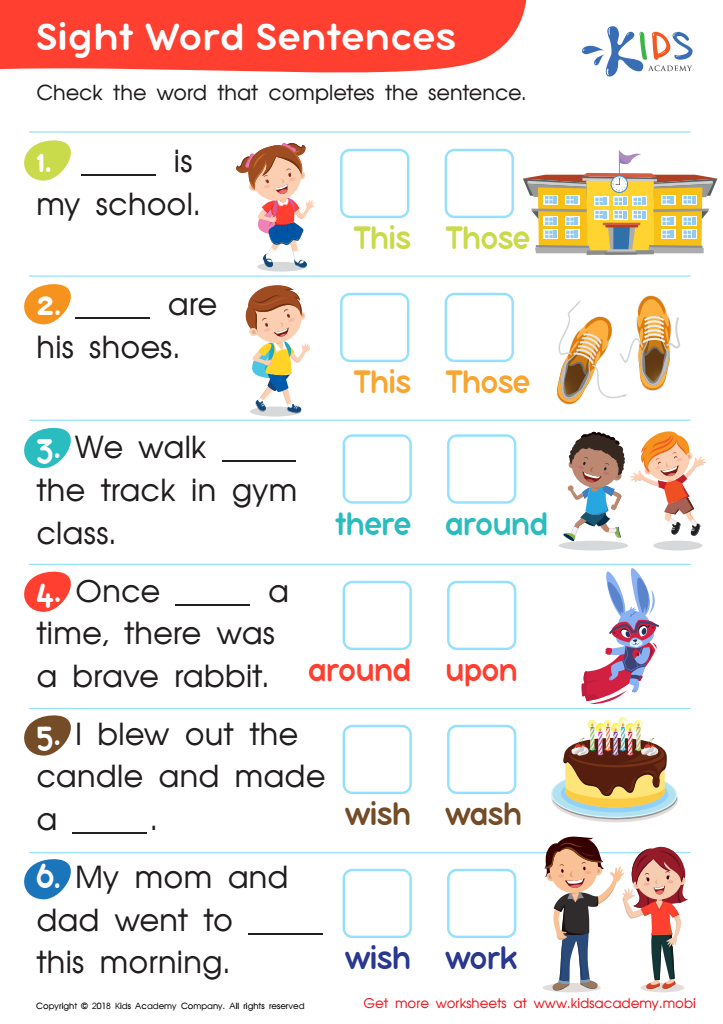
Improve reading fluency! Have students fill in the blank with the correct sight word to complete sentences. Sight words are often tricky to decode - they don't follow phonics or spelling rules. To read smoothly, young learners must know them by memory. Use this printable and help kids master their sight words!
Sight Word Sentences Worksheet
Worksheet
Letter G Sounds Worksheet

Letter G Sounds Worksheet
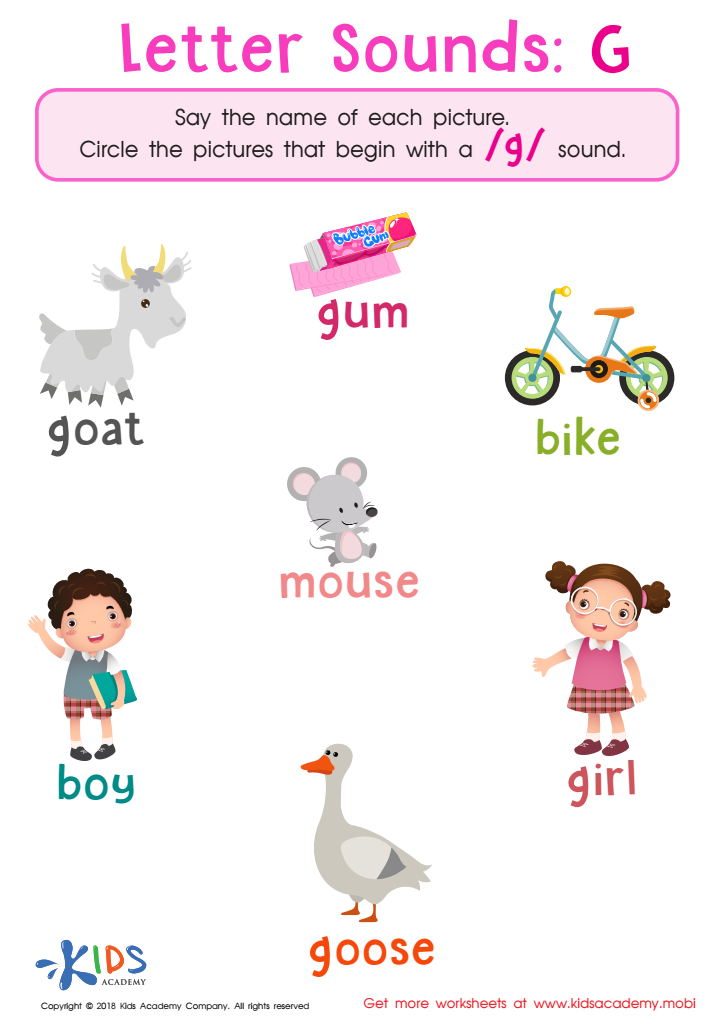
Help emerging readers build confidence by giving them practice identifying hard "G" with this free PDF worksheet. They'll use picture clues to name the words, and practice fine-motor skills tracing circles around the corresponding pics. It's a great way to introduce or reinforce hard "G" words.
Letter G Sounds Worksheet
Worksheet


Reading skills development for children aged 5-8 is crucial for several reasons. First, this age group is often referred to as the "emergent readers" phase, where foundational skills are built. Mastering reading at this stage not only enhances language proficiency but also strengthens cognitive abilities, leading to better overall academic performance.

Investing time in reading skills at a young age fosters a love for literature and learning, which can last a lifetime. It encourages curiosity and creativity, enabling children to explore new worlds through books. Furthermore, strong reading skills are directly linked to improved communication abilities, critical thinking, and problem-solving skills.

Moreover, reading proficiency is essential for success in various subjects beyond language arts; for instance, comprehension skills are crucial for understanding math problems and scientific concepts. Parents and teachers should also consider that early reading interventions can help identify and address challenges before they become significant hurdles.

Finally, creating a rich literacy environment, both at home and in the classroom, meets the diverse needs of each child, ensuring that every learner experiences growth and confidence. Supporting reading development is, therefore, a vital investment in children's academic futures and overall emotional and social development.