Reading thermometers Worksheets for Ages 5-8
4 filtered results
-
From - To
Introduce your child to the fundamentals of reading thermometers with these engaging worksheets designed for ages 5-8. Our thoughtfully crafted activities help young learners understand temperature concepts through fun exercises. As they color, match, and decode various thermometers, children will enhance their observation and critical thinking skills. These printable worksheets are perfect for both classroom use and at-home learning, making it easy to integrate practical science lessons into everyday play. Support your child's educational journey with tools that make learning about temperature enjoyable and interactive. Access these free resources now and watch their skills soar!
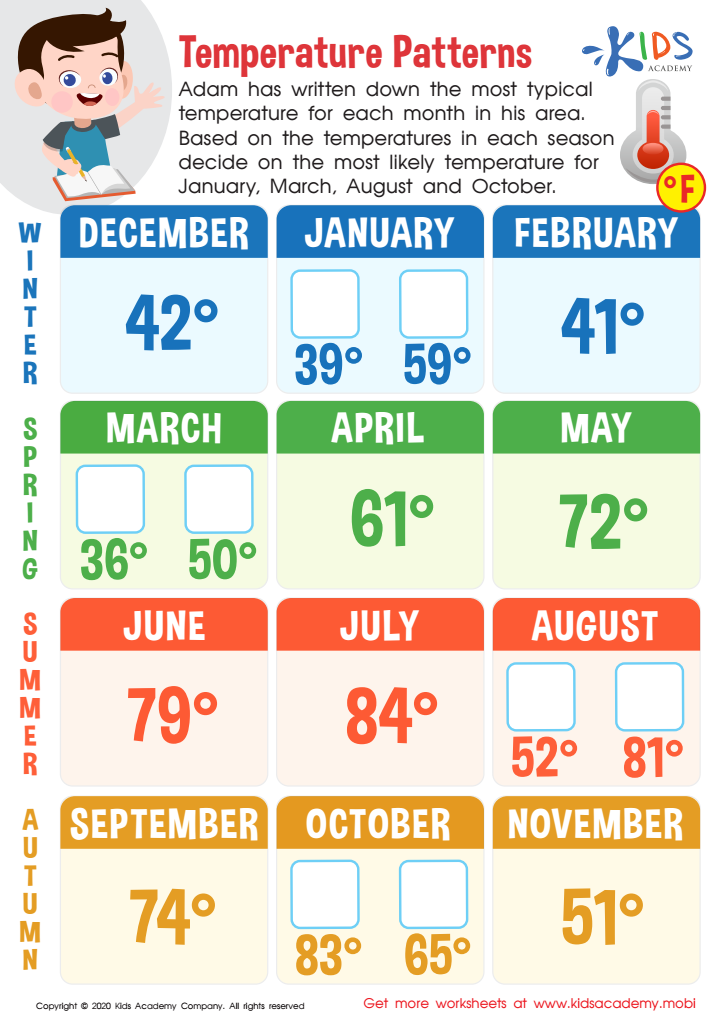
Temperature Patterns Worksheet
 Assign to My Students
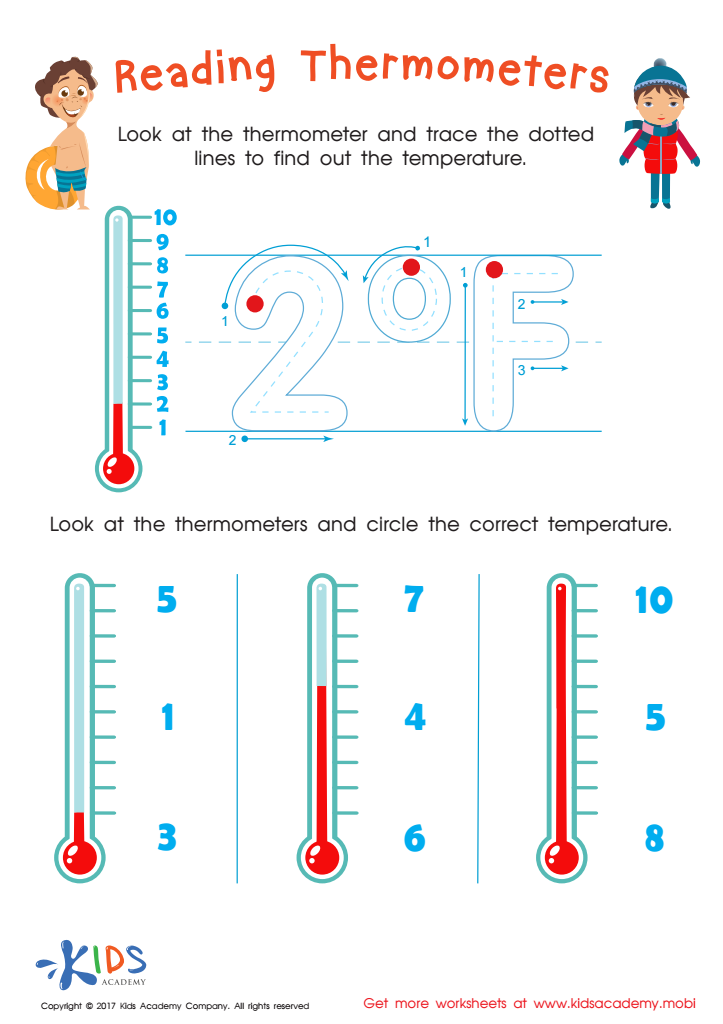
Reading Thermometers Printable
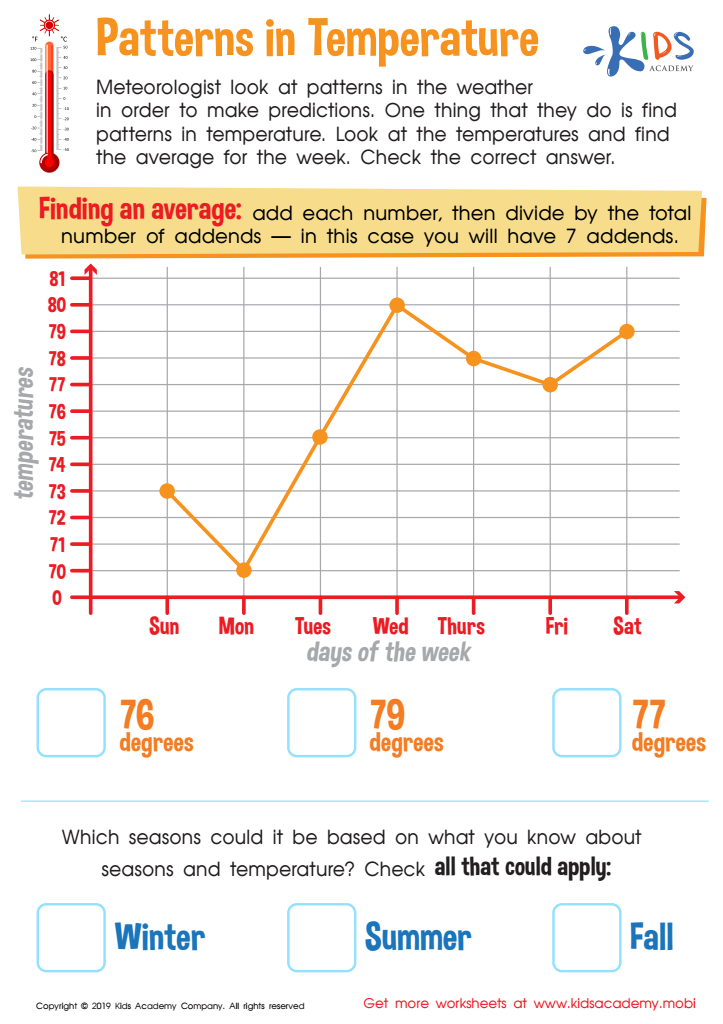
Patterns in Temperature Worksheet







Understanding how to read a thermometer is a valuable skill for children ages 5-8 because it blends scientific inquiry with everyday practicality. Firstly, it introduces young learners to fundamental science concepts, nurturing curiosity and critical thinking. For example, when kids grasp that the thermometer reflects temperature changes, they're interacting with tangible scientific phenomena and understanding a key aspect of the world around them.
Moreover, reading thermometers teaches important math skills. Children learn to recognize and interpret numbers, associate rising and falling temperatures with numerical values, and understand basic measurement concepts. These experiences make abstract math ideas, such as number scales and increments, more concrete and understandable.
Besides academic benefits, checking temperatures fosters practical life skills and safety awareness. Children can learn to dress appropriately for the weather or understand when they might have a fever, contributing to their health awareness and self-care capabilities.
Importantly, engaging with thermometers encourages observational skills and patience. Consistently reading a thermometer requires them to make and verify predictions, reinforcing a scientific mindset.
Incorporating thermometer-reading activities can thus scaffold learning by intersecting science, math, and real-world application, making them a beneficial and enriching component of early childhood education.








