Recognizing number patterns Worksheets for Ages 5-8
5 filtered results
-
From - To
Explore our engaging "Recognizing Number Patterns Worksheets" designed specifically for children ages 5-8. These worksheets provide an interactive way for young learners to develop their understanding of sequences and patterns through colorful activities and challenges. Our expertly crafted materials help children recognize and continue number patterns, enhancing their mathematical skills and critical thinking. Perfect for classroom use or home learning, these worksheets foster a love for math while building a strong foundation in number recognition. Download now to spark your child's creativity and confidence in mathematics with fun, educational exercises tailored to their developmental stage!
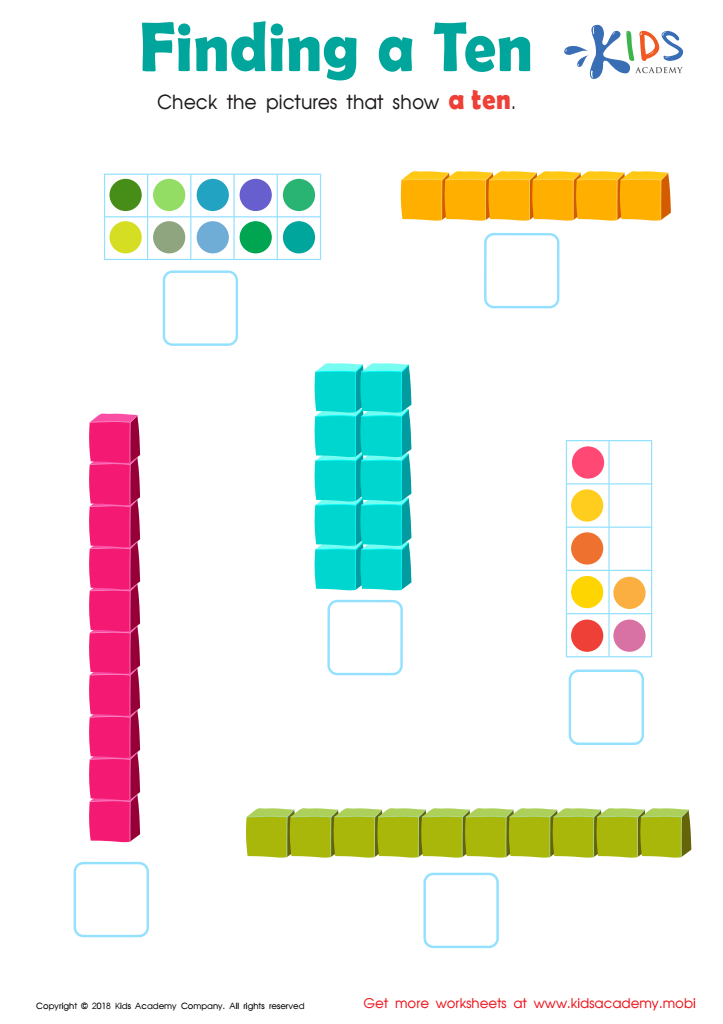
Finding a Ten Worksheet
 Assign to My Students
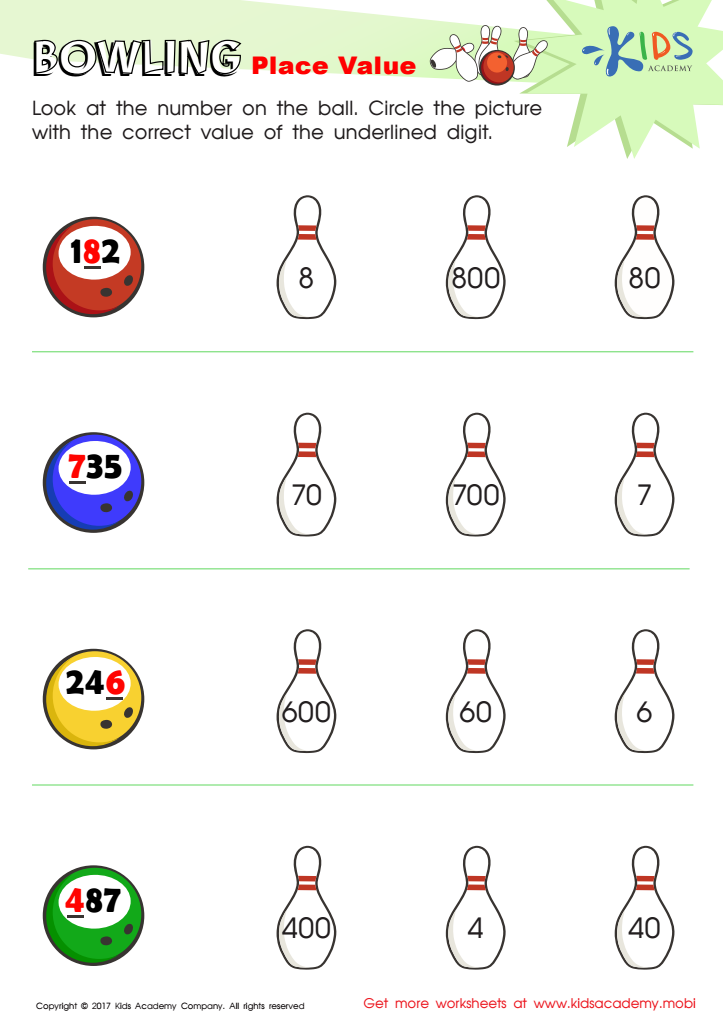
Place Value Worksheet
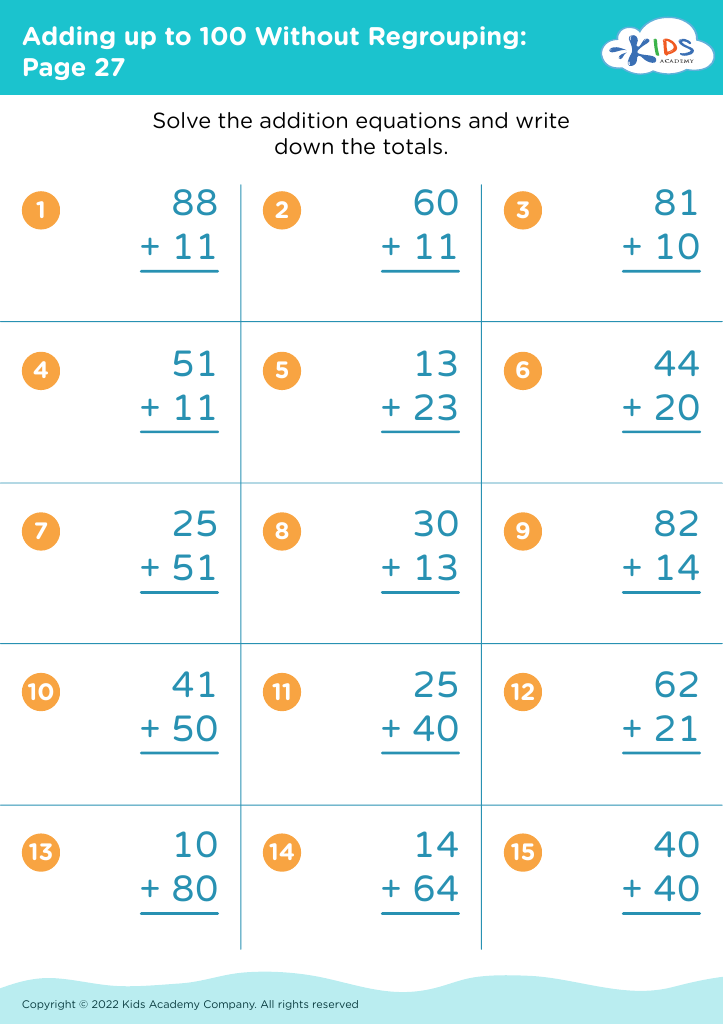
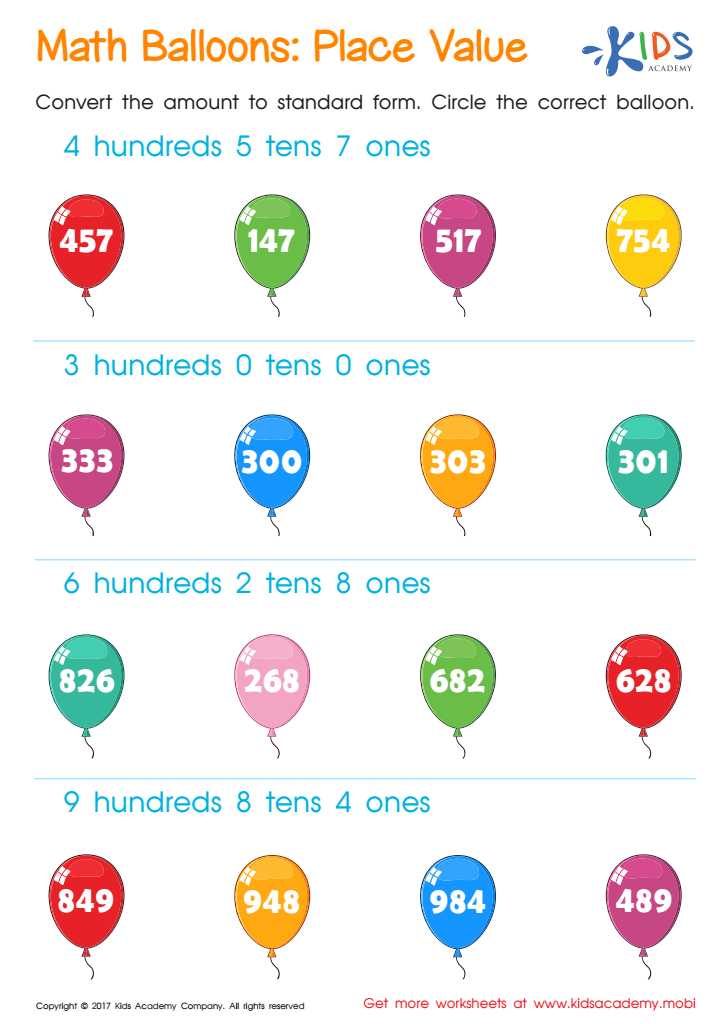
Place Value Printable Worksheet
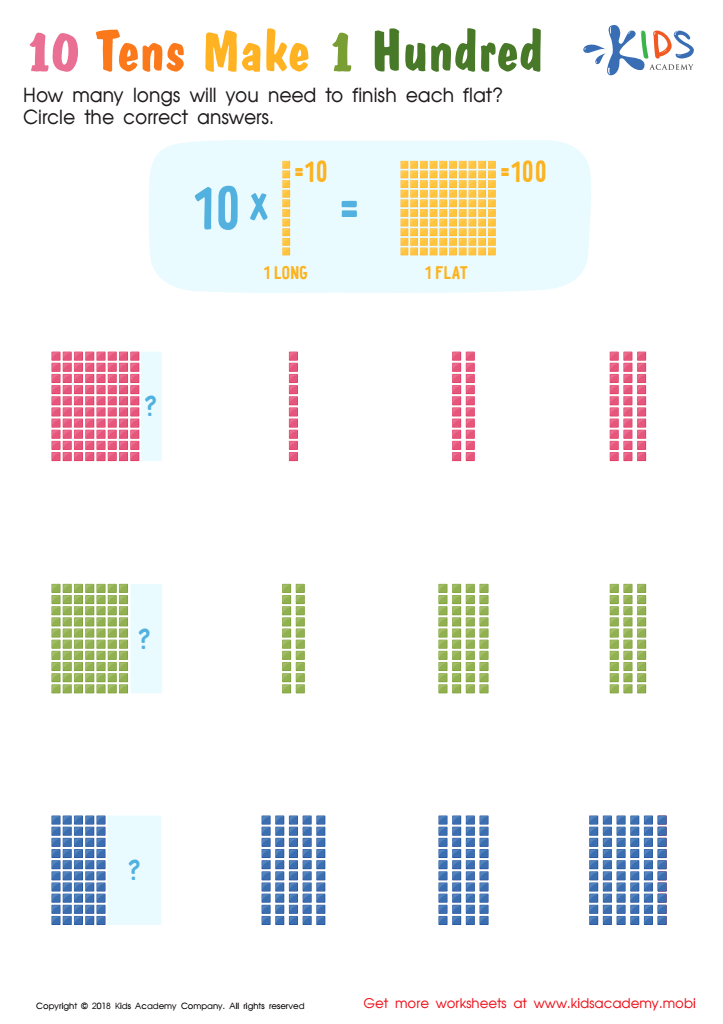
10 Tens Make 1 Hundred Worksheet








Recognizing number patterns is crucial for children aged 5-8 as it forms the foundation for their mathematical understanding. At this early age, children are developing their cognitive skills, and engaging with number patterns enhances their critical thinking and problem-solving abilities. Recognizing patterns helps children make connections between numbers, understand sequences, and predict future numbers, which are essential skills for more advanced mathematics.
Moreover, number patterns are intertwined with everyday life— from understanding time and money to identifying trends in nature or daily routines. By fostering pattern recognition, parents and teachers support children's ability to think logically and analytically. This skill not only sets the stage for more complex concepts, such as addition, subtraction, and multiplication, but also encourages creativity as children explore how numbers relate to one another.
Additionally, recognizing patterns builds confidence in young learners. When children notice and predict patterns, they experience success and pay attention to detail, enhancing their engagement with math. As a life-long skill, early recognition of number patterns lays the groundwork for better math proficiency, preparing children for future academic success and real-world problem-solving. Encouraging this skill in children fosters both a love for learning and essential life skills.








