Sentence completion Worksheets for Ages 5-8
5 filtered results
-
From - To
Enhance your child's literacy skills with our engaging Sentence Completion Worksheets for ages 5-8! Designed to develop critical thinking and language understanding, these worksheets present fun and interactive exercises that encourage creativity and vocabulary building. Perfect for home or classroom use, they guide young learners in constructing meaningful sentences by choosing the right words to fill in the blanks. Our user-friendly format ensures that kids stay entertained while mastering essential grammar concepts. Foster a love for writing and enhance comprehension skills today with our printable worksheets, ensuring a solid foundation for reading and communication success!
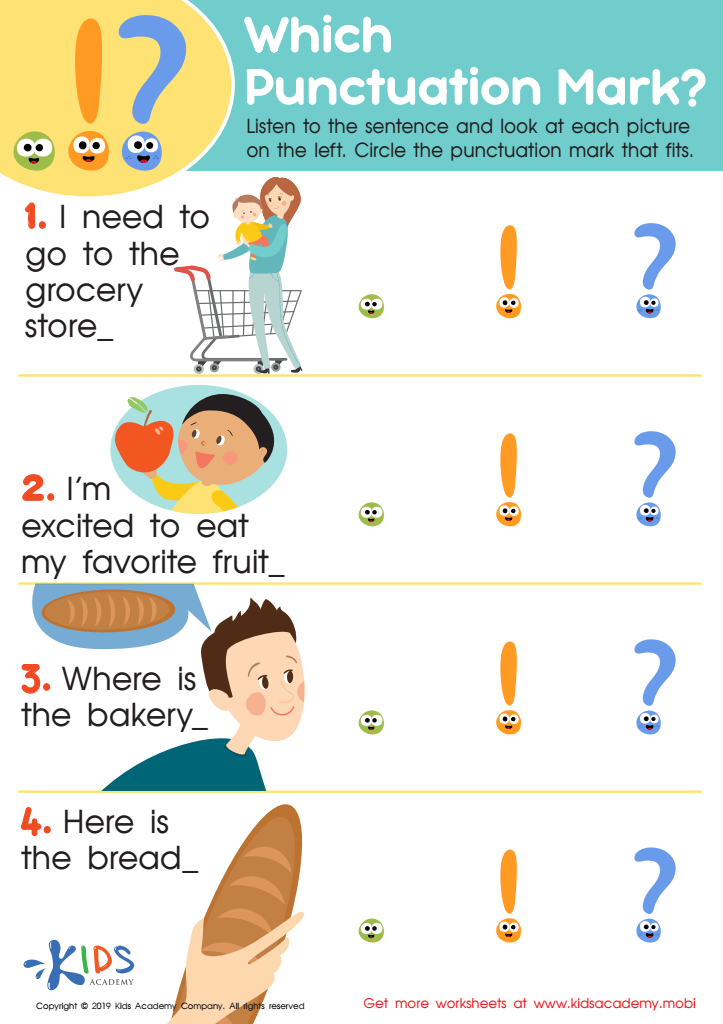
Which Punctuation Mark Worksheet
 Assign to My Students
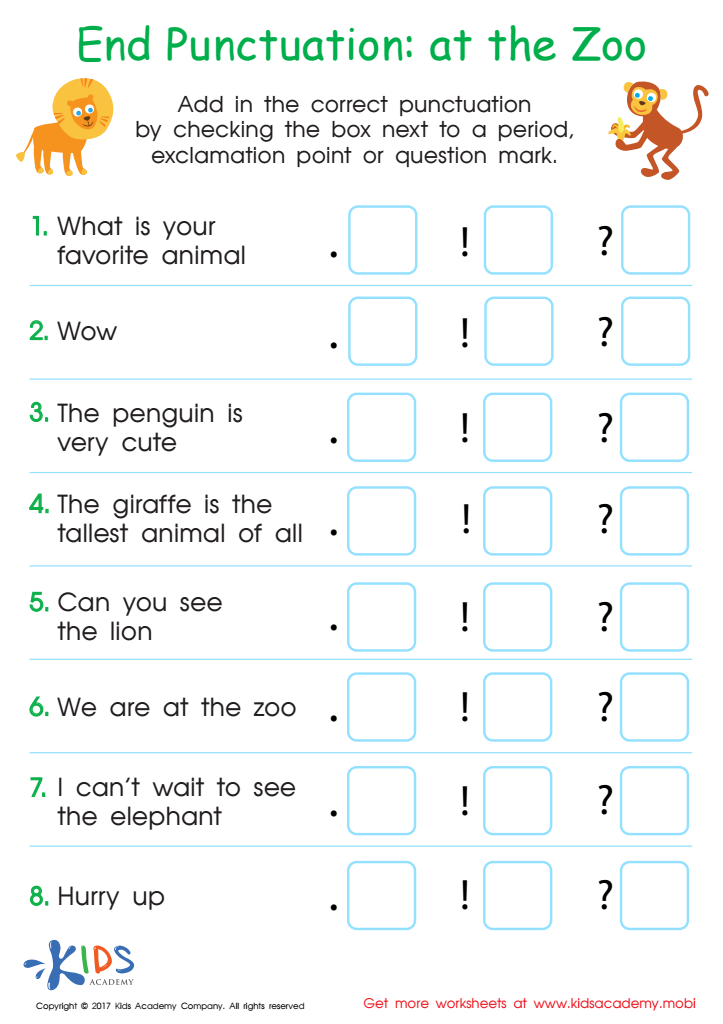
End Punctuation: At the Zoo Worksheet
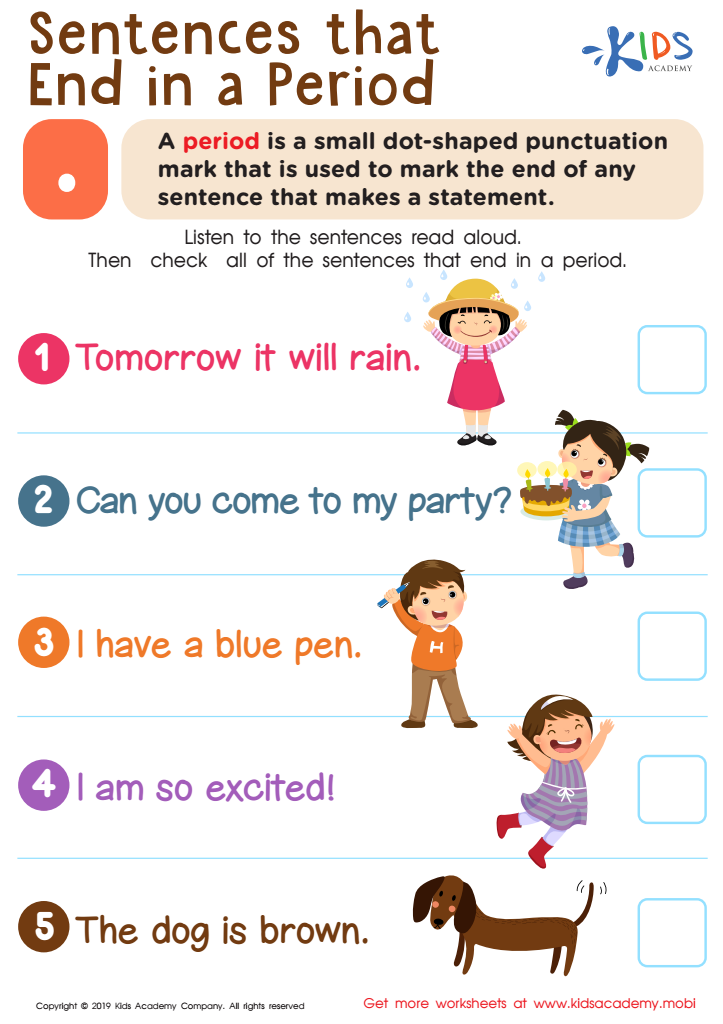
Sentences That End in a Period Worksheet
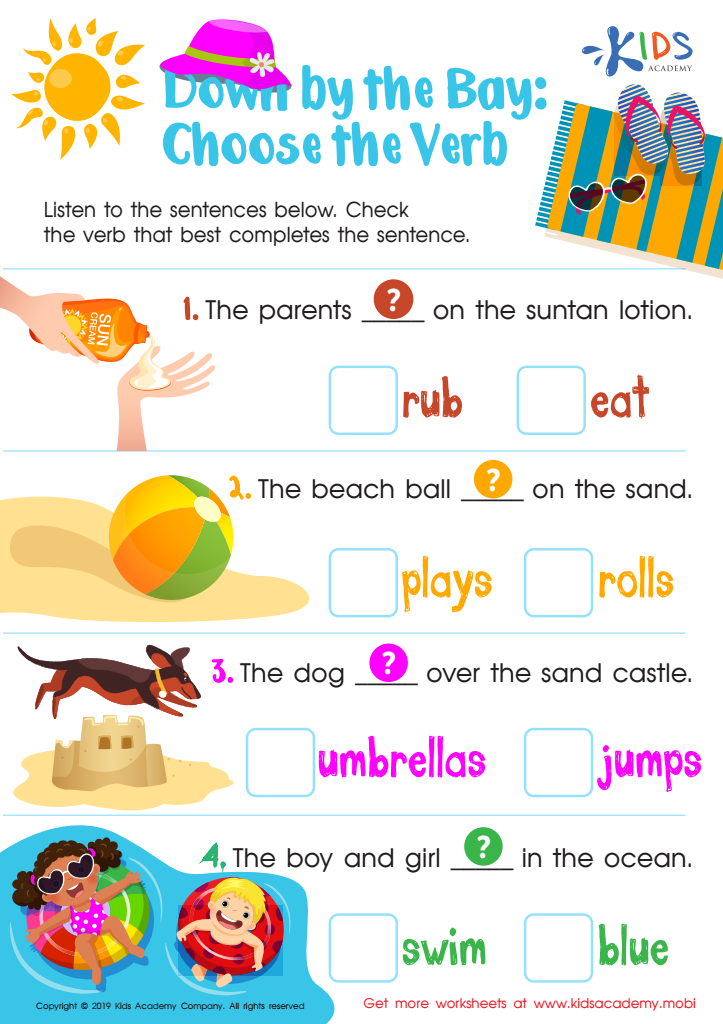
Down by the Bay: Choose the Verb Worksheet
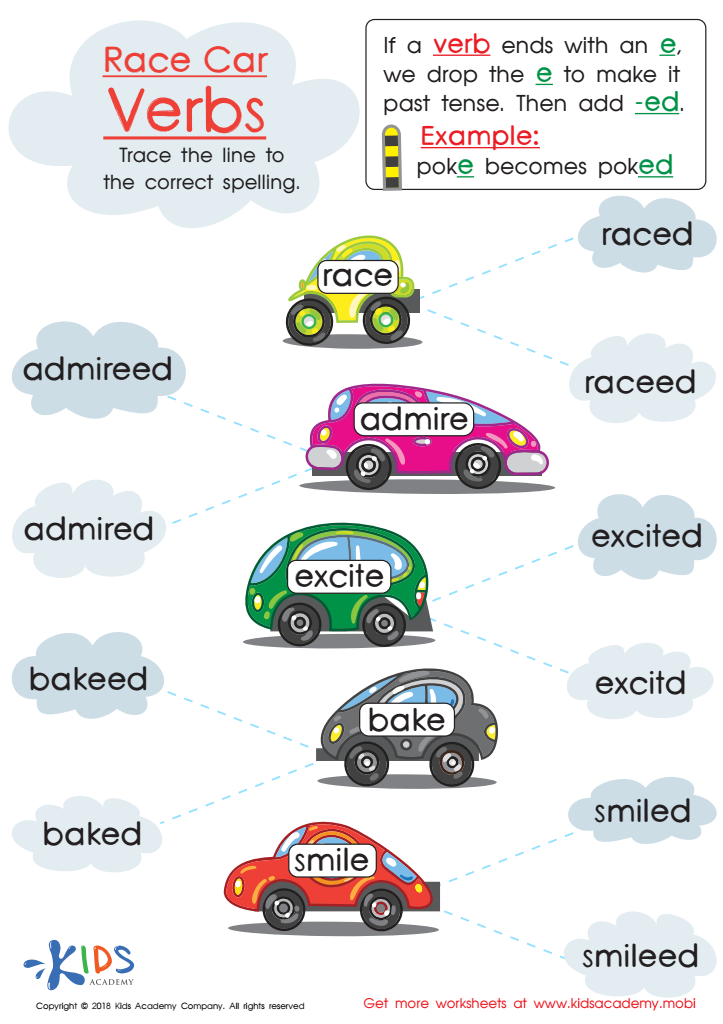
Race Car Verbs Worksheet







Sentence completion activities are essential for children aged 5-8 as they significantly support language development and cognitive growth. These exercises encourage children to think creatively and expand their vocabulary, leading to a deeper understanding of language structure. Engaging in sentence completion helps them practice grammar and improve sentence formation skills, which are foundational for effective communication.
Additionally, sentence completion promotes critical thinking, as children must analyze context and choose appropriate words or phrases to complete sentences meaningfully. This fosters their ability to infer, predict, and draw connections between concepts, crucial skills in reading comprehension and overall literacy.
Furthermore, these activities can bolster confidence in young learners by encouraging them to express their ideas and emotions. As children successfully complete sentences, they experience a sense of achievement, nurturing their enthusiasm for learning and writing.
Parents and teachers play vital roles in guiding and supporting sentence completion activities in fun and interactive ways. By integrating this practice into everyday learning, they help build essential literacy skills that will benefit children throughout their academic journey and beyond. Ultimately, prioritizing sentence completion in early education helps children become more articulate, confident, and capable communicators.








