
Visual interpretation skills Worksheets for Ages 5-8
3 filtered results
Difficulty Level
Grade
Age
-
From - To
Subject
Activity
Standards
Discover our engaging Visual Interpretation Skills Worksheets designed for children aged 5-8! These carefully crafted worksheets help young learners enhance their ability to interpret images, charts, and symbols. By participating in fun activities, children will develop critical thinking, improve attention to detail, and boost their comprehension skills. Our visually stimulating exercises make learning a joyful experience, sparking creativity while solidifying foundational skills. Ideal for homeschooling or supplementary practice, these worksheets cater to varying learning styles. Empower your child to confidently analyze visual information and foster a love for learning. Explore our diverse collection of worksheets and watch your child excel!
Favorites
With answer key
Interactive
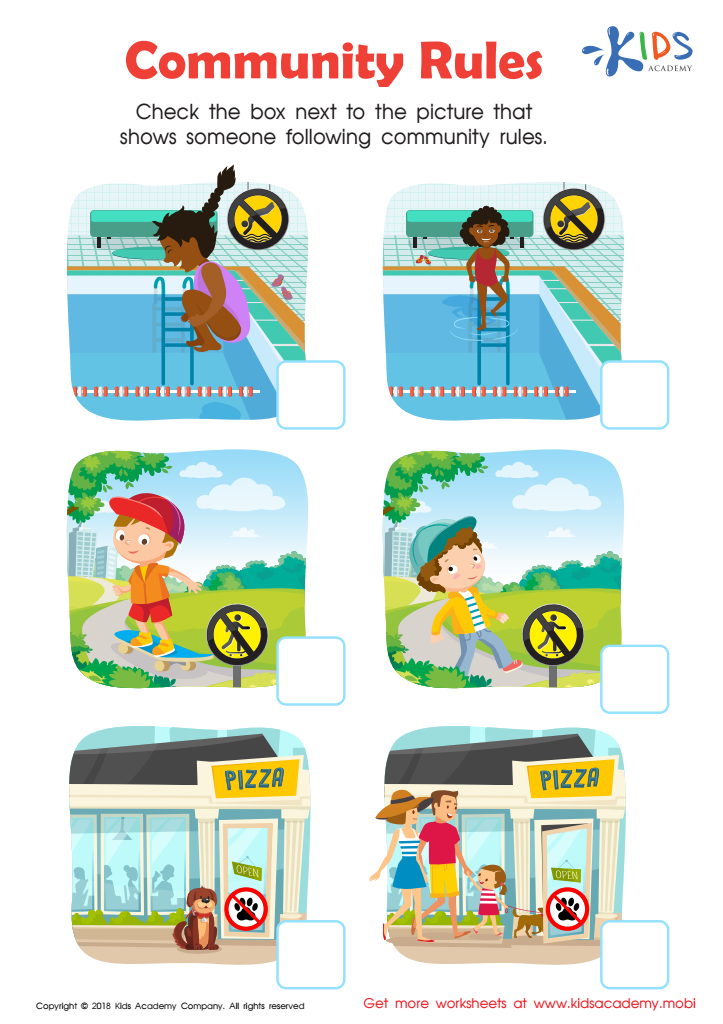
Community Rules Worksheet
Communities are where different people live, work and worship. They're made up of homes, schools, places of worship, businesses and other buildings. To create a healthy, functioning community, it's important for members to follow the rules and guidelines. Use this printout to teach kids about community rules. Ask them to check the box next to the picture that shows someone following them.
 Assign to My Students
Community Rules Worksheet
Worksheet
Join Kids Academy for Free
Who is primarily going to use this learning content?








Visual interpretation skills are crucial for children aged 5-8 as they lay the foundation for academic success and everyday functioning. At this developmental stage, children encounter a wealth of visual information in their learning environments—through books, charts, diagrams, and various media. Recognizing and interpreting these visual cues enhances comprehension and retention of information.
For parents and teachers, fostering these skills means promoting critical thinking and problem-solving capabilities. Children learn to visualize concepts, which aids in subjects like math and science, facilitating their ability to process and relate information effectively. Additionally, visual interpretation is integral to language development; as children learn to associate images with words, their vocabulary and literacy skills improve.
Furthermore, in an era increasingly dominated by digital content, being visually literate is essential for navigating complex information, fostering creativity, and enabling effective communication. These skills also play a vital role in social interactions, as children learn to read emotions and intentions through visual cues.
Ultimately, developing visual interpretation skills equips children with the tools necessary for lifelong learning and adaptability. For parents and teachers, prioritizing these skills means investing in their child's overall cognitive, emotional, and social development, laying a solid foundation for future success.








