Visual-spatial skills Worksheets for Ages 5-8
3 filtered results
-
From - To
Boost your child’s visual-spatial skills with our engaging worksheets designed for ages 5-8. Our expertly crafted activities help young minds develop crucial skills like pattern recognition, spatial reasoning, and visual memory. From puzzle-solving to shape sorting, each worksheet offers fun challenges that enhance critical thinking and problem-solving abilities. Perfect for both at-home learning and classroom use, these visual-spatial tasks provide a solid foundation for future STEM education. Make learning an exciting adventure with our beautifully illustrated, age-appropriate worksheets that inspire creativity and intellectual growth. Discover the joy of effective skill-building today!
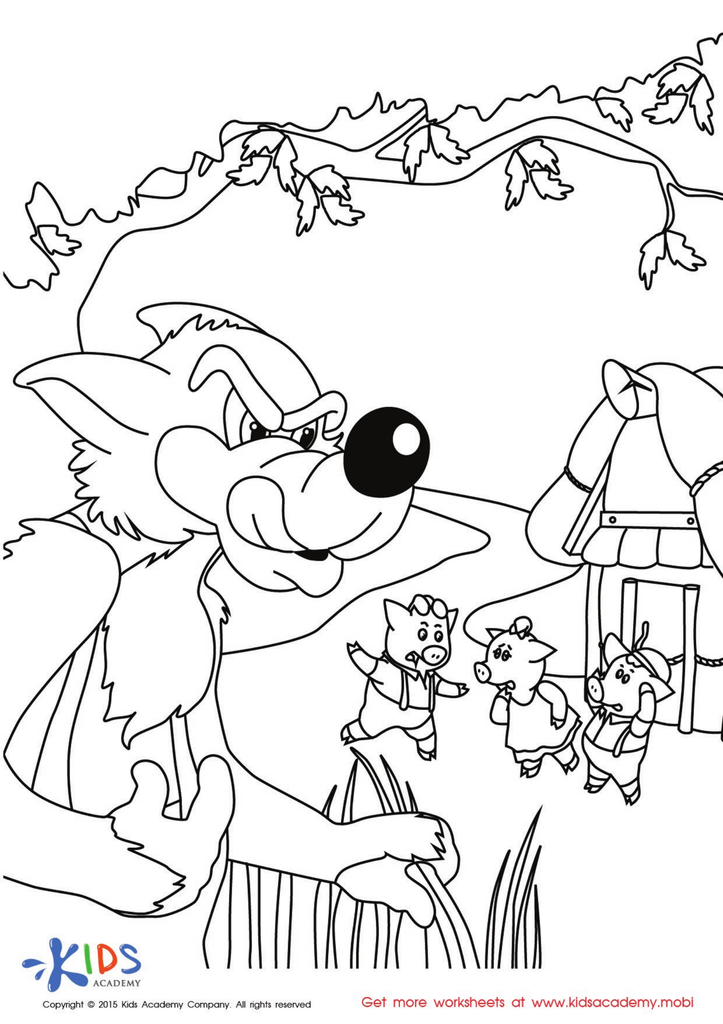
The Story of the Three Little Pigs Coloring Worksheet
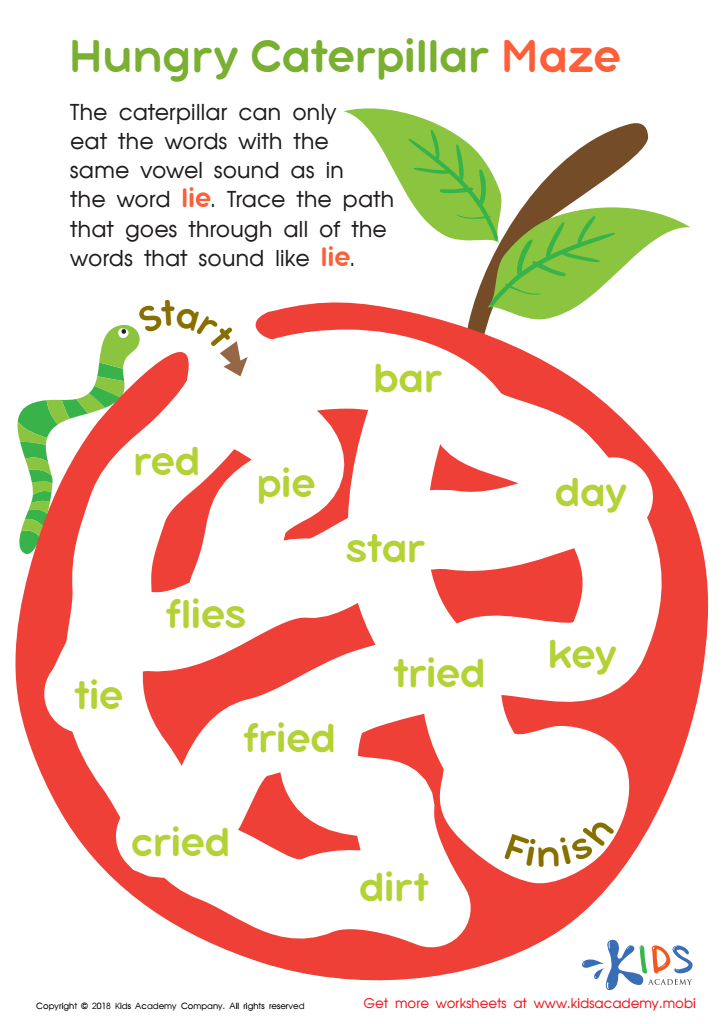
Hungry Caterpillar Maze Worksheet
 Assign to My Students







Visual-spatial skills are crucial for children ages 5-8 as they form the foundational abilities needed for many important tasks and overall cognitive development. These skills involve the ability to understand, reason, and remember the spatial relations among objects or space. They play a vital role in many areas of life and learning, from solving puzzles and understanding maps to performing tasks that require hand-eye coordination and spatial awareness.
For parents and teachers, fostering visual-spatial skills can greatly enhance a child's academic performance. These skills are directly linked to math and science abilities, such as geometry understanding, the capability to visualize geometric shapes, and performing arithmetic calculations. Children with strong visual-spatial skills can also better grasp the concepts of symmetry, perspective, and spatial visualization, which are integral to subjects like arts and crafts.
Moreover, development in this area assists children in the physical world. Efficient navigation skills, quick adaptation to new environments, and the ability to infer details from partial visual information are all partly the results of honed visual-spatial capabilities. Encouraging play with building blocks, drawing, painting, and engaging in sports can all be useful practices to enhance these skills. Ensuring children build a robust foundation in visual-spatial skills prepares them for complex problem-solving and creative thinking throughout their lives.








