Recognizing shapes Adding 2-digit Numbers Worksheets for Ages 5-8
4 filtered results
-
From - To
Unlock a world of fun and learning with our "Recognizing Shapes & Adding 2-digit Numbers Worksheets" for ages 5-8. Designed to engage young minds, these worksheets seamlessly integrate shape recognition with 2-digit addition to build foundational math skills. Bright, colorful activities captivate children's imaginations while reinforcing shape identification and basic arithmetic. Perfect for both classroom use and home practice, these tools provide a hands-on approach to learning that enhances cognitive development and prepares kids for future math challenges. Dive into a delightful blend of geometry and addition, and watch as your child's confidence and abilities soar!
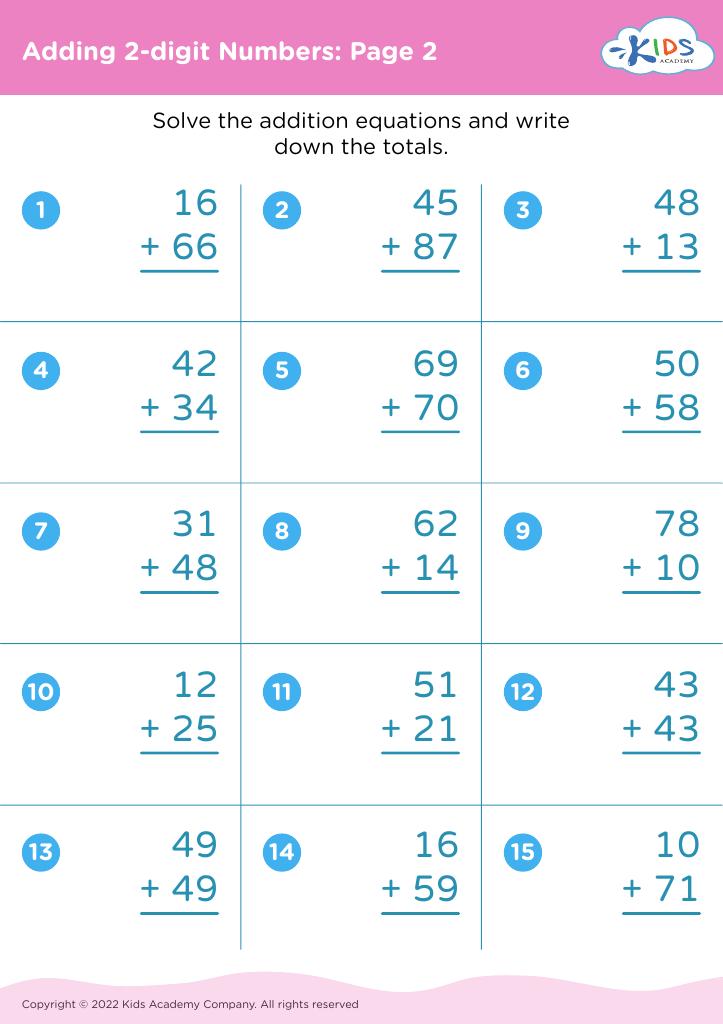
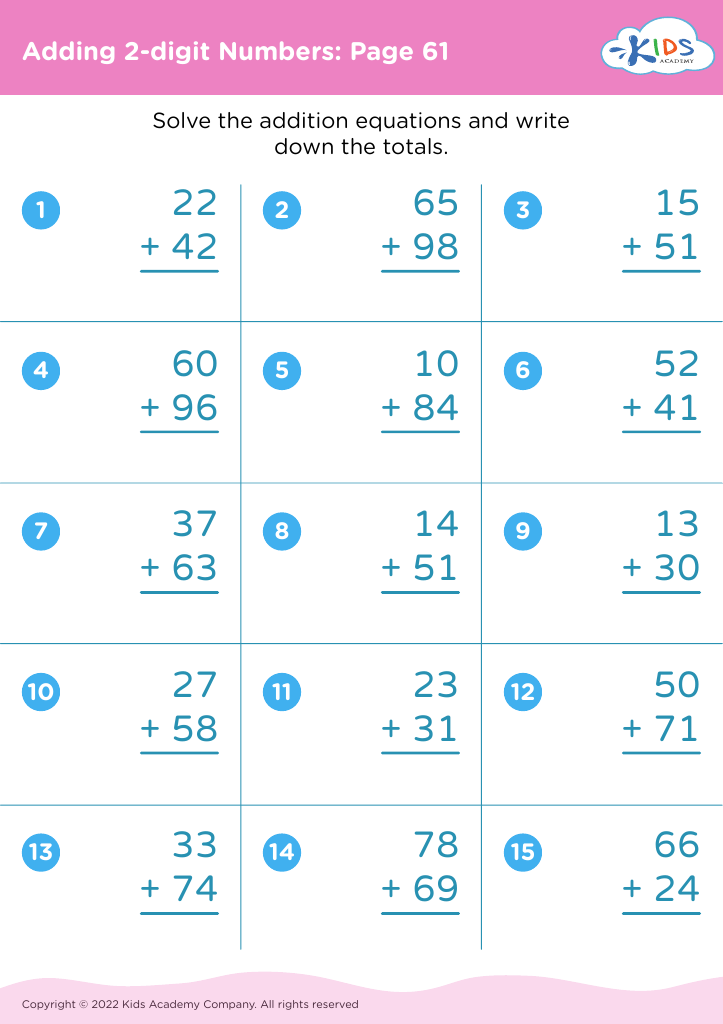
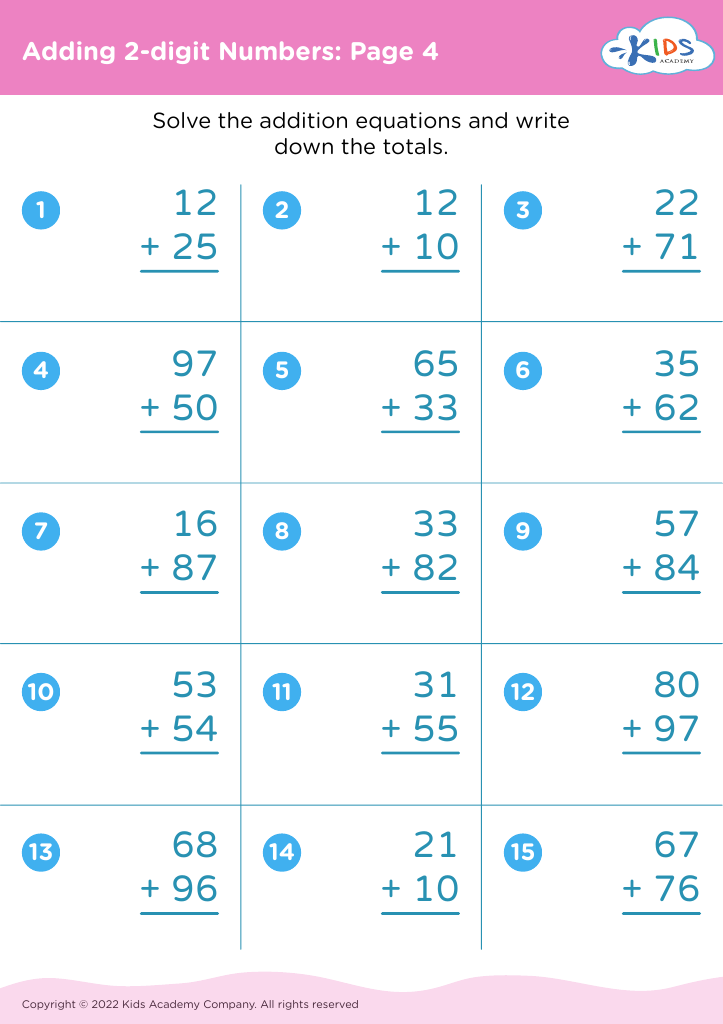
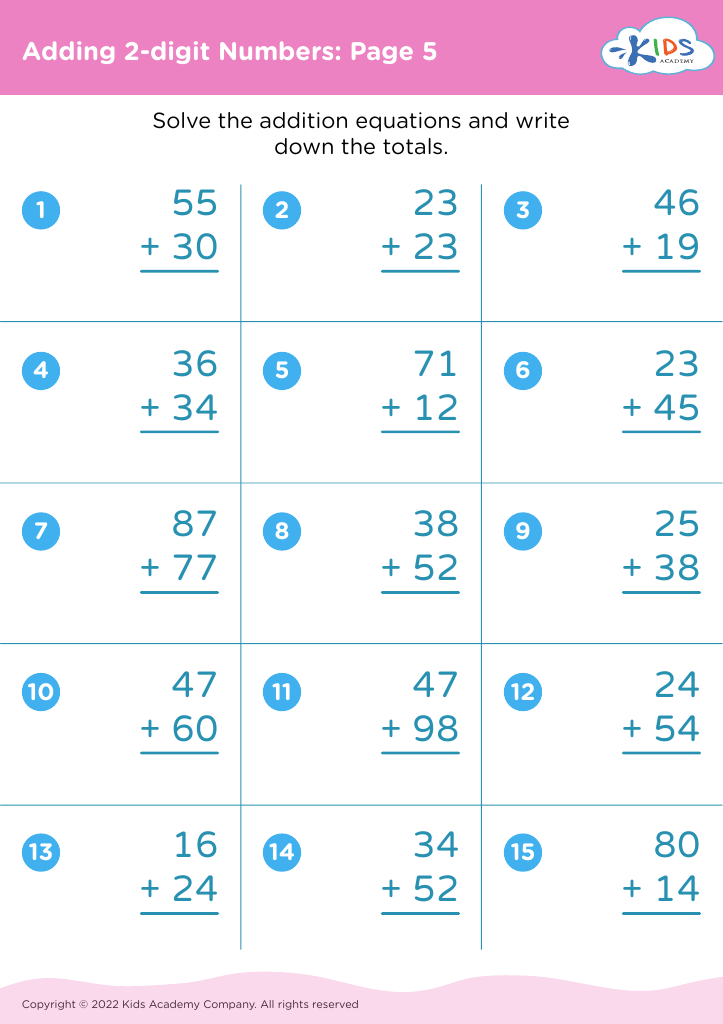








Recognizing shapes and adding 2-digit numbers are foundational skills crucial for cognitive development in children ages 5-8. These skills lay the groundwork for more advanced mathematical concepts, creative thinking, and problem-solving abilities.
Shapes form the basics of geometry and spatial awareness. By recognizing and differentiating shapes, children enhance their visual perception and learn to categorize and organize information. This skillset is critical, not just in math, but in understanding and interpreting the world around them. For instance, recognizing geometric patterns helps develop an eye for symmetry and improves fine motor skills necessary for writing.
Adding 2-digit numbers introduces young learners to essential arithmetic skills, providing a stepping stone toward more complex mathematical operations. This practice enhances their understanding of place value, number sense, and the relationship between numbers. Being adept at basic addition allows children to tackle real-life tasks like counting money, measuring ingredients for a recipe, or even figuring out the total score in a game.
Ignoring these skills can lead to academic difficulties since these foundational principles are built upon in later grades. Thus, parents and teachers should prioritize recognizing shapes and adding 2-digit numbers as they form the bedrock for successful education and everyday functioning.








