Basic Addition Skills Adding in the Forest Worksheets for Ages 5-8 - Page 3
55 filtered results
-
From - To
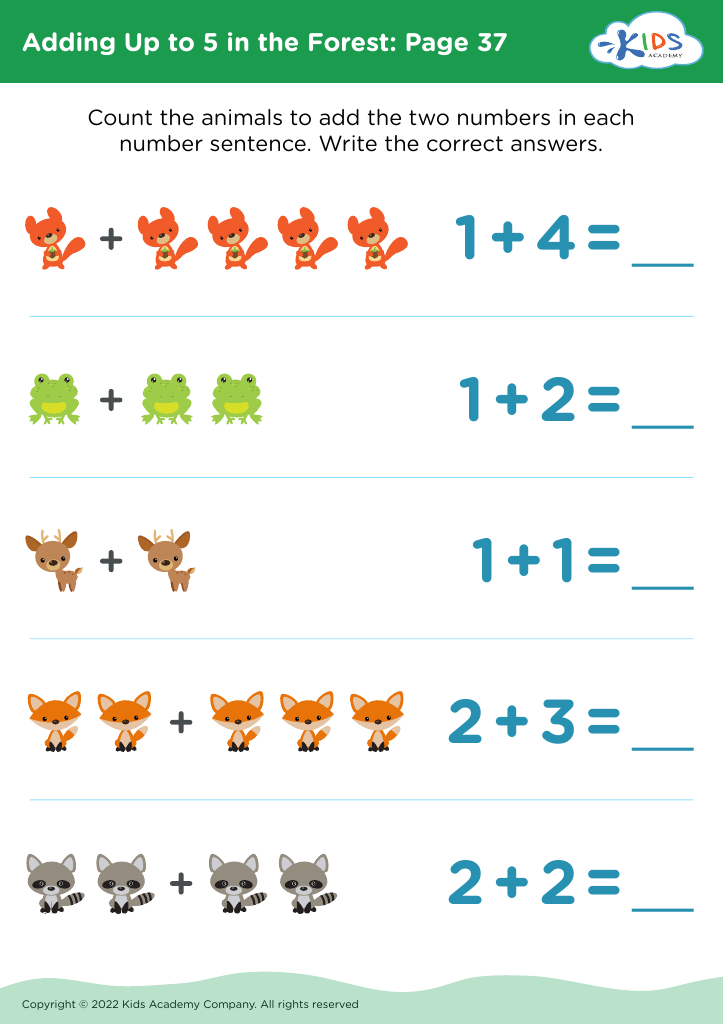
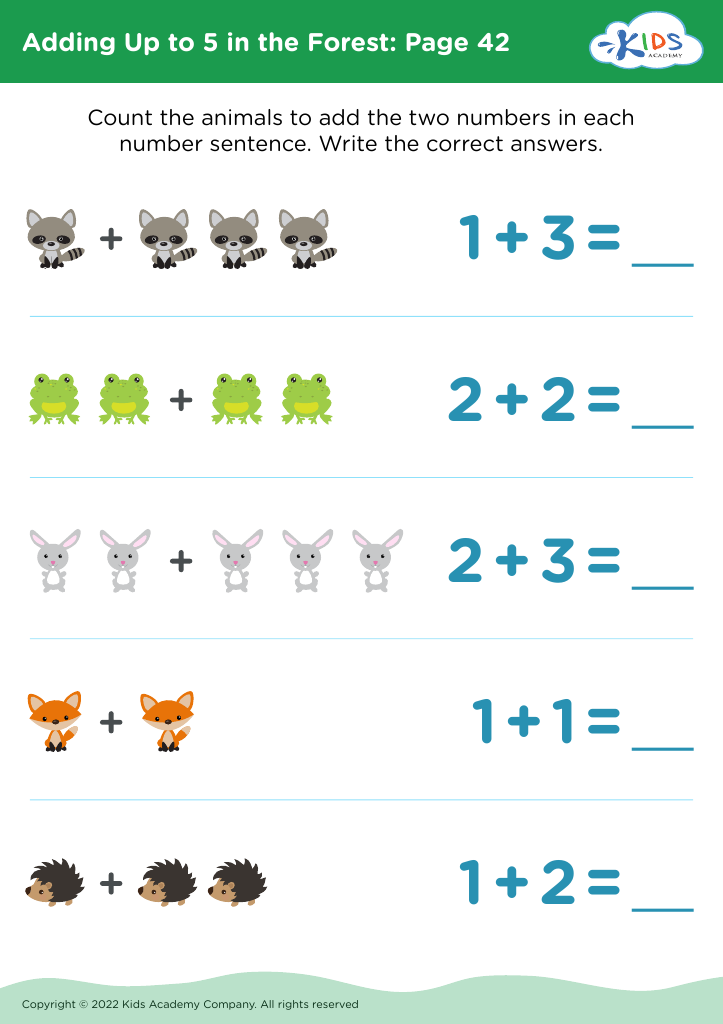
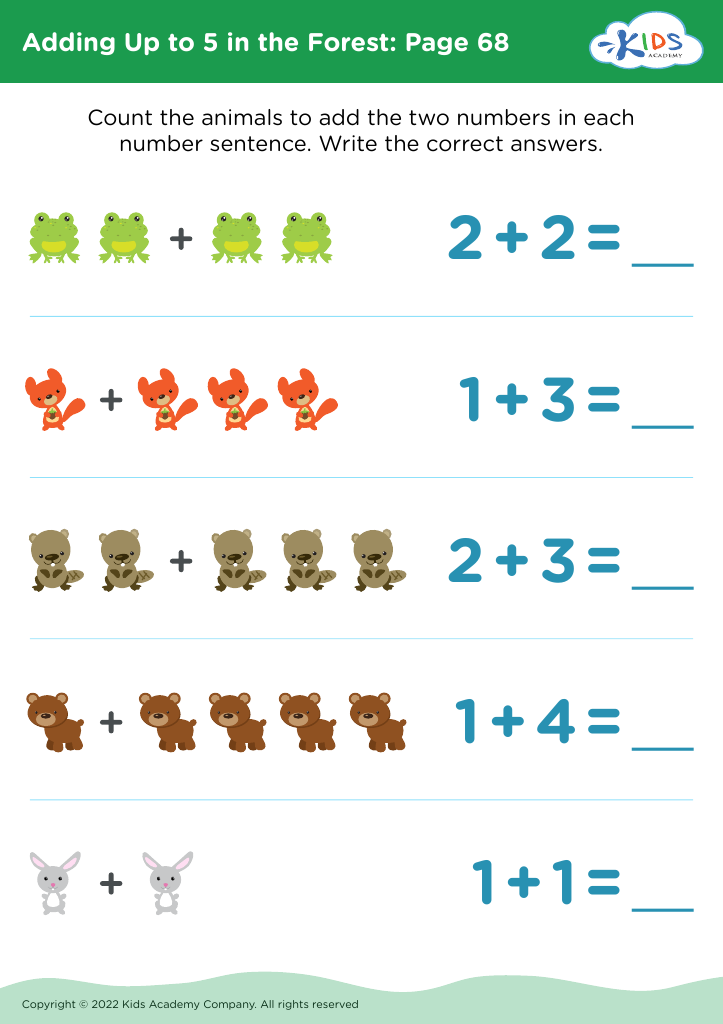
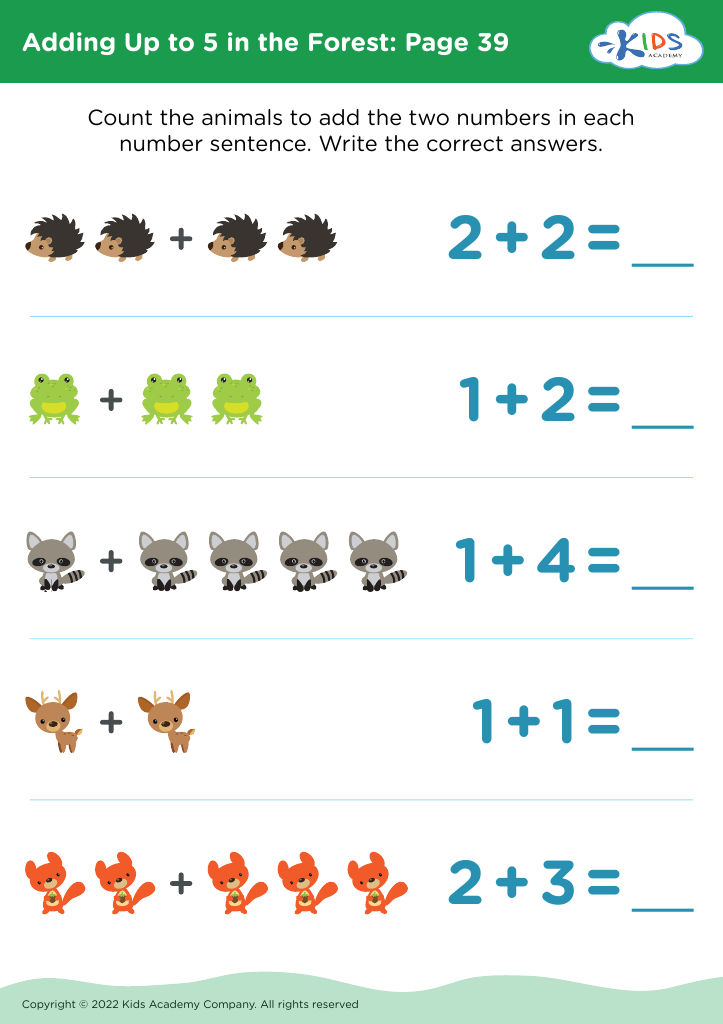
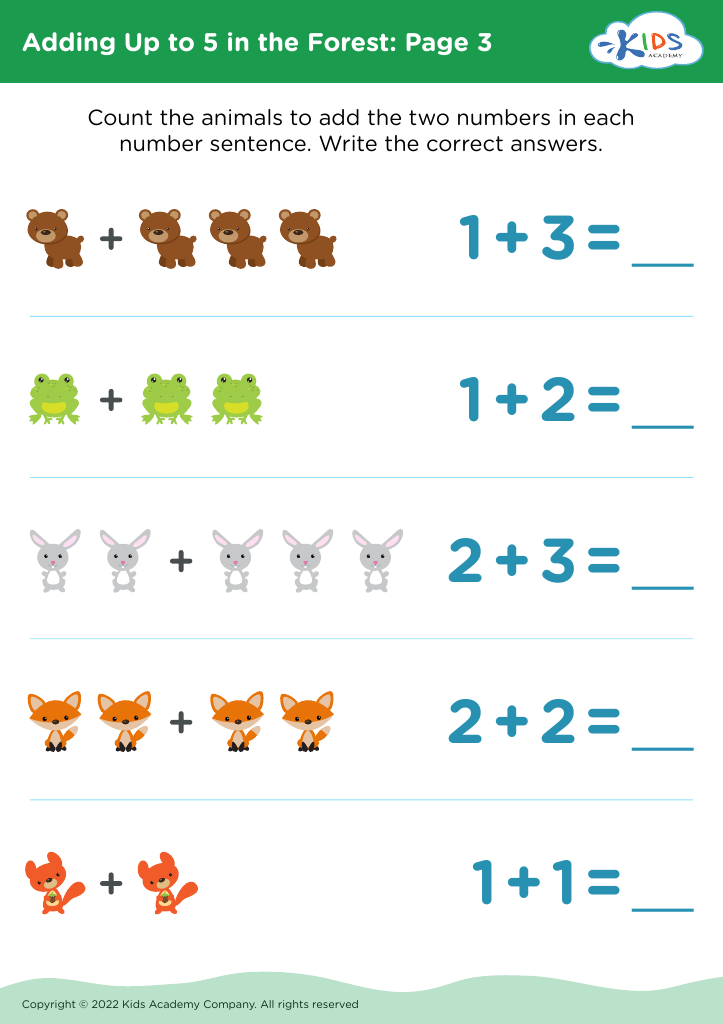
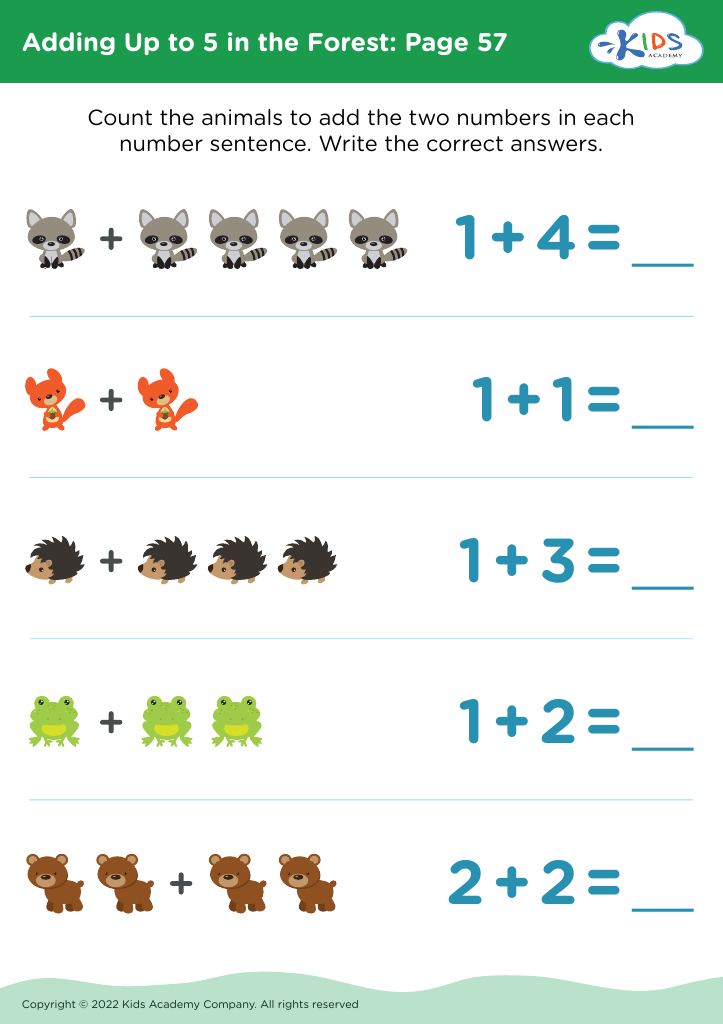
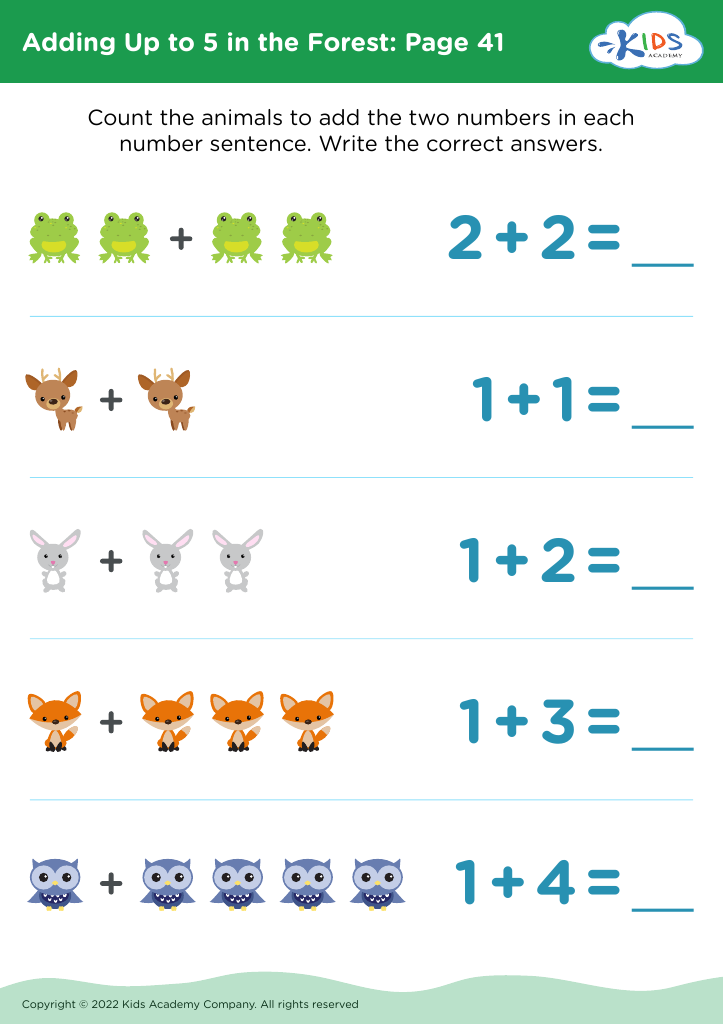




Basic addition skills form the foundation for all future math learning, and integrating engaging methods like "Adding in the Forest" can make a significant difference for children ages 5-8. At this developmental stage, children are naturally curious and eager to explore their surroundings, so their engagement with basic math concepts is crucial.
Integrating a forest theme into learning caters to a child's sense of adventure and creativity, fostering a positive attitude towards math. Utilizing familiar contexts like animals, trees, and plants helps children to visualize mathematical operations, making abstract concepts more concrete and relatable. This thematic approach sparks interest, retaining children's attention more effectively than traditional methods.
Moreover, mastering basic addition boosts a child’s confidence, enabling them to tackle more complex mathematical challenges as they grow. Teachers and parents should care because early proficiency in addition underpins future academic success. Developing strong math skills early narrows gaps, reducing the risk of falling behind in later grades.
By incorporating playful, context-rich resources such as "Adding in the Forest," parents and teachers can turn learning into an enjoyable adventure. This not only aids in knowledge retention but also cultivates a positive math experience, laying the groundwork for a lifelong love of learning.