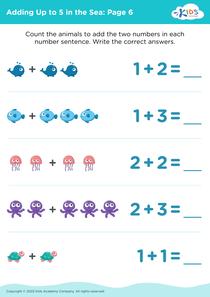
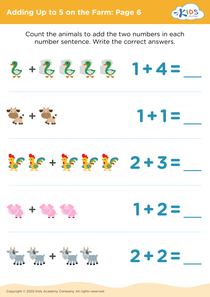
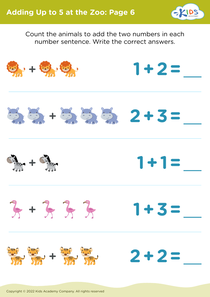
Basic Arithmetic Adding in the Forest Worksheets for Ages 5-8
5 filtered results
-
From - To
Welcome to our "Basic Arithmetic Adding in the Forest Worksheets" for children aged 5-8! These engaging worksheets are designed to make learning basic addition fun and interactive. Set in a whimsical forest theme, each worksheet features delightful illustrations that capture the imagination of young learners. As children practice their addition skills, they’ll encounter playful forest creatures that help reinforce mathematical concepts. Perfect for homework, classroom activities, or at-home enrichment, these worksheets foster a love for math while building foundational skills. Help your child embark on an exciting arithmetic adventure in the forest and watch their confidence soar in math!
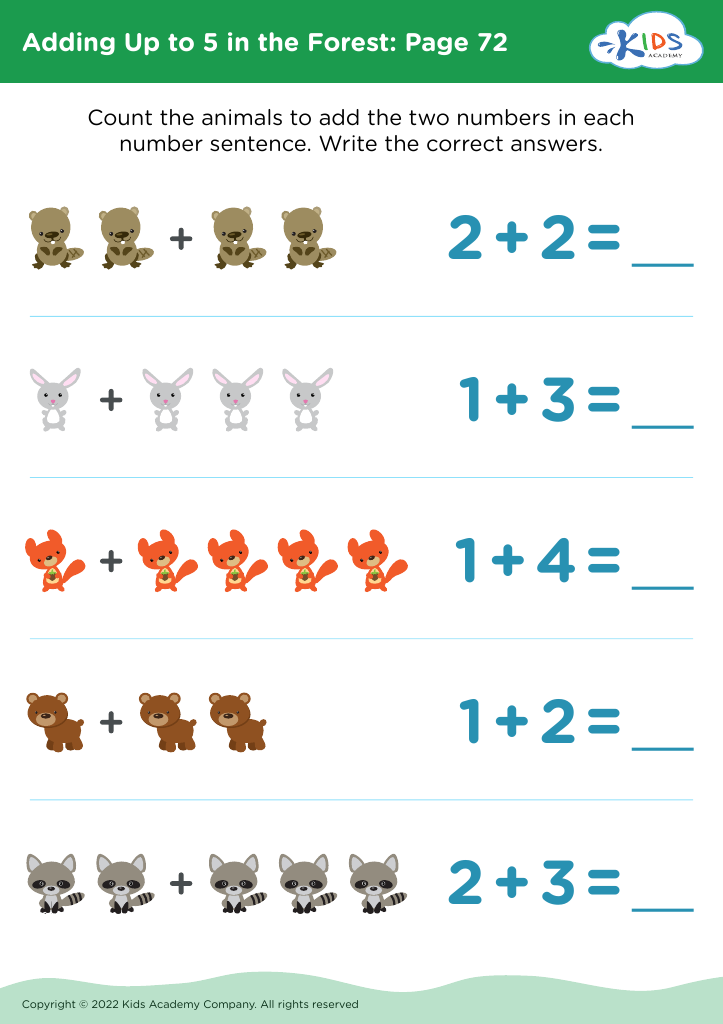
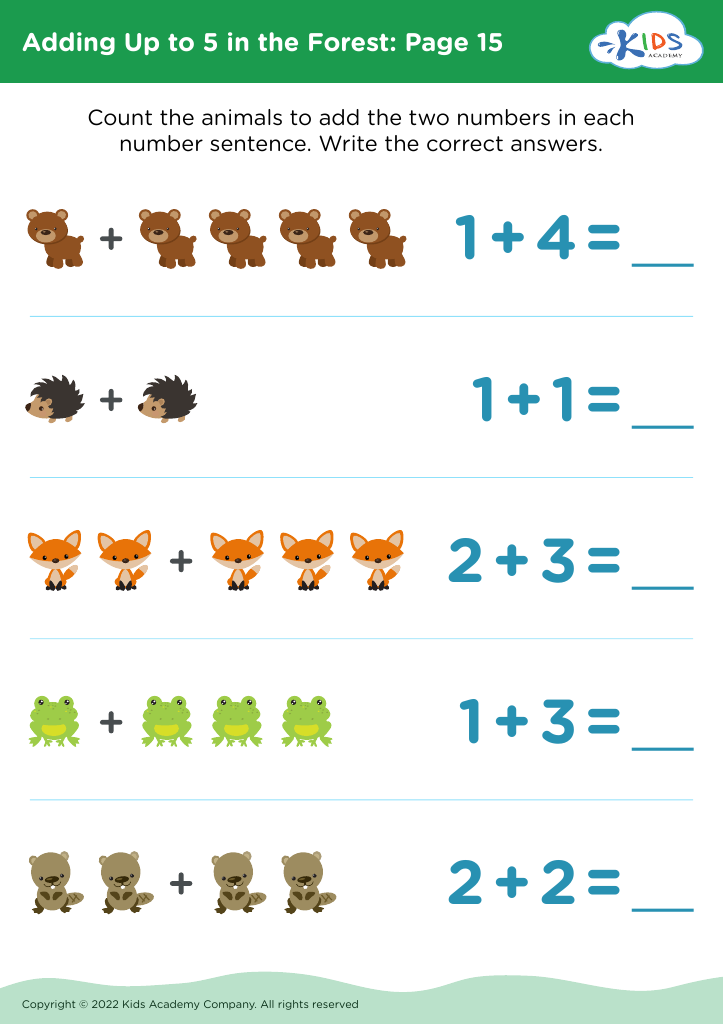
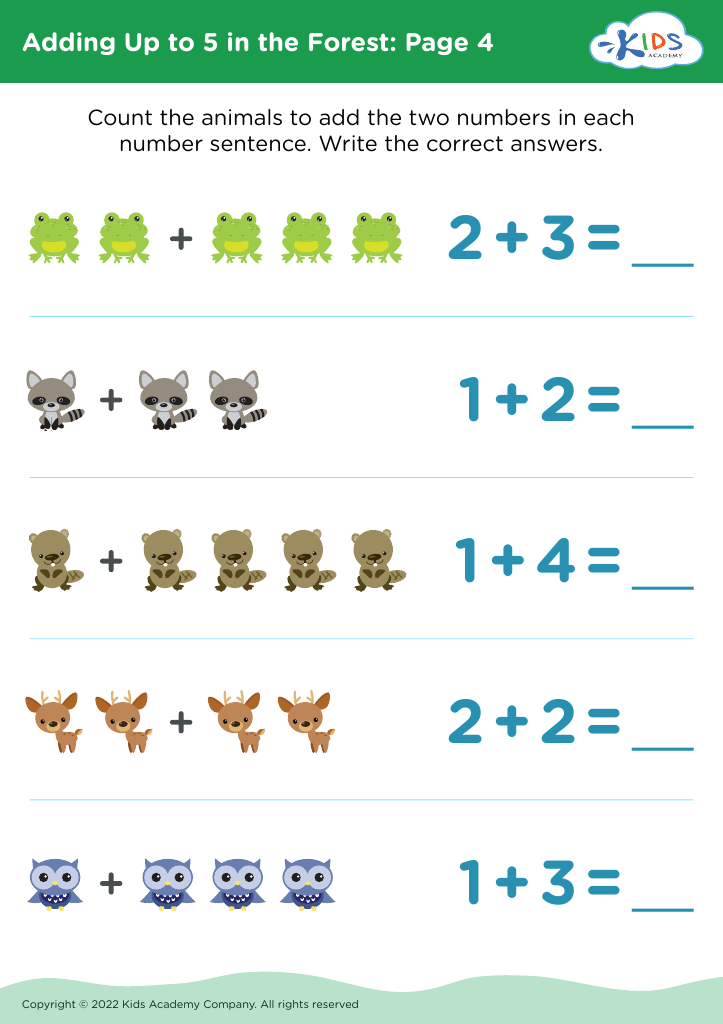
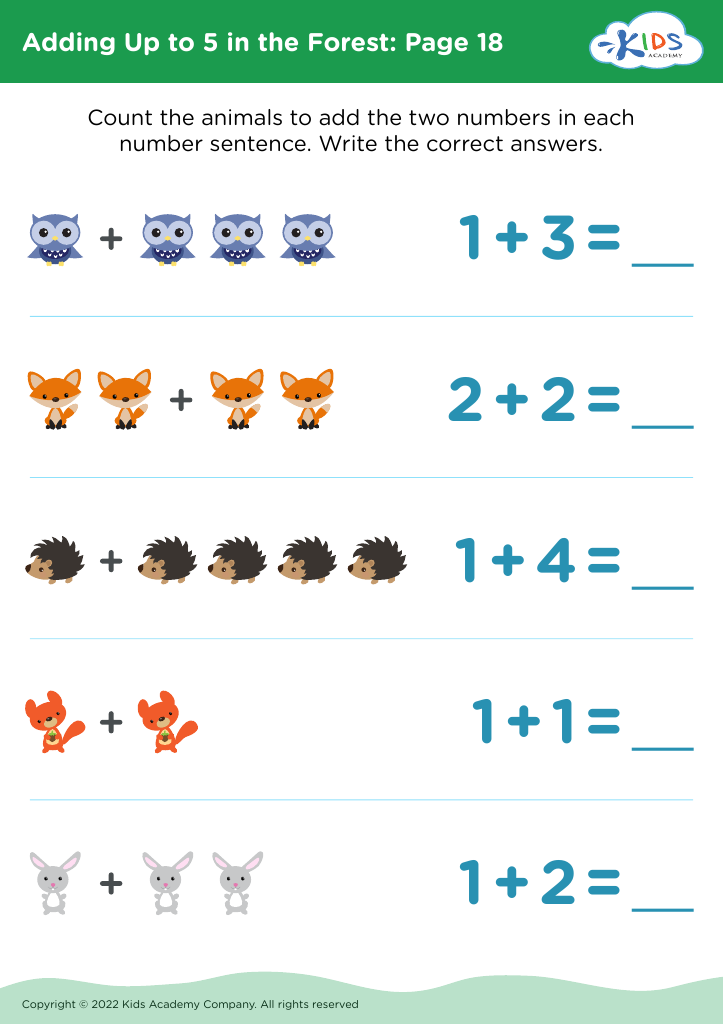
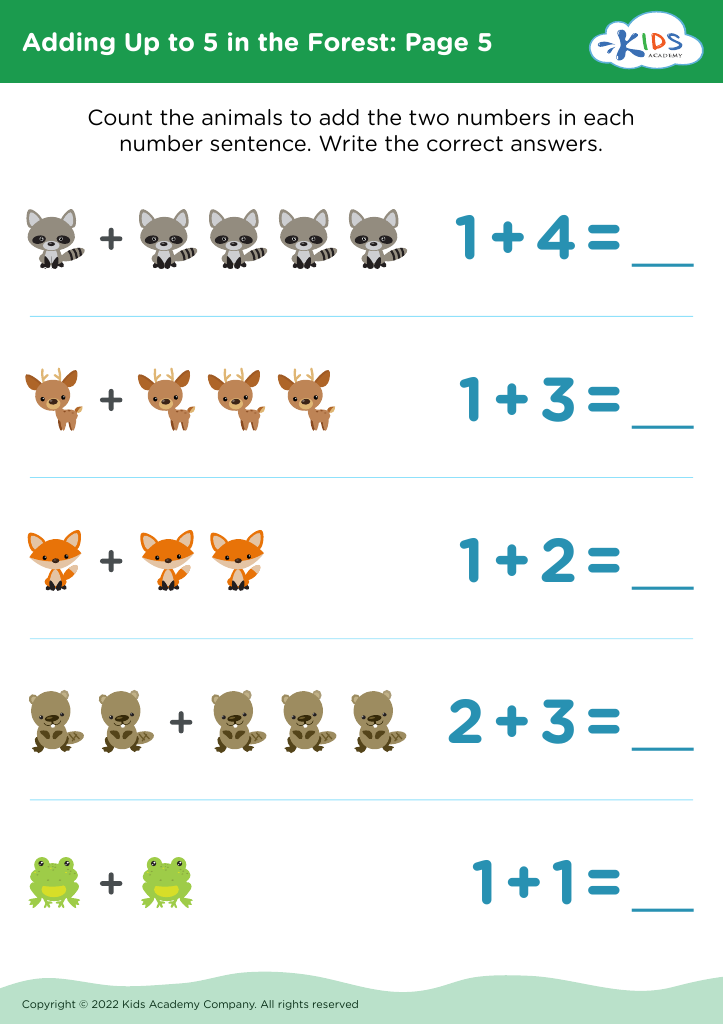



Parents and teachers should care about "Basic Arithmetic Adding in the Forest" for children ages 5-8 because it seamlessly blends core math skills with engaging and imaginative outdoor themes. At this age, children are naturally curious and enthusiastic about exploration, so incorporating a forest setting can make learning arithmetic fun and relatable.
Early math skills, such as addition, serve as foundational building blocks for more complex mathematical concepts. By teaching these skills in a lively context, children are more likely to retain information and develop a positive attitude towards learning. Moreover, the forest theme can encourage discussions about nature and environmental awareness, fostering a well-rounded educational experience.
Additionally, engaging with math outdoors promotes physical movement, enhancing focus and cognitive function. Parents and teachers nurturing this interactive approach can motivate children to see mathematics as an exciting and applicable part of their world, paving the way for lifelong mathematical literacy. This combination of nature, play, and learning can effectively instill a love for number concepts and critical thinking, shaping confident and capable learners.