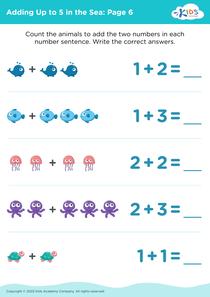
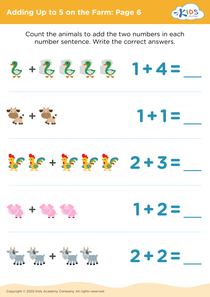
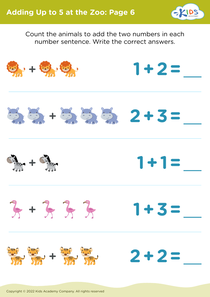
Basic Math Skills Adding in the Forest Worksheets for Ages 5-8
6 filtered results
-
From - To
Explore the enchanting world of "Basic Math Skills: Adding in the Forest Worksheets" designed for children ages 5-8! These engaging and vibrant worksheets combine fun forest themes with foundational math skills. Young learners will delight in solving addition problems featuring adorable woodland creatures, promoting both educational development and a love for nature. Our worksheets not only enhance mathematical proficiency but also encourage critical thinking and problem-solving abilities. Perfect for classroom settings or at-home learning, these resources nurture a positive learning environment while making math enjoyable. Download the worksheets now and watch your child thrive in their journey to mastering basic addition!
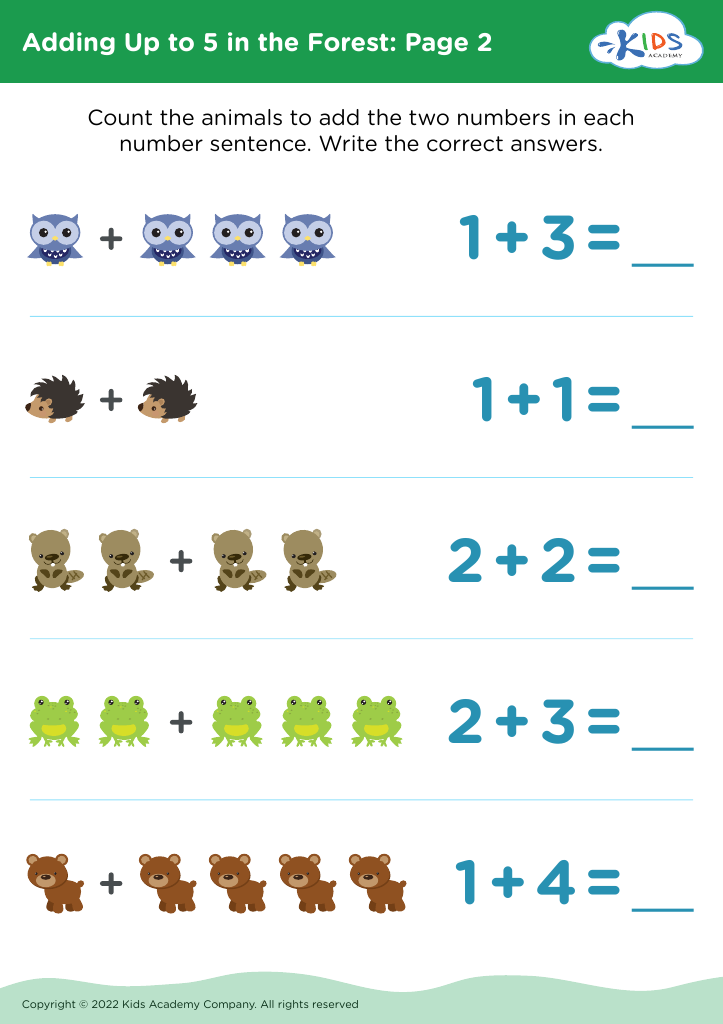
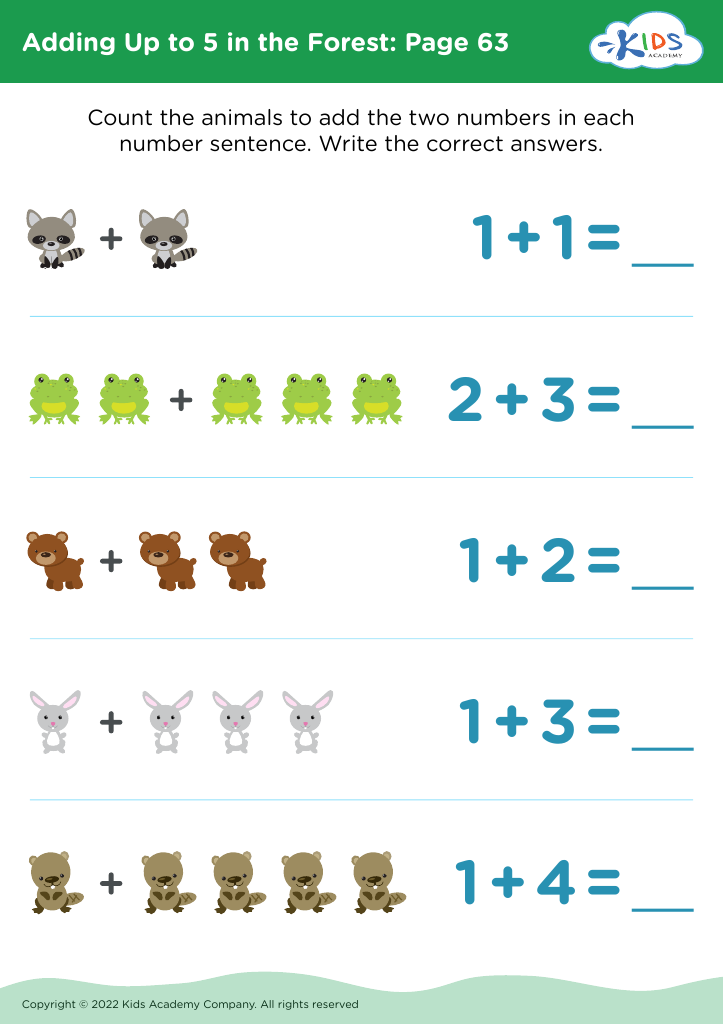
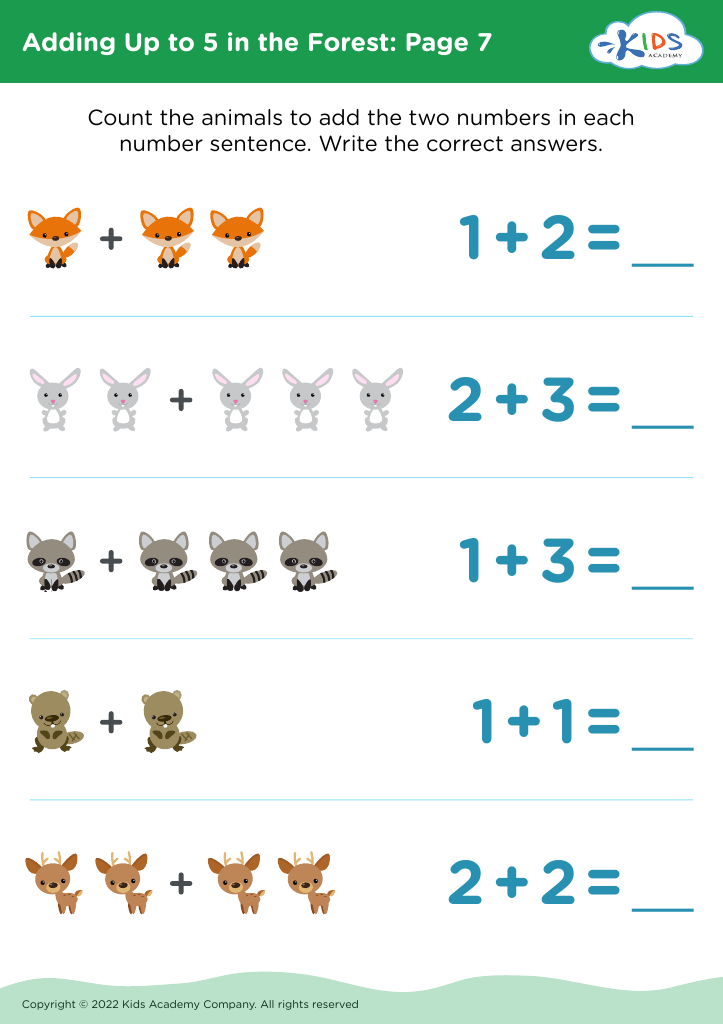
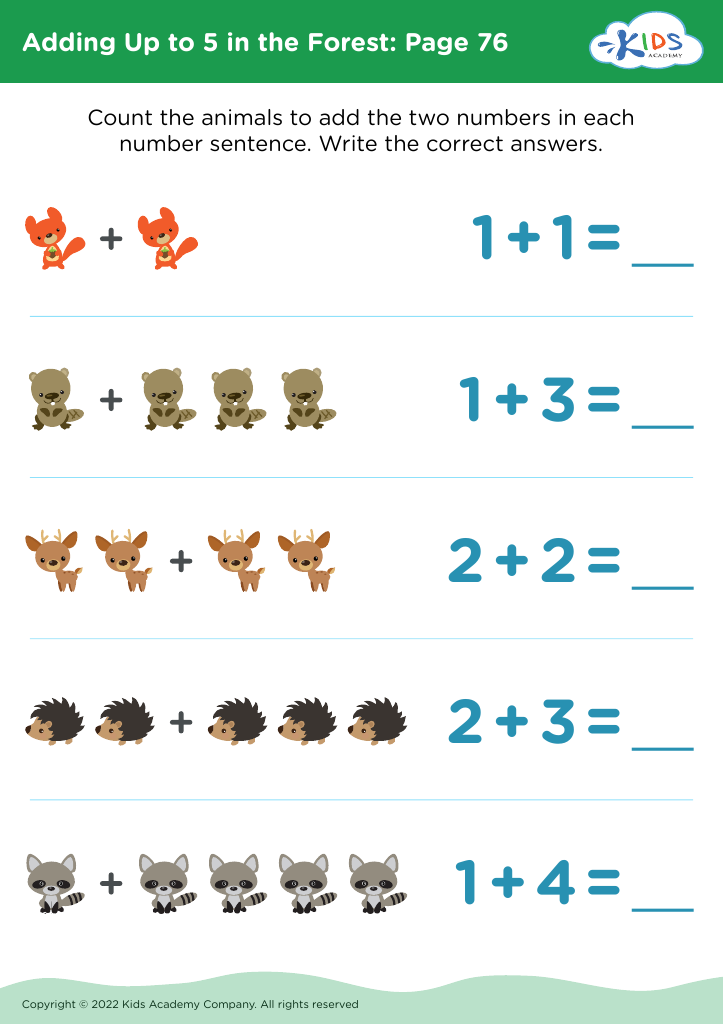
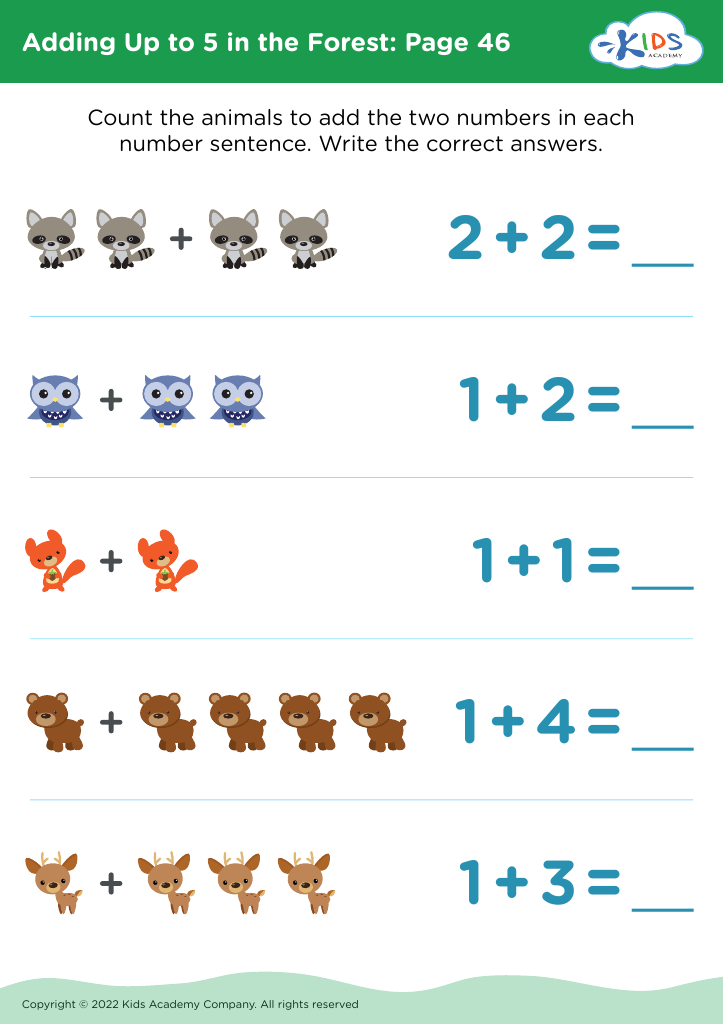
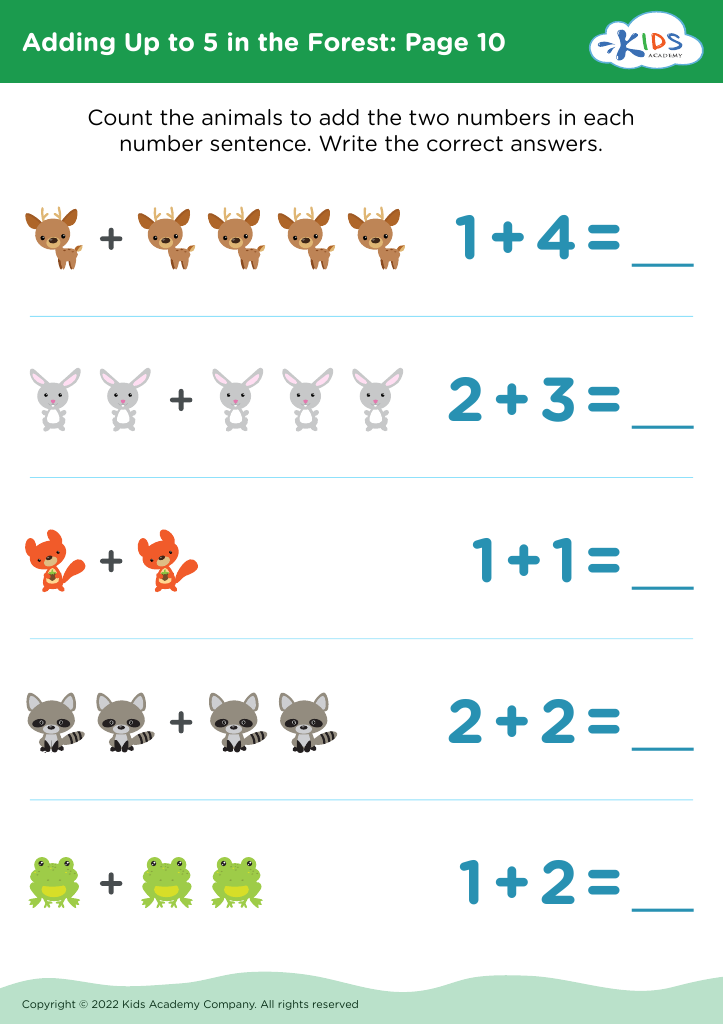



Parents and teachers should prioritize basic math skills for children ages 5-8, especially through engaging methods like "Adding in the Forest." This age group is crucial for developing foundational numeracy skills, which are essential for future academic success across subjects. By integrating math into an outdoor setting, such as a forest environment, children can learn to associate mathematical concepts with real-world phenomena, fostering a deeper understanding and love for mathematics.
Outdoor learning experiences stimulate curiosity and promote active participation, which can lead to improved retention of math skills. Exploring nature while practicing addition can make learning interactive and fun, helping to keep children motivated and engaged. For instance, counting animals, leaves, or stones provides authentic contexts that make abstract concepts more concrete.
Moreover, basic math skills encourage critical thinking and problem-solving abilities. By mastering addition early on, children build confidence in their capabilities, laying the groundwork for later, more complex mathematical topics. In today’s data-driven world, strong basic math skills also promote financial literacy, enabling children to navigate future economic challenges effectively. Thus, incorporating fun, nature-based activities helps instill a strong mathematical foundation, nurturing enthusiastic, capable learners.